
A complete taekwondo gear set is a major investment for any martial artist, whether you are a beginner stepping onto the mats or an experienced competitor preparing for a tournament. When shopping for these packages, you will quickly notice that retail bundles vary significantly in what they include. Some packages offer a bare-minimum setup, while others pack in every possible accessory, making it difficult to determine what you actually need.
Understanding the distinction between mandatory safety equipment and optional, situational add-ons is crucial. This knowledge ensures you comply with your dojo’s safety policies and tournament regulations while avoiding overspending on items you might not use. By evaluating each component individually, you can select a gear set that offers the right balance of protection, mobility, and value.
Essential Protective Gear for Taekwondo
The foundation of any sparring kit consists of the items required by almost all training halls and sanctioning bodies. These core pieces are designed to protect high-impact zones and vital areas during active sparring sessions.
Products mentioned in this guide
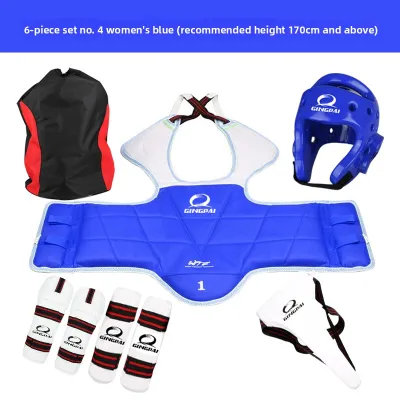
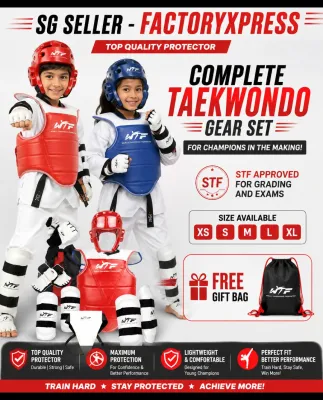
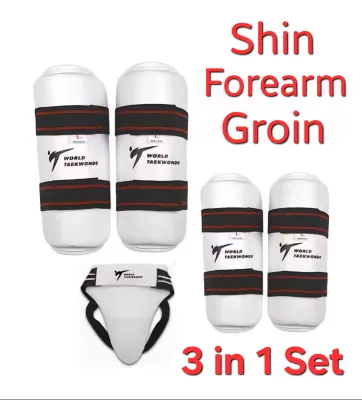
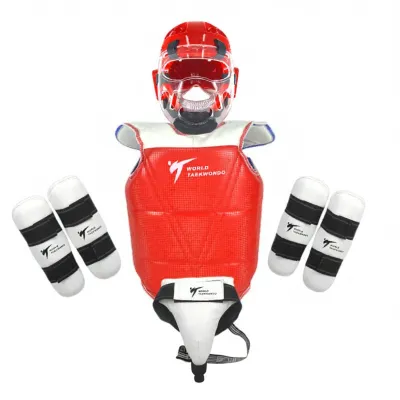
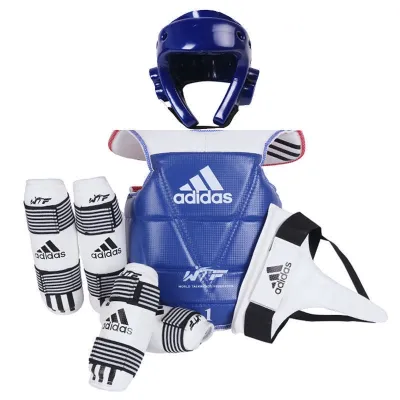
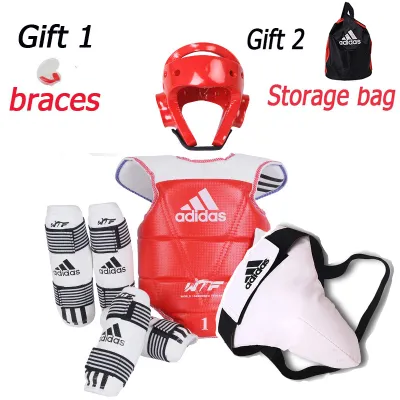
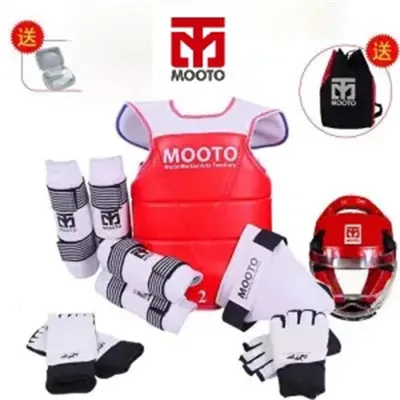
Prices are valid at publication and may change. Please refer to the product page for the latest price.
Headgear (Helmet): The helmet is a critical component designed to absorb and disperse the force of kicks directed at the head. When selecting a helmet from a taekwondo gear set, you must verify that it fits snugly without pinching or sliding when you move your head rapidly. It should cover the forehead, temples, and the back of the head while leaving your peripheral vision completely unobstructed. Look for a secure chin strap that remains fastened during movement, and check the product tag for visible safety certification labels.
Trunk Protector (Chest Guard / Hogu): The chest guard, traditionally known as a hogu, shields your torso, ribs, and vital organs from powerful front kicks. Standard training hogus are typically reversible, featuring one blue side and one red side to denote competitors. They are constructed from high-density foam wrapped in a durable synthetic leather shell. If you are entering advanced competitions, you may need to transition to an electronic scoring version (e-hogu), which contains internal sensors to register points. For daily dojo practice, however, a standard foam protector is the practical and cost-effective choice.
Groin Guard: This is a mandatory safety requirement for both male and female practitioners in almost all sanctioned sparring events and daily training sessions. The guard must fit securely under your uniform without shifting or restricting your range of motion during high kicks. When evaluating a gear set, check that the groin guard features a comfortable, breathable waistband and a rigid protective cup that stays centered during dynamic footwork.
Optional and Situational Taekwondo Add-Ons
Beyond the core essentials, several protective items are highly beneficial but may be classified as optional or situational depending on your age, skill level, and specific training environment.

Forearm and Shin Guards: These guards are designed to protect the long bones of your limbs from painful bone-on-bone contact during block-and-strike drills. They are particularly essential for beginners and youth practitioners who are still developing their blocking techniques and conditioning. However, in some advanced adult sparring formats, these guards might be restricted or deemed optional if electronic foot sensors or specific tournament rules are in play.
Gloves and Foot Protectors: Hand and foot gear serve to protect the small joints of your extremities and reduce the impact of your strikes on your opponent. The requirements for these items vary heavily depending on the specific tournament rule set and your instructor’s preferences. Some schools mandate padded gloves and foot mitts for all sparring, while others only require them during official competitions.
Mouthguards: While rarely included in basic retail gear bundles, a mouthguard is highly recommended for anyone participating in full-contact sparring. It plays a vital role in preventing dental injuries and reducing the risk of jaw damage. Because a proper fit is essential for protection, it is usually best to purchase a high-quality boil-and-bite mouthguard separately rather than relying on a generic one included in a cheap bundle.
How to Evaluate a Retail Taekwondo Gear Set
When shopping for a bundled taekwondo gear set, it is easy to be swayed by packages that claim to be complete. To ensure you are getting true value, you must systematically evaluate the contents of the bundle.
First, verify that the set includes all three core essentials: the headgear, trunk protector, and groin guard. If a bundle lacks any of these items, you will need to purchase them separately, which can quickly drive up your total cost. Do not assume a complete set automatically includes a groin guard, as many retail packages omit this item due to sizing variations.
Second, check the product tags for recognized taekwondo federation approval marks, such as World Taekwondo (WT) or ITF logos, if you plan to use the gear in official competitions. Unapproved gear, even if it is of high quality, may be rejected by tournament referees during gear checks. If your goals are strictly recreational, non-approved gear from reputable brands may suffice, but tournament-bound athletes must prioritize certified equipment.
Finally, compare the total bundle price in S$ against the cost of purchasing the essential and optional pieces individually. Online sports retailers and specialized martial arts shops in Singapore often offer competitive pricing on individual items. If a bundle includes low-quality optional items that you will likely need to replace soon, it is often more economical to buy high-quality essential pieces separately and add optional gear only when your training demands it.
Fitting, Inspection, and Maintenance Checks
Owning a complete taekwondo gear set is only effective if the equipment fits correctly and is maintained in safe working condition. Regular checks are essential to ensure your gear continues to provide reliable protection.
To verify the fit of your gear, put on the full set and perform a series of basic movements, including high kicks, pivots, and rapid footwork. Ensure all straps are secure and snug without restricting your breathing, circulation, or natural range of motion. Hard plastic shells and thick foam padding should remain firmly in place and not shift or slide during dynamic movement.
Establish a routine inspection habit before every sparring session. Check the foam padding of your helmet and chest guard for signs of compression; if the foam feels flat or fails to rebound after being pressed, its impact-absorption capabilities are compromised. Inspect plastic shells for cracks or splits, and check all velcro straps to ensure they still grip tightly. Degraded velcro can cause guards to fly off mid-sparring, posing a safety hazard to both you and your partner.
Proper cleaning and storage will significantly extend the lifespan of your gear. After each training session, wipe down non-washable hard shells and synthetic leather surfaces with a damp cloth and a mild, non-abrasive soap. Avoid soaking these items in water. Air-dry all fabric components and guards thoroughly in a well-ventilated space away from direct sunlight, as excessive heat can warp plastic and degrade foam. Never leave damp gear sealed inside a gym bag, as this promotes the growth of odor-causing bacteria and accelerates material breakdown.
Frequently Asked Questions (FAQ)
Do I need an electronic chest guard (e-hogu) for regular training?
Electronic chest guards (e-hogus) are specialized pieces of equipment equipped with electronic sensors to register scoring strikes. They are typically only required for sanctioned tournaments that utilize electronic scoring systems. For regular dojo training and daily sparring practice, standard foam protectors are highly recommended. They are more durable, significantly less expensive, and do not require the matching electronic foot socks to function. Unless your instructor specifically mandates electronic gear for advanced competition simulation, stick to a standard hogu.
Can I use generic martial arts gear instead of taekwondo-specific equipment?
While some generic martial arts gear may look similar, taekwondo-specific equipment is engineered to accommodate the unique strike angles, target areas, and high-velocity kicking patterns of the sport. For example, taekwondo helmets and chest guards offer specific coverage zones optimized for foot strikes, and the gear is designed to be lightweight to allow for rapid footwork. Using generic kickboxing or karate gear may not provide adequate protection in the right areas and could be restricted by your dojo’s safety policies. Always check with your instructor or tournament officials before substituting gear to ensure full compliance and safety.
How often should I replace my taekwondo protective gear?
There is no fixed calendar date for replacing your protective gear, as its lifespan depends heavily on your training frequency, the intensity of your sparring, and how well the equipment is maintained. Instead of relying on a timeline, monitor your gear for physical signs of wear. You should replace any item immediately if you notice compressed foam that no longer rebounds, visible cracks in plastic shells, torn stitching, or failing velcro straps that compromise a secure fit. Regularly inspecting your gear ensures you are never training with compromised protection.
Community discussion
Share your experience or ask a question. Comments are reviewed before publication.