
Selecting your first kettlebell weight is a critical decision that directly impacts your safety, movement mechanics, and long-term fitness progress. Unlike traditional dumbbells, a kettlebell features an offset center of mass that requires active stabilization, meaning a weight that feels manageable in a standard lift can feel significantly heavier during dynamic, ballistic movements. For beginners in Singapore setting up a home workout space, this choice is further shaped by the practical realities of apartment living, where floor protection, noise control, and space efficiency are just as important as physical conditioning.
To establish a safe and effective starting point, you must look beyond generic weight recommendations and instead evaluate your current physical baseline, your specific training goals, and the mechanics of the exercises you plan to perform. Starting too heavy can lead to compromised form and potential injury, while starting too light may fail to engage the powerful muscles of your posterior chain. By understanding how to match different weights to specific movement patterns and home environments, you can make an informed investment that supports your strength journey from the very first swing.
Assessing Your Baseline Strength and Fitness Goals
Rather than relying on rigid, generalized weight charts, you can determine your ideal starting kettlebell weight by performing simple, functional bodyweight assessments at home. To evaluate your upper body pressing and pulling strength, observe how comfortably you can execute basic movements like push-ups. If you can perform five to ten controlled, full-range push-ups with a stable core and neutral spine, your shoulders and upper back are likely prepared to handle a moderate starting weight for overhead presses. If push-ups are highly challenging or cause your lower back to sag, you should opt for a lighter, highly conservative kettlebell to protect your shoulder joints during vertical movements.
Products mentioned in this guide
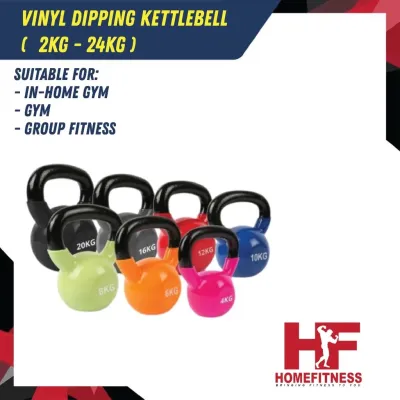
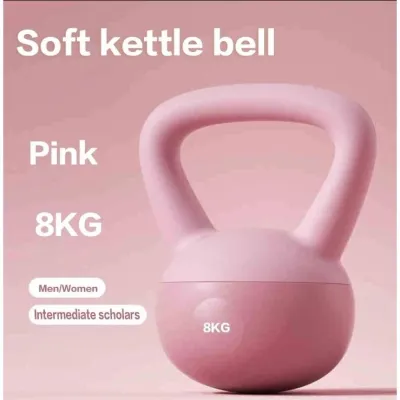
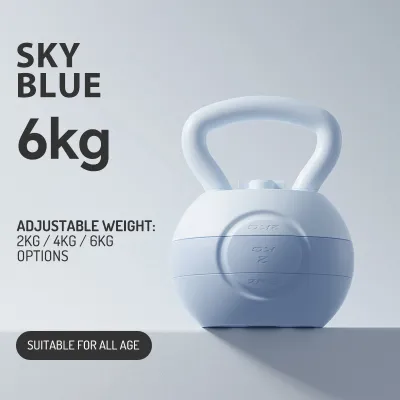
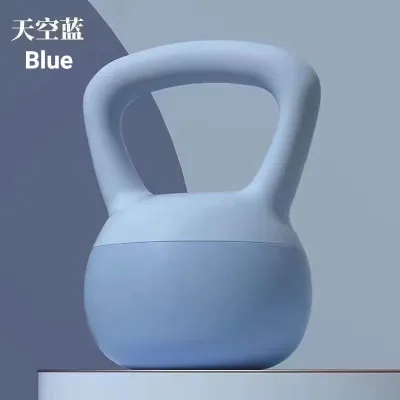
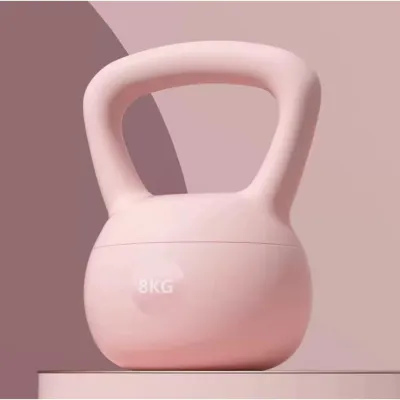
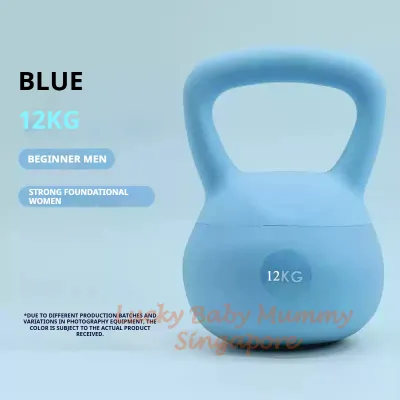
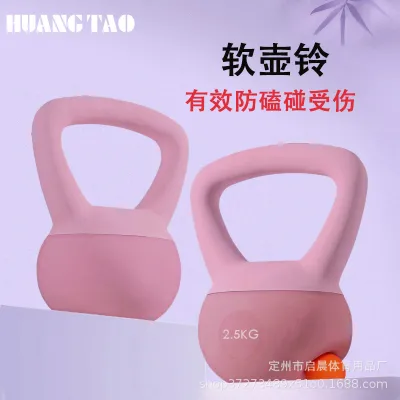
Prices are valid at publication and may change. Please refer to the product page for the latest price.
For lower body and core readiness, use the bodyweight squat as your primary diagnostic tool. Attempt to perform fifteen consecutive squats, focusing on keeping your chest upright, your heels firmly planted on the floor, and your knees tracking over your toes. If you can complete this set with ease and maintain perfect balance, your hips, glutes, and ankles possess the foundational mobility and strength required to safely manage a loaded kettlebell during lower-body exercises. If you struggle with balance or heel lift, your initial focus should remain on lighter loads that allow you to prioritize movement quality over sheer resistance.
Your prior training history also plays a significant role in defining your starting baseline. Individuals with several months of consistent barbell or dumbbell training can typically transition to slightly heavier kettlebells, as their nervous systems and connective tissues are already accustomed to managing external resistance. Conversely, if you are completely new to resistance training or are returning after a long hiatus, your tendons and ligaments will require time to adapt to the unique rotational forces of kettlebell training, making a lighter starting weight the safest and most productive choice.
Finally, align your weight selection with your primary fitness objectives. If your goal is to build cardiovascular endurance, muscular stamina, or to perform high-repetition conditioning circuits, a lighter kettlebell will allow you to maintain a high work rate without premature muscular failure. If you are training for raw strength, explosive power, or athletic performance, you will eventually need a heavier bell to sufficiently challenge your larger muscle groups, though you must still master the basic movement pathways with a lighter weight before attempting to scale up.
Matching Kettlebell Weight to Exercise Types
A common mistake among beginners is assuming that a single kettlebell can accommodate every exercise in a workout routine. In reality, different movements engage vastly different muscle groups, meaning a weight that is perfect for a lower-body swing will often be far too heavy for an upper-body overhead press. Understanding this mechanical division is essential for structuring a safe and effective home workout program.

Lower body and ballistic movements, such as the kettlebell swing, clean, and goblet squat, primarily target the posterior chain—the powerful network of muscles running along the back of your body, including the glutes, hamstrings, and spinal erectors. Because these muscles are designed to generate massive amounts of force, they require a relatively substantial load to engage properly. If you attempt to swing a kettlebell that is too light, you may find yourself pulling the weight up with your arms and shoulders rather than driving the movement through explosive hip extension, which can lead to neck strain and poor movement habits.
In contrast, strict upper-body movements like the overhead press, halo, and windmill rely on the smaller, more delicate muscles of the shoulder girdle and rotator cuff. These exercises demand strict control and a highly conservative weight to prevent joint impingement and compensation from the lower back. Attempting to press a kettlebell that is too heavy can force your spine into hyperextension, placing dangerous shearing forces on your lumbar vertebrae.
When purchasing your very first kettlebell for a home gym, you must decide whether to prioritize a weight optimized for overhead pressing or one optimized for ballistic swings. For absolute beginners, starting with a weight you can comfortably press overhead for five to eight repetitions is often the most practical approach. This conservative weight allows you to safely learn foundational pressing, carrying, and rotational movements, and you can easily transition this same bell to high-repetition swings to build cardiovascular fitness before eventually investing in a heavier model dedicated to lower-body power.
Adapting Kettlebell Training for HDB and Compact Homes
Training with a kettlebell within a typical Singapore HDB flat or compact apartment presents unique spatial and structural challenges that require careful preparation. Before you begin swinging a heavy iron weight, you must establish a safe workout zone with adequate clearance. Stand in your intended training space and extend your arms fully in all directions, ensuring you have at least half a meter of clear buffer space beyond your reach. This precaution prevents accidental collisions with walls, furniture, low-hanging ceiling fans, or light fixtures during dynamic movements like swings and high pulls.
Flooring protection is another critical consideration for apartment dwellers, as dropping a heavy metal object can easily crack ceramic tiles, dent vinyl sheets, or scratch polished timber. To safeguard your home and minimize noise, invest in high-density rubber gym mats that are at least fifteen to twenty millimeters thick. These specialized mats are designed to absorb localized impacts and dampen the low-frequency vibrations that can easily travel through concrete floors and disturb your downstairs neighbors. Avoid thin, soft foam puzzle mats, as they compress completely under load and fail to provide the stable, non-slip surface required for safe, explosive footwork.
For those with limited storage space, accumulating a large collection of fixed-weight kettlebells can quickly clutter a living room or balcony. In these scenarios, an adjustable kettlebell serves as an exceptionally efficient, space-saving alternative. These innovative tools allow you to modify the weight of a single bell by adding or removing internal plates, effectively replacing an entire rack of equipment. When selecting an adjustable model, prioritize designs with robust locking mechanisms that prevent the internal weights from shifting or rattling during fast, ballistic movements.
Choosing the Right Kettlebell Type and Material
As you explore your options in the Singapore market, you will encounter two primary styles of kettlebells: standard cast iron and competition-style models. Standard cast iron kettlebells increase in physical size as they get heavier, meaning a lighter bell has a smaller body and a thinner handle, while a heavier bell is physically larger with a thicker grip. The handles of cast iron bells are typically wider and flare outward, making them highly accommodating for two-handed exercises like the basic swing, which is ideal for beginners learning foundational movements.
Competition kettlebells, on the other hand, maintain identical external dimensions, handle diameters, and horn shapes regardless of their actual weight. This consistency ensures that your lifting mechanics, forearm contact points, and grip placement remain exactly the same as you progress to heavier loads. While competition bells are highly favored for advanced, one-handed ballistic training, their narrower handle horns can make two-handed grips uncomfortable or cramped for beginners with larger hands.
For home users, adjustable kettlebells offer a compelling balance of versatility and space efficiency, but you must carefully evaluate their construction quality. Look for models that utilize secure screw-down or pin-locking systems to keep the internal plates firmly in place, as any movement within the bell can disrupt your balance and compromise your wrist safety during transitions. Ensure the outer shell is durable enough to withstand repeated contact with your forearms during cleans and snatches.
Given Singapore’s high humidity, rust prevention is a vital factor in determining the lifespan of your fitness equipment. Kettlebells finished with a high-quality powder coating or a matte texture are highly recommended, as they resist moisture-induced corrosion while providing a secure, slip-resistant grip when your hands sweat. Avoid cheap kettlebells with smooth, glossy painted finishes, as they become dangerously slick with perspiration and are difficult to control without excessive use of gym chalk.
Starting Safely and Knowing When to Progress
Safety and technical precision should always take precedence over lifting heavier weights, especially when training unsupervised at home. Before beginning any kettlebell session, perform a mental checklist of your posture: your shoulders should be packed down and back, your core should be actively braced, and your spine must remain neutral throughout every movement. If you experience any sharp, sudden pain in your joints—particularly in your lower back, shoulders, or wrists—stop the exercise immediately, as this is a clear signal that your form has broken down or the weight is exceeding your current capacity.
To determine if your starting weight is appropriate, monitor your movement speed, rep ranges, and breathing patterns during your workouts. A suitable starting weight should allow you to complete three sets of ten to twelve clean, explosive swings while maintaining a steady pace and passing the “talk test”—meaning you can speak a short, coherent sentence without gasping for breath. If your movement slows down significantly, your posture collapses, or you find yourself holding your breath to complete a repetition, the kettlebell is too heavy and you should regress to a lighter load.
You are ready to progress to a heavier kettlebell only when you have achieved specific, observable technique milestones with your current weight. These milestones include the ability to execute ten strict overhead presses with complete elbow lockout and zero lower back arching, as well as performing high-repetition swings with perfect hip drive and no residual lower back tightness. Remember that building tendon, ligament, and joint strength takes significantly longer than building muscle tissue, so spending several weeks mastering a single weight will protect your body and build a resilient foundation for future strength gains.
Frequently Asked Questions (FAQ)
Can I use a dumbbell instead of a kettlebell for beginner exercises?
While you can safely substitute a dumbbell for static, linear movements like goblet squats, lunges, and strict overhead presses, the two tools behave very differently due to their physical designs. A dumbbell has its center of mass balanced directly in the palm of your hand, making it highly stable and easy to control in straight lines. A kettlebell features an offset center of mass that sits several inches below the handle, which creates a unique rotational pull as it moves. This offset design is essential for ballistic exercises like the kettlebell swing, where the weight must float and rotate smoothly around your hands; attempting to replicate these dynamic movements with a standard dumbbell is awkward, inefficient, and can place unnatural strain on your wrists and grip.
How do I know if my kettlebell is too heavy for swings?
Several clear technical warning signs indicate that your kettlebell is too heavy for safe swings. Watch for a rounding of your lower back at the bottom of the hinge, which indicates that your core and posterior chain cannot stabilize the load as it pulls you downward. Another common sign is pulling the bell upward with your shoulders and arms rather than driving the movement through explosive hip extension. If you cannot achieve a full, upright hip lockout at the top of the swing—or if your knees remain bent and your torso leans backward to compensate—the weight is too heavy, and you should immediately reduce the load to protect your spine and rebuild proper movement patterns.
Community discussion
Share your experience or ask a question. Comments are reviewed before publication.