
Starting a home fitness journey in Singapore often means working within the cozy confines of a Housing & Development Board (HDB) flat or a compact condominium. When space is at a premium, the kettlebell stands out as one of the most versatile, space-efficient strength tools you can own. However, choosing the right starting weight is a critical decision. Pick a bell that is too light, and you will quickly outgrow its usefulness; pick one that is too heavy, and you risk damaging your home’s flooring, disturbing your downstairs neighbors, or worse, injuring yourself.
To find your ideal starting kettlebell weight, you must balance your current physical strength with the mechanics of the exercises you plan to perform, all while keeping your apartment’s physical boundaries in mind. For most beginners, this means starting with a weight between 8 kg and 16 kg. The exact number depends on your biological baseline, lifting experience, and whether you are performing dynamic, ballistic movements or slow, controlled grinds.
Assess Your Baseline Strength to Find Your Starting Weight
To select the perfect starting weight, you must first understand that kettlebell training is divided into two distinct movement patterns: ballistics and grinds. Ballistic movements, such as the classic kettlebell swing, clean, and snatch, are fast, explosive exercises that rely on momentum generated by your hips, glutes, and hamstrings. Because these movements recruit your body’s largest muscle groups, they require a relatively heavier weight to provide adequate resistance and force proper alignment. If the bell is too light, you will end up using your arms to muscle the weight up, defeating the purpose of the exercise.
Products mentioned in this guide
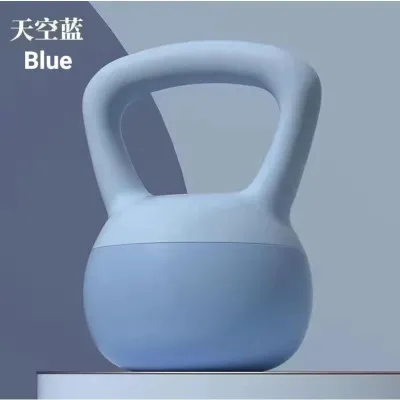
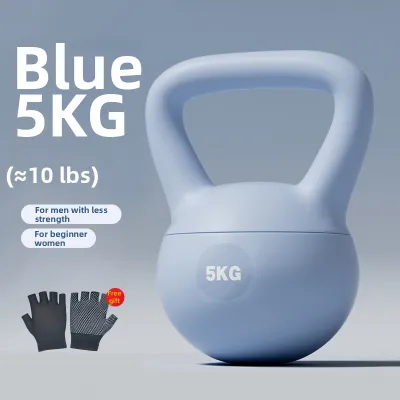
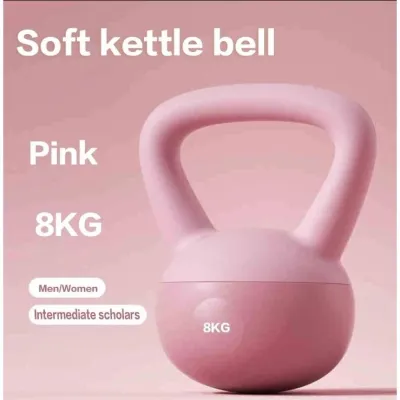
![[SG Ready Stock]Soft Kettlebell Women Fitness Home Software 2-12kg Kettlebell Squat Exercise Hip Strength Training Sand Kettlebell](https://img.lazcdn.com/g/p/3e3fbdc634aa1bfc744da1b89128eb82.jpg_400x400q80.jpg_.webp)
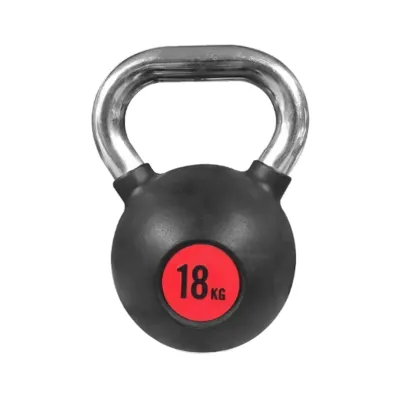
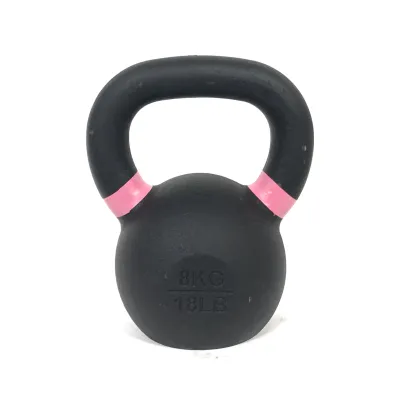
Prices are valid at publication and may change. Please refer to the product page for the latest price.
Conversely, grind movements are slow, deliberate, and highly controlled. Exercises like the overhead press, goblet squat, and Turkish get-up fall into this category. These movements rely on constant muscle tension and joint stability, particularly in the shoulders and core. Because grinds do not benefit from momentum, they require a lighter weight to execute safely. Using a weight that is too heavy for a grind movement can quickly lead to shoulder strain or a loss of balance, which is especially dangerous in a confined home environment.
To diagnose your physical baseline and determine your starting weight limits, perform these two simple self-assessment tests using a dumbbell or a temporary test weight at a local fitness store:
- The 5-Rep Strict Press Test (For Grinds): Find a weight that you can press overhead from shoulder height to full arm lockout five times with strict form. Strict form means your knees remain locked, your heels stay glued to the floor, and your lower back does not arch. If you can complete all five repetitions with controlled effort, and the fifth rep feels challenging but achievable without breaking form, this weight represents the upper limit for your grind movements.
- The Goblet Hold Test (For Core and Legs): Hold a weight vertically against your chest, keeping your elbows tucked in close to your ribs. Perform ten slow, deep squats. Focus on keeping your chest upright, your spine neutral, and your heels firmly planted on the ground. If your torso collapses forward, your lower back rounds at the bottom of the squat, or your heels lift off the floor, the weight is too heavy for your current core stability and hip mobility.
While individual capabilities vary, general industry starting points serve as helpful reference baselines. For individuals accustomed to female physiological baselines, a starting range of 8 kg to 12 kg is highly effective for ballistic exercises, while 4 kg to 8 kg is ideal for overhead grinds. For those accustomed to male physiological baselines, a starting range of 12 kg to 16 kg works best for ballistics, with 8 kg to 12 kg allocated for grind movements. Your prior lifting experience, grip strength, and joint mobility should always dictate where you fall within these ranges.
Always prioritize safety: if a weight causes joint pain, shoulder clicking, or forces your spine out of a neutral position during any test, it is too heavy. Stop the movement immediately and select a lighter option.
Evaluate Your Apartment Space and Flooring Constraints
Training in a small apartment requires more than just physical preparation; you must also evaluate your immediate surroundings. A standard HDB flat or compact condo unit presents unique structural challenges that can impact your safety and your relationship with your neighbors. Before purchasing your first kettlebell, perform a thorough spatial and environmental diagnosis of your designated workout area.

Ceiling Height Check Standard residential ceilings in Singapore typically hover around 2.6 meters, though some apartments with false ceilings or low-hanging light fixtures may offer even less clearance. To verify your overhead safety, stand in your intended workout spot and extend both arms fully overhead. If your knuckles are within 30 centimeters of the ceiling, a ceiling fan, or a light fixture, dynamic overhead movements present a high risk of impact. If space is tight, consider substituting standing overhead presses with half-kneeling or seated variations, and avoid high-reaching ballistic moves like the American swing or snatch in favor of the safer Russian swing, which stops at chest level.
Flooring and Noise Diagnosis The type of flooring in your apartment is a major factor in determining how you train. Homogeneous tiles, laminate, and parquet are common in Singaporean homes, and all of them are highly vulnerable to damage. Dropping a solid cast iron kettlebell from even a short height can easily crack tiles or leave deep, permanent gouges in wood. Furthermore, the impact of setting a heavy weight down forcefully sends low-frequency shockwaves through the concrete slab, which can disturb downstairs neighbors.
- Protective Matting: Never place a kettlebell directly on bare apartment flooring. Use a high-density rubber gym mat that is at least 15 mm thick to absorb impact and deaden sound.
- Coated Bases: Look for kettlebells wrapped in neoprene or vinyl, or those featuring a built-in rubber base ring. This protective layer cushions the contact point, reducing scuffs and minimizing noise transfer.
Storage and Footprint In a compact living room or study, a stray kettlebell is a serious tripping hazard. A single kettlebell has a tiny footprint, usually requiring less than a square foot of floor space. However, if you plan to build a collection, you must plan for safe storage. Choose a dedicated corner away from high-traffic walkways, or store your weights under a sturdy bed frame or inside a low cabinet. Avoid storing heavy weights on high shelves, as lifting them down poses an unnecessary injury risk.
Match the Weight to Your Core Beginner Exercises
Once you understand your baseline strength and spatial limits, you can match your starting weight to the foundational exercises that will form the core of your home routine. Each exercise provides clear physical feedback to help you verify if your chosen weight is appropriate.
The Goblet Squat The goblet squat is a fundamental lower-body movement that builds leg strength and core stability. To verify if your kettlebell is the right weight, pay close attention to your posture. If the weight is too light, you will feel very little core engagement, and you may find yourself rushing through repetitions without maintaining proper tension. If the weight is too heavy, your body will give you immediate warning signs: your lower back will round at the bottom of the movement (a common fault known as the “butt wink”), your elbows will flare out away from your body, or your torso will tilt excessively forward, shifting the load onto your lower spine.
The Kettlebell Swing The swing is the ultimate ballistic exercise, designed to build explosive hip power. A common beginner mistake is turning the swing into a squat-and-raise, using the shoulders and arms to lift the bell.
- Too Light: If your kettlebell is too light, you can easily lift it to chest height using your upper body alone, which prevents you from learning the essential hip-hinge mechanics.
- Too Heavy: If the weight is too heavy, you will struggle to control the descent. The momentum of the falling bell will pull your torso down too quickly, forcing your lower back to round and placing dangerous shear stress on your lumbar spine.
- The Sweet Spot: The ideal swing weight should feel heavy enough that you must use a powerful snap of your hips to drive the bell forward, yet light enough that you can easily maintain a neutral spine and keep your shoulders packed down throughout the movement.
The Overhead Press The overhead press is a strict grind movement that tests shoulder strength and scapular stability. Because the shoulder joint is highly mobile but structurally delicate, this exercise is the ultimate gatekeeper for weight selection. If you cannot press the kettlebell overhead with a completely vertical forearm, a locked wrist, and a stable, unmoving torso, the weight is too heavy. Any arching of the lower back or flaring of the ribs to complete the lift is a sign that you are compensating for a weight you cannot safely control.
The Beginner’s Decision Path As a beginner in a small apartment, you face a common dilemma: should you buy one versatile, middle-weight kettlebell, or invest in a pair of different weights?
- The Single-Bell Compromise: If budget or storage space is your primary constraint, a single middle-weight bell (such as a 12 kg bell for men or an 8 kg bell for women) is the most practical choice. It will feel slightly light for swings and squats, but it will allow you to safely learn overhead presses and get-ups without overloading your shoulders.
- The Two-Bell Strategy: If you have the budget and a dedicated storage spot, buying two distinct weights is highly recommended. Purchase one lighter bell (e.g., 6 kg to 8 kg for women, 10 kg to 12 kg for men) specifically for overhead presses, Turkish get-ups, and form practice, and one heavier bell (e.g., 12 kg to 16 kg for women, 16 kg to 20 kg for men) dedicated to explosive swings, deadlifts, and goblet squats. This dual approach ensures you never compromise your safety on upper-body moves while still challenging your lower body.
Choose the Right Kettlebell Design for Compact Living
Not all kettlebells are created equal. The physical design of the bell plays a massive role in how easily it fits into a small apartment lifestyle and how safely you can perform your workouts.
Cast Iron vs. Competition Style Standard cast iron kettlebells are cast as a single solid piece of metal. Their physical size scales up with their weight; an 8 kg cast iron bell is visibly smaller than a 16 kg cast iron bell. For beginners, cast iron is often the most cost-effective option, and the smaller physical dimensions of lower weights make them exceptionally easy to store.
Competition-style kettlebells, made of steel, maintain the exact same physical dimensions regardless of their weight. An 8 kg competition bell is the same size as a 32 kg bell, with the internal hollow cavity adjusted to meet the target weight. While more expensive, competition bells offer excellent spatial predictability. Because the handle size, window opening, and bell diameter never change, your movement mechanics, forearm clearance, and storage footprint remain perfectly consistent as you progress to heavier weights.
Adjustable Kettlebells For space-conscious apartment dwellers, an adjustable kettlebell is an incredibly appealing option. A single adjustable unit can replace a rack of five or six individual bells, saving you significant floor space and money in the long run. However, you must evaluate their design carefully before buying:
- Weight Distribution: High-quality adjustable kettlebells use internal steel plates secured by a central screw, maintaining the traditional shape and balance of a competition bell. Lower-quality models may use external selector pins or plastic parts that rattle, which can disrupt your balance during fast, ballistic movements.
- Durability: Ballistic training puts significant stress on the equipment. Ensure any adjustable model you choose has a robust locking mechanism to prevent plates from shifting or coming loose mid-swing.
Handle and Base Design When shopping, always inspect the handle and the base of the kettlebell. The handle should have a smooth, matte finish that allows it to glide easily through your hands without causing friction blisters or tearing your skin. Avoid handles with rough casting seams or thick, glossy paint that becomes slippery when your hands sweat in Singapore’s humid climate.
Additionally, ensure the kettlebell has a perfectly flat, machined base. A flat base is essential for safe storage, preventing the bell from rolling over and damaging your floors. It is also a safety requirement for floor-based exercises like renegade rows or push-ups on the bell, where an unstable base could collapse and cause wrist or facial injuries.
Signs You Need to Adjust Your Weight or Setup
As your strength improves and your home routine evolves, your initial setup will eventually need adjustments. Recognizing the early warning signs of an improper setup or an outdated weight is key to preventing injury and maintaining progress.
Physical Signals You have likely outgrown your starting weight when you can easily perform more than 15 to 20 repetitions of an exercise with flawless form and minimal cardiovascular or muscular fatigue. Another clear signal is when your grip strength easily outlasts the target muscles of the exercise—for instance, if your hamstrings feel completely unchallenged after a set of swings, but your hands are barely tired.
Conversely, if you experience persistent joint pain, shoulder clicking, or lower back soreness after your workouts, your weight is either too heavy or your form is breaking down. In this scenario, scale down to a lighter weight immediately to rebuild your movement patterns.
Environmental Signals Your home environment will also tell you when things need to change. If you notice fine cracks appearing in your floor tiles, scuff marks on your parquet, or if your downstairs neighbors politely complain about low-frequency vibrations, your floor protection is inadequate. Similarly, if you find yourself holding back on the power of your swing hip-snap because you are afraid of hitting a nearby television or glass sliding door, your workout space is too restricted.
Actionable Paths When you encounter these physical or environmental limits, take immediate action:
- Upgrade Your Protection: If noise or floor damage is a concern, upgrade to thicker interlocking rubber tiles (20 mm or more) or use a dedicated drop pad to cushion your weights.
- Adjust Your Space: Rearrange your furniture to create a dedicated 2-meter by 2-meter clear zone, ensuring you have complete freedom of movement.
- Progress Safely: When transitioning to a heavier weight, do not make massive jumps. If you are moving up from a 12 kg bell, consider a 14 kg or 16 kg option rather than jumping straight to 20 kg, ensuring your joints and core have time to adapt to the increased load.
Frequently Asked Questions (FAQ)
Can I substitute a dumbbell for a kettlebell in a small apartment?
Yes, you can substitute a dumbbell for several beginner exercises, but there are significant mechanical trade-offs. A dumbbell has an even weight distribution with its center of mass located directly inside your hand. This makes it highly stable and excellent for strict grind movements like goblet squats, overhead presses, and bent-over rows, which are easily performed in tight spaces.
However, a kettlebell’s center of mass is offset, hanging several inches below the handle. This offset design creates a unique dynamic pull during ballistic movements like the kettlebell swing, clean, and snatch, forcing your core and stabilizer muscles to work harder to maintain balance. While you can perform a swing by holding one end of a dumbbell, the grip is less secure, the leverage is altered, and you lose the fluid rotation that makes the kettlebell swing such an effective posterior-chain builder. For dynamic, full-body conditioning, the kettlebell remains the superior and safer tool for compact home environments.
Community discussion
Share your experience or ask a question. Comments are reviewed before publication.