
To ensure your bag remains securely attached without the risk of accidental failure, the ideal load rating for a carabiner hook depends heavily on the bag’s total weight and how you use it. For lightweight everyday carry items weighing under 5 kilograms, a high-quality accessory carabiner with a certified working load limit (WLL) of 20 to 50 kilograms is sufficient. However, if you are carrying a heavy commuter backpack, a laptop bag, or travel gear weighing 10 kilograms or more, you should use a certified climbing-grade carabiner rated for at least 10 kilonewtons (kN) along its major axis. This high rating is necessary because daily movements—such as jumping down stairs, running to catch a train, or dropping your bag—create sudden dynamic forces that can easily snap unrated accessory clips.
Using a carabiner that is not rated for these dynamic forces risks damaging your expensive electronics, losing your gear, or causing injury to bystanders if the clip snaps in a crowded public space. By understanding how load ratings work and how to calculate the real-world forces applied to your gear, you can select a connector that guarantees peace of mind during your daily commute or outdoor adventures.
Understanding Carabiner Load Ratings and Markings
Carabiners designed for safety and load-bearing applications carry specific markings stamped directly into their metal bodies. The primary unit of measurement for these ratings is the kilonewton (kN). In static terms under normal gravity, 1 kN of force is roughly equivalent to 100 kilograms (or 220 pounds) of weight. When you see a carabiner stamped with “24 kN” along its spine, it means the connector is rated to withstand approximately 2,400 kilograms of static force before structural failure occurs.
Products mentioned in this guide
![[SG Stock] S-Biner Aluminum Alloy Dual Carabiner Hook Outdoor Camping Hiking](https://img.lazcdn.com/g/p/d574f43883e26950ef1c22d18b30eda1.jpg_400x400q80.jpg_.webp)
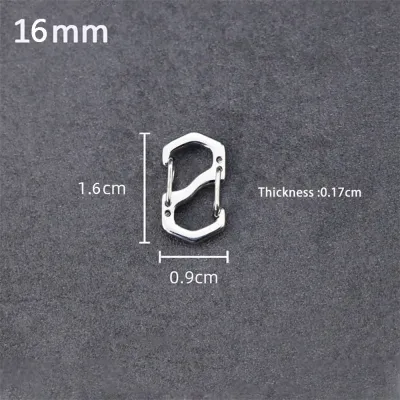
Prices are valid at publication and may change. Please refer to the product page for the latest price.
This rating is not uniform across the entire carabiner; it is highly dependent on the direction of the load. The major axis, which runs parallel to the solid spine of the carabiner, is the primary load-bearing direction and always boasts the highest rating. The minor axis runs perpendicular to the spine, placing the load directly against the gate. Because the gate is the weakest part of the structure, the minor axis rating (cross-load rating) is typically only a fraction of the major axis strength, often dropping from 24 kN down to 7 or 8 kN.
Another critical specification is the gate open strength rating. If a carabiner’s gate is accidentally held open by a strap or piece of fabric, the structural loop is broken, and the load-bearing capacity drops drastically. For instance, a climbing-grade carabiner that holds 24 kN when closed might only support 7 kN when open. This dramatic reduction highlights why proper gate closure is vital for safety.
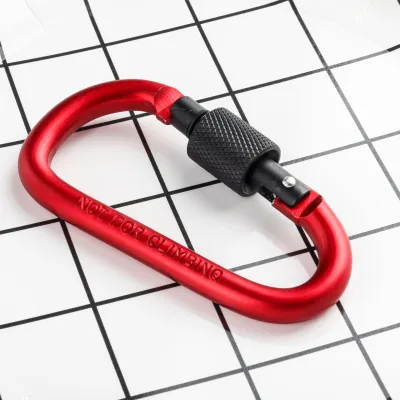
To ensure you are buying a reliable piece of hardware, look for official certification stamps on the spine. Certified climbing gear features stamps from the CE (Conformité Européenne) or the UIAA (International Climbing and Mountaineering Federation), alongside the specific EN 12275 standard. Conversely, cheap novelty clips will often be stamped with “Not for Climbing” or “Not for Safety,” indicating they have not undergone standardized stress testing and should never be trusted with valuable or heavy gear.
Calculating the Required Load Rating for Your Bag
Determining the right carabiner rating starts with assessing the static load of your bag. To do this, pack your bag with its maximum expected daily contents—including heavy items like a 15-inch laptop, a filled stainless steel water bottle, camera bodies, lenses, and external power banks—and weigh it using a luggage scale. A typical heavy commuter backpack or travel carry-on can easily weigh between 10 and 15 kilograms.

However, static weight is only a baseline. Everyday movements introduce dynamic loading, which refers to the sudden shock forces generated when an object in motion stops abruptly. When you walk quickly, run to catch an MRT train, climb stairs, or accidentally drop your bag a few inches onto a hook, gravity and acceleration multiply the force exerted on the carabiner. These sudden movements can easily multiply the static weight of your bag by 3 to 5 times, turning a 15-kilogram static load into a momentary 75-kilogram dynamic shock force.
To account for these dynamic spikes, you must establish a generous safety margin. While a dynamic force of 75 kilograms is technically under 1 kN, using a carabiner rated exactly to that limit leaves no room for material fatigue or improper loading. Choosing a climbing-grade carabiner rated for at least 10 kN (equivalent to 1,000 kilograms of static force) provides an exceptionally safe buffer. This high threshold ensures that even under extreme dynamic jolts, the metal remains well within its elastic limit and will not deform.
Environmental factors also play a massive role in material degradation over time. In tropical, high-humidity environments like Singapore, constant exposure to moisture, sweat, and coastal salt air accelerates metal oxidation and micro-corrosion. Over months of daily use, these environmental stressors can weaken unrated metals. Starting with a high-quality, anodized aluminum or stainless steel climbing carabiner with a high initial load rating ensures the connector remains safe even as it experiences minor surface wear.
Climbing-Grade vs. Accessory Carabiners: Safety Differences
Climbing-grade carabiners are highly engineered pieces of life-safety equipment. They are manufactured under strict quality control tolerances using premium alloys, such as 7075 aircraft-grade aluminum or high-strength stainless steel. Every batch undergoes rigorous destructive testing to ensure they can survive high-impact falls, and their rated strengths are clearly and permanently engraved on the body. These connectors are built to bend slightly under extreme, unexpected loads rather than snapping catastrophically without warning.
Accessory or keychain carabiners, on the other hand, are designed purely for convenience. They are typically constructed from cheap, low-grade cast aluminum, zinc alloys, or molded plastics. These materials are highly brittle and prone to hidden casting defects. Because they are intended only for lightweight items like keys, hand sanitizer bottles, or empty mugs, they lack standardized strength testing and rarely carry any load rating stamps.
Using an unrated accessory carabiner to secure a heavy backpack presents severe failure risks. Under the sudden dynamic jerk of a heavy bag shifting during transit, a cast-aluminum accessory clip can snap instantly. This sudden failure can drop your bag onto concrete, shattering expensive laptops or camera lenses, or cause the bag to fall into the path of other commuters, creating a serious safety hazard.
To protect your gear and those around you, adopt a strict purchasing rule: always use certified climbing-grade or explicitly rated industrial carabiners when attaching heavy daily carry bags, travel backpacks, or camera cases. If the manufacturer of the carabiner cannot provide a certified kilonewton or working load limit rating, the clip should be restricted strictly to holding keys and lightweight accessories.
Proper Attachment and Usage Precautions
Even the strongest climbing carabiner can fail if it is loaded incorrectly. Carabiners are designed to bear loads exclusively along their major axis, where the force pulls directly down the solid metal spine. If the carabiner rotates during use and the load shifts to the minor axis (known as cross-loading), its strength is cut by more than half. Tri-loading occurs when forces pull the carabiner in three different directions simultaneously, which twists the frame and drastically reduces its breaking point.
To prevent these dangerous loading configurations, you must ensure proper gate closure. After clipping your bag to an anchor point, double-check that the gate has snapped completely shut. For securing heavy bags during active travel, locking carabiners are highly recommended. Utilizing a screwgate, twist-lock, or auto-locking mechanism prevents the gate from accidentally rubbing or vibrating open against your clothing, bag straps, or external obstacles.
Incompatible anchor points are another common cause of carabiner failure. Avoid clipping your carabiner to exceptionally thick straps, wide metal bars, or rigid loops that force the gate to remain partially open. If the gate cannot close completely, the carabiner is forced to bear the load in its weakest state. Additionally, avoid clipping onto sharp metal edges, which can gouge the aluminum spine and create deep scratches that act as stress concentrators, leading to premature cracking.
Finally, be vigilant against “nose hooking.” This occurs when the loop or strap of your bag catches on the small notch or tooth at the nose of the carabiner rather than sliding fully into the basket. When a load is applied to the very tip of the nose, it acts as a lever against the gate mechanism. This configuration can easily break the gate or nose under a fraction of the carabiner’s rated capacity, causing immediate failure.
When to Retire Your Carabiner: Inspection and Maintenance
Because carabiners used on bags are exposed to daily wear, dirt, and environmental elements, regular visual and functional inspections are essential to ensure continued safety. Set aside time every few months to inspect your hardware closely.
Visual Inspection Checklist
- Deep Grooves: Check the basket and spine for wear grooves caused by friction from bag straps or metal loops. If any groove is deeper than 1 millimeter, retire the carabiner.
- Sharp Edges and Burrs: Run your fingers along the metal to feel for sharp burrs or gouges that could cut your bag's straps.
- Cracks and Corrosion: Look closely for hairline cracks, especially around the hinge pin and the nose. Inspect for white, powdery oxidation (on aluminum) or rust (on steel).
- Deformation: Lay the carabiner on a flat surface or compare it to an identical new one to check if the spine or gate has bent out of shape.
Functional Testing
Open the gate fully and let it go. It should snap shut crisply and instantly without any hesitation. If the gate sticks, rubs against the nose, or fails to close completely on its own, it is no longer safe to use. If you are using a locking carabiner, spin the locking sleeve to ensure it rotates smoothly along the threads without grinding, sticking, or jamming.
Basic Maintenance Steps
To extend the lifespan of your carabiner, keep it clean. If it is exposed to mud, dirt, sweat, or salty coastal air, rinse it thoroughly under warm, fresh tap water. Use a soft toothbrush to gently scrub away grime from the gate hinge and spring bay. Allow the carabiner to air dry completely away from direct sunlight or high heat sources. If the gate action remains sluggish after cleaning, apply a single drop of a dry, wax-based bicycle chain lubricant directly to the hinge pin, open and close the gate a dozen times to distribute the fluid, and wipe away all excess lubricant with a clean cloth to prevent attracting dirt.
Clear Retirement Conditions
Never attempt to repair a cracked, bent, or structurally compromised carabiner. If a connector fails any part of your visual or functional inspection, or if it has survived a severe impact drop onto a hard surface, retire it immediately. To prevent yourself or anyone else from accidentally pulling it out of the trash and reusing it, physically destroy the retired carabiner by bending the gate with pliers or cutting the body before disposal.
Frequently Asked Questions (FAQ)
Can I use a keychain carabiner to carry my heavy backpack?
No, you should never use a standard keychain carabiner to carry a heavy backpack. Keychain carabiners are unrated accessory clips designed solely for lightweight items like keys or small accessories. They lack the structural integrity and standardized testing required to withstand dynamic shock forces. Under the weight of a loaded backpack, these brittle clips can snap unexpectedly during movement, resulting in damaged gear or personal injury.
Does a higher kN rating mean the carabiner is completely unbreakable?
No, a high kilonewton (kN) rating does not make a carabiner unbreakable. The stamped rating only applies under ideal laboratory conditions where the load is pulled perfectly along the major axis with the gate fully closed and locked. Real-world misuse—such as cross-loading, tri-loading, nose-hooking, or leveraging the carabiner over a sharp edge—can cause even a certified 24 kN climbing carabiner to fail under a fraction of its rated strength.
Are locking or non-locking carabiners better for attaching bags?
Locking carabiners are highly superior for securing bags. While non-locking snapgate carabiners are lightweight and fast to clip, their gates can easily be pushed open if they rub against clothing, straps, or external objects during transit. A locking carabiner (such as a screwgate or auto-locking model) ensures the gate remains physically locked shut, preventing accidental openings and keeping your valuable bag securely attached.
Community discussion
Share your experience or ask a question. Comments are reviewed before publication.