
To fit an air bike comfortably in a typical Singapore HDB flat, you generally need a dedicated floor area of at least 1.2 meters by 0.6 meters for the static footprint, plus an additional 0.5 meters of clearance on all sides to accommodate the moving handlebars and pedals safely. Because HDB layouts prioritize efficient space utilization, selecting the right size involves balancing the physical dimensions of the machine with your personal range of motion and the layout of your room.
Unlike standard stationary bikes, air bikes feature large, swinging handles and a wide front fan that can easily overwhelm a small room if not planned carefully. Ensuring you have enough clearance prevents accidental wall scrapes and allows you to train at high intensities without restriction.
Understanding Air Bike Footprint and Clearance Needs
The static footprint of an air bike—the actual metal base resting on the floor—is only half the story. The dynamic footprint includes the full sweep of the handlebars as they push forward and pull back, along with the lateral space your knees and elbows occupy during a hard sprint. If you only measure the static base, you risk setting up a machine that is dangerous to operate.
Products mentioned in this guide
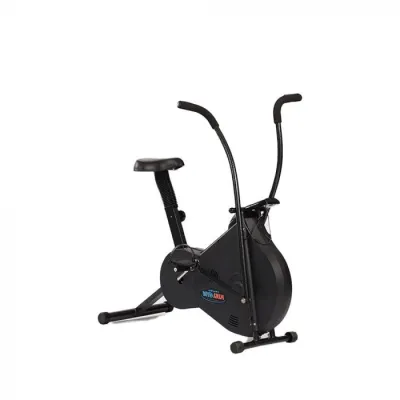
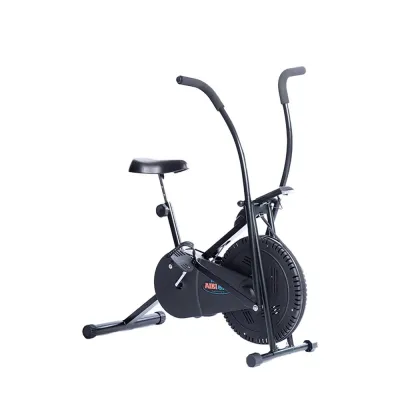
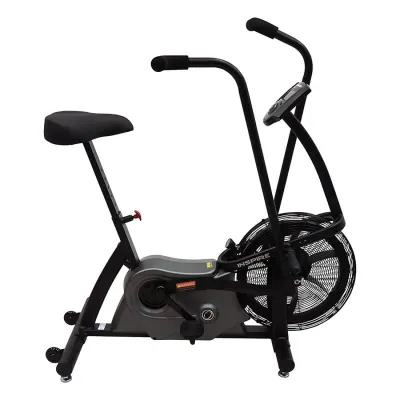
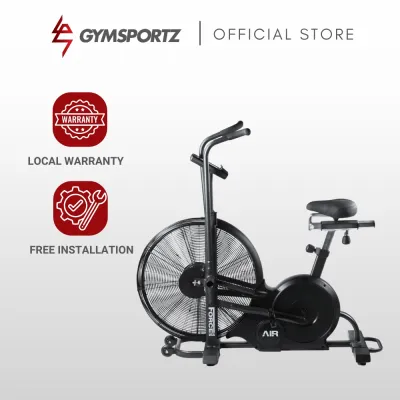

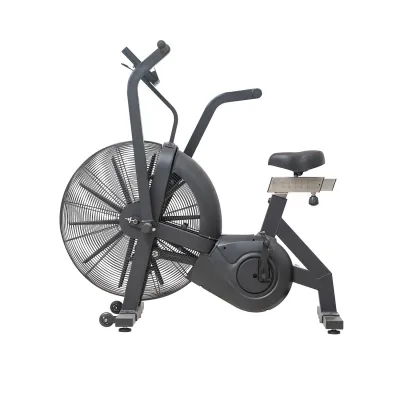
Prices are valid at publication and may change. Please refer to the product page for the latest price.
Before purchasing, check the manufacturer’s specifications for the maximum operational dimensions rather than relying on visual estimates from online photos. The fan housing at the front is often wider than the rear stabilizer bar, and the handles typically extend several centimeters beyond the frame’s base at their furthest extension points.
Your own body dimensions also dictate the actual space required. A taller user with a longer stride and arm reach will push the handlebars to their absolute mechanical limits. If you have a wider grip or flare your elbows during intense intervals, you must add this personal clearance buffer to the bike’s physical width to avoid hitting nearby walls or furniture.
Measuring Your HDB Flat for Cardio Equipment
HDB flats offer several potential zones for home workouts, such as a corner of the living room, a spare bedroom, or a covered service yard. When choosing a spot, consider the floor load limits and potential noise transmission. Air bikes generate substantial vibrations and wind noise, making solid concrete floors preferable over hollow partition walls.

It is not just about where the bike sits, but how it gets there. Measure your main door, bedroom doors, and the narrowest points of your hallway. Do not forget to check the dimensions of your HDB lift carriage and the communal corridor, as fully assembled or semi-assembled heavy cardio equipment can easily get stuck during delivery.
Air bikes are unique because the front fan generates a powerful stream of air. While this provides a cooling breeze during workouts, it also requires excellent room circulation. Placing the bike in a cramped, unventilated corner can lead to rapid heat buildup and stagnant air, so position the unit where air can flow freely from a window or ceiling fan.
Evaluating Air Bike Models for Compact Spaces
Standard commercial-grade air bikes are built with heavy-duty steel frames designed for maximum stability, but they carry a massive footprint. For HDB living, look for streamlined residential models that utilize slightly shorter frames and smaller fan diameters without sacrificing structural integrity.
Since dedicated workout rooms are a luxury in most flats, mobility is key. Ensure the model you choose features integrated transport wheels on the front stabilizer. This allows you to tilt the bike and roll it into a corner or against a wall when your workout is finished, keeping your living space clear.
Be cautious when opting for ultra-lightweight or overly compact air bikes. High-intensity interval training puts immense lateral force on the frame. A bike with a base that is too narrow or light may rock or slide during a sprint, which compromises safety; check the manufacturer’s maximum user weight rating and base width to ensure a stable ride.
Common Space Planning Mistakes to Avoid
The most common mistake is placing the bike’s base directly against a wall or next to a television console. When you begin pedaling, the handlebars swing forward and backward past the base frame, which can easily dent plaster walls, scratch paint, or smash into nearby electronics.
Many buyers measure their room perfectly but forget the journey from the delivery truck to the flat. HDB lifts can have tight door clearances, and older estates might have narrower lift doors or tight corridor corners. Always verify the packaged box dimensions against your building’s entryways before ordering.
Placing a heavy steel air bike directly on vinyl, laminate, or parquet flooring is a recipe for permanent damage. Sweat is highly corrosive and can ruin floor finishes, while the high-frequency vibrations from the fan and chain drive can disturb neighbors below. Always budget space and cost for a high-density rubber equipment mat to absorb impact and catch sweat.
Frequently Asked Questions (FAQ)
Can I keep an air bike on an HDB balcony?
Placing an air bike on an HDB balcony is generally not recommended unless the space is fully enclosed and climate-controlled. Singapore’s high humidity, frequent driving rain, and intense direct sunlight can rapidly corrode steel frames, degrade drive belts, and destroy sensitive electronic consoles. If you must use a semi-outdoor balcony, you must use a heavy-duty, waterproof weather cover when the bike is not in use, and regularly inspect the chain and bearings for rust. Additionally, ensure the bike does not block emergency escape routes or daily household access.
Do air bikes fold up for storage?
Unlike some light treadmills or basic magnetic exercise bikes, high-quality air bikes do not fold. The intense physical forces generated during high-intensity workouts require a rigid, fully welded steel frame to remain safe and stable. A folding hinge would introduce a weak point that could wobble or fail under load. Instead of folding, space-saving air bikes rely on compact frame designs, built-in transport wheels, and sometimes a vertical storage design that allows the bike to be tilted upward to rest on its front guard when not in use.
Community discussion
Share your experience or ask a question. Comments are reviewed before publication.