
Fitting an elliptical machine into a Singapore Housing & Development Board (HDB) flat is entirely possible, but it requires a strategic approach to spatial planning. Unlike simpler fitness equipment, an elliptical has moving parts that extend beyond its static metal frame during use. To avoid turning your living room or spare bedroom into an unusable obstacle course, you must evaluate floor space, ceiling height, and delivery access before making a purchase.
By understanding how to measure your home and interpret manufacturer specifications, you can find a machine that delivers an effective workout without compromising your living space. Balancing your physical needs, such as stride length, with the physical constraints of your apartment is the key to a successful home gym setup.
How to Measure Your Space for an Elliptical
Begin your spatial planning by measuring the exact floor footprint of the area where you plan to place the machine. Use a physical measuring tape rather than relying on visual estimation or digital apps. Mark this area on your floor using masking tape to help visualize how much floor space will be permanently occupied by the equipment.
Products mentioned in this guide
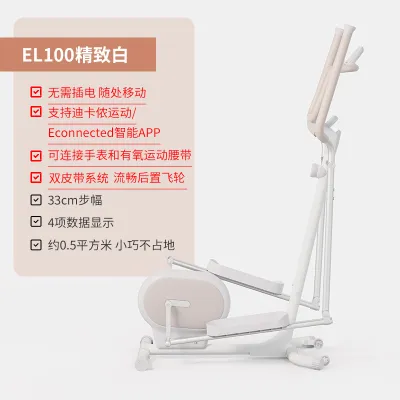
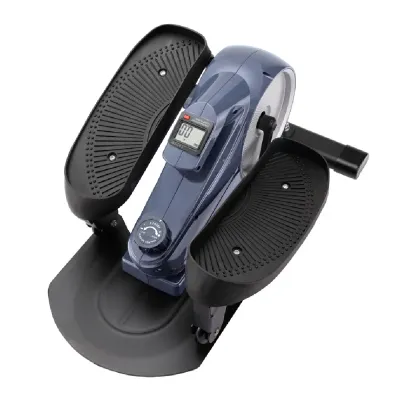
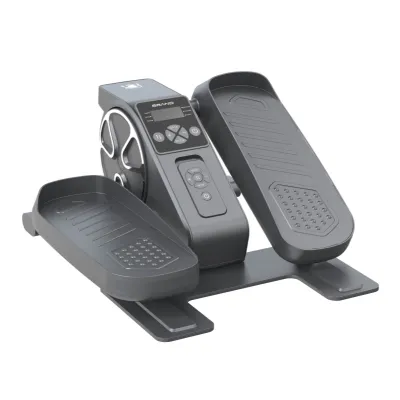

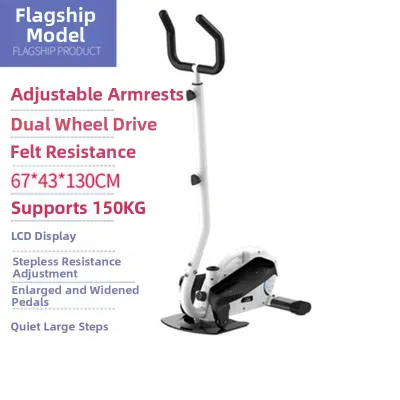
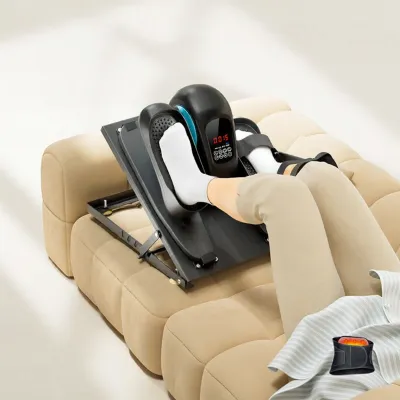
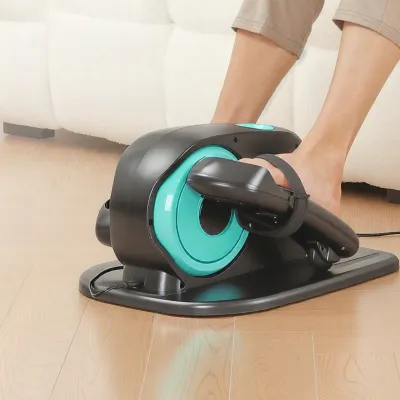
Prices are valid at publication and may change. Please refer to the product page for the latest price.
Next, calculate the vertical clearance, which is one of the most common oversights in HDB flats where standard ceiling heights typically range from 2.6 to 2.8 metres. To find your required ceiling height, add your own height to the machine’s maximum step-up height, which is the distance from the floor to the pedal at its highest point. Add an extra 15 to 20 centimetres of safety clearance to ensure your head does not contact the ceiling during high-intensity workouts or when using incline features.
Finally, map out the delivery pathway from the lift lobby to the final workout spot. A machine that fits perfectly in your bedroom is useless if it cannot get through the front door or navigate tight hallway turns. Measure the width of your main entrance, hallway corridors, and bedroom doors. Check the dimensions of the shipping box provided by the manufacturer, as unassembled units are often delivered in large, heavy boxes that require wide turning radiuses.
Calculating the True Footprint and Safety Clearances
Understanding the difference between static and operational footprints is critical for safe home workouts. The static footprint is the physical measurement of the machine’s base frame resting on the floor. The operational footprint, however, includes the space occupied by the moving handlebars and foot pedals as they glide through their full range of motion. On many models, the pedals or arms extend several centimetres past the front and rear of the frame during a stride.

Safety clearance zones are essential to prevent accidents and allow for emergency dismounts. You should maintain a minimum clearance of 50 to 60 centimetres on both sides of the machine. This lateral space ensures you can easily mount and dismount without squeezing against a wall or furniture. Additionally, keep at least 60 centimetres of clear space behind the machine to allow for a safe exit if you lose your balance.
Do not forget to look up and around when planning your layout. Ensure the console and moving handlebars do not interfere with wall-mounted air conditioning units, light fixtures, or ceiling fans. Operating an elliptical directly beneath a spinning ceiling fan poses a severe safety hazard. You must also leave a small gap around the motor housing to allow proper ventilation and prevent the machine from overheating during long cardio sessions.
Balancing Stride Length with Compact Frame Limits
When searching for a compact elliptical to fit a cozy HDB layout, you will face a direct trade-off between the machine’s physical size and its stride length. Stride length is the distance between your front heel and rear toe at the widest point of your elliptical path. A natural, joint-friendly stride is crucial for preventing knee, hip, and lower back strain during repetitive cardio workouts.
Compact or foldable ellipticals often achieve their small footprints by shortening the internal drive mechanisms, which inherently limits the stride length. While a shorter stride length of 30 to 40 centimetres might feel acceptable for shorter users, taller individuals will find it restricts their natural gait, leading to a choppy, uncomfortable stepping motion rather than a smooth glide.
To find the right balance, check the manufacturer’s specifications and match the stride range to the primary users in your household. As a general guideline, users under 160 centimetres tall can comfortably use a 40-centimetre stride, while those over 175 centimetres typically require a stride length of 45 to 50 centimetres. If space is tight, look for mid-drive designs that offer a full stride length while keeping the overall frame length relatively short.
Evaluating Space-Saving Features and Room Layouts
The drive design of an elliptical heavily influences how it fits into your room layout. Front-drive ellipticals tend to have a more vertical, compact frame but can feel long during use. Rear-drive models often provide a very smooth, traditional stride but usually require a longer static footprint and cannot be pushed flush against a wall due to the moving rear track. Mid-drive models place the flywheels on either side of the user, offering the most compact footprint, though they are often wider.
If you are placing the machine in a multi-purpose space like a living room or study, look for models equipped with heavy-duty transport wheels. These wheels allow you to tilt and roll the machine out of the way when guests visit. Folding ellipticals are another excellent option for HDB flats; these designs allow you to fold the pedal deck upward, reducing the static footprint by up to half when the machine is idle.
When positioning your machine, plan your layout around your power source. Motorized ellipticals require proximity to a standard wall outlet to power the console and resistance systems. Avoid running long extension cords across high-traffic walkways, as this creates a serious tripping hazard. Position the machine so the power cord runs directly along a wall, keeping the main pathways of your home completely clear.
Common Space Planning Mistakes to Avoid
One of the most frequent mistakes is ignoring the vertical clearance required for high-intensity intervals or incline adjustments. If your elliptical features an adjustable incline, the step-up height increases significantly at higher settings. Failing to account for this can result in painful head strikes against the ceiling or light fixtures when you try to increase the workout intensity.
Another common error is neglecting the delivery pathway. Buyers often focus solely on the final workout spot and forget that delivery personnel must navigate tight HDB corridors, lift lobbies, and narrow bedroom doors. If your doorway is narrower than the boxed machine’s width, you may face unexpected assembly fees or be forced to return the unit.
Lastly, do not underestimate the lateral space needed to access the console and perform routine maintenance. You will need to periodically clean the tracks, lubricate moving joints, and access the power switch, which is often located near the bottom of the frame. Leaving insufficient space around the machine makes these simple tasks incredibly difficult and can lead to premature wear on your equipment.
Frequently Asked Questions (FAQ)
Can I place an elliptical machine on a carpet or vinyl flooring?
Yes, but you should always use a high-density equipment mat underneath the machine. Placing a heavy elliptical directly on vinyl flooring can cause permanent indentations or scratches from the metal frame and vibrations. On carpeted floors, the machine can trap dust and fibers in its tracks and rollers, leading to premature wear of the moving parts. A dedicated equipment mat distributes the machine’s weight evenly, dampens noise and vibration, and protects your flooring from sweat and mechanical grease.
Do I need a dedicated power outlet for a home elliptical?
While most home ellipticals do not require a dedicated circuit like a heavy-duty treadmill, they still need a stable power supply. Always check the manufacturer’s voltage and amperage requirements to ensure compatibility with standard household outlets. Avoid plugging the machine into overloaded extension cords or sharing an outlet with other high-draw appliances. Keep the power cable neatly routed along the baseboards to prevent tripping hazards in your workout area.
Community discussion
Share your experience or ask a question. Comments are reviewed before publication.