
Selecting the right exercise ball size is essential for maintaining proper posture, protecting your joints, and ensuring your workouts are effective. To find the correct diameter, you must match your height to the ball’s dimensions so that your body can maintain a natural, balanced alignment during use. Sitting on a ball that is too large or too small forces your muscles to overcompensate, which can lead to fatigue or strain.
Generally, manufacturers categorize exercise balls by their maximum inflated diameter, ranging from 45 cm to 75 cm or larger. Adults under 152 cm usually require a 45 cm ball, while those between 155 cm and 173 cm typically fit a 55 cm ball. If your height is between 175 cm and 188 cm, a 65 cm ball is standard, and individuals taller than 188 cm should look for a 75 cm option. However, these general brackets serve as a starting point; physical proportions and inflation levels will influence your final choice.
The Golden Rule: How Your Height Dictates Exercise Ball Diameter
The primary biomechanical standard for choosing an exercise ball is the 90-degree rule. When you sit upright on the center of the ball with your feet flat on the floor, your hips should be level with or slightly higher than your knees. This position ensures that your thighs are parallel to the ground or sloping slightly downward, which keeps your pelvis in a neutral position.
Products mentioned in this guide
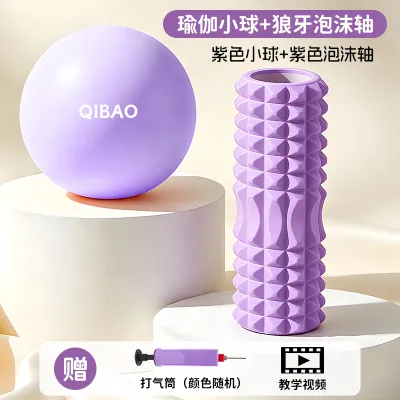
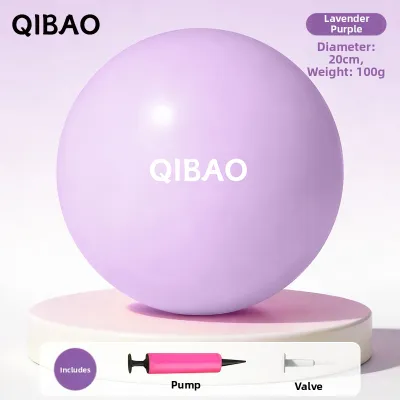
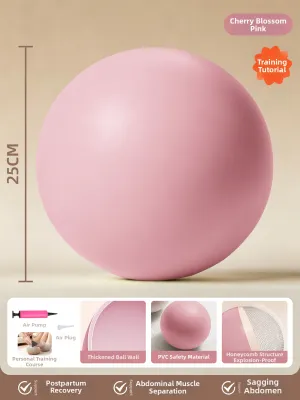
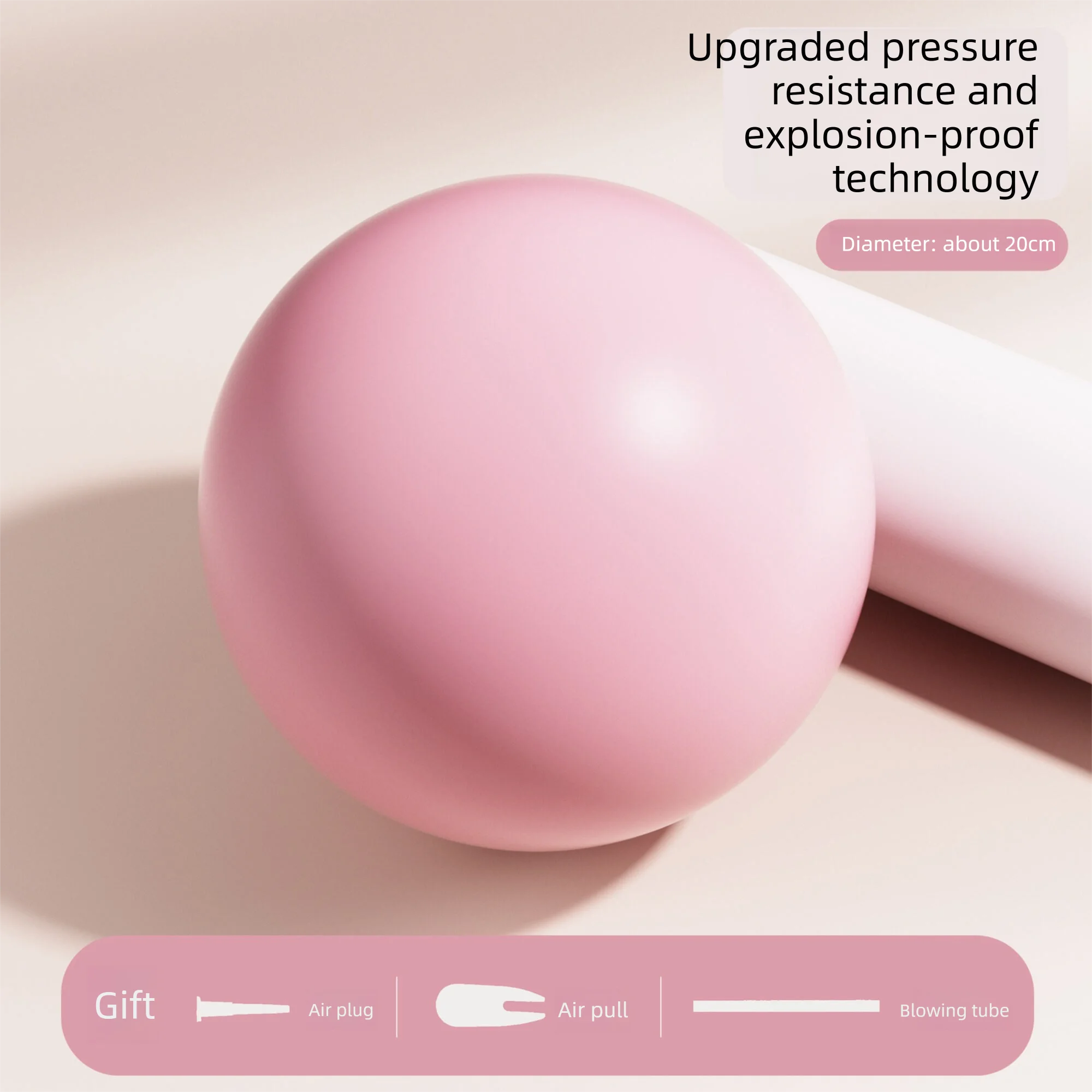
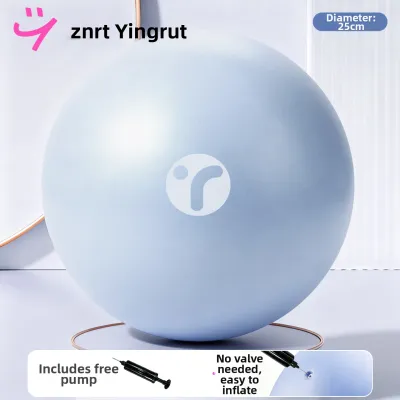
Prices are valid at publication and may change. Please refer to the product page for the latest price.
Maintaining this neutral pelvic alignment is crucial for core engagement and spinal safety. If the ball is too small, your knees will sit higher than your hips, forcing your pelvis to tilt backward and causing your lower back to round. This slouched posture places excessive pressure on your lumbar discs and prevents your deep core muscles from activating properly. Conversely, a ball that is too large will force you to tiptoe to maintain balance, which strains your hip flexors and reduces your stability.
It is important to understand that the size printed on the box—such as 55 cm or 65 cm—refers to the nominal diameter of the ball when it is fully inflated to its maximum capacity. This measurement represents the total height of the uncompressed sphere. Once you sit on the ball, your body weight will compress it, reducing its height. Therefore, you must account for this compression when evaluating how the ball fits your body.
How to Read Size Charts and Account for Inflation Variables
While general sizing guidelines are helpful, you should always consult the specific manufacturer’s height-to-diameter chart before purchasing. Different brands use varying PVC thicknesses and material blends, which directly affect how much the ball stretches and compresses under load. A chart from one brand may not closely align with another, making the manufacturer’s specific instructions your most reliable reference.

Several physical variables will alter the ball’s effective seated height once it is in your home or gym. The level of inflation is the most controllable factor; a ball inflated to its maximum limit will feel firm and sit higher, while a slightly under-inflated ball will compress more under your weight. Additionally, your body weight plays a significant role. Heavier users will experience greater compression and may need to choose a firmer material or select the upper end of a size recommendation to maintain the correct knee angle.
When shopping, you should verify secondary specifications such as anti-burst ratings and surface textures. Anti-burst technology is designed to ensure that if the ball is punctured, it deflates slowly rather than popping suddenly, which helps prevent falls. Textured surfaces or matte finishes provide essential grip on smooth floors. While these features are critical for safety and performance, they do not replace the need to get the correct base diameter for your height.
How to Test and Adjust Your Ball for Proper Posture
Achieving the correct fit requires proper setup and testing after you bring your exercise ball home. When inflating a new ball for the first time, fill it to approximately 80% of its maximum size and let it rest for 24 hours. This resting period allows the PVC material to stretch and acclimate to the air pressure safely, preventing uneven stretching or premature wear. After 24 hours, finish inflating the ball to its designated diameter.
To verify the fit, perform a simple wall-mark test or a mirror check. Place the fully inflated ball against a flat wall and sit on it with your feet flat on the floor, spaced about shoulder-width apart. Look at your reflection or have someone check your posture from the side. Verify that your knees form a 90-degree angle and that your thighs are parallel to the floor. If your heels lift off the ground or your knees are bent at an acute angle, you will need to adjust the air pressure.
You can fine-tune the ball’s stability by adjusting the inflation level within the manufacturer’s safe limits. Beginners or those using the ball for rehabilitation often benefit from slightly under-inflating the ball. A softer ball creates a larger, flatter contact area with the floor, which increases stability and makes balance easier to maintain. As your core strength and balance improve, you can add more air to create a firmer, more challenging surface that requires greater muscular engagement.
When to Size Up or Down: Proportions and Desk Use
Standard height-based sizing charts assume average body proportions, but individual differences in limb length can require adjustments. If you have exceptionally long legs relative to your torso, you may find that a standard ball size causes your knees to bend too sharply. In this case, sizing up to the next diameter will help you achieve the correct 90-degree angle. Conversely, if you have a longer torso and shorter legs, sizing down ensures your feet can rest firmly on the floor for safety.
Using an exercise ball as an active sitting chair at a desk is another scenario that requires special consideration. Standard office desks in Singapore typically measure between 70 cm and 75 cm in height. To reach your keyboard comfortably without hunching your shoulders, you may need to select a ball that is one size larger than what you would use for exercise. For example, if your height suggests a 55 cm ball for workouts, a 65 cm ball inflated firmly may be necessary to align your elbows comfortably with your desk surface.
While active sitting can encourage subtle movement throughout the day, an exercise ball does not provide the lumbar support of an ergonomic chair. If you experience persistent joint discomfort, lower back strain, or hip pain while using the ball, stop using it immediately. Equipment cannot replace professional guidance; consult a physical therapist or an ergonomic specialist to assess your workspace setup and ensure you are not causing long-term strain to your body.
Frequently Asked Questions (FAQ)
Can two people of different heights share the same exercise ball?
Sharing a single exercise ball between individuals of different heights is generally not recommended. To maintain proper posture and safety, the ball must be inflated to a specific diameter that matches the user’s height. Constantly inflating or deflating the ball to accommodate different users is time-consuming and can accelerate wear on the valve and material. Investing in separate, correctly sized balls—typically costing around S$20 to S$40 each—is a much safer and more practical solution for a shared household.
What if my height falls exactly between two recommended sizes?
If your height falls directly on the boundary between two sizes, your primary use case should dictate your decision. Sizing up and slightly under-inflating the ball is generally the preferred approach, as it provides a wider, more stable base of support while still allowing you to achieve the correct seated height. Sizing down and over-inflating the ball is highly discouraged, as over-inflation makes the ball excessively hard, reduces its grip on the floor, and increases the risk of material failure.
Community discussion
Share your experience or ask a question. Comments are reviewed before publication.