
Selecting the right kids tennis bag involves balancing your child’s age, physical stature, and the actual equipment they need to carry. A bag that is too large can strain a growing child’s shoulders and back, while one that is too small forces them to cram gear together, risking damage to expensive rackets. By matching the bag’s capacity and carrying style to your child’s developmental stage and daily schedule, you can ensure they travel to and from the court comfortably and safely.
Assess Your Child's Daily Tennis Load
When evaluating potential bags, the first step is to analyze exactly what your child needs to carry on a typical training day. Overestimating or underestimating this load leads to buying a bag that is either too bulky for their frame or too small to be practical.
Racket Count and Size Junior rackets range from 19 to 26 inches in length, designed specifically for younger players, before transitioning to standard 27-inch adult rackets around age 13 or 14. Beginners typically start with a single racket, but as they progress to playing matches, carrying a backup racket becomes necessary to handle broken strings. You must assess whether the bag needs to accommodate these shorter junior frames or if it must fit full-sized adult rackets that your teenager is starting to use.
Products mentioned in this guide
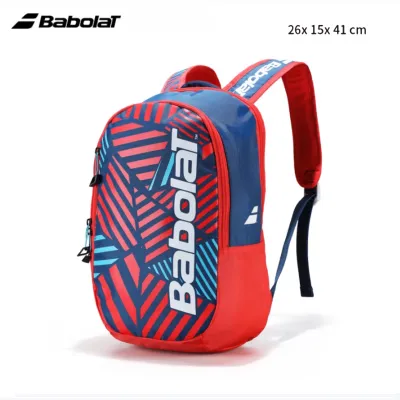
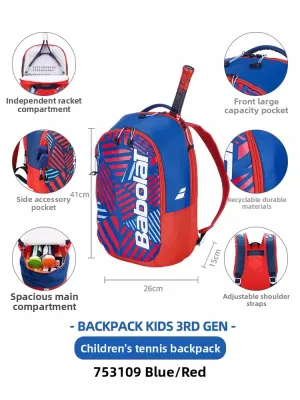
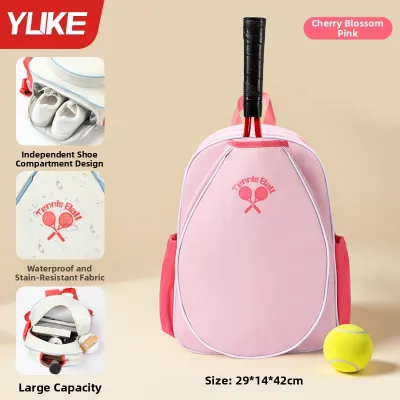
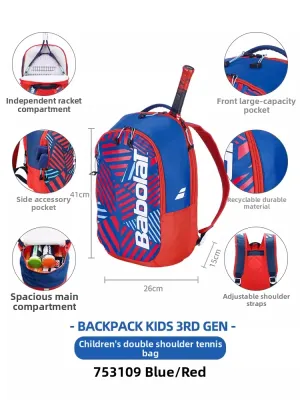
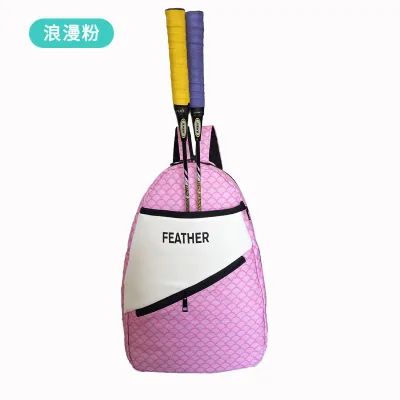
Prices are valid at publication and may change. Please refer to the product page for the latest price.
Off-Court Essentials In Singapore, young players often head straight to the tennis court after school, meaning their bag must carry more than just sports gear. A proper kids tennis bag needs to accommodate a large insulated water bottle (often 1 to 1.5 liters to stay hydrated in tropical heat), a fresh change of clothes, a sweat towel, and post-practice snacks. Additionally, if your child commutes directly from school, the bag may need extra compartments or a separate sleeve to protect schoolbooks, homework folders, or a tablet.
Carrying Method The way your child travels to the court dictates the best bag style. If they rely on public transport like the MRT or public buses, carrying a heavy single-strap duffel bag can cause uneven weight distribution, leading to poor posture or shoulder strain. An ergonomic backpack with dual shoulder straps is highly preferable for active commutes, keeping their hands free and distributing the weight evenly across their growing shoulders and spine.
Match Bag Size and Capacity to Age and Skill Level
As children grow, both their physical strength and their commitment to tennis evolve. Matching the bag’s physical dimensions and storage capacity to their age group ensures they can carry their own gear without physical strain.

Younger Beginners (Ages 5–9) For children in this age bracket, simplicity and lightweight designs are paramount. Most players at this stage use junior rackets measuring 19 to 25 inches and only need to carry one racket to their weekly lessons. A specialized junior backpack is the ideal kids tennis bag for this group, as it is scaled down to fit smaller torsos without hanging too low or dragging on the ground.
When choosing a bag for younger beginners, verify that the racket compartment securely holds a junior racket without letting the handle wobble excessively. The main compartment should have just enough space for a small water bottle, a hand towel, and a light snack. Avoid buying an oversized bag with the expectation that they will grow into it, as a bag that is too heavy or bulky can discourage them from carrying their own gear and lead to physical discomfort.
Intermediate Players (Ages 10–14) As children enter pre-teen years and transition to intermediate training, their gear requirements increase. They typically use 25-inch to 26-inch junior rackets or start experimenting with lightweight 27-inch adult rackets. At this stage, players often carry two rackets to practice, alongside specialized tennis shoes, wristbands, and extra hydration.
Look for mid-sized tennis backpacks or 3-pack racket bags that feature dedicated shoe compartments. Keeping court shoes separate from clean clothing and schoolwork is essential for hygiene, especially after playing on dusty hard courts or damp surfaces. Additionally, check for bags with integrated wet/dry separation pockets, which allow damp shirts and sweaty towels to be isolated from the rest of the bag’s contents.
Advanced Teens (Ages 15+) Teenagers playing at a competitive or advanced level require bags that can accommodate standard 27-inch adult rackets, often carrying three or more frames to tournaments. At this point, they are ready to transition to full-sized adult 3-pack or 6-pack racket bags, or high-capacity tournament backpacks.
Before purchasing an adult-sized bag for a teenager, closely evaluate the strap adjustability and torso length compatibility. An adult bag that sits too low on a teenager’s back can cause them to arch their spine unnaturally to compensate for the weight. Ensure the shoulder straps can be adjusted tightly enough to keep the bag flush against their upper back, distributing the load across the hips and shoulders rather than pulling on the lower back.
Essential Features for Singapore's Climate and Commutes
Beyond raw size and capacity, specific design elements directly affect how well a tennis bag protects equipment and remains comfortable during daily use in a tropical environment.
Thermal Protection The intense tropical heat in Singapore can quickly degrade tennis equipment. High temperatures cause racket strings to lose tension rapidly, which directly affects a player’s control on the court. Furthermore, extreme heat can compromise the structural integrity of composite racket frames left in warm environments.
To safeguard your child’s equipment, look for a kids tennis bag that features thermal-lined compartments. These pockets are designed with specialized insulating materials that shield rackets from external temperature spikes. Additionally, these insulated compartments are excellent for keeping water bottles cool, ensuring your child has access to refreshing hydration throughout their training session.
Ventilation and Moisture Management Singapore’s high humidity levels create a prime environment for mold, mildew, and unpleasant odors to develop inside enclosed spaces. A tennis bag packed with damp clothes, sweaty socks, and court shoes will quickly become unhygienic if it lacks proper airflow.
Prioritize bags that feature ventilated compartments, which are typically equipped with mesh panels or metal grommets that allow air to circulate freely. Dedicated shoe pockets should always be ventilated to help dry out court shoes post-practice. Instructing your child to unzip these compartments as soon as they get home will further prevent the buildup of bacteria and keep their gear smelling fresh.
Ergonomics and Fit Carrying tennis gear alongside school supplies can result in a heavy load for a developing child. To prevent muscle fatigue and posture issues, pay close attention to the ergonomic design of the bag’s straps and back panel.
The shoulder straps should be wide, heavily padded, and easily adjustable to match your child’s height. For older children carrying multiple rackets and heavy water bottles, look for bags that include an adjustable chest (sternum) strap or a waist belt. These additional straps help stabilize the bag against the body, preventing it from swaying side-to-side during active commutes on public transit or while walking to the courts.
Durability and Weather Resistance Sudden tropical downpours are a regular occurrence in Singapore, meaning a tennis bag must be able to withstand unexpected rain. Additionally, tennis bags are frequently tossed onto rough concrete court surfaces, benches, or grass, requiring highly durable materials.
Check the manufacturer’s specifications for the fabric’s denier rating, where a higher number (such as 600D or 900D polyester) indicates a thicker, more tear-resistant weave. Look for bags treated with water-resistant polyurethane (PU) coatings or those featuring a tarpaulin-reinforced base. Water-resistant zippers are another valuable feature, preventing rainwater from seeping through the seams and damaging schoolbooks or electronic devices stored inside.
Signs It Is Time to Upgrade Their Tennis Bag
Children grow rapidly, and their commitment to tennis can deepen over a single season. Monitoring how they use their current bag helps you identify when it is time to transition to a more suitable model.
Observable Capacity Limits As your child grows and their tennis commitment deepens, their original bag will eventually fall short of their needs. Clear physical indicators that a bag is too small include zippers that strain or split when closing, racket handles that stick out at awkward angles, and a lack of space to fit essential items like a water bottle or a change of clothes. If your child is forced to carry their water bottle or shoes in their hands because their bag is completely packed, it is a clear sign that they require a larger capacity model.
Physical Discomfort A bag that no longer fits your child’s body can lead to physical strain and discomfort. Pay attention if your child complains of shoulder, neck, or lower back pain after their commute to the court. If you notice that the shoulder straps are adjusted to their maximum length but the bag still sits too high, pinches their armpits, or digs into their neck, the bag’s physical dimensions are no longer compatible with their height and frame.
Action Paths When your child’s current bag is no longer meeting their needs, you have three primary courses of action:
- Reorganize: Before purchasing a new bag, conduct a thorough cleanout. Remove old tennis balls, empty plastic bottles, and non-essential items. Utilizing small packing cubes can help maximize internal space and keep gear organized.
- Repurpose: If the bag is still structurally sound but simply too small to hold their expanding tennis gear, transition it into a dedicated school bag, gym bag, or casual travel backpack.
- Upgrade: If reorganizing does not solve the space issue, or if the bag is causing physical discomfort, it is time to upgrade. Select a bag from the next size tier or transition from a basic single-strap model to an ergonomic backpack with advanced support features.
Frequently Asked Questions (FAQ)
Can my child use a regular school backpack for tennis?
While a standard school backpack can temporarily hold a junior racket and a few tennis balls for a casual weekend hit, it is not recommended for regular training. School backpacks generally lack specialized, padded racket compartments, leaving the frame and strings vulnerable to damage from other heavy items like textbooks. Furthermore, standard backpacks do not offer thermal protection to preserve string tension, nor do they feature ventilated compartments to isolate sweaty clothes and dirty court shoes, which can quickly lead to hygiene and odor issues. For consistent training, investing in a dedicated kids tennis bag is highly recommended to protect both their sports equipment and school supplies.
How do I check if a junior racket fits properly inside the bag?
To verify if a racket will fit comfortably inside a specific bag, first measure the child’s longest racket from the very top of the frame head down to the butt cap at the base of the grip. Next, compare this total length against the internal dimensions provided by the bag manufacturer, paying close attention to the designated racket compartment length. Ensure there is at least a one-to-two-centimeter clearance so the racket grip does not press tightly against the zipper or bottom seams. A fit that is too tight can put unnecessary pressure on the zipper teeth, causing them to split over time, and may damage the racket’s grip tape or frame during transit.
Community discussion
Share your experience or ask a question. Comments are reviewed before publication.