
Selecting the right outboard fuel tank (often searched by boaters as an outboat fuel tank) is a balancing act between securing enough range for your excursion and keeping your vessel safe, stable, and light. Unlike larger vessels with built-in under-floor fuel systems, motorized kayaks and small utility boats rely entirely on portable external tanks. On these compact watercraft, every kilogram of added weight and every centimeter of deck space directly impacts stability, maneuverability, and safety.
To find the ideal capacity, you must evaluate your motor’s fuel consumption rate, planned trip duration, and the physical limits of your vessel. Carrying too little fuel leaves you stranded in open water, while carrying too much can dangerously lower your boat’s freeboard or cause it to list. By applying a simple mathematical formula and cross-referencing the result with your watercraft’s weight distribution limits, you can confidently select a tank size that ensures a safe and enjoyable day on the water.
How to Calculate Your Required Outboard Fuel Tank Capacity
Determining your required fuel capacity begins with a straightforward mathematical calculation. Rather than guessing your fuel needs, you can establish a reliable baseline by multiplying your engine’s hourly fuel consumption by your expected active motoring hours, then adding a non-negotiable safety margin.
Products mentioned in this guide
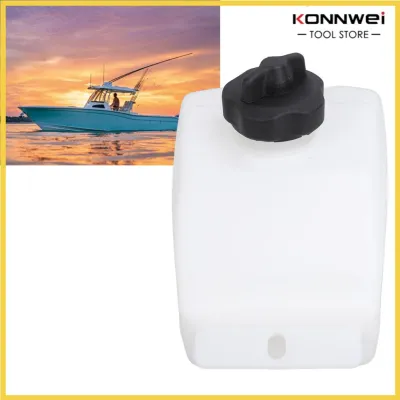
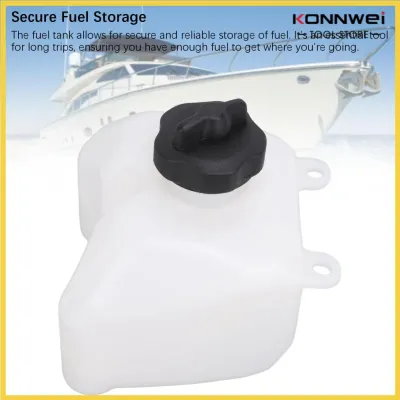
Prices are valid at publication and may change. Please refer to the product page for the latest price.
The standard formula for calculating your fuel requirement is:
Required Fuel Capacity = (Estimated Hourly Fuel Consumption × Expected Hours on the Water) × 1.20
The extra 20% represents a critical safety reserve. This buffer ensures you have enough fuel to handle unexpected head currents, detours, sudden wind shifts, or prolonged idling without the risk of running dry before reaching the boat ramp.
To estimate your hourly fuel consumption, you can use a widely accepted marine industry guideline. Under wide-open throttle (WOT), a modern four-stroke outboard motor typically consumes approximately 10% of its rated horsepower in gallons per hour (GPH). For example, a 10 HP outboard motor running at full speed will burn roughly 1.0 gallon (about 3.8 liters) of fuel per hour. If you plan to cruise at a more efficient mid-range throttle (often called the engine’s “sweet spot”), this rate generally drops by 30% to 50%, but using the maximum consumption rate for your calculations provides an essential safety cushion.
Actual fuel consumption rates fluctuate significantly based on real-world operating conditions. A heavily loaded boat carrying multiple passengers and dense fishing gear requires more throttle to maintain speed, which rapidly increases fuel burn. Similarly, fighting strong tidal currents, choppy waves, or stiff headwinds forces the motor to work harder, dragging down your fuel efficiency. Always treat your calculated baseline as a starting point that must be adjusted upward if you anticipate challenging weather or heavy cargo loads.
Once you have calculated this mathematical baseline, you must cross-reference it with the physical limitations of your watercraft. A calculation might suggest that an all-day coastal cruise requires a 6-gallon tank, but if you are paddling a narrow motorized kayak, placing that much weight on the deck could severely compromise your safety. The physical weight and space limits of your specific boat must always dictate the final size of the tank you bring on board.
Recommended Tank Sizes by Motor and Watercraft
Different watercraft and motor combinations have distinct weight tolerances and fuel requirements. Matching your outboard fuel tank to your specific vessel type ensures you maintain proper balance and performance while carrying sufficient fuel.

Motorized Kayaks and Canoes (1 HP to 5 HP)
For motorized kayaks, canoes, and square-stern tenders powered by micro-outboard motors ranging from 1 HP to 5 HP, the typical recommended external tank size is 1 to 3 gallons (approximately 3.8 to 11.4 liters). These narrow, low-profile vessels have exceptionally strict weight and space limits, making large tanks highly impractical and dangerous.
Because kayaks have narrow beams, they are highly sensitive to changes in their center of gravity. A 3-gallon tank filled with gasoline weighs roughly 10 kilograms; if this weight is placed too high or too far to one side, it raises the vessel’s center of gravity and severely reduces its secondary stability. Boaters must prioritize lightweight, low-profile portable tanks that can be lashed down low along the centerline, typically in the kayak’s rear tank well, to prevent tipping in rough water or during sharp turns.
Many small 2-stroke or 4-stroke motors in the 1 HP to 3 HP range feature built-in internal fuel tanks, which typically hold between 0.5 and 1.5 liters of fuel. For short trips in calm, sheltered waters—such as reservoir fishing or exploring slow-moving rivers—relying solely on this internal tank may eliminate the need for an external tank entirely, keeping your deck clean and clutter-free. However, if you plan to venture farther, carrying a compact 1-gallon external tank provides an excellent, lightweight safety reserve without cluttering your limited cockpit space.
Small Boats, Dinghies, and Micro-Skiffs (5 HP to 15 HP)
For small aluminum utility boats, inflatable dinghies, and micro-skiffs powered by 5 HP to 15 HP outboard motors, the standard tank size ranges from 3 to 6 gallons (approximately 11.4 to 22.7 liters). These vessels can handle more weight than a kayak, but they still require careful planning to maintain optimal hull performance.
When choosing a tank size for this category, you must balance your desire for extended range against the physical weight of a full tank. A 6-gallon plastic tank filled with fuel weighs approximately 20 kilograms. On a small 3-meter boat, placing this much concentrated weight at the transom alongside a heavy outboard motor can severely affect the boat’s trim. This stern-heavy imbalance can cause excessive bow rise, prevent the hull from getting on a plane, and increase fuel consumption by forcing the motor to plow through the water rather than glide over it.
To decide between a 3-gallon and a 6-gallon tank, evaluate your typical trip distance and fuel availability. If you primarily use your boat for short runs to nearby fishing spots or as a tender to transport passengers from a dock to a moored yacht, a compact 3-gallon tank is ideal because it keeps the boat light, agile, and easy to plane. If you plan to embark on long-distance coastal exploration or visit remote areas where refueling is impossible, upgrade to a 6-gallon tank, but be prepared to offset the stern weight by moving heavy gear, anchor chains, or passengers toward the bow.
Measuring Space and Managing Weight on Board
Before purchasing an outboard fuel tank, you must carefully evaluate how its physical dimensions and weight will interact with your watercraft’s layout and handling characteristics.
- Weight Distribution: Gasoline weighs approximately 6 pounds per gallon (0.72 kg per liter). When you add the weight of the heavy-duty plastic or metal tank itself, a full 6-gallon setup can easily exceed 21 kilograms. In a small boat, this weight must be distributed to keep the vessel level both from bow to stern and from port to starboard. In a kayak, always secure the tank along the centerline to prevent a dangerous list that could lead to a capsize.
- Measuring Available Space: Use a tape measure to determine the exact dimensions of your planned storage area, whether it is the rear deck of a kayak, the space beneath a dinghy's transom seat, or a designated forward storage locker. Compare these measurements against the manufacturer's tank specifications. Keep in mind that plastic fuel tanks can expand slightly when exposed to direct sunlight and high ambient temperatures, so leave a small clearance margin around the tank.
- Clearance Requirements: Do not just measure the footprint of the tank itself; you must also account for the clearance required for the fuel line, the primer bulb, and the quick-connect fittings. If these components are forced into a tight space, the fuel hose can easily kink, restricting fuel flow to the engine and causing it to stall. Additionally, ensure the fuel line is routed away from high-traffic areas on deck to prevent tripping hazards or accidental disconnections.
- Ventilation Rules: Portable outboard fuel tanks must never be stored or operated inside completely sealed, unventilated compartments. Gasoline vaporizes readily in warm climates, and if these highly flammable fumes accumulate in an enclosed space, a single spark from an electrical connection or engine starter can cause a catastrophic explosion. Always operate and store your portable tank in an open, well-ventilated area of the deck.
Common Sizing Mistakes to Avoid
Avoiding common tank selection errors can save you from poor boat performance, fuel system damage, or dangerous situations on the water.
- Oversizing for a Kayak: It is tempting to buy the largest tank available to maximize your range, but placing a heavy 6-gallon tank on a kayak paired with a 2 HP motor is highly dangerous. The excessive weight lowers your freeboard, making the kayak vulnerable to swamping by passing boat wakes, and ruins the vessel's tracking and paddling performance.
- Undersizing for a Dinghy: Conversely, attempting to run a 10 HP or 15 HP motor on a tiny 1-gallon tank to save deck space is highly risky. These larger motors consume fuel rapidly at high throttle settings, and an undersized tank will leave you with an extremely limited operational radius, forcing you to perform frequent, dangerous refuelings on open water.
- Ignoring "Usable" Capacity: Many boaters assume they can use every drop of fuel listed on the tank's capacity label. However, portable marine tanks utilize a rigid internal pickup tube that extends down from the top fitting. To prevent sucking up sediment, debris, or condensation from the very bottom of the tank, this tube typically stops a few millimeters short of the floor, meaning the final 5% to 10% of your fuel volume may be completely unreachable.
- Forgetting the Safety Reserve: Never size your tank exactly to your estimated burn rate based on a perfect, flat-water test run. Headwinds, rough chop, and unexpected detours will quickly drain your fuel. Always maintain a strict 20% safety margin to ensure you can return safely to shore under less-than-ideal conditions.
Pre-Launch Safety and Setup Checks
Before launching your watercraft, perform a comprehensive inspection of your fuel system to ensure safe operation and prevent environmental contamination.
Before modifying your fuel setup or connecting an external tank, always check your outboard motor’s user manual and the fuel tank manufacturer’s instructions. If instructions conflict, or if you are using an unidentified motor model, stop and consult a qualified marine professional or the manufacturer.
Inspect the entire length of your fuel line, the primer bulb, and all connection fittings before every trip. Look closely for signs of cracking, stiffness, or dry rot caused by UV exposure and saltwater. Squeeze the primer bulb several times to ensure it becomes firm, which indicates the system is primed and free of air leaks. If you detect any fuel leaks, physical damage, or a strong smell of gasoline, do not launch your vessel; address the issue immediately.
Proper vent management is essential for safe operation. When the motor is running, the tank’s vent cap must be open to allow air to enter as fuel is drawn out. If the vent is closed, a vacuum will form inside the tank, starving the engine of fuel and causing it to stall. Conversely, during transport in a vehicle or when storing the tank off the water, ensure the vent cap is tightly sealed to prevent fuel spills, evaporation, and dangerous pressure buildup.
Always secure your fuel tank firmly to the deck of your watercraft using marine-grade tie-down straps, heavy-duty bungee cords, or dedicated tank trays. A loose fuel tank can slide around in rough water, potentially rupturing, disconnecting the fuel line, or causing a sudden shift in weight that destabilizes your boat. Additionally, be aware of local maritime regulations governing fuel transport and safety equipment, such as those set by the Maritime and Port Authority of Singapore (MPA) for vessels operating in local waters.
Frequently Asked Questions (FAQ)
Can I use a standard automotive gas can as an outboard fuel tank?
No, you should never use a standard red automotive gas can as an active fuel tank for an outboard motor. Marine-specific fuel tanks are engineered with specialized features required for safe on-water operation. They are constructed from high-density, UV-resistant polyethylene designed to withstand harsh marine environments and intense sunlight. More importantly, marine tanks feature integrated fuel pickup tubes, secure quick-connect fittings that seal under pressure, and specialized venting systems that prevent fuel from sloshing out while allowing the engine to draw fuel continuously. Standard gas cans lack these features and will cause fuel starvation, leaks, or fire hazards.
Do I need a fuel water separator for my small outboard?
While not strictly mandatory for very small engines running on internal tanks, installing an inline fuel-water separator is highly recommended for any outboard motor utilizing an external portable tank. In humid tropical climates, temperature fluctuations between hot days and cool nights cause moisture to condense on the inner walls of plastic fuel tanks. Additionally, ethanol-blended fuels attract water from the atmosphere. Water in your fuel system can cause severe engine sputter, corrosion in the carburetor, or complete engine failure. An inexpensive inline fuel-water separator filters out this water and fine debris before it reaches your outboard, protecting your engine and ensuring reliable performance on the water.
Community discussion
Share your experience or ask a question. Comments are reviewed before publication.