
To fit comfortably in a small Singapore Housing & Development Board (HDB) flat, a pedal exercise cycle should ideally have a compact footprint of no more than 50 cm in length, 40 cm in width, and a maximum pedal height of 30 cm. These dimensions allow the unit to slide under standard coffee tables, bed frames, or sofa clearances when not in use, while remaining stable enough for a safe workout. Choosing the right size requires balancing your physical height and knee clearance with the layout constraints of your living room or study.
While these mini cardio machines are excellent space-savers, a mismatch in dimensions can lead to bruised knees, scratched floors, or an unusable piece of equipment. By understanding how to measure your home and matching those figures to the physical specifications of different pedal cycle designs, you can maintain an active lifestyle without cluttering your home.
Assessing Your HDB Space and Pedal Cycle Footprints
Singapore’s HDB flats, particularly modern 2-room Flexi, 3-room, and 4-room Build-To-Order (BTO) units, require highly efficient space planning. Floor space in the living room or bedroom is highly contested, often shared between sofas, television consoles, dining sets, and work-from-home desks. Traditional upright exercise bikes or treadmills can dominate a room, permanently eating into your living space and disrupting the visual flow of your home. A pedal exercise cycle offers a practical alternative, providing a low-impact cardio workout from the comfort of your existing seating.
Products mentioned in this guide
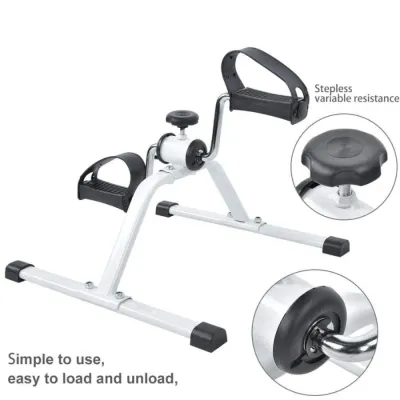
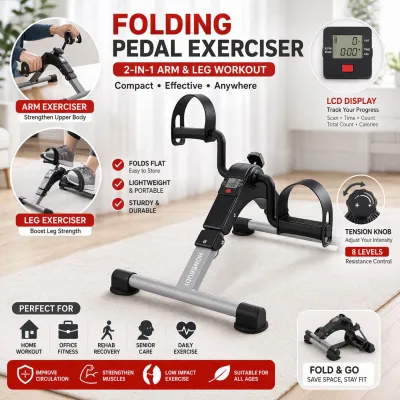
![🏅Foldable Pedal Exerciser Bike Fitness Bike Upper And Lower Limb Rehabilitation Bicycle [SG READY STOCK]](https://img.lazcdn.com/g/p/b00b708351a7cf456de462fe83053b11.jpg_400x400q80.jpg_.webp)
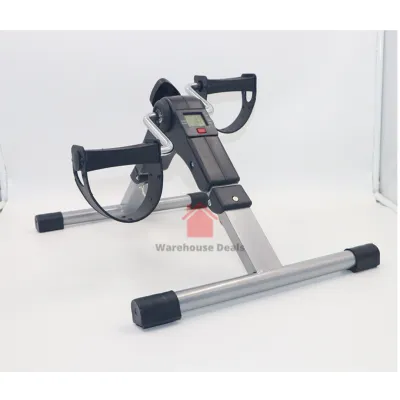
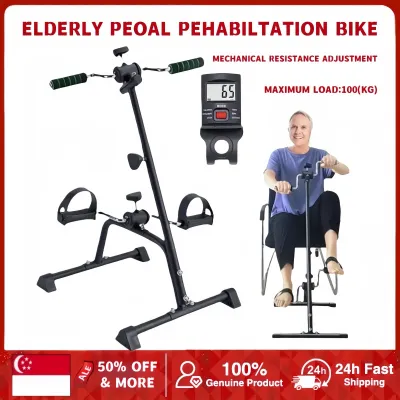
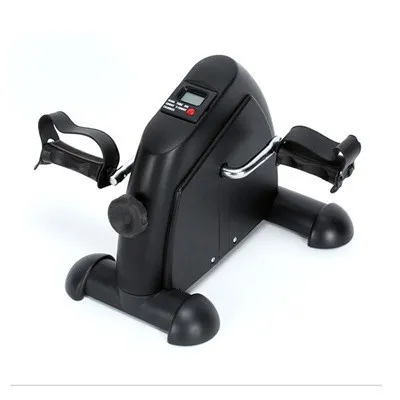
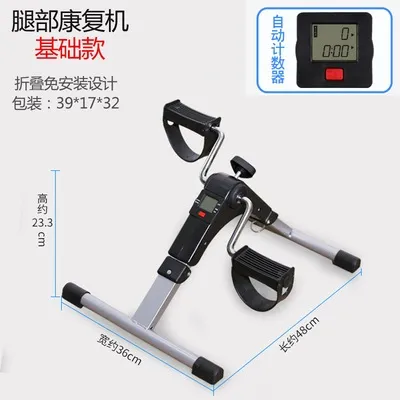
Prices are valid at publication and may change. Please refer to the product page for the latest price.
However, the term “compact” is highly subjective in the fitness equipment market. Some models marketed as mini exercise bikes are surprisingly tall or feature wide, non-adjustable stabilizer bars that make them difficult to tuck away. Other models are ultra-low-profile but have a wider horizontal footprint that can block narrow walkways or trip family members.
When assessing your flat, you must consider two distinct footprints: the active workout zone and the static storage space. The active footprint includes the physical machine plus the clearance required for your legs to extend fully and your knees to rise without obstruction. The static footprint is the space the machine occupies when it is turned off and stored out of sight. Balancing these two footprints is the key to finding a machine that fits seamlessly into your daily routine.
Critical Dimensions to Verify Before Purchasing
Before browsing online marketplaces or local fitness showrooms, you need to understand the exact physical dimensions of the pedal exercise cycle. Manufacturers always list the length, width, and height of the machine, but you must interpret these numbers in relation to your home’s furniture and your own body measurements.

Base Footprint and Storage Clearance
The base footprint refers to the length and width of the cycle’s frame where it contacts the floor. For a small HDB flat, look for a base length of 40 cm to 50 cm and a base width of 35 cm to 45 cm. This size is small enough to fit between the legs of most standard armchairs and office chairs, ensuring a stable and ergonomic seating position during use.
Storage clearance is equally critical if you plan to hide the cycle under furniture. Measure the vertical gap between the floor and the underside of your sofa, bed frame, or TV console. Many modern sofas have a ground clearance of only 10 cm to 15 cm, which will not accommodate standard mini exercise bikes. If your furniture sits low to the ground, you may need to look for specialized ultra-low-profile pedalers or foldable models that lay flat.
Additionally, inspect the design of the base stabilizers. Some models feature wide, curved bars with bulky rubber end caps designed to prevent tipping. While these stabilizer bars improve safety on hard HDB flooring like homogeneous tiles or luxury vinyl, they can easily snag on furniture legs or cabinet doors when you try to slide the unit into a tight storage niche.
Pedal Height and Knee Clearance
The most common mistake buyers make is measuring the height of the machine’s frame while ignoring the path of the pedals. The highest point of the pedal stroke—the peak vertical distance from the floor to the top of the pedal when it is at its highest position—dictates whether you can use the machine under a desk or table.
To calculate your required vertical clearance, you must combine the peak pedal height with your seated knee height. You can measure your seated knee height by sitting in your preferred workout chair and measuring the distance from the floor to the top of your knee when your thigh is parallel to the ground. Add this number to the peak pedal height of the cycle you are considering.
For example, if your seated knee height is 55 cm and the cycle’s peak pedal height is 30 cm, your knees will reach a maximum height of 85 cm during use. If you plan to pedal while working at a standard HDB study desk with an underside clearance of only 70 cm, your knees will repeatedly strike the bottom of the desk. To avoid this, you would need to find a low-profile pedaler with a pedal height of 15 cm to 20 cm, or use a lower chair to reduce your seated knee height.
Choosing the Right Pedal Cycle Design for Small Spaces
Pedal exercise cycles come in several distinct design variations, each offering a different trade-off between stability, ease of storage, and ergonomic comfort. Choosing the right design depends on where you plan to use and store the machine.
- Under-Desk Low-Profile Pedalers: These machines feature a flattened, elliptical-like pedaling path rather than a traditional circular motion. This design keeps the peak pedal height exceptionally low, often between 18 cm and 24 cm. They typically lack top-mounted handles or bulky console screens, making them the easiest to slide under low coffee tables or desks. The trade-off is that they are often heavier (weighing 8 kg to 12 kg) to prevent them from sliding forward on smooth floors, making them slightly harder to lift and move.
- Standard Mini Exercise Cycles: These models feature a traditional circular pedaling motion with a peak pedal height of 30 cm to 40 cm. They often include a carrying handle on top and a small LCD screen to track your stats. While they provide a more natural cycling feel, their height makes them difficult to use under standard tables. They are best suited for open-space use in front of a sofa or armchair, and they require a taller storage niche, such as the bottom of a wardrobe or a utility closet.
- Foldable Pedal Exercisers: These lightweight models (typically weighing 2 kg to 4 kg) feature legs that fold flat against the main frame, reducing the storage height to under 15 cm. They are highly portable and can easily be tucked into a drawer or behind a bedroom door. However, because they are lightweight and have a smaller base footprint, they offer less stability. They are prone to slipping on smooth tile floors during high-resistance pedaling and may wobble if used on uneven surfaces.
When choosing between these designs, weigh the trade-off between stability and storage convenience. A heavier, wider machine will provide a smoother, safer workout experience but will require a dedicated, easy-to-access storage spot. A lightweight, foldable model is incredibly easy to hide but may require you to place it against a wall or anchor it to your chair to keep it from sliding away during use.
How to Measure Your Room for Active Use and Storage
To ensure your new pedal exercise cycle fits perfectly, follow this step-by-step measuring routine before making a purchase. This will help you visualize the machine in your space and prevent any layout surprises.
Step 1: Measure the Active Workout Zone Identify the exact chair, sofa, or office seat you plan to use while pedaling. Sit in this seat and extend your legs forward as if you are pedaling. Measure the distance from the front edge of your seat cushion to the nearest obstacle, such as a coffee table, TV console, or wall. You will need at least 80 cm to 100 cm of clear horizontal space in front of your seat to allow for comfortable leg extension without knocking your feet or shins against surrounding furniture.
Step 2: Measure the Dedicated Storage Spot Decide where the cycle will live when it is not in use. If you plan to slide it under a sofa or bed, measure the vertical clearance from the floor to the lowest hanging part of the furniture frame. If you plan to store it in a gap between a cabinet and the wall, measure the width of that gap. Remember to account for skirting boards or baseboards along the walls, which can reduce the usable width of a storage niche by 1.5 cm to 3 cm on each side.
Step 3: Factor in the Floor Mat Using a pedal cycle on bare HDB flooring can lead to scratches, scuffs, and unwanted noise that might disturb neighbors living below you. Placing a non-slip rubber or PVC fitness mat under the cycle is highly recommended to protect your floor and absorb vibrations. These mats typically add 0.5 cm to 1 cm of height to the machine and require their own storage space. Ensure your vertical clearance measurements account for this extra layer under the machine’s base.
Common Sizing and Clearance Mistakes to Avoid
Many homeowners face frustration because of simple oversights during the purchasing process. Avoiding these common pitfalls will ensure you choose a machine that is both functional and easy to live with.
One frequent mistake is assuming that all “mini” or “under-desk” cycles are universally compatible with standard furniture. Standard HDB study desks and dining tables typically have a height of 70 cm to 75 cm, but support beams, drawers, or keyboards trays underneath can reduce the actual leg clearance to 60 cm or less. Always measure the lowest point of the underside of your table, not just the top surface.
Another common oversight is ignoring the weight of the machine in relation to your daily routine. A heavy magnetic resistance pedal cycle (weighing 10 kg or more) offers a smooth, quiet workout, which is ideal for high-density HDB living where noise travels easily. However, if you have back pain, joint issues, or limited strength, lifting and sliding a heavy machine out from under a deep sofa every day can become a chore. If mobility is a concern, look for a lighter model with built-in transport wheels or a dedicated carrying handle.
Finally, do not forget to check the manufacturer’s user weight limits and leg length recommendations. Compact machines often have lower weight capacities than full-sized exercise bikes. If a machine’s frame is too small for your height, you may find your legs are cramped, forcing your knees to rise higher than expected and increasing the risk of hitting the underside of your desk.
Frequently Asked Questions (FAQ)
Can I use a pedal exercise cycle under a standard HDB dining table?
Yes, but it depends entirely on the table’s underside clearance and the cycle’s peak pedal height. Standard dining tables in Singapore are typically 75 cm high, but many have a wooden support apron underneath that reduces the actual clearance to around 65 cm to 68 cm. To use a pedal cycle safely, your combined seated knee height and the cycle’s peak pedal height must be less than this clearance. For most adults, this requires using a specialized low-profile under-desk pedaler with a peak pedal height of 25 cm or less, rather than a standard mini exercise bike.
Do foldable pedal cycles save significant space compared to fixed models?
Foldable pedal cycles save a significant amount of vertical space, often collapsing down to a height of 15 cm or less. This makes them ideal if you need to store the unit in a shallow drawer, under a low-clearance sofa, or inside a crowded utility closet. However, they require manual unfolding and adjustment before every workout. If you plan to use the cycle daily, a compact, fixed-frame model that slides directly under your desk or sofa without needing to be folded may offer better long-term convenience and encourage more consistent exercise habits.
Community discussion
Share your experience or ask a question. Comments are reviewed before publication.