
For fitness enthusiasts living in Singapore, finding space-efficient home gym equipment is a constant balancing act. If you are looking to add a step board to your cardio routine, the ideal size depends heavily on your HDB flat’s layout and your specific workout style. As a quick rule of thumb, a standard step board measuring 35 to 36 inches in length is the most versatile option for typical 4-room and 5-room HDB living areas. If you are working out in a compact 2-room or 3-room flat, or plan to exercise in a bedroom, a compact or mini step board (under 30 inches) is usually the safest and most practical choice to prevent obstructing daily movement.
Choosing the right equipment requires looking beyond the physical dimensions of the plastic platform itself. You must also account for dynamic movement clearance, vertical height limits, and storage constraints. Balancing these spatial factors ensures you can maintain an effective aerobic routine without turning your living room into an obstacle course.
Understanding Step Board Dimensions and Movement Clearance
When shopping for a step board, it is easy to focus solely on the product’s static footprint. However, a safe workout requires understanding how these dimensions translate to active use. Step boards generally fall into three size categories:
Products mentioned in this guide
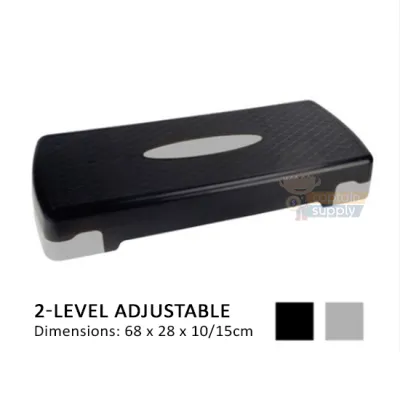
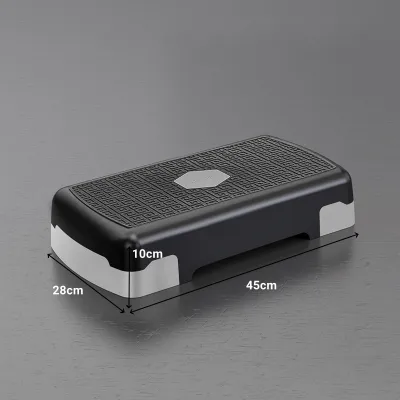
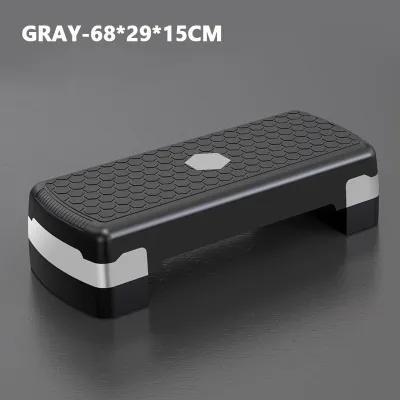
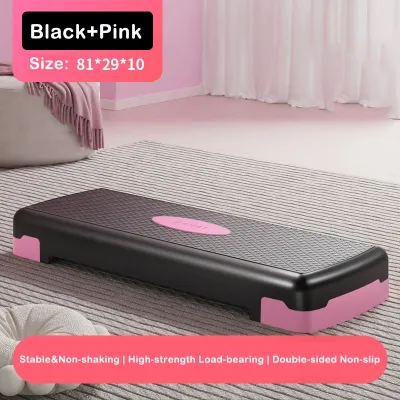
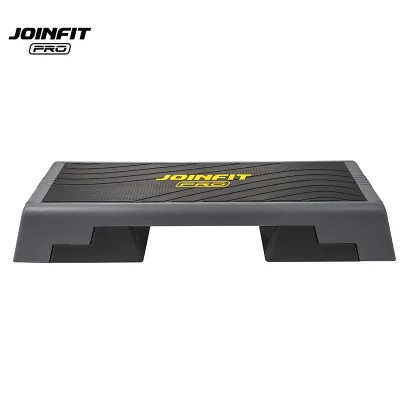
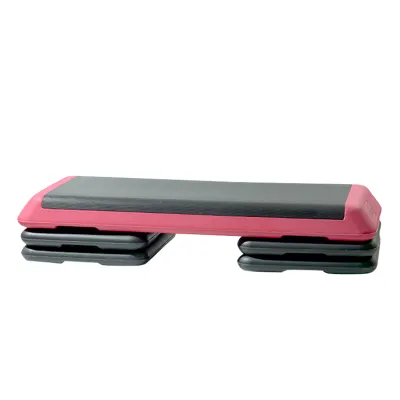
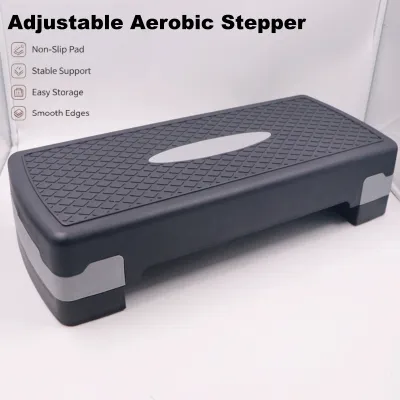
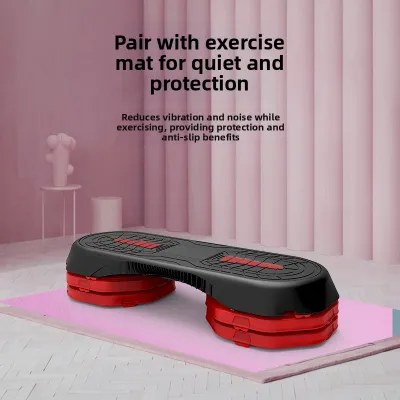
Prices are valid at publication and may change. Please refer to the product page for the latest price.
- Mini and Compact Boards: These measure around 28 inches (approx. 71 cm) long and 10 to 12 inches wide. They are lightweight, portable, and occupy minimal floor space.
- Standard Boards: Measuring approximately 35 to 36 inches (approx. 89 to 91 cm) long and 14 to 15 inches wide, these are the typical home-use standard. They offer a stable platform for a wide range of exercises.
- Studio and Large Boards: These measure 40 inches (approx. 102 cm) or more in length. They are identical to the heavy-duty platforms found in commercial fitness centers, providing maximum surface area for complex choreography.
The physical footprint of the step board is only your starting point. To exercise safely, you must establish a “clearance zone” around the equipment. During a high-energy step workout, you do not remain static on top of the platform. You will perform lateral steps, rear lunges, step-backs, and wide-stance squats. To prevent tripping or colliding with nearby objects, you should maintain a clear buffer of at least 2 to 3 feet (60 to 90 cm) of unobstructed space on all sides of the board. This space is also crucial for arm swings and maintaining balance if you misstep.
Furthermore, step boards utilize adjustable risers to change the intensity of your workout, typically offering height settings of 4, 6, and 8 inches (10, 15, and 20 cm). Increasing the height of the board changes the spatial dynamics of your room. Higher settings require a wider base support, as some riser designs flare outward, slightly increasing the physical footprint. More importantly, raising the platform elevates your entire body, which directly impacts your vertical clearance requirements and alters your center of gravity during high-impact movements.
Before starting any workout, always consult the manufacturer’s instructions for your specific step board to verify its maximum weight capacity, stability recommendations, and proper setup. If you are unsure about its compatibility with your flooring or your personal fitness limits, consult a fitness professional or the equipment manufacturer directly before proceeding.
Matching Step Board Sizes to HDB Room Layouts
HDB flats in Singapore are designed with efficiency in mind, meaning floor space is highly optimized. To choose the right step board, you must evaluate the layout of your specific room and determine how much furniture-free space you can realistically dedicate to your workouts.

Compact and Mini Boards (Under 30 Inches)
Compact and mini step boards are highly suited for smaller HDB layouts, such as 2-room Flexi or 3-room flats, where every square meter counts. They are also the logical choice if you plan to exercise in a bedroom or a small home office rather than the main living area. Because of their short length, these boards can easily be tucked away under standard bed frames, low-profile sofas, or inside a wardrobe when not in use.
However, choosing a mini board involves specific trade-offs. The limited surface area means you have less room for error when landing. It restricts your ability to perform wide-stance exercises or complex lateral movements safely. If your routine consists primarily of basic straight-on step-ups, elevated mountain climbers, or targeted lower-body strength work, a compact board is highly efficient.
Standard Boards (35 to 36 Inches)
For the majority of HDB residents living in 4-room or 5-room flats, a standard 35-to-36-inch step board offers the ideal balance between workout versatility and spatial practicality. This size is long enough to accommodate lateral movements, wide squats, and classic step aerobics routines comfortably, reducing the risk of missing the platform during fast-paced transitions.
A standard board fits comfortably in a cleared living room center or a dedicated study room. During your workout, you can easily push back a coffee table or slide dining chairs aside to create the necessary clearance zone. Once your session is complete, storing a standard board is relatively straightforward. It can be slid under a queen-sized bed, stood vertically against a wall in your household shelter, or placed inside a utility closet.
Large or Studio Boards (40+ Inches)
Large or studio-sized step boards are generally impractical for standard HDB flats unless you have a highly spacious, open-concept layout with minimal furniture, or a dedicated spare room converted entirely into a home gym. These commercial-grade boards offer excellent stability and a massive landing surface, which is ideal for advanced step choreography and high-impact plyometrics.
Despite their performance benefits, their sheer size creates significant storage and safety challenges in a typical flat. A 40-inch board cannot easily be hidden away in standard HDB storage spaces. If left out on the floor, it quickly becomes a permanent tripping hazard and a visual clutter magnet in your living area. Moving such a heavy, bulky item back and forth from a storeroom before every workout can also become a chore, potentially discouraging you from using it regularly.
How to Measure Your Available Space Before Buying
To avoid the hassle of returning an oversized step board, you should measure both your active workout area and your intended storage space before making a purchase. Taking a few systematic measurements ensures your home fitness routine is both safe and enjoyable.
Measure the Active Zone Do not rely on visual estimation alone. Clear the space where you intend to work out and place a temporary marker, such as a bath towel folded to the dimensions of the step board you are considering. Stand in the center of this marker and perform a series of test movements. Step forward, lunge backward, step wide to both sides, and swing your arms. If your hands or feet come close to touching walls, TV consoles, glass doors, or furniture, you need to adjust the placement or opt for a smaller board size.
Verify Vertical Clearance HDB ceiling heights typically range from 2.6 meters (approximately 8.5 feet) in standard flats to slightly higher in top-floor units. While this is ample for daily living, it requires careful calculation for step workouts. Consider your height, add the maximum height of the step board with all risers attached (typically 8 inches or 20 cm), and then account for your vertical reach during overhead arm movements. Ensure there is a safe clearance margin to avoid making contact with ceiling lights, false ceilings, or spinning ceiling fans, which pose a severe safety hazard.
Assess the Storage Zone Measure the exact dimensions of your planned storage spot. If you plan to slide the board under a sofa or bed, measure the vertical clearance from the floor to the lowest part of the furniture frame. Do not forget to measure the width of your doorways, hallway corridors, or the entrance to your household shelter. If the board is too wide or awkward to carry through these narrow paths, you will struggle to put it away after your workouts.
Smart Storage and Space-Saving Features to Look For
Living in an HDB flat means prioritizing smart design and multi-functional furniture. When shopping for a step board, look for specific features that minimize its physical presence when it is not in use.
Integrated Riser Storage High-quality step boards feature a nesting or stacking design where the adjustable risers snap securely into the underside of the main platform. This keeps all components together as a single, cohesive unit. It prevents loose risers from cluttering your closets and ensures you do not lose track of the height adjusters.
Foldable and Split-Platform Designs Some modern step boards are designed specifically for compact homes and feature a folding mechanism or a split-platform layout. These models can be folded in half, reducing their storage length by 50%. This allows you to store a standard-sized board easily on a utility shelf, inside a small cabinet, or in a tight corner of your household shelter.
Multi-Functional Utility To maximize the value of the floor space your equipment occupies, consider purchasing a multi-functional step board. Some advanced models can be adjusted to serve as an inclined or declined weight bench, feature built-in storage compartments for resistance bands, or include integrated anchors for fitness tubes. A highly versatile board reduces the need to purchase and store multiple separate pieces of exercise equipment, keeping your HDB flat organized and clutter-free.
Common Sizing and Space Mistakes to Avoid
When setting up a home workout space, small oversight errors can lead to safety hazards or minor property damage. Keep these common pitfalls in mind when selecting and positioning your step board:
- Ignoring the Swing Radius: Many users only measure the floor space needed for the board's feet, forgetting that their arms and legs extend far beyond the platform during dynamic movements. Always test your full range of motion before starting a high-tempo workout.
- Forcing Tight Storage Fits: Trying to squeeze a step board into a gap that is slightly too narrow or low can scratch your bed frames, scuff vinyl flooring, or damage the board's plastic edges. Always leave at least an inch of clearance for easy retrieval.
- Neglecting Vertical Storage Depth: Storing a step board vertically against a wall or inside a closet is an excellent space-saving technique. However, remember that storing the board with the risers attached increases its depth. This can cause the board to stand at an unstable angle, making it prone to tipping over and causing injury or damage.
- Forgetting Room Obstacles: Always account for functional space barriers such as swinging doors, sliding wardrobe panels, thick curtain drapes, and furniture overhangs. A space that looks wide open when the bedroom door is closed might become completely unusable when the door is swung open.
Frequently Asked Questions (FAQ)
Will a step board scratch HDB laminate or vinyl flooring?
Yes, the hard plastic base of a step board or its risers can easily scuff, scratch, or dent laminate, vinyl, and polished tile flooring during high-impact workouts. The repetitive downward force and slight shifting of the board during exercise can wear down protective floor coatings over time.
Before using your step board, verify that the bottom of the platform and all risers are equipped with intact, non-slip rubber feet. To ensure maximum protection for your home’s flooring, it is highly recommended to place a thick, high-density yoga mat or a dedicated rubber equipment mat underneath the step board. This mat not only prevents scratches and absorbs cosmetic impact but also provides extra grip to keep the board from sliding, while helping to dampen workout noise for your downstairs neighbors.
Community discussion
Share your experience or ask a question. Comments are reviewed before publication.