
To fit a treadmill into a typical Singapore HDB flat without blocking walkways, you must balance the machine’s physical size with the space required for safe operation and daily foot traffic. For most 2-room and 3-room flats, a compact walking pad or ultra-thin folding treadmill with an in-use length under 140 cm and width under 70 cm is the practical limit. In larger 4-room and 5-room flats, you can accommodate standard home treadmills measuring up to 190 cm long and 90 cm wide in a dedicated corner or spare room. However, physical dimensions are only half the equation. You must also factor in mandatory safety clearances—especially behind the running deck—and ensure the machine does not obstruct major pathways, doorways, or access to windows and balconies.
Understanding HDB Space Constraints and Treadmill Footprints
When shopping for treadmills, it is easy to mistake storage dimensions for the actual space the machine occupies during a workout. The physical footprint of a treadmill is divided into two distinct states: folded (or storage) dimensions and in-use (or operational) dimensions. Folded dimensions show how much floor space the machine reclaims when upright, but in-use dimensions represent the absolute minimum physical frame size when the deck is lowered. This includes the total length from the front motor cover to the rear roller, the width across the handrails, and the step-up deck height.
In Singapore’s high-density HDB layouts, usable floor area is a premium commodity. Modern BTO flats feature highly optimized room configurations where every square metre counts. Placing a heavy piece of fitness equipment in a bedroom or living room directly impacts daily traffic flow, limits furniture placement, and can restrict natural ventilation. Airflow is particularly critical in Singapore’s humid climate; blocking windows or placing a machine in a stagnant corner can make workouts uncomfortable and accelerate wear on the treadmill’s electronic components due to moisture buildup.
Products mentioned in this guide


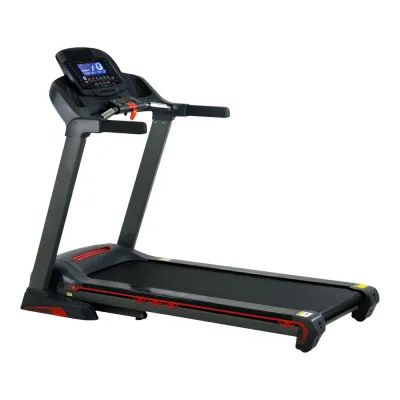
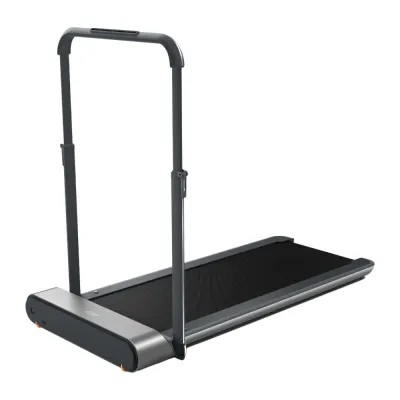
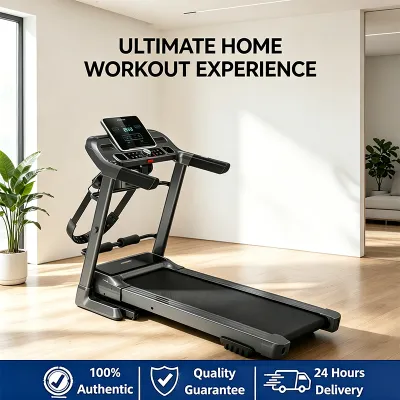
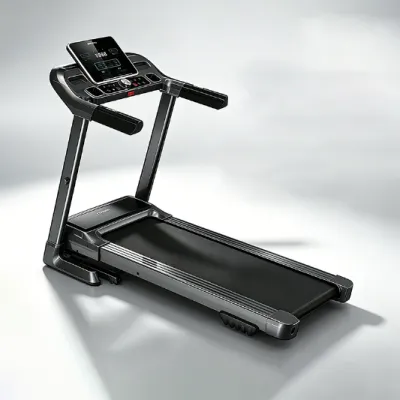
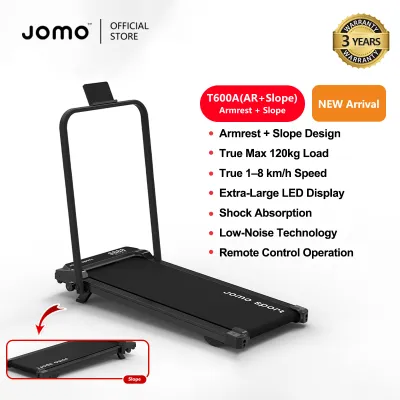
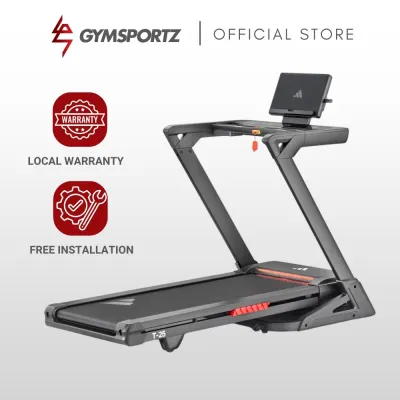
Prices are valid at publication and may change. Please refer to the product page for the latest price.
Furthermore, you must account for “operational clearance,” which extends well beyond the physical steel frame. When you run, your arms swing outward, and your body moves dynamically. Safety standards require open zones around the machine to accommodate emergency step-offs or accidental falls. Neglecting this clearance means you risk striking nearby walls, furniture, or glass doors if you lose your footing, turning a standard workout into a significant household hazard.
Recommended Treadmill Dimensions by HDB Flat Type
Selecting the right treadmill size requires a realistic assessment of your flat’s layout. While a larger running deck offers a more comfortable stride, it can quickly turn a living room into an obstacle course. Below are the recommended sizing boundaries based on standard HDB flat configurations.

2-Room and 3-Room Flats (Compact Spaces)
For residents living in 2-room Flexi or 3-room HDB flats, floor space is highly constrained, with living rooms often doubling as dining areas or home offices. In these layouts, the maximum recommended in-use footprint for a treadmill is 130 cm to 150 cm in length and 65 cm to 75 cm in width. To maintain clear walkways, prioritize ultra-compact folding treadmills or flat walking pads that can be stored horizontally under a sofa or bed, or stood vertically against a wall when not in use.
These compact machines come with distinct trade-offs that you must evaluate against your fitness goals. To achieve a smaller footprint, manufacturers reduce the length of the running belt (often to 100 cm–120 cm) and limit the motor size. This makes compact treadmills highly suitable for walking, power walking, or light jogging, but unsuitable for tall runners or high-speed sprinting where a longer stride is natural. Additionally, lightweight frames typically have lower maximum weight capacities, which you must verify against the manufacturer’s specifications before purchasing.
When positioning a compact treadmill in a small room, look for unused corners or spaces parallel to solid walls. Avoid placing the machine directly behind doors, even if it seems out of the way. If the door swing radius is blocked by even a few centimetres, it creates an immediate safety hazard, preventing quick entry or exit during an emergency and making daily room access highly frustrating.
4-Room and 5-Room Flats (Dedicated Fitness Corners)
Residents in 4-room and 5-room HDB flats enjoy more flexibility, often having the luxury of a spare bedroom, a study, or a spacious living room corner. In these larger layouts, you can reasonably accommodate standard home treadmills with in-use dimensions up to 180 cm to 200 cm in length and 80 cm to 90 cm in width. These dimensions allow for longer running decks (typically 140 cm or more) and robust frames that support higher running speeds, heavier user weights, and motorized incline functions.
Integrating a full-sized treadmill into a larger flat still requires careful spatial planning to preserve the room’s primary function. Avoid placing the machine in central transit zones or directly in front of pathways leading to balconies, service yards, windows, or attached bathrooms. A good rule of thumb is to align the length of the treadmill parallel to a solid wall in a corner of the room, ensuring that the console faces outward or toward a window to make the workout space feel less enclosed.
Additionally, always leave sufficient space around the console and front motor hood. Modern treadmills often feature large touchscreen displays or device holders that require proximity to power outlets. Leaving at least 30 cm of breathing room at the front of the machine ensures proper ventilation for the motor housing, prevents dust buildup from nearby curtains, and allows easy access for plugging in chargers or routing cables safely.
Crucial Clearances: Doorways, Walkways, and Safety Margins
Before committing to any treadmill purchase, you must verify that the machine can actually reach its intended room and operate safely within it. Measuring only the final workout spot is a common mistake that can lead to costly delivery failures or hazardous workout environments.
Delivery and Entry Your spatial planning must begin at the entry point of your home. Standard HDB main doors typically have a clear opening width of around 100 cm, which easily accommodates most boxed treadmills. However, internal bedroom doors are narrower, usually offering a clear passage of 80 cm to 85 cm. Older HDB flats may have even tighter door frames. Measure your lift lobby, the lift entrance itself, your main gate, and every doorway along the delivery path. If a treadmill’s boxed width or pre-assembled frame exceeds these measurements, delivery personnel may not be able to maneuver the machine into your flat, or you may be forced to pay extra disassembly fees.
Rear Safety Clearance The space behind your treadmill is the most critical safety zone in your entire home setup. If you trip or fall while running, the moving belt will rapidly eject you backward. If the rear of the treadmill is placed directly against a wall, a wardrobe, or a glass sliding door, you can become trapped between the spinning belt and the obstruction, leading to severe friction burns or impact injuries. To prevent this, always refer to the manufacturer’s instruction manual for the exact required rear safety clearance. As a general safety standard, maintain an entirely clear, unobstructed drop-zone of at least 1.2 metres to 1.5 metres behind the rear roller. This zone must never be used for storage, laundry racks, or furniture.
Side and Overhead Clearance Lateral and vertical spaces are equally vital for safe operation. You need at least 50 cm of clear space on both sides of the treadmill deck. This lateral clearance allows for natural arm swing during intense runs and provides a safe zone to step onto the side rails if you need to stop urgently. For vertical clearance, do not rely solely on your flat’s standard ceiling height, which is typically around 2.6 metres in modern HDB flats. To calculate your required overhead clearance, use this formula:
- User Height + Treadmill Deck Height (at maximum incline) + 15 cm (safety buffer)
Compare this total to your actual ceiling height. If you plan to install a ceiling fan in the same room, ensure the treadmill is positioned well outside the fan’s blade radius to avoid catastrophic head injuries when stepping onto or running on the machine.
Space-Saving Features to Look For
If you are working with limited square footage, specific engineering features can make a substantial difference in how easily a treadmill integrates into your daily life.
Hydraulic Folding Mechanisms Most modern home treadmills feature a folding deck that pivots upward toward the console when not in use. Look for machines equipped with a hydraulic “soft-drop” system. This mechanism assists you in lifting the heavy deck and ensures it lowers slowly and safely to the floor without slamming. When evaluating a folding model, check both the folded height and folded depth specifications. Some models fold almost completely flat (less than 30 cm deep), allowing them to stand flush against a wall or slide inside a utility closet, while others fold at an angle, still requiring a significant amount of floor space even when upright.
Transport Wheels A treadmill is a heavy piece of machinery, often weighing anywhere from 40 kg to over 100 kg. Built-in transport wheels are essential for HDB living, as they allow a single person to tilt and roll the machine short distances. This is crucial not only for reclaiming floor space when hosting guests but also for routine household maintenance. Dust and lint accumulate rapidly underneath treadmill decks due to static electricity; transport wheels allow you to easily move the machine to vacuum the floor and keep the motor area clean.
Vertical Storage and Wall Mounting Some ultra-compact treadmills are designed to stand vertically without support or are advertised as wall-mountable. However, you must exercise extreme caution before leaning or mounting heavy equipment. Standard HDB flats feature a mix of structural concrete walls (which are load-bearing and highly stable) and non-structural partition walls (such as drywall or lightweight concrete blocks used to divide bedrooms). Never attempt to lean a heavy treadmill against a partition wall or mount storage brackets without verifying the wall’s structural integrity. Always check the machine’s manual for specific vertical storage instructions and weight limits, and ensure the safety locking pins are fully engaged to prevent the machine from tipping over onto children or pets.
Common Sizing Mistakes to Avoid
Avoiding a few common pitfalls during the planning stage can save you from purchasing an unusable machine or damaging your home.
Ignoring the Incline Factor Many buyers measure their ceiling clearance based on the treadmill’s flat deck height, forgetting that engaging the incline function changes the geometry of the machine. When you increase the incline, the front of the deck rises, lifting your entire body closer to the ceiling. On some premium treadmills, a 10% to 15% incline can raise the deck height by 20 cm or more. Always calculate your ceiling clearance using the machine’s maximum incline height to ensure you will not hit your head during hill-climbing workouts.
Overlooking Noise and Vibration Transfer In an HDB flat, your floor is your downstairs neighbor’s ceiling. The structural vibration caused by your feet striking the treadmill deck travels easily through concrete slabs, creating a low-frequency drumming noise that can cause neighbor disputes. To mitigate this, you must allocate space for a high-density, shock-absorbing rubber equipment mat underneath the treadmill. These mats typically add 1 cm to 2 cm of height and extend slightly beyond the treadmill’s physical width and length, which must be factored into your final footprint calculations.
Blocking Power and Network Points Treadmills require a dedicated, grounded power outlet to operate safely and prevent electrical overloads. Before finalizing your treadmill’s position, map out the location of your HDB wall sockets. Avoid placing the machine in a spot that requires running extension cords across doorways or major walkways, as this creates a severe tripping hazard and can damage the cord over time. Additionally, if your treadmill relies on a stable Wi-Fi connection for interactive training apps, ensure it is positioned within clear range of your router or home network access points.
Frequently Asked Questions (FAQ)
Can I place a treadmill on vinyl flooring or raised platforms in my HDB?
While standard HDB reinforced concrete subfloors can easily support the weight of a treadmill and runner, the decorative flooring installed on top requires protection. Modern vinyl tiles, luxury vinyl planks (LVP), and laminate flooring are susceptible to denting, scratching, or tearing under the heavy, concentrated point loads of a treadmill’s feet and transport wheels. Raised timber or laminate platforms are even more vulnerable, as the hollow space beneath them can amplify vibration noise like a drum and may sag or crack under dynamic impact. To protect your flooring and distribute the machine’s weight evenly, always place a heavy-duty, high-density rubber equipment mat beneath the treadmill, and consult your flooring installer’s warranty guidelines regarding heavy fitness equipment.
Do folding treadmills actually save space during workouts?
No, folding mechanisms only save space when the treadmill is stored and not in use. During a workout, a folding treadmill requires the exact same operational footprint and safety clearances as a non-folding model with equivalent deck dimensions. You must never attempt to operate a treadmill in a partially folded state or compromise on the mandatory 1.2-metre rear safety clearance just because the machine has folding capabilities. Always plan your workout space based on the machine’s fully lowered, in-use dimensions.
Community discussion
Share your experience or ask a question. Comments are reviewed before publication.