
The HEAD Speed MP is a highly regarded tennis racket, but it is traditionally designed for intermediate to advanced players who have already established their swing mechanics. For a true beginner, this racket sits right on the borderline of what is manageable on the court.
It features an unstrung weight of approximately 300 grams (10.6 ounces) and a standard 100-square-inch head size. While these specifications offer a fantastic blend of stability, control, and precision, they can be physically demanding for someone just starting out.
If you have slower swing speeds or are still developing your upper body strength, maneuvering a 300g frame over a multi-hour session can quickly lead to fatigue. However, athletic beginners or those with a background in other racket sports often find it to be an excellent “grow-with-me” option.
Products mentioned in this guide
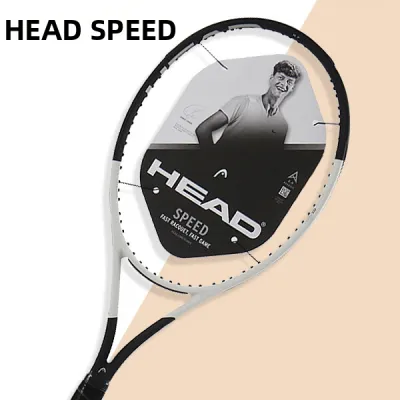

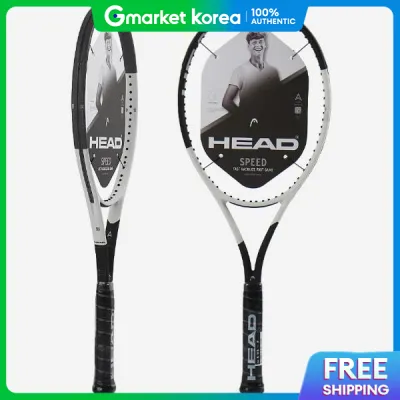
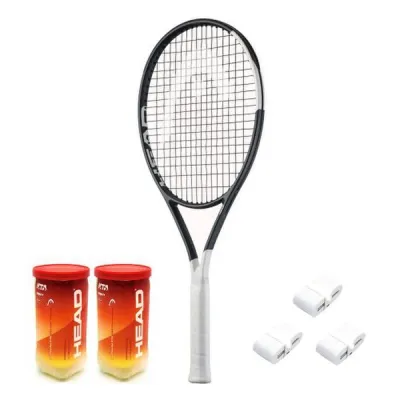
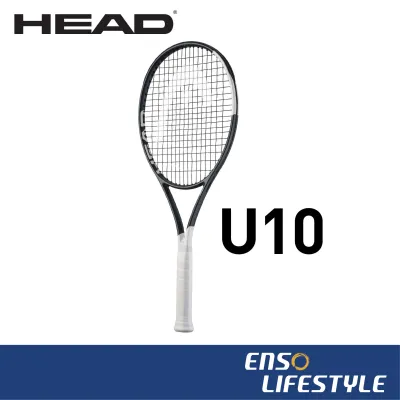
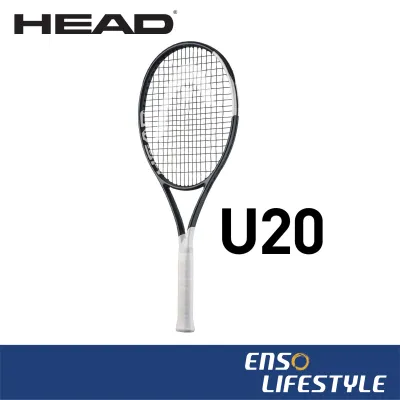
Prices are valid at publication and may change. Please refer to the product page for the latest price.
Because manufacturers occasionally adjust specifications across different product generations, always check the physical label on the racket’s throat for the exact unstrung weight and balance point of the specific model year you are holding.
Decoding the Specs: What the Numbers Mean for Your Game
Selecting a tennis racket based solely on aesthetic appeal or professional player endorsements can inadvertently hinder your skill development. Understanding the physical dimensions and technical specifications of the head speed mp allows you to predict how the frame will behave when it makes contact with the ball.
While tennis brands introduce updated graphite weaves, dampening materials, and frame geometries with every product cycle, the foundational physical dimensions remain the primary drivers of how a racket actually feels on the court. By breaking down these core numbers, you can determine whether they align with your current physical capabilities and playing style.
Weight and Balance: Stability vs. Arm Fatigue
The HEAD Speed MP features an unstrung weight of approximately 300 grams (10.6 ounces). Once you add the weight of strings, an overgrip, and perhaps a dampener, the active playing weight increases to roughly 315 to 320 grams. This weight is paired with a head-light balance, which is designed to keep the frame relatively maneuverable despite its overall mass.
A heavier frame offers a major physical benefit: stability. When you face a fast, heavy ball from an opponent, a 300g racket resists twisting in your hand, absorbing a significant portion of the impact shock before it can travel up your arm. This stability helps you return shots with depth and direction, even when your timing is slightly off.
The primary drawback for beginners is the physical toll of swinging this mass. Novice players often rely heavily on their arm and wrist muscles to swing the racket, rather than executing a full-body kinetic chain rotation from the legs and hips. If your technique is still developing, a 300g racket can feel incredibly heavy by the end of a long practice session, leading to late contact points and dropped balls.
Before making a purchase, always verify the exact unstrung weight and balance point printed directly on the racket’s throat. This ensures you are not accidentally buying a customized or alternative version that deviates from the standard specifications.
Head Size: The Trade-Off Between Control and Forgiveness
The head size of the HEAD Speed MP is 100 square inches (645 square centimeters), which places it firmly in the “midplus” category. This size represents the modern industry standard for a versatile racket, offering a highly functional middle ground between control and power.
An oversized racket, typically measuring 105 to 115 square inches, is designed specifically for beginners to offer a massive sweet spot and effortless power. In contrast, traditional player-focused rackets feature head sizes of 95 to 97 square inches, prioritizing extreme precision at the expense of forgiveness. The 100-square-inch head of the Speed MP sits comfortably between these extremes.
For a developing player, this midplus head size provides decent forgiveness on off-center hits. However, it does not offer a massive safety net. You will still need to develop consistent footwork and hand-eye coordination to ensure you regularly strike the ball within the sweet spot, making it a great tool for building clean habits.
String Pattern: Generating Spin and Power
The HEAD Speed MP utilizes a 16×19 string pattern, which consists of 16 main (vertical) strings and 19 cross (horizontal) strings. In the tennis world, this layout is classified as an open string pattern because the spacing between the individual strings is relatively wide.
This open spacing allows the strings to slide and “snap back” into place during impact. This movement bites into the felt of the tennis ball, which is highly beneficial for beginners who are trying to learn how to brush up on the ball to generate topspin. Topspin is crucial for keeping high-velocity shots safely inside the baseline.
Additionally, an open string pattern deflects more upon impact, creating a slightly higher launch angle and a softer, more cushioned feel. This translates to more effortless power compared to a dense 18×20 pattern, which requires much faster swing speeds to achieve the same depth.
On-Court Translation: How the Racket Actually Performs
Transitioning from technical specifications on paper to actual play on the court reveals how these physical dimensions interact with your stroke mechanics. A racket does not play the game for you; its performance is a direct reflection of how its built-in physics respond to your physical input and technical execution.

Understanding these on-court characteristics helps you anticipate how the frame will behave during different phases of play, from baseline rallies to rapid exchanges at the net.
Baseline Power and Shot Control
On the baseline, the HEAD Speed MP functions as a “tweener” frame with a strong lean toward control. Unlike lightweight, oversized beginner rackets that catapult the ball deep into the opponent’s court with minimal effort, this frame requires you to supply a significant portion of the swing energy.
If you swing slowly or with short, abbreviated strokes, you may find your shots landing short in the court. To get the most out of this racket, you must commit to a smooth, full-length swing path.
The payoff for this physical effort is exceptional directional control. When you make clean contact, the frame resists flexing excessively, allowing you to direct the ball with high precision. Instead of simply trying to hit the ball back over the net, you can confidently start aiming for specific targets, such as deep corners or sharp crosscourt angles, as your technique improves.
Maneuverability and Comfort During Long Sessions
When transitioning to the net for volleys, the 300g unstrung weight of the Speed MP presents a double-edged sword. While the racket remains incredibly stable when blocking back hard-hit passing shots, moving it quickly into position requires fast reflexes and strong wrist stability. Beginners transitioning from lighter 270g frames may initially find it slightly sluggish during rapid volley exchanges.
On serves, the racket’s overall mass can work to your advantage. If you have the shoulder strength to accelerate the frame through the contact zone, the weight helps generate a heavy, penetrating ball. However, if your serving motion is jerky or lacks proper rhythm, the weight will quickly tire your shoulder and upper back.
From a comfort perspective, the physical mass of the Speed MP is excellent at dampening harsh vibrations before they reach your joints. However, using a 300g racket with poor technique or an incorrect grip size can still lead to repetitive strain injuries like tennis elbow. To safeguard your joints, ensure you perform proper shoulder and wrist warm-ups before every session, and consider consulting a local coach to verify your swing mechanics.
Decision Guide: Who Should (and Shouldn't) Choose This Racket
Choosing a tennis racket is a highly personal decision that must balance your current physical capabilities with your long-term athletic goals. The HEAD Speed MP is a premium investment, and understanding where you fit on the spectrum of player profiles will help you make a confident choice.
Who the HEAD Speed MP is ideal for:
- Athletes with racket sports experience: If you have previously played badminton, squash, or table tennis at a decent level, you likely already possess the hand-eye coordination and wrist lag necessary to handle a 300g frame.
- The "grow-with-me" buyer: If you are athletic, plan to play multiple times a week, and want a high-quality frame that you will not outgrow within six months, this racket offers an excellent runway for skill progression.
- Control and spin seekers: If you naturally swing fast and want a racket that helps keep your shots inside the court through spin and control, rather than one that adds uncontrollable power.
Who should consider an alternative:
- Pure beginners with lower physical strength: If you prefer a highly casual game, have a slower swing speed, or have a history of wrist, elbow, or shoulder discomfort, you should look at lighter alternatives. The HEAD Speed Team or Speed Lite versions (typically weighing between 260g and 285g) are much easier to swing.
- Players needing maximum forgiveness: If you struggle to consistently hit the center of the strings and feel frustrated by off-center mishits, an oversized racket with a 105 to 110-square-inch head will provide a much larger sweet spot.
Before committing to a purchase, it is highly recommended to demo the racket. You can often borrow a test frame from a friend, your tennis coach, or a local pro shop in Singapore. Keep in mind that the choice of strings and the grip size will drastically alter the final playing feel, so seek professional guidance to set up the frame to match your needs.
Frequently Asked Questions (FAQ)
What string tension is best for a beginner using this racket?
For beginners using the HEAD Speed MP, a lower-to-mid tension range of 48 to 52 pounds (approximately 21.5 to 23.5 kg) is highly recommended. It is best to pair this tension with a soft multifilament or a high-quality synthetic gut string rather than a stiff polyester string. Lower tensions expand the effective sweet spot, provide more free power, and reduce the amount of shock transmitted to your arm upon impact. Always check the manufacturer’s recommended tension range printed on the inner throat of the racket, and consult a professional stringer at a local pro shop to customize the setup for your comfort.
How does the Speed MP compare to lighter versions like the Speed Lite?
The primary difference lies in the unstrung weight and overall maneuverability. While the Speed MP sits at approximately 300 grams, lighter variants like the Speed Team or Speed Lite typically weigh between 260 and 285 grams. These lighter versions are significantly easier to swing, making them ideal for pure novices, juniors, or players with less upper-body strength who need to focus on learning clean swing paths. The heavier Speed MP, however, offers superior stability, shock absorption, and plow-through against fast-moving balls, making it better suited for stronger players or those rapidly transitioning to an intermediate level.
Community discussion
Share your experience or ask a question. Comments are reviewed before publication.