
Starting a home Pilates practice requires a thoughtful commitment to both your physical training and your living environment. For beginners, selecting the right reformer machine involves balancing structural safety, mechanical smoothness, and the physical constraints of a residential space. The ideal home reformer must accommodate your current fitness level, fit comfortably within your home, and offer the adjustability needed to progress safely as you master core exercises.
Why Space and Frame Material Matter for Home Setup
The physical footprint of a reformer is often the first major hurdle for home users, particularly in high-density residential environments like Singapore’s HDB flats or condominiums. A standard studio-sized reformer typically measures between 2.2 to 2.5 metres in length and 60 to 70 centimetres in width. Before committing to a purchase, it is vital to map out your intended workout area, ensuring you have at least 60 centimetres of clear clearance on all sides to allow for unrestricted arm and leg extensions, as well as safe mounting and dismounting.
Frame material directly dictates the machine’s stability, overall weight, and aesthetic integration into your home. Solid wood frames, often crafted from maple, oak, or beech, are highly prized for their natural weight, which provides excellent stability and dampens noise during intense movements. However, wood is sensitive to environmental factors; in humid climates, poorly sealed timber can warp or crack over time. If you opt for wood, verify that the manufacturer has applied a high-quality, moisture-resistant sealant to protect the frame.
Products mentioned in this guide

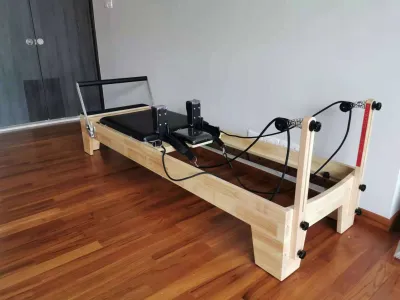
Prices are valid at publication and may change. Please refer to the product page for the latest price.
Conversely, aluminum and steel frames offer a more modern aesthetic and are generally lighter and easier to maneuver. High-grade anodized aluminum is exceptionally durable, resistant to rust, and requires minimal structural maintenance. Steel frames provide maximum rigidity and are often found in heavy-duty or commercial-grade home models. While metal frames are highly stable, they can transmit slightly more vibration and noise through the floor, which may necessitate the use of a dense rubber equipment mat to protect your flooring and maintain a quiet environment for downstairs neighbors.
For those with limited space, folding or vertical-stand reformers present an attractive solution. A folding reformer features a hinged frame that allows the machine to fold in half, reducing its footprint so it can be rolled into a closet or stored under a bed. While highly convenient, folding mechanisms introduce structural joints that can compromise the absolute rigidity of the frame under heavy loads. Non-folding models that can stand vertically against a wall offer a compromise, preserving the structural integrity of a solid frame while minimizing floor space when not in use. Always verify the ceiling height of your room before purchasing a vertical-stand model to ensure safe clearance.
Structural safety hinges on respecting the manufacturer’s specified maximum user weight capacity. Operating a reformer near or above its weight limit can strain the frame, compromise the stability of the carriage, and accelerate wear on the springs and ropes. Beginners should look for a machine with a weight capacity that comfortably exceeds their body weight by at least 15 to 20 percent to ensure a safe margin during dynamic movements.
Room Measurement Checklist:
- Length and Width: Measure the exact footprint of the machine and map it on your floor using painter's tape.
- Perimeter Clearance: Ensure at least 60 centimetres of open space around the entire perimeter for safety.
- Ceiling Height: Verify that your ceiling allows for full standing or kneeling exercises on top of the carriage.
- Storage Path: Measure doorways, hallways, and elevator dimensions if you plan to move or store the machine frequently.
Understanding the Carriage and Spring Resistance System
The heart of any Pilates reformer is the carriage—the rolling platform upon which you sit, kneel, or lie. The quality of your workout depends heavily on the smoothness of the carriage’s travel along the frame tracks. A jerky or bumpy ride disrupts the fluid, controlled movements central to Pilates and can place unnecessary stress on your joints. Look for carriages equipped with high-quality polyurethane or heavy-duty nylon wheels fitted with sealed ball bearings. Sealed bearings prevent dust, hair, and debris from entering the wheel mechanism, ensuring a silent, friction-free glide over years of use.

Complementing the wheels are the track rails, which should ideally be constructed from anodized aluminum or stainless steel. These materials resist wear and provide a perfectly flat surface for the wheels to roll on. When evaluating a reformer, check that the tracks are easy to wipe clean, as any accumulation of dust or grit will immediately degrade the smoothness of the carriage travel.
Resistance on a reformer is generated by a set of heavy-duty springs, which serve as the primary tool for both challenging your muscles and supporting your body weight during specific exercises. Most high-quality home reformers feature a system of four to six springs. Rather than having uniform tension, these springs are color-coded or clearly labeled to indicate different levels of resistance, typically categorized as light, medium, and heavy. A standard configuration might include one light spring (often yellow), two medium springs (blue), and two heavy springs (red).
Understanding how to combine these springs is crucial for progressive training. For instance, core-centric exercises like the “hundred” often require lighter resistance to challenge stability, while leg presses require heavier resistance to build lower-body strength. Beginners should ensure the machine they choose has a clearly documented spring tension guide. Additionally, the spring bar—the metal bar where the springs hook onto the frame—should feature multiple gear or anchor points. An adjustable gear system allows you to shift the starting position of the carriage closer to or further from the footbar, accommodating different leg lengths and adjusting the initial tension of the springs to match your physical proportions.
In a home or apartment setting, noise control is a major consideration. Squeaking springs or a noisy carriage can disrupt your concentration and disturb others in your household. High-quality manufacturers design their springs with internal dampeners or use high-grade steel alloys that resist whistling or creaking under tension. Before purchasing, consult user manuals or verified buyer feedback to confirm that the mechanical components operate quietly under normal working conditions.
Essential Accessories and Adjustability for Beginners
To perform the diverse repertoire of Pilates exercises safely, a home reformer must offer a high degree of adjustability to fit your unique biomechanics. The footbar is one of the most critical touchpoints on the machine, serving as the anchor for your feet during leg work and your hands during planks. A beginner-friendly reformer should feature an adjustable footbar with multiple height and angle settings. A footbar that is too high or too low can force your pelvis out of alignment or place excessive strain on your knees and ankles. Look for a secure, quick-release locking mechanism that allows you to transition between angles smoothly without the risk of the bar slipping during an exercise.
The straps and handles connect you directly to the spring system, facilitating arm, leg, and core work. Historically, traditional reformers utilized leather straps, but modern home models predominantly feature high-strength nylon or cotton webbing. Cotton straps are softer against the skin and offer a comfortable grip, while nylon straps are exceptionally durable and easier to sanitize. Double-loop straps are highly recommended for beginners; they feature a short loop for hand grips and a longer loop for feet, eliminating the need to constantly adjust rope lengths mid-workout.
The rope adjustment system itself should be intuitive. Older systems require manual knotting under the carriage, which can be tedious and imprecise. Modern home reformers utilize cleat systems or quick-adjust cam locks mounted near the headrest, allowing you to fine-tune the rope lengths symmetrically with minimal effort. Symmetrical ropes are vital for maintaining balanced muscular engagement and preventing postural compensation.
Proper spinal alignment is paramount in Pilates, particularly during supine (lying on your back) exercises. This is where adjustable shoulder rests and headrests play a vital role. The shoulder rests should be contoured and padded to support your shoulders comfortably against the pull of the springs without causing pinching. The headrest should offer at least two or three height positions to help maintain a neutral cervical spine, which is especially important for individuals with tight neck muscles or a forward-head posture.
While many advanced accessories exist, beginners should focus on securing a few essential add-ons that expand the utility of the machine. The most critical accessory is a standard Pilates box. A padded box sits on top of or over the carriage, raising your seating position to allow for seated exercises, prone (lying on your stomach) back extensions, and side-lying lateral work. Many manufacturers bundle a box with the initial purchase, making it a highly cost-effective inclusion.
Other accessories, such as a jumpboard or a standing platform, are excellent for progression but can be acquired later. A jumpboard attaches to the footbar end of the reformer, converting the machine into a low-impact plyometric training tool that elevates your heart rate. A standing platform allows for standing balance work. Ensure that any reformer you choose has the necessary mounting brackets to accept these accessories in the future, even if you do not purchase them immediately.
How to Evaluate Brand Reputation and Warranty
Investing in a home reformer is a long-term commitment to your physical well-being, making it essential to evaluate the manufacturer’s reputation and warranty policies carefully. A high-quality reformer is built to withstand thousands of cycles of motion, and its warranty should reflect this durability. When reviewing warranty terms, look for a clear distinction between different components of the machine. Reputable brands typically offer a lifetime or multi-decade warranty on the structural frame, as solid wood, steel, or aluminum should not fail under normal residential use.
Conversely, moving parts and soft goods are subject to natural wear and tear and will have shorter warranty periods. Springs, ropes, pulleys, and wheels should ideally be covered for one to two years, while the vinyl upholstery and foam padding may have a shorter coverage window. Be cautious of manufacturers that offer vague, short-term warranties covering the entire machine for only a few months, as this often indicates lower-grade materials and construction.
Reliable customer support is another critical factor, particularly when it comes to long-term ownership. Over years of consistent use, springs will eventually lose their tension, and rollers may wear down. Before purchasing, verify that the manufacturer sells replacement parts directly on their website or has a dedicated service channel. If a brand does not offer replacement springs or wheels, a simple mechanical wear issue could render your entire machine unusable.
When researching user feedback, look beyond initial impressions and focus on long-term reviews written after six months to a year of ownership. Pay close attention to comments regarding carriage noise, track wear, and customer service responsiveness. A brand that actively responds to customer issues and provides clear, accessible assembly instructions is far more likely to offer a positive long-term ownership experience.
Finally, watch out for red flags that suggest a lack of safety engineering or quality control. These include missing or incomplete assembly manuals, a lack of contact information for customer support, and the absence of safety certifications for mechanical components. A reputable manufacturer will always provide detailed safety guidelines, clear weight limits, and step-by-step maintenance instructions to ensure your home practice remains safe and rewarding.
Frequently Asked Questions (FAQ)
Is a folding reformer as durable as a full-size model?
Folding reformers are engineered to balance portability with structural integrity, but they do involve mechanical trade-offs. The hinge joints and locking pins required to fold the frame can introduce minor flex under high-tension exercises or dynamic lateral movements. While high-quality folding models from reputable brands are perfectly safe and durable for standard home use, they may not feel quite as rock-solid as a single-piece, full-size frame. When choosing a folding model, inspect the locking mechanism to ensure it uses heavy-duty steel pins or secure clamp locks that eliminate play in the frame joint when fully assembled.
Can I assemble a reformer machine by myself?
Many home reformers are designed for self-assembly and arrive with the necessary basic tools, such as Allen keys and wrenches. However, the physical demands of the assembly process should not be underestimated. Reformers are heavy, often weighing between 40 and 100 kilograms depending on the frame material. Unboxing, flipping the frame, and mounting the heavy carriage onto the tracks are tasks that generally require two people to perform safely. If you are assembling the machine alone, proceed slowly, follow the manufacturer’s illustrated guide step-by-step, and consider hiring professional assembly services if you feel uncomfortable handling the heavy components.
How do I maintain the springs and carriage at home?
Maintaining a home reformer involves simple, low-risk steps that preserve the smoothness of the machine and extend the life of its components. After every workout, wipe down the vinyl upholstery, headrest, and shoulder rests with a clean, dry, or slightly damp microfiber cloth to remove sweat and body oils; avoid harsh chemical cleaners, alcohol, or bleach, which can dry out and crack the vinyl. Periodically wipe the track rails with a dry cloth to prevent dust and hair from building up and clogging the wheels. Finally, perform a visual inspection of the springs every few months, checking for any gaps in the coils, rust, or uneven stretching, and replace them immediately if you detect any signs of wear.
Community discussion
Share your experience or ask a question. Comments are reviewed before publication.