
Selecting your first dive knife for snorkeling is primarily a matter of safety, preparation, and choosing the right tool for the environment. Unlike scuba diving, where heavy-duty tools are used for prying or anchoring, snorkeling requires a compact, lightweight tool designed to free you from unexpected underwater hazards. The ideal snorkeling knife features a compact blade, a blunt safety tip, a combination cutting edge, and highly corrosion-resistant materials.
Before purchasing any cutting tool, it is crucial to recognize that a dive knife is strictly emergency safety equipment, not a weapon or a tool for interacting with marine life. Carrying a knife does not replace proper water safety skills, buddy awareness, or formal snorkeling instruction. If you ever find yourself entangled, remaining calm and using your tool systematically is far more important than the size of the blade.
Sizing and Weight: Why Snorkeling Knives Differ from Scuba Gear
Recreational snorkelers operate primarily at the water’s surface or perform short, breath-hold skin dives. Because you lack the heavy gear, mechanical buoyancy control, and thick neoprene suits of a scuba diver, minimizing water resistance is essential. A large, heavy dive knife strapped to your leg creates unnecessary drag, disrupts your kicking rhythm, and can cause your leg to sink, making surface swimming more tiring.
Products mentioned in this guide
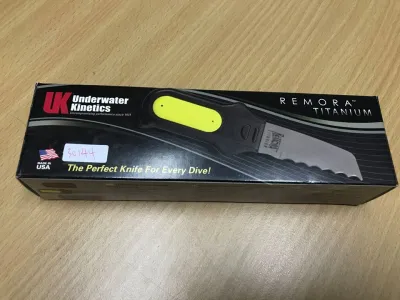
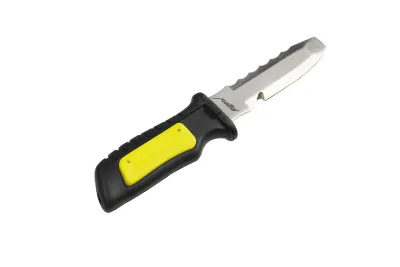
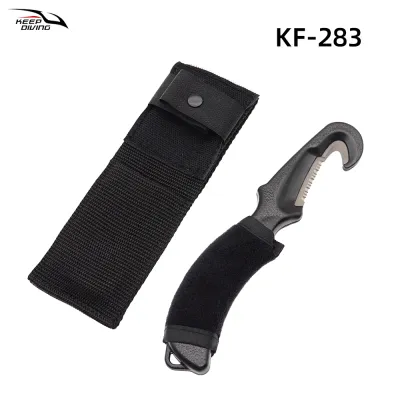
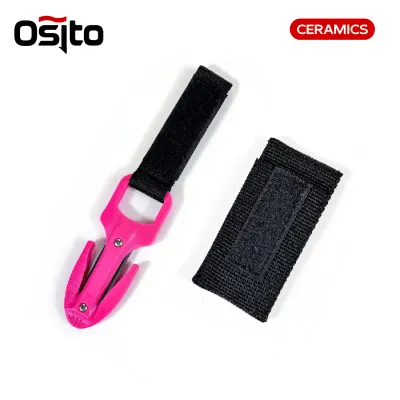
Prices are valid at publication and may change. Please refer to the product page for the latest price.
For snorkeling, your knife should be a compact, low-profile safety tool rather than a heavy pry bar. Scuba divers often carry larger knives to assist with heavy-duty tasks or gear adjustments at depth. In contrast, your primary hazard at the surface is entanglement in discarded fishing lines, thin nylon nets, or floating marine debris. A small blade measuring between 5 to 9 centimeters is more than adequate for these tasks while remaining light enough to wear comfortably without affecting your buoyancy or swimming form.
Choosing a lightweight, streamlined model also prevents the knife from shifting or sliding down your limb while you swim. Heavy knives require tight, thick straps that can constrict blood flow or pinch bare skin. By selecting a compact tool specifically designed for low drag, you ensure that the knife remains securely in place and completely unnoticed until the moment you actually need it.
Blade Specs Decoded: Edges and Tips for Underwater Tasks
Understanding the anatomy of a dive knife blade helps you select a tool that performs reliably under tension. The shape of the edge and the design of the tip dictate how safely and efficiently you can cut through different materials when seconds count.

Edge Types: Straight, Serrated, and Combo
Straight edges function like a standard kitchen knife, providing a clean, continuous slice. They are exceptionally effective at cutting through thin, soft materials such as monofilament fishing lines or plastic bands. However, a straight edge can slip on tough, fibrous materials unless you apply significant pressure, which is difficult and dangerous to do while floating at the surface.
Serrated edges feature a saw-like profile that excels at tearing through thick, tough materials. If you encounter braided nylon ropes, heavy fishing nets, or thick marine vegetation like kelp, a serrated edge allows you to saw through the obstruction quickly with minimal slipping. The downside is that serrated edges are more difficult to sharpen and do not produce clean, precise cuts.
For a first-time buyer, a combination blade (combo edge) offers the most practical balance. These blades feature a straight edge near the tip for clean slicing and a serrated section near the handle for heavy-duty sawing. This dual-profile design ensures you are prepared for both thin monofilament lines and thick, fibrous ropes without needing to carry multiple tools.
Tip Designs: Blunt vs. Pointed
Blunt tips are flat or squared-off at the end, making them the safest choice for snorkeling. In choppy surface waters or low-visibility conditions, a blunt tip prevents you from accidentally puncturing your inflatable snorkel vest, damaging your wetsuit, or cutting your own skin during a high-stress entanglement. Additionally, the flat tip can double as a light prying tool or a flathead screwdriver for quick gear adjustments on the beach.
Pointed tips are designed for piercing and precision cutting. While they offer excellent penetration, they carry a significantly higher risk of accidental injury in dynamic water environments. A sudden wave or a loss of balance can easily cause a pointed tip to slip, risking severe injury to you or your snorkeling buddy. For recreational snorkeling, the piercing capability of a pointed tip is rarely necessary, making the safety of a blunt tip the far superior option.
Material Specs: Evaluating Corrosion Resistance for Saltwater
Saltwater is highly corrosive, and warm tropical waters, such as those around Singapore’s Southern Islands, accelerate the oxidation process. When evaluating dive knives, you must look closely at the specific material grades listed on the product label rather than relying on generic marketing terms like “rust-proof.”
Marine-grade stainless steel is the most common material used for dive knives, typically categorized into 300-series and 400-series steels. 300-series stainless steel (such as 316) offers exceptional corrosion resistance but is relatively soft, meaning it loses its cutting edge quickly and requires frequent sharpening. 400-series stainless steel (such as 420) is much harder and holds a sharp edge well, but it is highly susceptible to surface rust and requires meticulous cleaning after every single immersion.
Titanium is the premium alternative to stainless steel. It is virtually immune to saltwater corrosion, incredibly lightweight, and highly durable. A titanium dive knife is an excellent long-term investment for frequent snorkelers, though it comes at a higher price point, typically ranging from S$80 to S$150 or more. Stainless steel knives are more budget-friendly, generally costing between S$30 and S$70, but they demand rigorous post-dive maintenance to prevent rust.
Regardless of the material you choose, always verify the manufacturer’s care instructions. No metal is entirely maintenance-free in marine environments. Even high-end titanium knives can suffer from mineral buildup or galvanic corrosion if stored in contact with other wet metals inside a gear bag.
Handle Ergonomics and Sheath Mounts: Securing Your Gear
A dive knife is useless if you cannot grip it securely or if it falls out of its sheath during your swim. The design of the handle and the mounting style of the sheath directly impact how safely and quickly you can deploy the tool in an emergency.
Handle grips must provide excellent traction when wet. Look for handles made from textured rubber, co-molded polymers, or high-traction plastics. Avoid smooth metal or polished plastic handles, which become incredibly slippery in saltwater. If you plan to snorkel in cooler waters or wear thin rash guards and gloves, ensure the handle is large enough to grasp comfortably without your fingers slipping forward onto the blade.
Sheath mounting options must keep the knife secure and low-profile to prevent snagging on coral, rocks, or floating debris. While scuba divers often strap knives to their calves, this position can cause significant drag for snorkelers swimming at the surface. Forearm mounts, weight belt clips, or secure pocket attachments are highly recommended for snorkeling. A forearm mount keeps the knife easily visible, accessible with either hand, and well away from your kicking stroke.
Before entering the water, always test the sheath’s locking mechanism. It should hold the knife firmly in place so it cannot shake loose, yet release smoothly when you apply deliberate pressure to the locking tab. Avoid simple friction-fit sheaths that rely solely on a rubber band, as these can easily degrade in the sun and fail unexpectedly.
Safe Handling, Maintenance, and Transport Rules in Singapore
Operating a bladed tool underwater requires deliberate, careful movements. When drawing your knife, always look directly at the sheath to ensure your fingers are clear of the blade’s path. Keep the blade pointed away from your body and your buddy at all times, and never force a knife back into its sheath blindly.
Proper post-dive maintenance is essential to preserve the integrity of your tool. Immediately after exiting the water, rinse both the knife and the inside of the sheath thoroughly with clean, fresh water to remove salt deposits and sand. Dry the knife completely with a clean towel before storing it. For stainless steel blades, applying a thin layer of food-grade silicone grease or mineral oil according to the manufacturer’s instructions will help prevent surface rust during storage.
Local transport regulations in Singapore require strict adherence to safety and security laws regarding bladed items. Carrying an exposed dive knife in public spaces, on public transport (such as the MRT or buses), or in the cabin of an aircraft is strictly prohibited and subject to severe legal penalties. Always transport your dive knife securely packed deep inside a gear bag or container where it is completely inaccessible to the public. For flights departing from or arriving at Changi Airport, the knife must be packed securely in your checked luggage; never attempt to carry it in your cabin baggage. Always consult the latest guidelines from the Land Transport Authority (LTA) and the Civil Aviation Authority of Singapore (CAAS) before traveling with your gear.
Frequently Asked Questions (FAQ)
Do I really need a dive knife for basic reef snorkeling?
If you are participating in a guided snorkeling tour within a highly managed marine park or resort sanctuary, a dive knife is generally not necessary, as trained guides handle safety and environmental hazards. However, if you are snorkeling independently around natural reefs, rocky coastlines, or areas where recreational fishing is common, carrying a compact dive knife is a vital safety precaution. It serves as an essential emergency tool to free yourself or your buddy from discarded monofilament fishing lines, ghost nets, or drifting ropes that pose a serious entanglement risk.
Can I carry a dive knife on public transport or flights in Singapore?
Yes, but only if it is transported in compliance with local security laws. You must never carry an exposed or easily accessible dive knife on public buses or the MRT. Instead, pack the knife securely inside a closed gear bag, ensuring it is completely inaccessible during your journey. For air travel through Changi Airport, dive knives are classified as sharp objects and are strictly prohibited in carry-on cabin baggage. You must pack the knife securely in your checked luggage, preferably wrapped or housed in its sheath to prevent injury to baggage handlers. Always check the latest transport security regulations before your trip.

Community discussion
Share your experience or ask a question. Comments are reviewed before publication.