
Selecting your first table tennis machine is a major step toward accelerating your training, allowing you to practice strokes, build muscle memory, and improve footwork without needing a training partner. For players in Singapore, where dedicated club tables are highly competitive and training space can be limited, having a reliable home or community setup can significantly boost your development. However, navigating the technical specifications of a modern robot can be overwhelming if you do not know which features directly translate to skill progression.
To make an informed investment, you must evaluate how a machine’s mechanical capabilities align with your current skill level, physical space, and training goals. While advanced models offer complex programming, beginners and intermediate players generally benefit most from consistent ball delivery, manageable spin variations, and straightforward maintenance. Balancing these features against your budget and space constraints will ensure you choose a tool that actively supports your growth rather than gathering dust in a storage closet.
Quick Answer: Essential Specs for Your First Robot
When buying your first table tennis machine, focus on four non-negotiable features that directly impact the quality of your practice sessions. First, look for adjustable spin capabilities, specifically the ability to switch between topspin and backspin, which are the foundations of modern table tennis. Second, ensure the machine offers variable speed and frequency controls so you can start slowly and gradually increase the intensity as your muscle memory develops. Third, basic horizontal oscillation is essential for footwork training, as it forces you to move rather than standing in a single spot. Finally, select a machine with a minimum ball capacity of 100 to 150 balls to ensure you can complete meaningful, uninterrupted drill sets.
Products mentioned in this guide
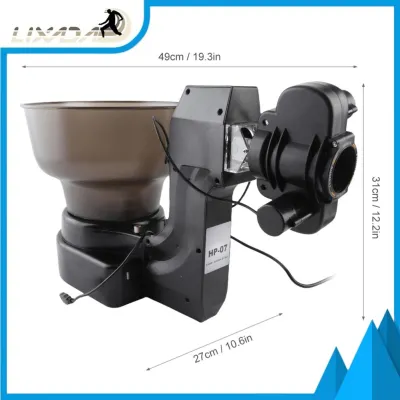
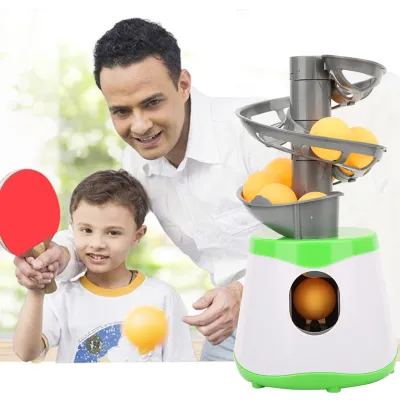
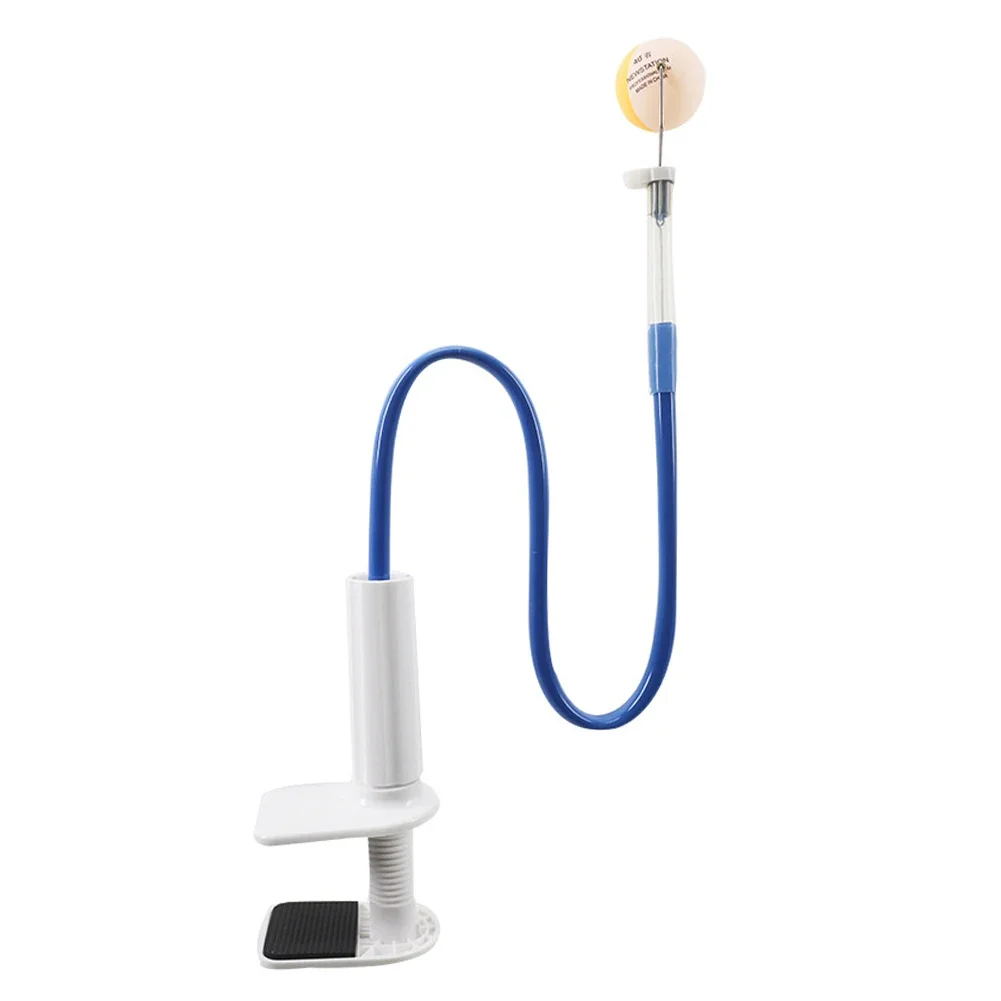
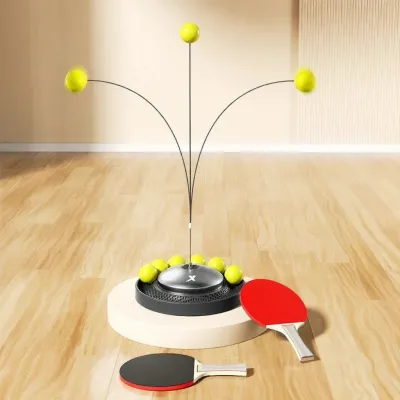
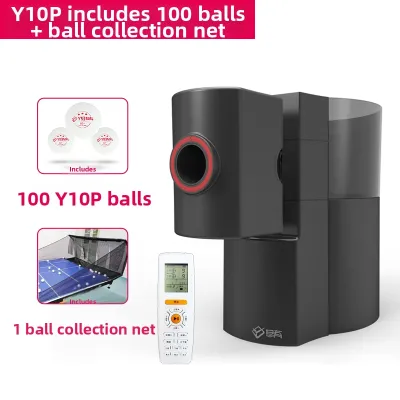
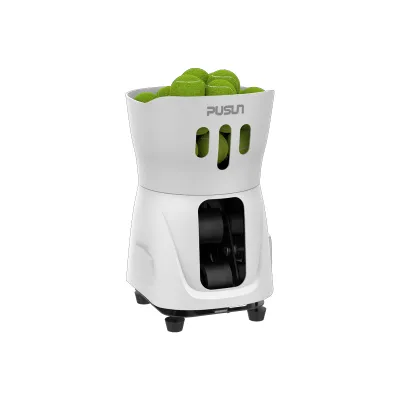
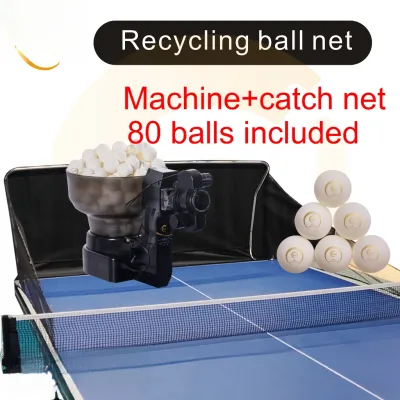
Prices are valid at publication and may change. Please refer to the product page for the latest price.
Beyond these technical specifications, practical logistics are equally critical. Portability, ease of setup, and a compact footprint are vital considerations, especially when dealing with typical space constraints in Singapore homes. A machine that is difficult to assemble or takes up too much space in a shared living area will quickly become a chore to use. Prioritizing a model that can be quickly set up on a standard dining table or easily transported to a community club will maximize your actual training time.
Core Features to Evaluate Before Buying
Spin Capabilities
Adjustable spin is far more important for beginners than raw speed. In table tennis, the spin of the incoming ball dictates how you must angle your racket and execute your stroke. A quality entry-level table tennis machine must allow you to practice against both topspin (the forward rotation that causes the ball to dive) and backspin (the backward rotation that causes the ball to float and drop). Practicing against backspin is particularly crucial for beginners, as it helps you master the “push” and the basic “loop” stroke required to lift underspin balls over the net.

When evaluating spin, pay close attention to how the machine generates rotation. Basic machines typically use a single friction wheel. To change the spin on a single-wheel model, you must manually rotate the robot’s head, meaning you cannot easily mix topspin and backspin in a single continuous drill. Intermediate and advanced machines utilize a dual-wheel design, where two independent motors spin separate wheels. By adjusting the relative speed of these two wheels, you can generate heavy topspin, heavy backspin, sidespin, or even a completely flat “no-spin” ball without touching the machine’s head. For long-term skill building, a dual-wheel system offers much greater versatility.
Speed and Frequency Range
For beginner training, control and consistency are paramount. You do not need a machine that fires balls at professional-level velocities; instead, you need a robot that can deliver slow, highly spun balls that give you enough time to execute a complete, correct stroke. Look for a machine that offers a wide speed range, starting at a gentle crawl and scaling up to moderate speeds. This allows you to focus on form, balance, and racket contact before trying to handle faster, more aggressive shots.
Frequency, measured in balls per minute (BPM), determines the rhythm of your training. A beginner-friendly machine should offer an adjustable frequency range starting as low as 25 to 30 BPM. This slow rate gives you ample time to reset your stance, analyze your previous stroke, and prepare for the next ball. As your reaction times and physical conditioning improve, you can scale the frequency up to 60 or 80 BPM to simulate rapid rally sequences and build cardiovascular endurance. Avoid machines with fixed or highly limited frequency settings, as they cannot adapt to your growing skill level.
Oscillation and Placement
Static drills, where the machine feeds the ball to the exact same spot on the table, are excellent for learning a new stroke. However, to transition from a beginner to an intermediate player, you must learn to hit the ball while moving. This is where oscillation and placement features become critical. Horizontal oscillation refers to the machine’s ability to sweep side-to-side, distributing balls across the width of the table. Basic oscillation sweeps continuously from left to right, while more advanced programming allows you to target specific spots, such as alternating between your deep forehand and deep backhand.
Vertical oscillation, which controls the depth of the ball (short near the net versus long near the endline), is another valuable feature. Combining horizontal and vertical movement forces you to adjust your positioning both laterally and forward-and-backward. When shopping for a machine, verify whether the oscillation patterns are predictable or random. Predictable patterns are ideal for structured footwork drills, while random placement simulates real match play by preventing you from anticipating where the next ball will land.
Ball Capacity and Power Source
Your training rhythm is heavily influenced by how the machine holds and feeds balls. Table tennis robots generally fall into two categories: those with internal hoppers and those with external net-attached collection systems. Internal hoppers sit directly on the table or attach to the end, holding a set number of balls (usually between 100 and 200). Once the hopper is empty, you must stop and collect the balls from the floor or table to reload. External net systems automatically catch your return shots and feed them back into the machine’s firing mechanism, allowing for continuous, uninterrupted play. While net-attached systems maximize hitting time, they are significantly bulkier and more complex to set up.
Power supply options also impact where and how you can train. Most standard table tennis machines rely on an AC adapter, which requires proximity to a wall outlet. In Singapore, where you might set up a table in a multi-purpose hall, a condominium function room, or even an outdoor void deck, finding a nearby power outlet can sometimes be a challenge. If you plan to travel with your machine or play in shared community spaces, consider models that offer rechargeable battery compatibility or USB power inputs. For dedicated home setups, a standard AC adapter is usually the most reliable and hassle-free option.
Recommended Table Tennis Machine Types for Beginners
Basic Portable Launchers (For Absolute Beginners)
Basic portable launchers are designed for players who are just starting their table tennis journey and want to focus on consistent stroke repetition. These machines are typically lightweight, freestanding units that sit directly on top of the table. They are highly portable, making them easy to pack into a sports bag and take to a local community center or a friend’s house. Because they have a simple mechanical design, they are generally very user-friendly and affordable.
- Pros: Highly portable and lightweight; very affordable; fast and simple setup; ideal for small spaces and HDB apartments.
- Cons: Limited spin variations (usually single-wheel, requiring manual head adjustment); minimal or basic horizontal oscillation; smaller ball capacities that require frequent reloading.
Intermediate Programmable Robots (For Skill Building)
Intermediate programmable robots are geared toward players who have mastered basic strokes and want to develop their footwork, reaction times, and transition play. These models often feature dual-wheel firing heads, allowing you to generate a wider variety of spins, including realistic sidespins and no-spin balls. They also offer programmable electronic control boxes or smartphone app integration, enabling you to set up specific drill sequences, such as one backspin ball to the backhand followed by one topspin ball to the forehand.
- Pros: Excellent for footwork drills and combination shots; independent spin and speed controls; programmable placement and sequence options; great long-term value as you transition to intermediate play.
- Cons: Steeper learning curve to program drills; higher budget required; slightly heavier and more complex to transport than basic launchers.
Net-Attached and Advanced Systems (For High-Volume Drills)
Net-attached systems are designed for high-volume, intense training sessions. These machines mount directly to the end of the table and feature an integrated collection net that spans the entire width of the playing surface. When you hit the ball back over the net, it rolls down into a central collection funnel and is recycled back into the firing mechanism. This continuous loop allows you to hit hundreds of balls without stopping to clean up the floor.
- Pros: Maximizes active practice time with automatic ball recycling; high ball capacity; robust build quality designed for heavy daily use; advanced programming options.
- Cons: Bulky and heavy; requires dedicated storage and significant setup time; expensive; requires a sturdy table that can handle the mounting clamp mechanism.
Comparison of Table Tennis Machine Types
| Machine Type | Target Skill Level | Key Training Benefit | Portability | Relative Price Tier (SGD) |
|---|---|---|---|---|
| Basic Portable Launcher | Absolute Beginner | Stroke consistency & basic timing | Excellent (Freestanding, lightweight) | Budget (S$150 – S$400) |
| Intermediate Programmable | Beginner to Intermediate | Footwork, shot transitions, & spin recognition | Moderate (Compact, corded/battery) | Mid-Range (S$400 – S$900) |
| Net-Attached System | Intermediate to Advanced | High-volume endurance & continuous drills | Low (Bulky, semi-permanent clamp) | Premium (S$900+) |
Note: Exact retail prices, stock availability, and shipping fees vary. You should verify current pricing and compatibility with local sports retailers in Singapore before making a purchase.
Setup, Safety, and Maintenance Guidelines
Safety Boundaries
While table tennis is generally a low-impact sport, operating a motorized table tennis machine introduces specific physical safety considerations. The firing wheels inside the machine’s head rotate at incredibly high speeds to generate spin and velocity. You must never look directly into the launch nozzle while the machine is powered on, as an unexpected ball release can cause serious eye injury. If you are training children or operating the machine at its maximum speed settings, wearing protective sports eyewear is a highly recommended precaution.
Additionally, the physical practice environment must be kept clear of hazards. Operating a robot means you will quickly accumulate dozens of loose balls on the floor around your feet. Stepping on a loose ball during a lateral footwork drill is a common cause of rolled ankles and slips. To mitigate this risk, use a physical barrier or a floor-level collection net to corral stray balls, and periodically pause your drill to clear the floor. Equipment can enhance your practice, but it cannot replace personal situational awareness and physical safety judgment.
Table and Space Requirements
Before purchasing a machine, measure your available playing space to ensure you can move safely. A standard ITTF-approved table tennis table measures 2.74 meters in length and 1.525 meters in width. To practice footwork effectively, you need a absolute minimum clearance of 1.5 to 2 meters behind the endline of the table, and at least 1 meter of clear space on either side. If your room is too cramped, you will not be able to execute proper lateral movements, which defeats the purpose of using an oscillating robot.
Furthermore, you must verify how the machine mounts to your table. Clamp-on models attach directly to the table’s end apron. Check the manufacturer’s specifications regarding maximum table thickness and edge profile compatibility. If your home table has a non-standard, extra-thick support frame or a highly beveled edge, a clamp-on machine may not secure safely. In such cases, a freestanding model that sits on a tripod or directly on the table surface is a much safer and more versatile choice.
Maintenance and Cleaning
Singapore’s tropical climate, characterized by high humidity, directly impacts the performance and lifespan of your table tennis equipment. High humidity causes dust, sweat, and oil from your hands to stick to the surface of the table tennis balls. When these dirty balls are fed through the machine, the grime transfers to the internal tracks and the rubber firing wheels. Over time, this buildup degrades the grip of the wheels, leading to inconsistent ball trajectory, inaccurate spin, and frequent mechanical jamming.
To keep your machine running smoothly, establish a regular cleaning routine:
- Wipe down the balls: Periodically wash your training balls in warm, soapy water, rinse them thoroughly, and let them dry completely before putting them back into the machine.
- Clean the friction wheels: Unplug the machine and use a dry, lint-free microfiber cloth to gently wipe the rubber firing wheels. Do not use harsh chemical solvents or wet cloths on the internal electronics.
- Clear the internal tracks: Check the feeding tubes and tracks for dust or stray hair, which can cause the ball-feeding motor to overheat.
- Protect the unit: When the machine is not in use, cover it with a dust cover or store it in its original packaging to protect the sensitive electronic components and rubber parts from ambient moisture and dust.
Frequently Asked Questions (FAQ)
How many balls should a beginner table tennis machine hold?
A beginner table tennis machine should ideally hold between 100 and 150 balls. This capacity strikes the perfect balance between practical training volume and physical portability. A hopper of this size allows you to perform continuous drills for several minutes, which is long enough to build muscle memory and elevate your heart rate without causing physical exhaustion. While larger hoppers holding 200 or more balls exist, they add significant weight and bulk to the machine, making it much harder to pack away and store in space-conscious homes.
Do I need a special table for a table tennis robot?
No, you do not need a specialized table, as almost all table tennis machines are designed to work with standard, full-sized tables. However, you must carefully check the machine’s mounting mechanism before buying. Clamp-on robots require a standard table edge and a clean undercarriage to grip securely. If you are using a compact, mid-sized, or folding table that does not meet standard ITTF dimensions, or if your table has a very thick decorative apron, a freestanding robot with its own support stand is a much safer option that avoids compatibility issues.
Can a table tennis machine actually help improve my footwork?
Yes, a table tennis machine is an exceptionally effective tool for improving your footwork, provided you use it correctly. By utilizing the machine’s horizontal oscillation features, you can program the ball to land in alternating positions, forcing you to move laterally. To get the most out of these drills, you must actively focus on your footwork mechanics—using side-steps or cross-steps to position your body behind the ball before swinging—rather than simply leaning or reaching with your arm. Remember that while a robot provides consistent delivery, it cannot replace physical training, self-discipline, and proper coaching feedback.
Community discussion
Share your experience or ask a question. Comments are reviewed before publication.