
Selecting the right wellness tool requires a clear understanding of its physical design, material composition, and how it aligns with your physical needs. A mugwort hammer is a traditional self-care device used for meridian tapping (Pai Da) and targeted muscle relaxation. Filled with dried mugwort leaves—often blended with supportive materials like seeds or grains—this tool is swung in a rhythmic, bouncing motion to stimulate circulation, ease tension, and release a calming herbal aroma.
To find a high-quality mugwort hammer that delivers consistent therapeutic benefits, you must evaluate four primary decision-making dimensions: the filling material (pure mugwort versus seed blends), the outer fabric (breathability and skin comfort), the handle ergonomics (length, flexibility, and grip), and the overall weight. By matching these key features to your physical build, pain tolerance, and wellness goals, you can select a durable tool that integrates seamlessly into your daily routine.
Key Design Features to Evaluate Before You Buy
Every component of a mugwort hammer directly influences the quality of your tapping sessions. Understanding how these structural features function allows you to make an informed choice based on comfort, hygiene, and performance.
Products mentioned in this guide
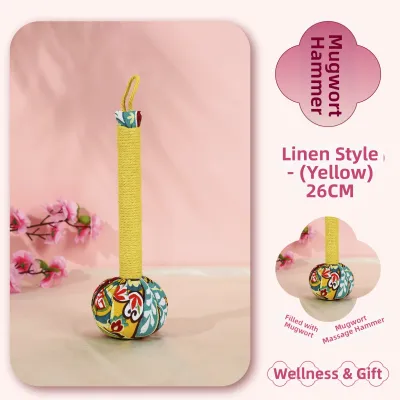
Prices are valid at publication and may change. Please refer to the product page for the latest price.
Hammer Head Materials and Fillings
The internal filling of the hammer head determines both the impact sensation and the therapeutic properties of the tool. Manufacturers generally use either pure mugwort fillings or blended fillings. Pure fillings consist entirely of compressed, dried mugwort leaves or moxa wool. These heads are lightweight, highly aromatic, and deliver a soft, cushioned strike that is gentle on sensitive skin.
Blended fillings combine dried mugwort with dense elements such as cassia seeds, buckwheat hulls, or cotton. Cassia seeds add significant weight and structure, creating a firm, solid head that delivers a deeper, more rhythmic impact. Buckwheat hulls offer a balanced middle ground, providing moderate firmness and excellent air circulation within the head. Cotton is occasionally added to increase cushioning, though it can reduce the tactile feedback of the strike.
The outer fabric of the hammer head is equally important for comfort and hygiene. Cotton and linen are the preferred choices for their high breathability and natural feel against the skin. Linen is exceptionally durable and handles moisture well, which is highly beneficial in warm, humid climates like Singapore where sweat transfer is common. Velvet covers offer a soft, plush feel but tend to trap heat and require more careful maintenance. To maintain proper hygiene, look for models that feature a removable, washable outer sleeve. Because the internal herbal filling must never get wet, a washable cover allows you to keep the contact surface clean without damaging the delicate dried herbs inside.
Handle Design and Ergonomics
The handle is your primary interface with the tool, and its design determines how much control you have and how much physical strain your wrist experiences. Common handle materials include solid wood (such as beech, ash, or oak), natural bamboo, and high-density plastics. Solid wood handles provide excellent durability and a stable, solid grip. Bamboo handles are highly favored for their natural flexibility; they offer a subtle “spring” or whip-like action that absorbs shock and reduces the force transferred to your wrist during repetitive tapping. High-density plastics are easy to sanitize but lack the shock absorption and organic feel of natural wood or bamboo.
Handle length is a critical factor that must match your target application. Long handles, typically measuring between 35cm and 45cm, are essential for reaching difficult areas independently, such as the shoulder blades, upper back, and lower back. Shorter handles, ranging from 20cm to 30cm, offer superior control, leverage, and precision, making them ideal for targeted tapping on the arms, chest, thighs, and calves.
Additionally, inspect the connection point where the handle meets the hammer head. This joint is the most common failure point on low-quality models. Look for reinforced construction, such as handles that are deeply embedded into the head and secured with heavy-duty cord wrapping, metal collars, or internal structural pins. A loose or wobbly head compromises safety and disrupts the rhythmic flow of your wellness routine.
Weight and Size Considerations
The weight of the hammer head dictates how deeply the impact penetrates your muscle tissue. Heavier heads, typically weighing between 250g and 400g, rely on gravity to deliver deep, blunt stimulation. These are highly effective for large, dense muscle groups like the glutes, hamstrings, and upper trapezius. Lighter heads, weighing between 100g and 200g, require slightly more wrist movement to swing but deliver a gentle, superficial stimulation. This is ideal for delicate meridian lines, thin-skinned areas, and users with lower pain thresholds or fragile joints.
To prevent repetitive strain injuries, you must choose a weight that you can comfortably swing using a relaxed wrist motion for 10 to 15 minutes. If your forearm muscles or wrist joints begin to ache or tire within the first few minutes, the hammer is too heavy or poorly balanced for your current physical strength.
The shape and surface area of the head also influence how the impact is distributed. Round or spherical heads distribute pressure evenly in all directions, making them highly versatile for general use. Oval or cylindrical heads allow you to alternate between a broad, flat strike and a more concentrated edge strike. Flat, disc-like heads cover a larger surface area quickly, which is highly efficient for broad back tapping but less effective for pinpointing specific muscle knots.
How to Match the Hammer Type to Your Wellness Goals
To get the most out of your purchase, you should select a hammer type designed specifically for your primary wellness objectives. Different configurations excel at different tasks.

Comparison of Mugwort Hammer Types for Different Wellness Goals
| Hammer Type | Primary Use Case | Key Design Feature | Limitations |
|---|---|---|---|
| Deep Tissue & Muscle Relief | Relieving deep muscular knots, tension, and post-exercise stiffness | Heavyweight (300g+), cassia seed or buckwheat blend, long wooden handle | Not suitable for bony areas, joints, or low pain tolerance |
| Meridian Tapping & Light Wellness | Daily meridian stimulation (Pai Da), stress relief, and aromatherapy | Lightweight (150g-200g), pure aged mugwort filling, breathable cotton cover | Less effective for deep muscular knots or thick muscle tissue |
| Compact & Travel-Friendly | Commuting, office use, or maintaining wellness routines while traveling | Short handle (<25cm), lightweight head, occasionally foldable or modular | Limited reach for the back; requires more physical effort to generate impact force |
Deep Tissue and Muscle Relief Hammers
If your primary goal is to alleviate chronic muscle tightness, physical fatigue from long hours at a desk, or post-workout soreness, you require a heavy-duty option. These hammers leverage dense fillings like cassia seeds, which retain their structure and provide a firm, solid impact that penetrates deep into the myofascial layers.
The outer fabric should be a thick, tightly woven cotton canvas or heavy linen to withstand repeated firm strikes. A longer handle made of solid wood or flexible bamboo is crucial here, as it allows you to swing the hammer over your shoulder to reach the lower back, glutes, and hamstrings without straining your shoulders or twisting your spine. Note that these firm hammers are highly intense and should never be used on thin-skinned or bony areas.
Meridian Tapping and Light Wellness Hammers
For those practicing traditional meridian tapping to stimulate energy flow along the body’s pathways, a lighter, gentler tool is preferred. These hammers feature pure, high-quality moxa wool or dried mugwort fillings with minimal heavy seeds. The impact is soft, cushioned, and highly aromatic.
When the hammer strikes the body, the friction and warmth help release the natural, soothing essential oils of the mugwort. The cover should be a highly breathable, thin cotton or linen fabric to allow the therapeutic aroma to escape freely. These are perfect for daily self-care, relaxation, and sensory therapy, but they will not break down deep, stubborn muscular knots.
Compact and Travel-Friendly Options
For busy individuals who want to keep a wellness tool at their office desk or pack it in a travel bag, compact models are ideal. These typically feature shorter handles (often under 25cm) and smaller, highly compressed heads. Some modern designs offer modular, screw-on handles or foldable shafts to maximize portability.
While highly convenient, they present distinct trade-offs: you lose the mechanical advantage of a long handle, meaning you must use more shoulder and arm effort to tap your back, and the smaller head covers less surface area, requiring more strikes to achieve the same coverage.
Quality Indicators: Spotting Authentic Mugwort and Durable Craftsmanship
Because the market includes many low-grade imitations, you must know how to verify the quality of both the herbal filling and the physical construction before committing to a purchase.
Evaluating Mugwort Quality and Aroma
The therapeutic value of a mugwort hammer lies in its filling. Authentic, high-quality mugwort (specifically Artemisia argyi) undergoes an aging process—typically three to five years—to reduce its harsh, volatile green oils, leaving a mellow, earthy, slightly sweet, and deeply calming herbal aroma. In contrast, low-quality, freshly harvested, or chemically treated mugwort emits a sharp, grassy, or harsh chemical odor that can cause headaches rather than relaxation.
Because dried herbal products are highly susceptible to absorbing moisture, they run a high risk of developing mold, especially in humid tropical climates. Before buying, check the product’s feel and smell. The hammer head should feel completely dry and firm, never damp or spongy. The aroma must be clean and herbal; any hint of a musty, sour, or damp-cardboard smell indicates mold growth, rendering the hammer unsafe for use.
Always check the product label for the stated age of the mugwort. Reputable wellness brands will clearly state the aging period (e.g., “3-Year Aged Chen Ai” or “5-Year Aged”). Verify these claims by reading user reviews, paying close attention to comments regarding how long the scent lasts and whether users experienced any dust leakage or allergic reactions.
Checking Craftsmanship and Durability
A close visual and tactile inspection will reveal whether a hammer is built to last. Examine the stitching of the hammer head carefully. The filling is highly compressed, meaning poor stitching will quickly unravel under the stress of repeated impacts. This leads to messy leaks of herbal dust or seeds. Look for tight, uniform, and double-stitched seams, especially around the base where the fabric meets the handle.
Test the handle-to-head joint. Hold the handle firmly and apply gentle lateral pressure to the hammer head. There should be absolutely no wobbling, shifting, or creaking. A loose connection is a safety hazard, as the heavy head could detach mid-swing.
Finally, inspect the handle finish. Natural wood and bamboo handles must be sanded perfectly smooth. Look for any splinters, rough grain, or cracks. Avoid handles coated in cheap, highly slippery varnishes that can slide out of sweaty hands; instead, look for natural oil finishes or textured grips, such as wrapped cotton cord, which ensure a secure hold during use.
Safe Usage Boundaries and Daily Maintenance
To enjoy the benefits of a mugwort hammer without risking injury or damaging the tool, you must follow clear safety guidelines and proper maintenance practices.
Before your first session, always check the applied product’s label and the manufacturer’s instructions. If instructions conflict with your personal health conditions, stop and consult a qualified healthcare professional.
- Avoid Sensitive Areas: Never strike the spine, joints (knees, elbows, wrists, ankles), bony prominences (like the collarbone), or the head. Tapping must be restricted strictly to fleshy, muscular zones. Direct impact on bones can cause painful periosteal bruising, joint inflammation, or microtrauma.
- Observe Contraindications: Do not use a mugwort hammer if you are pregnant, have open wounds, skin infections, severe cardiovascular conditions, deep vein thrombosis, or bleeding disorders. If you experience persistent pain, dizziness, or unusual bruising, stop use immediately.
- Use Proper Technique: Employ a relaxed, bouncing wrist motion rather than a stiff, forceful arm strike. Imagine the hammer head bouncing off your skin like a drumstick. This elastic impact allows the mechanical wave to penetrate deeply into the muscle tissue without causing superficial bruising or skin damage.
- Prevent Moisture and Mold: To combat high humidity, store your mugwort hammer in a dry, well-ventilated area. Keep it inside a breathable cotton bag or a dedicated storage box with silica gel desiccant packs. Never store it in a damp bathroom or a sealed plastic bag without ventilation.
- Sun-Dry Safely: To refresh the natural aroma and eliminate surface moisture, place the hammer in indirect sunlight for 1 to 2 hours occasionally, provided the manufacturer's label permits it. Avoid prolonged, direct midday UV exposure, which can degrade the outer fabric fibers and dry out the volatile oils too quickly. Never wash the hammer head or submerge it in water, as wetting the dried mugwort will cause immediate mold and ruin the tool.
Frequently Asked Questions (FAQ)
Can I use a mugwort hammer every day?
Yes, daily use is generally safe and highly beneficial for light meridian tapping and muscle relaxation. However, you should limit your sessions to 10 to 15 minutes per target muscle group to prevent overstimulation, localized soreness, or bruising. Always listen to your body; if a particular area feels tender or bruised from a previous session, rest that area and allow it to recover fully before tapping it again.
Does the mugwort filling lose its effectiveness over time?
Yes, the volatile essential oils responsible for the therapeutic, calming aroma of the mugwort will naturally dissipate over time. Depending on how frequently you use the hammer and how well you store it, the scent will typically remain strong for 1 to 2 years. While the physical tapping function of the hammer remains perfectly intact after this period, the aromatherapy benefits will diminish, making it a good time to replace the hammer if sensory relaxation is a key part of your routine.
Is it safe to use a mugwort hammer on joints and bones?
No, it is not safe to use a mugwort hammer directly on joints, bones, or the spine. These areas lack the protective cushioning of thick muscle tissue, and striking them can lead to painful bone bruises, joint inflammation, or nerve irritation. Restrict your tapping exclusively to soft, fleshy muscle groups such as the shoulders, upper back, thighs, and calves to ensure a safe and therapeutic experience.
Community discussion
Share your experience or ask a question. Comments are reviewed before publication.