
Selecting the right electronic whistle for cheerleading coaching requires balancing acoustic power, physical ergonomics, and reliable operation. Unlike traditional sports where a referee stands relatively still on a field, a cheerleading coach is constantly in motion—spotting high-flying stunts, demonstrating complex choreography, and shouting instructions over high-tempo music. An electronic whistle provides a sanitary, loud, and instantaneous signal that cuts through the noise of a bustling gymnasium without requiring you to constantly place a plastic mouthpiece in your mouth. By focusing on key specifications such as directional sound projection, hands-free mounting options, and secure trigger mechanisms, you can find a tool that enhances your coaching efficiency and keeps your athletes safe during intense training sessions.
Why Cheerleading Environments Demand Specific Whistle Features
Cheerleading practices and competitions present a unique set of acoustic and physical challenges that standard sports whistles often fail to address. In a typical training facility, multiple teams may share the same floor, creating a chaotic wall of sound composed of tumbling impacts, counting voices, and overlapping music tracks. Traditional pea whistles rely on the coach’s lung capacity to generate volume, which can quickly lead to vocal fatigue and inconsistent signaling during a long, multi-hour practice session. Furthermore, the acoustic properties of high-ceilinged, hardwood-floored gymnasiums tend to scatter sound, making it difficult for athletes at the far end of a 14-meter cheer mat to hear a standard whistle clearly.
Physically, cheerleading coaching is an incredibly active role that demands constant hands-on engagement. Coaches must be ready to spot flyers during basket tosses, guide bases through complex stunt transitions, and physically adjust an athlete’s posture mid-routine. Holding a traditional whistle in your mouth while performing these tasks is not only uncomfortable but also poses a significant choking hazard if you must react quickly to catch a falling athlete. Transitioning to an electronic alternative allows you to keep the signaling device mounted on your wrist, finger, or clothing, ensuring your hands and mouth remain completely free to coach, spot, and instruct safely.
Products mentioned in this guide
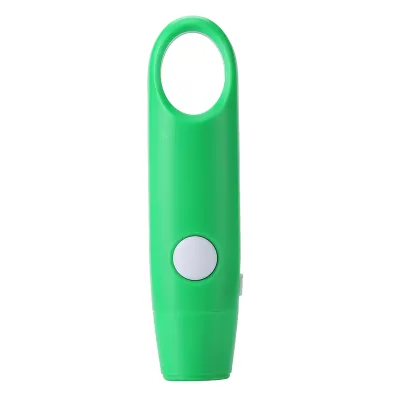
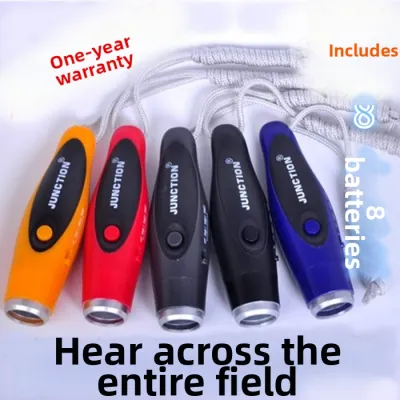
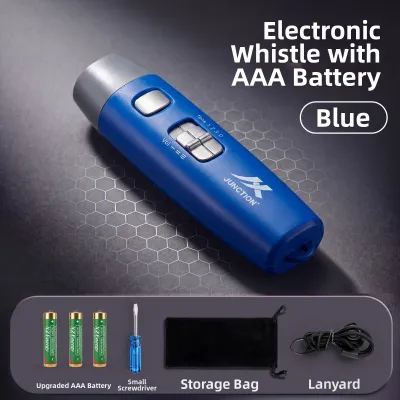
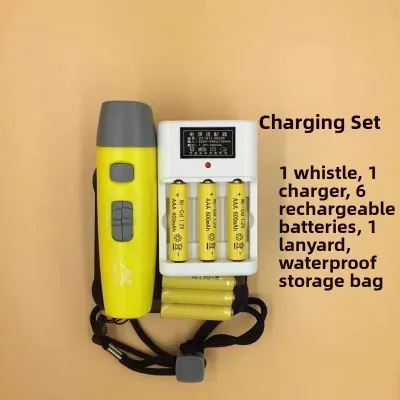
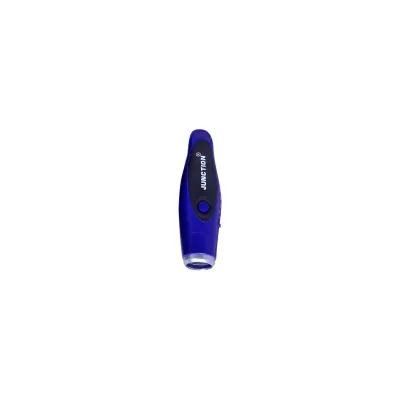
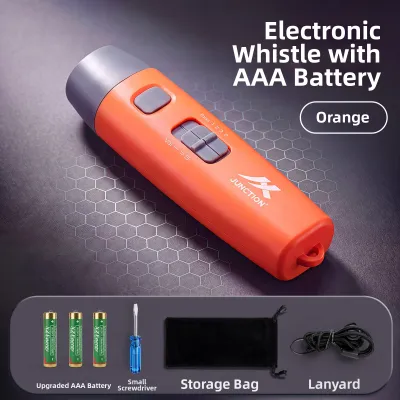
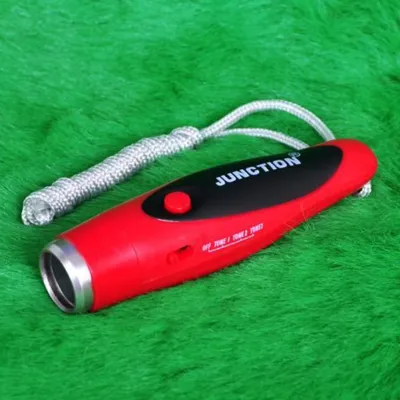
Prices are valid at publication and may change. Please refer to the product page for the latest price.
Additionally, the hygiene benefits of electronic models cannot be overstated in a team environment. Traditional whistles collect saliva and moisture, making them breeding grounds for bacteria and viruses, especially if multiple coaches or student leaders need to use the same signaling device. An electronic whistle operates via a simple button press, eliminating oral contact entirely. This design allows the device to be passed between coaching staff, team captains, or choreographers without any sanitary concerns, maintaining a healthier training environment for everyone involved.
Sound Projection and Volume Adjustability
When evaluating the acoustic performance of an electronic whistle, the maximum decibel output is the first specification you should verify. Cheerleading music is mixed to be highly energetic and loud, often played through powerful gym sound systems that can easily drown out low-power electronic devices. Look for manufacturer specifications that detail the decibel rating at a set distance, typically measured at one meter. A whistle capable of producing a clear, high-frequency tone is essential for cutting through the heavy bass and vocal tracks of a modern cheer mix, ensuring your athletes can instantly hear the signal to stop or reset.

However, raw loudness is only half of the equation; volume adjustability is equally critical for coaches who transition between different training environments. A whistle that is loud enough to be heard over a roaring crowd at an outdoor national competition will likely be deafening and disruptive in a small, enclosed choreography studio. Selecting a model with variable volume settings—such as low, medium, and high modes—allows you to adapt the signal to your immediate surroundings. This flexibility prevents auditory discomfort for your athletes during close-quarters instruction while still providing the necessary projection when you move to a large, open-air stadium.
You must also consider the directional nature of the sound produced by electronic whistles. Unlike traditional whistles that scatter sound in a wide radius around the user’s head, electronic models project sound from a specific speaker port on the casing. This directional projection means you can aim the whistle directly at the group of athletes you are addressing, focusing the acoustic energy where it is needed most. When shopping, check the design of the speaker horn or nozzle to ensure it is shaped to project a focused beam of sound across the length of the cheer mat, rather than dispersing weakly in all directions.
Hands-Free Design and Wearability
Because cheerleading coaching requires constant physical readiness, the way you wear and carry your electronic whistle directly impacts your coaching style. Traditional neck lanyards are a common option, but they can pose safety risks during active spotting. A loose whistle swinging from your neck can easily get caught on an athlete’s clothing or limbs during a stunt, or bounce painfully against your chest while you are running to assist a group. If you choose a lanyard-style whistle, ensure it features a quick-release safety clasp that immediately detaches under tension, preventing injury to both you and your athletes.
For coaches who prioritize maximum mobility and safety, finger-ring mounts and wrist straps offer a much more secure alternative. A finger-ring design keeps the whistle snugly positioned against your palm or the back of your hand, allowing you to activate the button with a simple squeeze of your thumb while keeping your fingers free to grip and spot. Wrist straps keep the device securely attached to your arm, preventing it from falling onto the hard gym floor during dynamic movements. When comparing these designs, look for adjustable, padded straps that can be customized to fit your wrist or hand size comfortably without restricting blood circulation.
The overall weight and balance of the electronic whistle are also key factors in long-term comfort. A heavy, bulky unit will feel cumbersome during a six-hour weekend practice and can cause noticeable wrist or neck strain over time. Look for lightweight composite plastics that offer high impact resistance without adding unnecessary weight. The attachment points where the lanyard or strap connects to the whistle body must be robustly constructed; thin plastic loops can easily snap if the whistle is accidentally snagged during a high-energy coaching moment.
Trigger Mechanism and Accidental Blow Prevention
The mechanism used to trigger the whistle sound determines how quickly you can signal your team in an emergency, as well as how easily the device can be operated under stress. The most common trigger types are push-buttons, squeeze-activated casings, and bite-plates. Push-button models are highly precise, but they require you to locate and press a specific small target, which can be challenging if you are wearing gloves or focusing entirely on a complex stunt. Squeeze-activated models allow you to trigger the sound by compressing the entire body of the device, offering a faster response time when split-second signaling is required.
While quick activation is vital, you must also look for features that prevent accidental sounding. An electronic whistle that goes off inside your gear bag, pocket, or while hanging from your wrist can be incredibly disruptive to other teams and can quickly drain the battery. To avoid this, look for models equipped with physical lock-out switches or deeply recessed buttons that require deliberate pressure to activate. Some designs feature protective caps or sliding covers that shield the trigger mechanism when the whistle is not in active use, providing peace of mind during transport and storage.
Additionally, assess the physical effort required to depress the trigger. The button or squeeze mechanism should offer a tactile click or distinct resistance so you know exactly when the connection is made. If the trigger is too stiff, it can cause hand fatigue over a long day of coaching; if it is too soft, you may find yourself accidentally triggering the whistle every time you close your hand or adjust your grip. Testing or checking user feedback regarding the spring tension of the button can help you find a balanced mechanism that responds only when you intend it to.
Hygiene and Maintenance for Shared Team Use
In a busy cheerleading gym, equipment is frequently shared among head coaches, assistant coaches, and student tumbling instructors. Maintaining strict hygiene standards is essential to prevent the spread of seasonal illnesses through the coaching staff. While electronic whistles inherently reduce germ transmission by eliminating the need for oral contact, they still accumulate sweat, chalk dust, and hand oils during daily use. Look for models constructed from non-porous, medical-grade plastics that can be easily wiped down with sanitizing wipes without degrading the material.
Water and dust resistance ratings, commonly denoted as IPX ratings, are excellent indicators of how well a whistle can withstand cleaning and environmental exposure. A whistle with a rating of IPX4 or higher can resist splashes of water from any direction, meaning you can safely clean it with damp disinfectant cloths or use it outdoors in light rain without damaging the internal circuitry. Avoid models with open, unprotected speaker grilles or battery compartments that can easily trap moisture, dirt, or gym chalk, as these particles can muffle the sound output and eventually cause electrical failure.
If you are considering a model that features a hybrid mouth-and-hand design, verify whether the mouthpiece is completely removable and dishwasher-safe. For purely hand-held electronic whistles, check the manufacturer’s cleaning guidelines to ensure that common sanitizing agents, such as isopropyl alcohol or chlorine-free disinfectant wipes, will not cloud the plastic casing or dissolve the adhesive seals around the buttons. A simple, smooth exterior design with minimal crevices will make the daily sanitizing routine quick and hassle-free.
Battery Life and Power Options for Competition Days
A reliable power source is critical when you are managing a team through a grueling multi-day competition weekend. Electronic whistles are generally powered by either rechargeable lithium-ion batteries or replaceable alkaline/coin-cell batteries. Rechargeable models are highly convenient and cost-effective over time, allowing you to top up the battery between sessions using a standard USB-C cable. However, if a rechargeable battery dies mid-competition and you do not have access to a power outlet or portable power bank, the whistle becomes temporarily useless.
Replaceable batteries, such as AAA or CR2032 coin cells, offer the advantage of instant power restoration. If the whistle fails, you can simply swap in a fresh set of batteries from your coaching kit and resume practice immediately. The trade-off is the ongoing cost of replacement batteries and the environmental impact of disposable cells. When choosing between these two power options, consider your access to charging infrastructure during travel and whether you prefer the long-term savings of a rechargeable unit or the fail-safe reliability of swappable batteries.
To prevent unexpected power failures, look for whistles that feature clear low-battery indicators, such as a small LED light that changes color or flashes when the charge drops below a certain threshold. Some advanced models also include an automatic power-saving mode that shuts down the device after a period of inactivity, preserving battery life if the switch is accidentally left on. Check the manufacturer’s estimated runtime specifications, ensuring the device can deliver several hours of continuous or intermittent signaling on a single charge or set of batteries.
Building Your Shortlist: Matching Specs to Your Coaching Style
To select the ideal electronic whistle, you must match these technical specifications to your specific coaching environment, role, and budget. If you primarily coach in a large, high-volume competition arena or a shared multi-team gym, prioritize models with a high decibel output (above 100 dB) and directional sound projection to ensure your signals are heard clearly over the din. Conversely, if you work in a smaller, dedicated choreography studio, a model with adjustable volume levels is essential to protect your athletes’ hearing while still maintaining control of the practice.
Your coaching role also dictates the best wearability and trigger design. Active stunt and tumbling coaches who physically spot athletes should avoid neck lanyards entirely, opting instead for secure finger-ring mounts or wrist straps that keep the hands free and prevent snagging hazards. Choreography and dance coaches, who may spend more time observing from the front of the floor, might find a lightweight neck lanyard with a quick-release safety clasp more convenient for quick access.
Finally, establish a realistic budget framework. High-quality electronic whistles typically range from S$20 to S$60 in Singapore’s specialty sports retail market. Entry-level models around S$20 often feature basic single-tone outputs and simple button triggers, which are perfectly adequate for casual coaching or small gym settings. Mid-range to premium models priced between S$40 and S$60 generally offer advanced features such as multi-tone selectors, rechargeable USB-C batteries, superior IPX water resistance, and ergonomic finger-ring mounts. Prioritize the features that directly impact your safety and coaching efficiency, and invest in a durable unit that can withstand the daily rigors of the cheerleading season.
Frequently Asked Questions (FAQ)
Are electronic whistles allowed in official cheerleading competitions?
You should always consult the specific rulebooks of your national or regional cheerleading governing bodies, as well as individual event producers, before bringing an electronic whistle to a competition. While electronic whistles are widely accepted during warm-ups and practice sessions, some official competition guidelines strictly prohibit the use of electronic noise-making devices by coaches or spectators during live performances. These rules are designed to prevent confusing the athletes on stage or interfering with the official timing and music systems. Understanding the local regulations beforehand ensures you remain compliant and avoid any potential team penalties.
How do I prevent an electronic whistle from failing in cold outdoor weather?
Cold outdoor temperatures can significantly reduce the chemical efficiency of both rechargeable lithium-ion and disposable alkaline batteries, leading to sudden power drops or temporary device failure. To prevent this, keep the electronic whistle insulated close to your body heat—such as in an inner jacket pocket—when it is not actively being used. Additionally, cold weather can make plastic casings more brittle and prone to cracking if dropped. Check the manufacturer’s specified operating temperature range, and choose a model with a rugged, impact-resistant composite shell if you frequently coach outdoor practices or sideline performances during cooler seasons.
Can I use a standard sports electronic whistle for cheerleading?
While a standard sports electronic whistle designed for soccer or basketball referees can function in a cheerleading setting, it may not offer the optimal features required for active coaching. Standard referee whistles are often designed for stationary use or simple hand-held operation, lacking the secure finger-ring mounts or quick-release safety lanyards necessary for active stunt spotting. Furthermore, the acoustic tone of a standard referee whistle is tuned to project across open, outdoor fields, whereas cheerleading coaches require a highly directional, high-frequency tone that can pierce through loud, bass-heavy indoor music without echoing excessively off hard gym walls.
Community discussion
Share your experience or ask a question. Comments are reviewed before publication.