
Fitting an Adidas treadmill into a Singapore Housing & Development Board (HDB) flat requires balancing your fitness goals with the spatial realities of high-rise living. While many compact and folding Adidas models are designed to integrate into residential spaces, selecting the right one depends on matching the machine’s physical dimensions with your flat’s layout, structural limits, and safety requirements. By systematically measuring your space and verifying key specifications, you can enjoy a convenient home cardio setup without compromising your living area.
Assessing Your HDB Space for a Treadmill
Before browsing specific treadmill models, you must accurately assess the physical space available in your flat. Modern HDB layouts, especially in newer Build-To-Order (BTO) flats, often feature compact bedrooms and living areas where every square meter is highly utilized. Begin by measuring the length and width of the exact spot where you plan to place the machine, ensuring you account for the swing of nearby doors, wardrobe panels, and the general flow of household traffic. If you are placing the treadmill near a household shelter (bomb shelter), ensure the heavy steel door has complete clearance to open fully in an emergency.
Vertical clearance is another critical factor that is easily overlooked. While a treadmill deck sits relatively low to the ground, you must calculate the combined height of the deck and the tallest user in your household. Compare this total to your flat’s ceiling height, keeping a safe distance from ceiling fans, light fixtures, and overhead beams to prevent accidental contact during a workout. A standard HDB ceiling height is typically around 2.6 meters, so a tall runner on a high-incline deck could easily get uncomfortably close to overhead fixtures.
Products mentioned in this guide
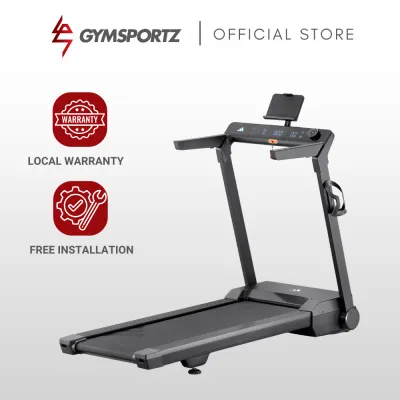
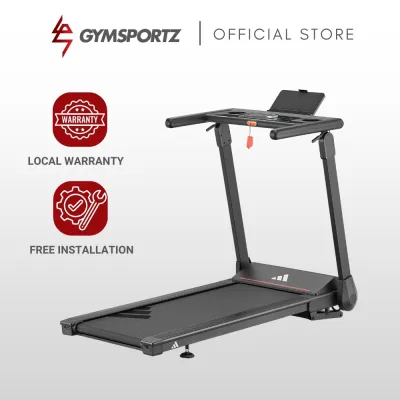
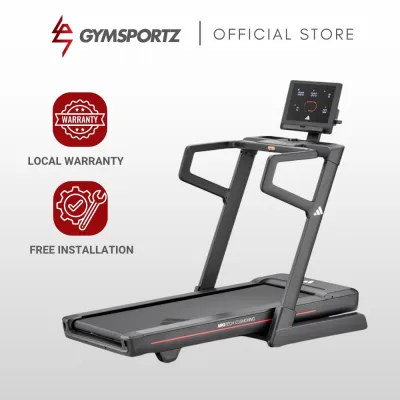
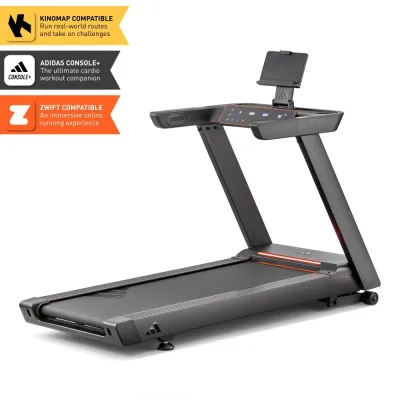
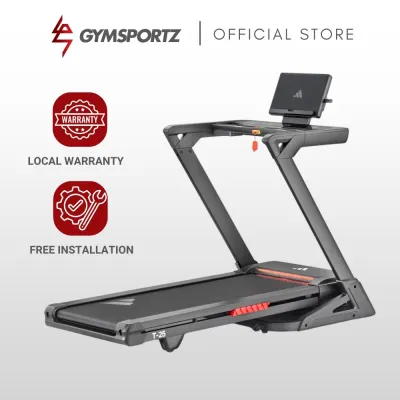
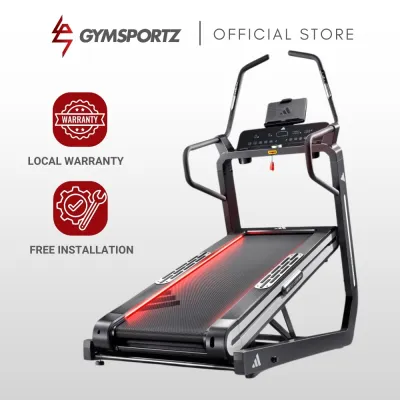
Prices are valid at publication and may change. Please refer to the product page for the latest price.
Logistics and delivery pathways require careful planning before the machine even arrives at your block. You must measure the width and height of your flat’s main entrance, the metal gate, internal corridors, and the doors of any rooms the treadmill must pass through. Additionally, verify the dimensions of your building’s passenger elevator to ensure the boxed or partially assembled unit can be transported up to your floor without obstruction. Some larger treadmill boxes are exceptionally long and may not fit horizontally in standard HDB lifts, requiring delivery personnel to tilt the box or unbox it on the ground floor.
Finally, locate the nearest suitable power outlet to your designated workout spot. Treadmills have high electrical power demands and should ideally be plugged directly into a dedicated wall socket rather than an extension cord or multi-way adapter. Ensuring the outlet is close to the machine prevents hazardous power cables from stretching across high-traffic walkways, reducing the risk of trips and accidental unplugging. This also minimizes the aesthetic clutter of visible wiring in your living room or study.
Key Adidas Specifications to Check for Compact Spaces
When evaluating different Adidas treadmill models, you must look beyond the basic motor power and speed settings to analyze the physical dimensions listed in the official product specifications. The most critical metrics to compare are the “in-use footprint” and the “folded footprint.” The in-use footprint represents the maximum floor space the machine occupies when fully deployed for running, while the folded footprint shows how much space it reclaims when stored vertically or flat.

The type of folding mechanism featured on the model determines how easily and safely you can transition the machine between storage and operational modes. Many Adidas treadmills utilize a hydraulic soft-drop system, which allows the heavy deck to lower slowly and hands-free when released. You must verify whether the folding mechanism requires additional overhead clearance or lateral space to lock and unlock securely, especially if you plan to store the machine in a tight alcove or behind a door. Some ultra-compact models fold completely flat, allowing them to be rolled under certain bed frames or stood upright against a wall, which is highly advantageous for smaller HDB flats.
The dimensions of the running belt, or deck size, represent a direct trade-off between workout comfort and space efficiency. A wider and longer running belt provides a more comfortable stride, particularly for taller users or those planning high-speed running workouts. However, a larger belt naturally increases the overall frame size of the treadmill, so you must choose a model that offers a sufficient running surface without unnecessarily oversizing the machine for your room. For casual jogging or walking, a more compact deck size will suffice and save valuable floor space.
Portability features are essential for multi-purpose HDB spaces where the treadmill cannot remain permanently deployed. Check the product specifications for built-in transport wheels and verify their design. Some models feature multi-directional wheels that allow you to roll the machine in any direction, making it much easier to maneuver around tight corners, furniture, and narrow hallways when moving the treadmill to and from its storage spot. The weight of the machine also plays a role here; a lighter model is much easier to tilt and roll than a heavy, commercial-grade unit.
Safety Clearances and Floor Load Considerations
Operating a treadmill safely in a high-rise residential environment requires strict adherence to clearance guidelines and structural limits. Every Adidas treadmill user manual specifies mandatory safety clearances around the machine during operation. Typically, you must maintain a clear, unobstructed zone of at least two meters behind the moving belt and at least half a meter to one meter on both sides of the frame.
These clearance zones are vital for preventing serious injury in the event of a slip, trip, or fall. If a runner loses balance and falls, a clear space behind the belt allows them to slide safely off the moving surface. Squeezing a treadmill tightly against a wall, wardrobe, or window frame eliminates this safety margin, creating a high risk of the user becoming trapped and injured against the obstruction by the continuously running belt.
Floor load capacity is another crucial consideration for high-rise living in Singapore. HDB flats are structurally designed to support a standard live load of 150 kilograms per square meter. To ensure compliance, you must calculate the total dynamic load of your setup, which is the combined weight of the treadmill itself and the heaviest user, concentrated on the machine’s contact points during high-impact running.
While most residential treadmills fall well within these structural limits, the impact of running can concentrate forces on specific spots. Using a high-density equipment mat helps distribute this weight more evenly across the floor tiles or vinyl planks. Additionally, ensure there is adequate ventilation and open space around the motor housing at the front of the machine to prevent the motor from overheating in enclosed or air-conditioned rooms, as restricted airflow can lead to premature component failure.
Space-Saving Placement and Daily Usage Tips
Integrating a treadmill into a shared family space requires practical strategies to minimize disruption to your household and neighbors. One of the most common challenges in concrete HDB buildings is the transmission of impact noise and vibrations through the floor slab to the flat below. To maintain good neighborly relations, always place a specialized anti-vibration mat beneath the treadmill to absorb the shock of your footsteps.
When positioning the machine, try to face a window, an open doorway, or a well-lit area of the room rather than staring directly at a blank wall. Having a visual sense of space and natural light can significantly improve your workout experience, making indoor running feel less confined. Just ensure that this positioning does not compromise the mandatory safety clearances required behind the running deck, and avoid placing the machine where direct sunlight can overheat the console screen.
Establish a consistent daily routine for managing your treadmill to keep your living area organized and safe. After completing your workout, wipe down the console and handrails to remove sweat, unplug the power cord from the wall, and fold the deck upward until the safety lock engages. Rolling the folded machine back to its designated storage corner immediately after use ensures your flat remains spacious and free of clutter for daily activities.
Frequently Asked Questions (FAQ)
Can I place an Adidas treadmill on an HDB balcony?
Placing an Adidas treadmill on an HDB balcony is generally not recommended due to environmental exposure. Singapore’s high humidity, frequent rain, and direct sunlight can rapidly degrade the treadmill’s electronic components, rust the metal frame, and damage the running belt. Additionally, you must check the manufacturer’s warranty terms, as outdoor or semi-outdoor placement often voids coverage. If you must use a balcony, ensure it is fully enclosed, protected from the elements, and that the balcony’s weight limits and drainage slopes are verified before installation.
Will a folding treadmill damage my HDB flooring?
A folding treadmill can potentially damage HDB flooring if proper precautions are not taken. The heavy weight of the machine, combined with the impact of running, can cause scratches, dents, or discoloration on vinyl, laminate, or parquet floors, and can crack or chip ceramic tiles. To protect your flooring, always place a thick, manufacturer-recommended protective mat under the treadmill to distribute the weight and absorb vibrations. Additionally, ensure the treadmill’s rubber footpads are clean and intact, and lift the machine slightly when moving it on its transport wheels to avoid dragging it across the floor.
Community discussion
Share your experience or ask a question. Comments are reviewed before publication.