
Selecting a barbell can feel overwhelming when confronted with a wall of technical specifications. The features that actually matter depend entirely on your training style, environment, and budget. To make an informed decision, you must look past marketing jargon and focus on core structural metrics—such as shaft diameter, tensile strength, and whip—alongside tactile details like knurling and sleeve rotation.
Understanding these specifications ensures you invest in a bar that performs safely, matches your lifting goals, and withstands local environmental challenges like high humidity. By prioritizing the right features, you can avoid overpaying for marginal upgrades and build a reliable strength setup.
Core Structural Specs: Diameter, Tensile Strength, and Whip
Shaft Diameter The thickness of the barbell shaft, measured in millimeters, determines how the bar feels in your hands and how much it resists bending. Standard Olympic weightlifting and general-purpose bars typically feature a diameter of 28mm to 28.5mm. This thinner profile makes it easier to wrap your hands around the bar, facilitating a secure hook grip for dynamic movements like cleans and snatches. Conversely, powerlifting bars generally measure 29mm to 32mm. A thicker shaft provides a stiffer feel, which is crucial for reducing hand fatigue and maintaining stability during heavy squats, bench presses, and deadlifts.
Products mentioned in this guide
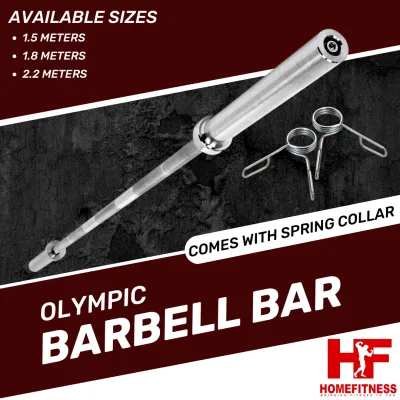
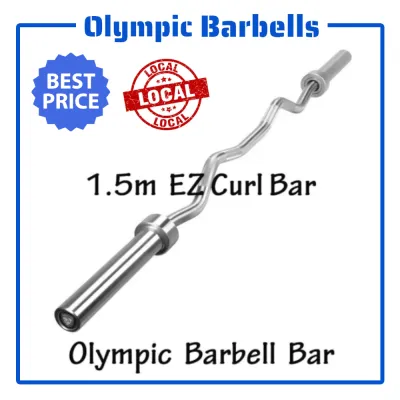
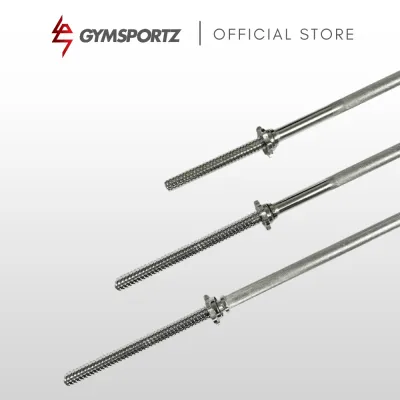
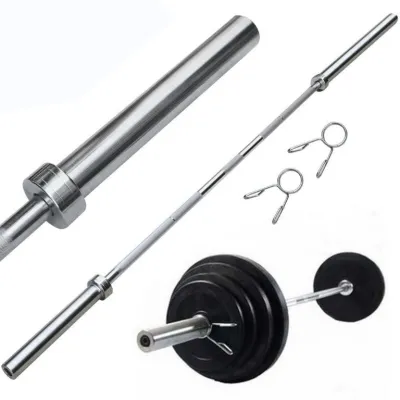
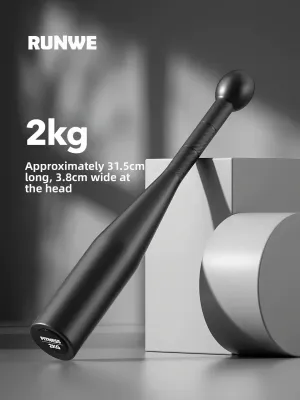
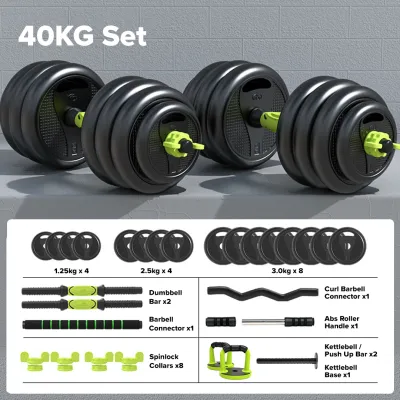
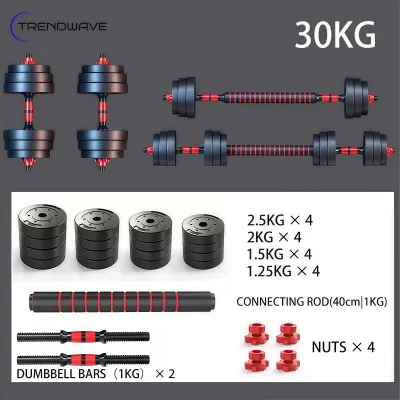
Prices are valid at publication and may change. Please refer to the product page for the latest price.
Tensile Strength This specification measures the maximum stress a material can withstand before breaking or permanently bending, expressed in pounds per square inch (PSI). For a reliable home or commercial gym barbell, look for a rated tensile strength between 150,000 and 210,000 PSI. You should verify the manufacturer’s rated PSI to ensure the bar can safely handle your current and projected lifting weight. While a higher PSI generally indicates a more durable bar, chasing extreme ratings beyond 210,000 PSI is rarely necessary for non-elite lifters and often comes with a steep price premium.
Whip (Flex) Whip refers to the amount of elastic deflection or flex a barbell exhibits under load. During dynamic lifts, a bar with high whip bends under acceleration and then snaps back, providing a momentum boost that helps weightlifters transition under the bar during cleans and snatches. Stiff bars with minimal whip are preferred by powerlifters because they remain rigid under heavy loads, preventing unstable bouncing during squats or bench presses. When choosing a bar, consider how much dynamic flex your training style requires, as a bar that is too stiff can hinder Olympic lifting, while a bar with too much whip can destabilize heavy power lifts.
Grip and Fluidity: Knurling Patterns and Sleeve Rotation
Knurling Aggressiveness and Pattern Knurling is the crosshatched pattern cut into the barbell shaft to enhance grip security. The aggressiveness of this pattern ranges from mild (smooth, comfortable for high-rep cross-training) to moderate (all-around utility) and aggressive (deep, sharp cuts for heavy powerlifting). You must also consider the presence of a center knurl, which is a textured section in the middle of the shaft. A center knurl is highly beneficial for back squats because it grips your shirt to prevent the bar from sliding down your back. However, dedicated Olympic lifting bars omit this center knurl to protect your collarbones and chest during high-velocity catch phases.

Sleeve Rotation (Bushings vs. Bearings) The mechanism that allows the barbell sleeves to spin independently of the shaft is critical for protecting your joints. Smooth sleeve rotation reduces the rotational torque transferred to your wrists, elbows, and shoulders when the bar is moving rapidly. Bronze bushings are the standard for powerlifting and general-use bars; they offer a controlled, reliable spin and require minimal long-term maintenance. Needle bearings, on the other hand, provide a much faster, smoother, and more sensitive spin, which is essential for the rapid transitions of Olympic weightlifting. Because these internal systems differ significantly, always review the manufacturer’s care guidelines to understand the maintenance required to keep them rotating smoothly.
Which Barbell Specs You Can Safely Deprioritize
Extreme Tensile Strength Premiums While a solid baseline durability is non-negotiable, paying a massive premium for ultra-high tensile strength ratings is often unnecessary. Once a barbell reaches a verified threshold of around 190,000 PSI, it possesses more than enough structural integrity for the vast majority of lifters. Unless you are routinely handling weights that approach competitive world records, the extra cost of a 215,000+ PSI bar yields diminishing returns and does not offer noticeable performance benefits for daily training.
Exotic Finishes Barbells come in various finishes, including bare steel, black oxide, chrome, zinc, cerakote, and stainless steel. While these coatings affect the bar’s aesthetic appeal and tactile feel, they do not alter its core structural performance or whip. However, because Singapore’s tropical climate is characterized by persistently high relative humidity, rust resistance is a practical concern. Instead of choosing a finish purely for its color or branding, prioritize options like stainless steel or cerakote if your training space is prone to moisture, and establish a regular maintenance routine rather than relying solely on a premium coating to prevent corrosion.
Matching Barbell Specs to Your Training Style
Powerlifting Focus If your training centers on the squat, bench press, and deadlift, prioritize a barbell designed for maximum stability under heavy, slow-tempo loads. Look for a 29mm shaft diameter, aggressive knurling, a distinct center knurl, and a robust bronze bushing system. This combination ensures the bar remains stiff, resists bending, and stays securely anchored on your back or in your hands during your heaviest sets.
Olympic Weightlifting Focus For dynamic, explosive movements like the clean and jerk and snatch, your equipment must facilitate speed and fluid transitions. Prioritize a 28mm shaft diameter, moderate knurling without a center knurl, high-quality needle bearings for rapid sleeve rotation, and a steel composition that offers high whip. This setup allows you to execute quick hand transitions and utilize the bar’s natural elasticity to assist your lifts.
General Fitness / Home Gym If you perform a mix of power lifts, Olympic lifts, and high-intensity functional fitness workouts, a versatile hybrid bar is the most practical choice. Aim for a 28.5mm shaft diameter with moderate or dual-pattern knurling, bronze bushings, and a balanced whip. This “do-it-all” specification provides a comfortable grip and reliable performance across various training modalities without forcing you to purchase multiple specialized bars. Hybrid bars are highly accessible, with entry-level options starting around S$300, while premium commercial-grade bars can exceed S$800.
Verification and Setup Checks Before making a final purchase, always verify the manufacturer’s rated weight capacity and physical dimensions against your specific gym setup. Check that the bar’s total length and sleeve spacing are compatible with your squat rack’s J-cups and the distance between the uprights. Additionally, ensure the sleeve diameter matches your existing weight plates to avoid compatibility issues that could compromise your safety during training.
Frequently Asked Questions (FAQ)
How do I maintain the sleeve rotation on my barbell?
To keep your barbell sleeves spinning smoothly, always consult the manufacturer’s specific care instructions before attempting any maintenance. For user-serviceable bars, the general process involves carefully removing the end cap or retaining ring, cleaning out any accumulated chalk, sweat, or debris, and applying a few drops of the manufacturer-recommended lubricant, such as a light 3-in-1 oil or specific bearing grease. Avoid using harsh chemical solvents, WD-40, or high-pressure compressed air, as these can degrade internal seals, strip away essential factory grease, or force abrasive dust deeper into the bushing or bearing assembly.
Will a standard Olympic barbell fit my home gym rack?
Standard Olympic barbells feature sleeves with a 50mm (approximately 2-inch) diameter, making them compatible with standard Olympic weight plates and standard rack setups. However, you must measure your specific rack’s J-cup width and the precise distance between the uprights before purchasing. Check the bar’s total shaft length—which is typically around 51.5 inches (131 cm) for a standard 7-foot (2.2-meter) bar—to ensure that the collar of the sleeve sits safely outside your rack’s J-cups, providing an adequate safety margin so you do not accidentally strike the uprights when re-racking the weight.
Community discussion
Share your experience or ask a question. Comments are reviewed before publication.