
Finding the perfect bicycle hanger for your home depends on three critical factors: your available floor and wall space, how frequently you ride, and the physical characteristics of your bike. In space-constrained urban environments like Singapore, where residential spaces range from cozy HDB apartments to high-rise condominiums, maximizing vertical space is essential. The right storage solution keeps your living area organized while protecting your investment from accidental damage and environmental wear. Whether you are a daily commuter navigating the Park Connector Network (PCN) or a weekend road warrior, selecting the ideal hanger requires balancing accessibility, structural safety, and spatial efficiency.
Assess Your Available Space and Riding Frequency
Before purchasing any bicycle hanger, you must conduct a thorough physical assessment of your intended storage area. Begin by measuring the exact dimensions of your space, focusing on available wall width, vertical clearance, and ceiling height. If you plan to hang your bike vertically, measure the total length of your bicycle from the front tire to the rear tire to ensure your ceiling height can accommodate it without the rear wheel blocking walkways. For horizontal setups, measure the bike’s total handlebar width and overall length, as these dimensions dictate how far the bike will protrude into your living space.
Additionally, consider Singapore’s tropical climate and high humidity. If you plan to store your bicycle on a balcony or near large windows, it will be exposed to moisture and potential rain splash. In these scenarios, ensure you choose a hanger made from rust-resistant materials, such as powder-coated steel or anodized aluminum, to prevent corrosion from spreading to your bike’s frame.
Products mentioned in this guide
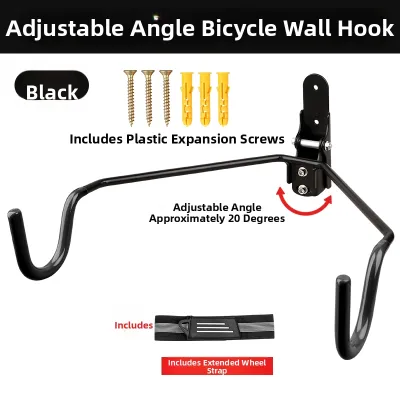
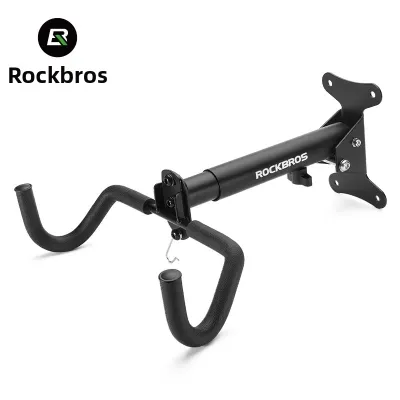
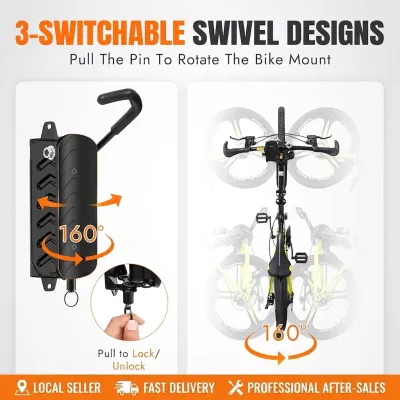
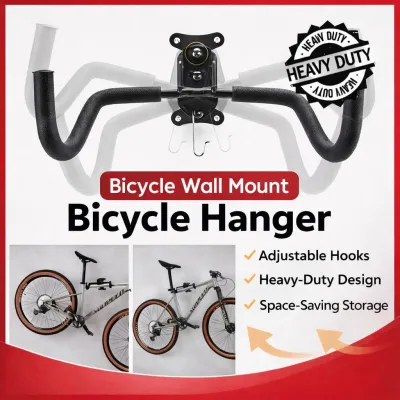
Prices are valid at publication and may change. Please refer to the product page for the latest price.
Your riding habits play an equally important role in determining the most practical hanger category. If you are a daily commuter who rides to work or uses the PCN regularly, you need a quick-access solution that requires minimal lifting. A low-profile horizontal wall mount or a roll-on vertical rack keeps your bike ready to ride at a moment’s notice. Conversely, if you are a seasonal or weekend rider, you can tolerate storage solutions that require more physical effort to deploy, such as ceiling hoists or high-elevation wall hooks that keep the bike completely out of the way for extended periods.
Finally, create a mental and physical checklist of potential obstructions in your home. Analyze the swing radius of nearby doors, the clearance of window panels, and the positioning of furniture. A bicycle hanging on a wall hook can easily become an obstacle if it projects into a narrow hallway or blocks access to utility rooms. Additionally, if you are considering a ceiling hoist, identify the drop zone to ensure the descending bike will not collide with light fixtures, ceiling fans, or overhead storage units.
Compare Wall-Mounted Options: Hooks vs. Horizontal Mounts
Wall-mounted storage is the most popular way to reclaim floor space, but the choice between vertical wall hooks and horizontal mounts depends heavily on your room’s layout and your physical lifting capacity.

Wall Hooks (Vertical Hanging): Vertical wall hooks hold the bicycle perpendicular or slightly angled to the wall, suspended by either the front or rear wheel. This configuration is highly efficient for narrow rooms or tight corners because it minimizes the required wall width, allowing you to store multiple bikes side-by-side in a compact footprint. However, vertical hanging requires significant vertical clearance and concentrates the entire weight of the bicycle onto a single anchor point on your wall. This concentrated stress demands a highly secure installation, and lifting a heavy bicycle vertically onto a high hook can be physically demanding. Furthermore, because the rear tire rests directly against the wall, it can leave unsightly black tire marks on your paint. To prevent this, look for vertical hangers that include wall protector plates or integrated rear-wheel trays.
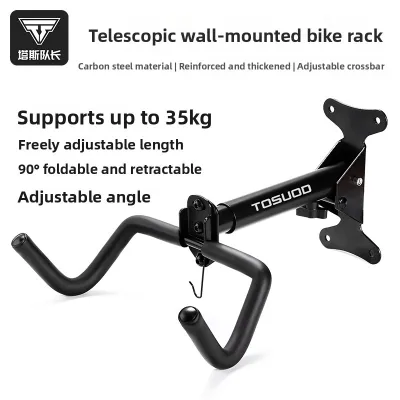
Horizontal Mounts: Horizontal mounts support the bicycle parallel to the wall, typically cradling the top tube of the frame. This method distributes the bike’s weight across two distinct anchor points, reducing localized stress on your wall structure. Horizontal mounts are highly favored by enthusiasts who wish to display their bicycles as design elements in their living rooms or studies. Because the bike is held parallel to the wall, this setup requires a wide, unbroken stretch of wall space. The primary benefit of a horizontal mount is its ergonomic accessibility; you can install the hanger at waist or chest height, making it much easier to lift the bike on and off without overhead straining.
When comparing the ease of use, horizontal mounts generally require less lifting effort since you do not have to hoist the entire length of the bike vertically. However, they cause the handlebars to protrude significantly into the room, which can restrict movement in narrow corridors. Vertical hooks, while requiring a higher lift, keep the bike’s profile closer to the wall, making them ideal for dedicated storage alcoves or utility rooms where width is at a premium.
Evaluate Space-Saving Options: Ceiling Hoists vs. Vertical Racks
When wall space is unavailable or drilling is restricted, you must look to alternative dimensions: the ceiling or freestanding vertical structures.
Ceiling Hoists (Pulley Systems): Ceiling hoists utilize a system of pulleys and ropes to lift your bicycle flat against the ceiling, completely freeing up your floor and wall space. This solution is exceptionally well-suited for homes with high ceilings or dedicated garage spaces where the overhead area is underutilized. Many pulley systems offer a mechanical advantage (such as a 2:1 or 4:1 ratio) that reduces the physical effort required to lift the bike. However, operating a pulley system still requires consistent physical effort and a clear understanding of safety mechanisms. You must ensure the ceiling joists or concrete slabs are structurally capable of holding the dynamic load of a hoisted bike, and the system must feature an automatic locking mechanism to prevent the bike from falling if the rope slips.
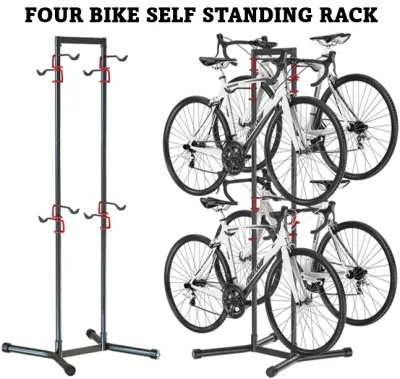
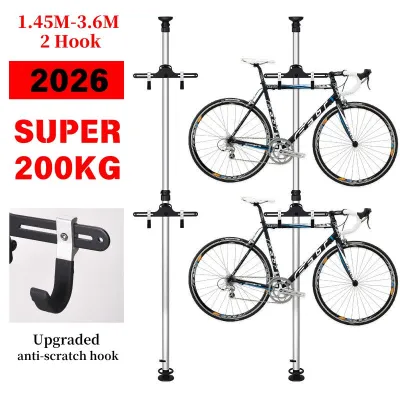
Vertical Racks (Freestanding or Tension-Mounted): For renters or those who prefer to avoid drilling holes into their walls and ceilings, freestanding or tension-mounted vertical racks offer an elegant, damage-free alternative. Tension-mounted poles extend from floor to ceiling, using a heavy-duty internal spring or screw mechanism to secure themselves firmly in place. However, you must verify that your ceiling is solid concrete; tension poles cannot be safely installed against hollow plasterboard or false ceilings commonly found in modern condominium renovations. Freestanding racks rely on a weighted, stable base to support one or more bikes vertically or horizontally. These systems are incredibly versatile, allowing you to store multiple bicycles within a very tight footprint without permanent structural modifications.
Deciding between these two options comes down to a clear trade-off: prioritize zero floor footprint or zero structural drilling. If you have solid concrete ceilings and want your bike completely out of sight, a ceiling hoist is an excellent long-term storage choice. If you live in a rented apartment, frequently rearrange your space, or want to avoid complex drilling altogether, a tension-mounted vertical rack provides a highly stable, portable, and accessible solution.
Match Your Bike Weight and Frame Type to the Right Hanger
To prevent structural failures or costly damage to your bicycle, you must carefully match your bike’s physical characteristics with the technical specifications of your chosen hanger.
E-Bikes and Heavy Mountain Bikes: Electric bicycles (e-bikes) and heavy mountain bikes present a unique challenge due to their substantial weight, which often exceeds 20 to 25 kilograms. Standard utility hooks or lightweight horizontal mounts can easily bend or pull out of the wall under this continuous load. If you own an e-bike or a full-suspension mountain bike, you must select heavy-duty, steel mounts with reinforced anchor plates. Always verify the manufacturer’s maximum weight rating and ensure your installation hardware matches or exceeds this capacity.
Road Bikes and Carbon Frames: Road bikes, particularly those featuring delicate carbon fiber frames and high-profile aerodynamic wheels, require specialized care. Never use unpadded metal hooks, as they can scratch carbon rims or damage delicate frame tubes. Look for hangers featuring thick rubber or foam padding on the contact points. If you are using a vertical hook, ensure the hook’s shape does not put localized, crushing pressure on deep-section carbon rims. For horizontal mounts, verify that the cradle does not pinch or compress thin-walled carbon top tubes, which are not designed to handle high clamping forces.
Unique Frame Geometries: Step-through frames, women’s specific frames, and some full-suspension mountain bikes lack a traditional straight top tube. If you attempt to hang these bikes on a standard horizontal mount, they will hang at a severe, unstable angle. To resolve this, you may need to purchase a removable frame adapter bar (a tensioned bar that clips between the seat post and the handlebar stem) to create a temporary straight top tube for level hanging.
Fat Bikes and Plus-Tire Bikes: If your ride of choice features oversized tires, standard bicycle hangers will not suffice. The hook openings on typical vertical hangers are often too narrow to accommodate tires wider than 2.5 inches. For fat bikes or plus-tire mountain bikes, you must source specialized wide-opening hooks or adjustable cradles specifically designed to fit high-volume tires without pinching the rubber or bending the wheel spokes.
Before making a final purchase, calculate the total weight of your bicycle, including all mounted accessories such as water bottles, heavy-duty locks, panniers, and mudguards. Many riders overlook these add-ons, which can easily add several kilograms to the base weight of the bike, pushing it past the safe operating limit of a standard hanger.
Verify Installation Safety and Wall Compatibility
The ultimate success and safety of your bicycle storage system depend entirely on the quality of its installation and its compatibility with your home’s wall materials.
In modern residential construction, walls are typically composed of either drywall (plasterboard) over wooden or metal studs, or solid masonry and concrete. It is absolutely critical to understand that you must never hang a bicycle of any weight on drywall alone. Drywall lacks the structural integrity to support the constant downward pull and dynamic leverage of a bicycle being mounted and dismounted. If you are installing a hanger on a stud-and-drywall wall, you must use a reliable stud finder or perform a tap-test to locate the exact center of the wooden or metal studs, securing your hanger directly into these structural supports.
For homes featuring solid masonry, brick, or concrete walls—which are highly common in Singapore’s HDB flats and condominiums—the installation process requires different tools. You cannot use standard wood screws; instead, you must use a hammer drill equipped with a high-quality masonry drill bit to create precise holes. Once drilled, these holes must be fitted with heavy-duty plastic wall plugs or expansion anchors designed specifically for concrete before you thread in the mounting screws. Additionally, use a multi-detector tool before drilling to ensure you do not accidentally strike hidden electrical conduits or water pipes embedded in the concrete.
Establish a strict safety boundary before you begin drilling. If you do not know your wall’s composition, if the wall sounds hollow and you cannot locate studs, or if your bicycle is exceptionally heavy, do not attempt a DIY installation. In these scenarios, you should either consult a qualified professional handyman to perform the installation safely or opt for a damage-free, freestanding tension-mounted rack that bypasses the need for drilling entirely.
Frequently Asked Questions (FAQ)
Can I hang a carbon fiber bike by its wheel?
Yes, hanging a carbon fiber bicycle vertically by its front or rear wheel is generally safe, provided you take a few precautions. The wheel’s rim is designed to handle significant forces during riding, so the static weight of the bike hanging from a hook will not cause damage. However, you must ensure the hook is generously padded with rubber or foam to prevent scratching the carbon finish. Additionally, verify that the hook is wide enough to avoid compressing or putting lateral pressure on deep-section aerodynamic rims. If you have any doubts, always consult your wheel manufacturer’s specific care and maintenance guidelines.
Do I need to drill into the wall for a bicycle hanger?
No, drilling is not mandatory for all bicycle storage solutions. While traditional wall hooks, horizontal mounts, and ceiling hoists require secure drilling into studs or concrete, several highly stable alternatives exist. Tension-mounted vertical poles use floor-to-ceiling pressure to remain securely in place without a single screw, making them perfect for rental properties. Alternatively, freestanding gravity racks lean securely against the wall or stand on a weighted base, allowing you to store multiple bikes without causing any structural damage to your home.
Community discussion
Share your experience or ask a question. Comments are reviewed before publication.