
Choosing the most suitable bike rack is a matter of matching your daily carrying needs with your bicycle’s structural design. If you are navigating the paved paths of the Park Connector Network on a daily commute, heading out for a weekend touring adventure, or running quick errands, the way you transport your gear affects both your riding comfort and safety. The three primary options—rear racks, front racks, and seatpost-mounted racks—each serve distinct purposes. Rear racks excel at carrying heavy, bulky loads with high stability. Front racks help distribute weight evenly for long-distance journeys or keep smaller items within arm’s reach. Seatpost racks offer a convenient, clamp-on solution for lightweight cargo when your bike lacks dedicated mounting points.
Assess Your Cycling Routine and Cargo Needs
Before purchasing any rack, evaluate your typical cargo weight and volume. A daily commute with a laptop and a change of clothes requires a different setup than a quick grocery run. If you plan to carry heavy panniers or multi-day touring gear, a robust, frame-mounted system is essential to prevent structural damage and maintain control of your bicycle.
Your riding environment also dictates your choice. Smooth, paved cycling paths, such as urban park connectors, allow for a wider variety of rack designs. However, if your route includes busy city streets with frequent stop-and-go traffic or bumpy, mixed-terrain paths, you need a highly secure mounting system. Unstable cargo can shift during sudden stops or tight turns, throwing off your balance.
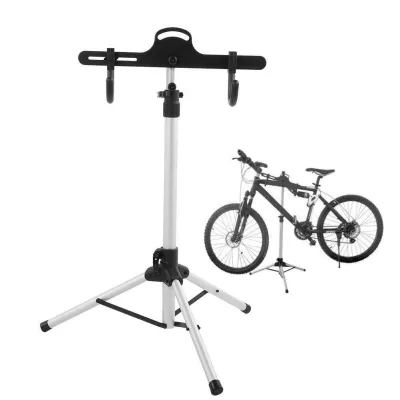
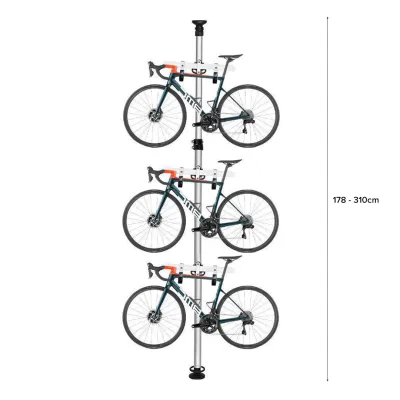
Products mentioned in this guide
![[✅SG Ready Stock] Bicycle Rack Hanger Triple Bike Stand Shelf Floor to Ceiling](https://img.lazcdn.com/g/p/bb306f5985889e969e2393bd2fa0e9d0.jpg_400x400q80.jpg_.webp)
Prices are valid at publication and may change. Please refer to the product page for the latest price.
Handling preferences are another key consideration. Placing a heavy load over the rear wheel keeps steering light but can make the rear feel sluggish during climbs. Conversely, carrying weight on the front wheel stabilizes steering at speed but requires more effort to turn at low speeds. Understanding these dynamics helps you choose a rack that complements your riding style.
Rear Racks for Heavy Loads and Daily Commuting
Rear racks are the traditional workhorses of the cycling world, designed to support substantial weight over the rear wheel. They are a highly practical choice for riders who regularly transport heavy or bulky items, such as full pannier bags or large grocery hauls. By positioning cargo directly over the rear axle, these racks keep the center of gravity low and centered, minimizing the impact on steering and balance.

When using a rear rack, the weight is distributed over the strongest part of the bicycle frame. This allows you to carry significantly heavier loads compared to other rack types, with many standard rear racks supporting between 15 to 25 kilograms. This high weight capacity makes them highly practical for daily commuters carrying professional gear and utility riders running heavy errands.
However, installing a rear rack requires specific frame characteristics. Most standard rear racks bolt directly into threaded eyelets near the rear dropouts and on the seatstays. If your bicycle frame lacks these eyelets—common on road bikes and carbon fiber models—you will need specialized adapters, such as seat-collar clamps with integrated eyelets or axle-mounting kits. You must also ensure the rack design provides sufficient clearance for disc brake calipers.
Front Racks for Touring and Balanced Weight
Front racks offer a specialized alternative or complement to rear racks, particularly for long-distance touring and balanced load management. Distributing your gear across both wheels prevents the back of the bicycle from becoming overloaded on multi-day journeys. A balanced setup can actually improve handling stability on long, straight stretches by keeping the front wheel firmly planted.
There are two main styles of front racks: low-rider racks and platform racks. Low-rider racks mount low on the fork blades, keeping the center of gravity of your panniers close to the front axle to minimize steering interference. Front platform racks mount higher up and provide a flat surface above the front wheel, which is ideal for securing a small basket, a sleeping bag, or a handlebar bag.
Despite their benefits, front racks introduce specific handling trade-offs. Carrying cargo on the front wheel directly affects steering responsiveness, making the handlebars feel heavier and slower to turn. Additionally, high-mounted front cargo can block your front headlight, requiring you to reposition your lighting system for night rides. You must also verify fork compatibility, as front suspension forks or carbon forks rarely support standard front racks.
Seatpost Racks for Light Errands and Quick Installation
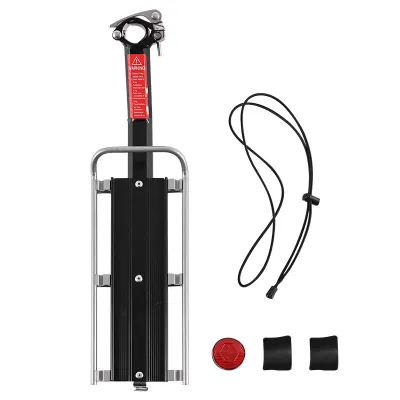
For riders who need a temporary carrying solution or own a bicycle without traditional frame mounting points, seatpost-mounted racks offer an appealing option. These racks clamp directly onto the seatpost, extending backward over the rear wheel without requiring any connection to the frame dropouts. This versatile design makes them compatible with a wide variety of bicycles, including full-suspension mountain bikes and road bikes.
The primary advantage of a seatpost rack is its ease of installation and removal. Most models feature quick-release clamps or simple bolt-on mechanisms that allow you to attach or detach the rack in minutes. This is highly convenient for cyclists who only need carrying capacity occasionally and prefer to keep their bike lightweight and streamlined for daily sport riding.
However, seatpost racks come with strict limitations. Because the entire weight is supported by a single clamping point on the seatpost, these systems have much lower weight capacities than frame-mounted racks, typically limited to around 5 to 10 kilograms. Exceeding this limit or riding over rough terrain can place extreme stress on your seatpost, potentially leading to sudden component failure. Furthermore, seatpost racks can sway side-to-side if the clamp is not securely tightened.
Essential Compatibility and Safety Checks Before Buying
Before finalizing your purchase, conduct a thorough compatibility and safety check to prevent damage and ensure a secure fit. First, inspect your bicycle frame and fork for dedicated mounting eyelets. If your bike has disc brakes, look closely at the rear dropout area; you may need a rack with offset legs to clear the disc brake caliper. For bikes with thru-axles, specialized axle-replacement mounting systems may be required.
Next, verify the manufacturer-specified weight limits for both the rack and your bicycle. Never assume a high-capacity rack allows you to carry heavy loads if your bicycle frame or seatpost is not rated to support that weight. This is particularly critical for lightweight aluminum or carbon fiber components, which can crack under excessive clamping force. Always use a torque wrench to tighten all mounting bolts to the manufacturer’s exact specifications.
Finally, check for adequate tire and wheel clearance. Once the rack is temporarily positioned, ensure there is ample space between the rack structure and your tire, taking into account potential flexing under load. If you use wider tires, mudguards, or have a full-suspension bicycle, verify that the suspension can compress fully without the tire contacting the rack. A rubbing tire can cause rapid wear or a sudden loss of control.
Frequently Asked Questions (FAQ)
Can I use a bike rack on a carbon fiber frame or seatpost?
Mounting a bike rack on carbon fiber components requires extreme caution and is generally not recommended unless the manufacturer has explicitly approved the setup. Carbon fiber is engineered to withstand specific directional forces but is highly vulnerable to crushing forces from clamps. Clamping a seatpost rack or frame adapter onto a carbon fiber tube can crack the material, leading to catastrophic failure. If you must carry cargo on a carbon bike, look for racks that mount directly to the thru-axles or wheel skewers, and always use a torque wrench to follow precise manufacturer limits.
Do I need a specific rack if my bike has disc brakes?
Yes, bicycles equipped with disc brakes often require specialized racks or mounting adapters. Standard rack designs feature straight mounting legs that attach directly to the frame eyelets. On a disc-brake bike, the brake caliper is positioned near these eyelets and will often block a straight rack leg from reaching the mounting point. To resolve this, look for disc-specific racks that feature curved or offset lower legs designed to flare out and clear the caliper assembly, or use specialized mounting brackets that do not compromise the rack’s weight rating.
Community discussion
Share your experience or ask a question. Comments are reviewed before publication.