
To determine which Brompton bag mounting system is compatible with your bike, you must match the bag’s attachment mechanism to your frame’s front carrier block, rear rack eyelets, or seatpost clearance. Compatibility depends on your specific model line, handlebar stem height, and whether your bike has factory-installed mounting points. For urban commuters navigating busy transit networks like the MRT or storing their bikes in compact apartments, choosing the right luggage system is essential.
Folding bikes require precise clearance to fold completely without damaging components or cables. Choosing a bag is not just about storage capacity; it is about ensuring the bag does not interfere with steering, tire clearance, or the folding hinges. By understanding your bike’s specific frame geometry and mounting options, you can select luggage that remains secure during both transit and storage.
Identifying Your Brompton Model and Configuration
To find the right luggage, you must first identify your specific bike model and its configuration. The main model lines feature different frame materials, weights, and factory fittings. For instance, standard steel frames like the C Line and superlight titanium-blend options like the P Line or T Line have distinct frame dimensions and clearance profiles. Entry-level or legacy models may lack pre-installed mounting hardware, requiring you to purchase separate adapters before you can mount any luggage.
Products mentioned in this guide
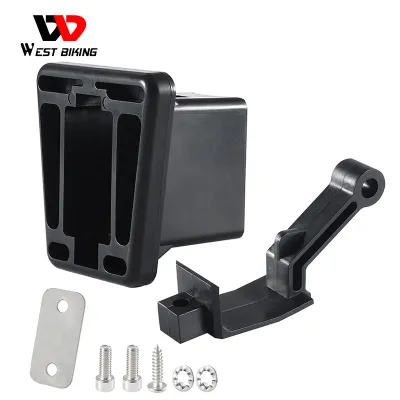
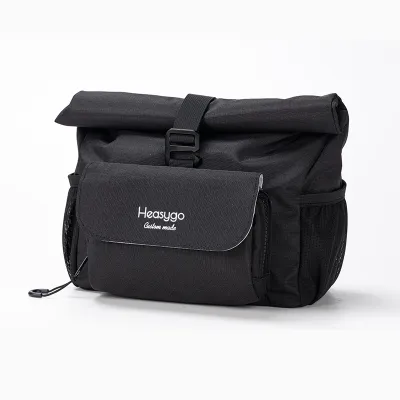
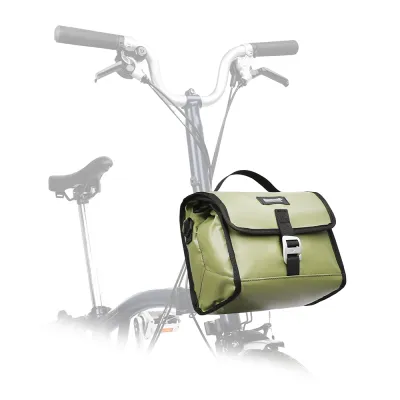
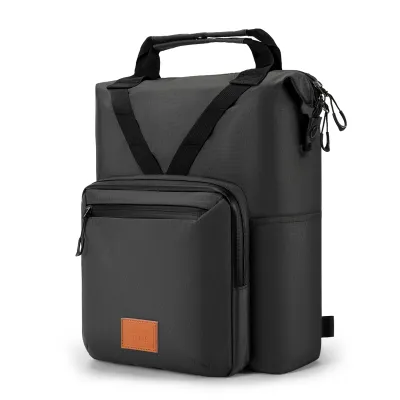
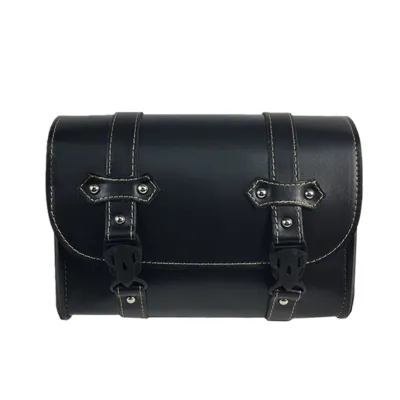
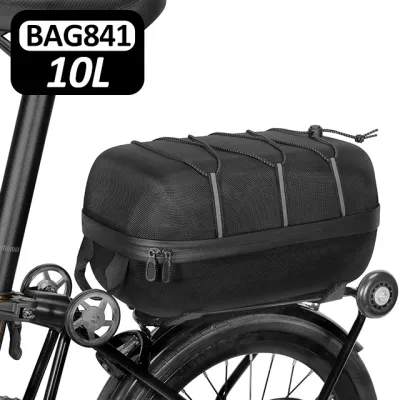
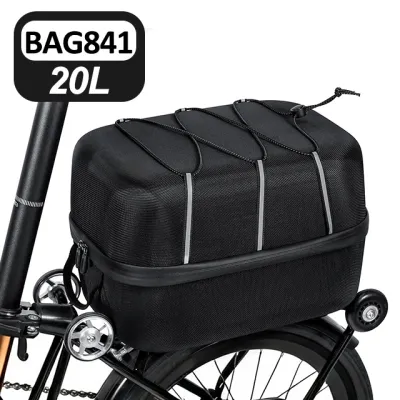
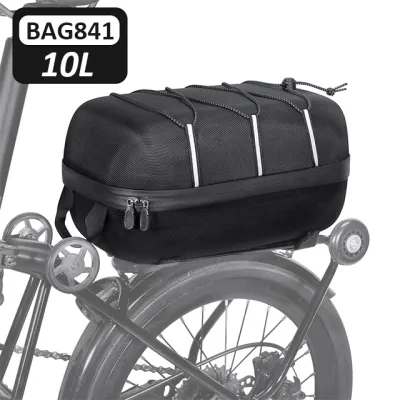
Prices are valid at publication and may change. Please refer to the product page for the latest price.
Your handlebar type also plays a critical role in bag compatibility. Handlebars generally come in low, mid, and high profiles, which are paired with different stem lengths. A low handlebar setup positions the grips closer to the front wheel, significantly reducing the vertical clearance available for tall bags. Conversely, mid and high handlebar setups offer more vertical space but require careful routing of brake and gear cables to prevent the bag from pinching or pulling the lines during tight turns.
To confirm your exact factory specifications, locate the serial number on your frame. This is typically found on a plate or label on the seat tube or near the bottom bracket. You can use these details to verify your bike’s production year and model line, which is especially helpful if you purchased your bike secondhand or have modified the original components.
Front Carrier Block and Handlebar Bag Fitment
The front carrier block is the primary mounting system for most folding bike luggage. Unlike traditional bicycles where bags attach directly to the handlebars, this system bolts directly to the frame’s head tube. This design ensures that the weight of your luggage remains suspended on the main frame rather than the steering column, preserving stable handling even when carrying heavy loads. In humid climates like Singapore, keeping your back free of a heavy backpack by using a front-mounted bag helps improve comfort during daily commutes.

Before purchasing a front bag, you must perform clearance checks based on your handlebar height. If your bike uses a low handlebar stem, a large or tall bag may strike the brake levers or restrict the steering lock. Measure the distance from the top of the carrier block to the underside of the handlebar grips. Ensure that the height of your chosen bag, including its carrying handle, sits well below this line to maintain full control of your steering.
Electric folding models require extra attention when selecting front luggage. The electric battery pack is often integrated into a specialized front bag that mounts onto a proprietary carrier block. This block includes electrical connectors and must accommodate wiring harnesses that run to the front hub motor. Standard non-electric bags will not fit on an electric carrier block, and attempting to force a standard bag onto an electric model can pinch critical wiring or disrupt the bike’s weight distribution.
Rear Rack and Seatpost Mounting Checks
If you require additional storage beyond a front bag, rear racks and seatpost mounts offer alternative carrying options. However, not all frames are equipped to accept a rear rack. You must inspect your rear triangle for factory-drilled mounting eyelets near the rear dropouts and the brake bridge. Entry-level models or minimalist performance lines often omit these eyelets entirely to save weight, meaning a standard rear rack cannot be installed without specialized aftermarket adapters.
When installing a rear rack or a rack-mounted bag, you must check for potential interference with other moving parts. Ensure that the rack struts do not pinch the rear brake cables or rub against the derailleur chain tensioner. Additionally, if your bike is equipped with mudguards, the rack must clear the mudguard stays without pressing down on the tire, which could cause friction and premature wear during your ride.
Seatpost-mounted bags and saddle bags are popular for carrying small tools or personal items, but they require careful positioning. The bag must not extend so far down the seatpost that it blocks the main frame hinge or prevents the seatpost from sliding fully down into the frame when folded. Furthermore, you must verify that the bag does not sag or rub against the rear tire when the suspension block compresses under your weight.
Verification Steps Before Purchasing Brompton Bags
Before finalizing your purchase, cross-reference the bag’s mounting specifications with your bike’s existing hardware. If your bike does not have a front carrier block installed, you will need to purchase and install one before you can use any front-mounting luggage. Ensure that the mounting bolts supplied with the block match the threaded bosses on your head tube, as thread pitches can vary slightly between older and newer frame generations.
Once you have the bag and mounting hardware, perform a physical fold-test in a controlled environment. Attach the empty bag to the carrier block or rack and slowly fold the bike step by step. Watch closely to ensure that no loose straps, buckles, or rigid frames catch on the main frame hinges, the front wheel hook, or the chain. If any part of the bag prevents the bike from locking into its folded position, you may need to adjust the strap tension or choose a more compact bag model.
If you have modified your bike with aftermarket handlebars, stems, or suspension blocks, standard compatibility charts may no longer apply. In these cases, consult the official compatibility documentation provided by the manufacturer or visit an authorized dealer. Bringing your modified bike to a local shop allows you to physically test different bag shapes and mounting brackets, ensuring a perfect fit without risking damage to your frame or components.
Frequently Asked Questions (FAQ)
Do I need an adapter for third-party bags?
Yes, most third-party bags require a specific adapter to mount onto the front carrier block. The front carrier block uses a proprietary latching interface, so any non-original bag must be equipped with a compatible mounting plate or frame. Many aftermarket brands sell these adapter plates separately, which you can bolt or sew onto your bag to make it compatible with the factory block. Always verify that the adapter plate matches the dimensions of your specific carrier block before riding.
Will a front bag interfere with the folding mechanism?
A properly sized and mounted front bag is designed to remain on the front carrier block when the bike is folded, often acting as a convenient handle to roll the folded bike. However, oversized bags or those with loose, dangling straps can catch on the front wheel or the rear frame triangle during the folding process. To prevent interference, always secure loose straps before folding and perform a slow test fold to ensure the bag clears all moving parts.
Community discussion
Share your experience or ask a question. Comments are reviewed before publication.