
Choosing the right Brompton front bag depends on your daily riding habits, cargo requirements, and how you navigate the city. Unlike standard bicycle panniers or handlebar baskets, a Brompton front bag integrates directly into the bike’s unique folding ecosystem. By matching the bag’s capacity and features to your specific use case—whether that is a fast commute to the central business district, a leisurely weekend cruise along the Park Connector Network (PCN), or an extended touring adventure—you can maximize utility without compromising the bike’s iconic fold.
Investing in a dedicated front bag significantly enhances your riding experience by keeping your back free from sweaty backpacks, which is a major advantage in warm, humid climates. However, because these bags serve as both on-bike cargo carriers and off-bike luggage, finding the right balance of size, weatherproofing, and organization is essential. Selecting the wrong style can lead to handling issues, folding interference, or carrying inconvenience during your daily transit transitions.
How the Brompton Front Carrier System Works
At the heart of the Brompton luggage system is the Front Carrier Block. This ingenious bracket mounts directly to the steel or titanium head tube of the main frame rather than the handlebars. Because the weight of your cargo is supported by the frame, the steering remains light, predictable, and highly responsive, even when carrying a heavy load. This separation of steering and cargo weight is a key reason why a loaded Brompton handles significantly better than a standard bicycle with a heavy handlebar basket.
Products mentioned in this guide
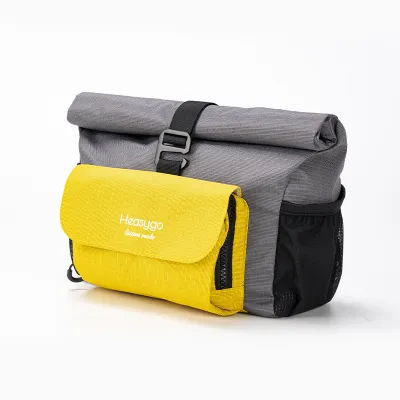
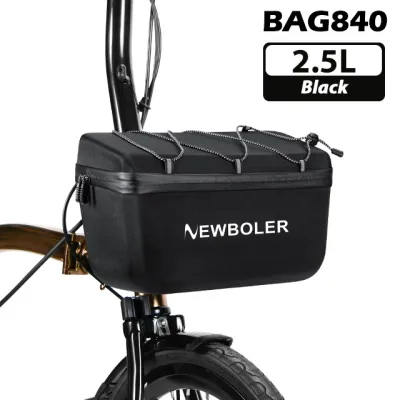
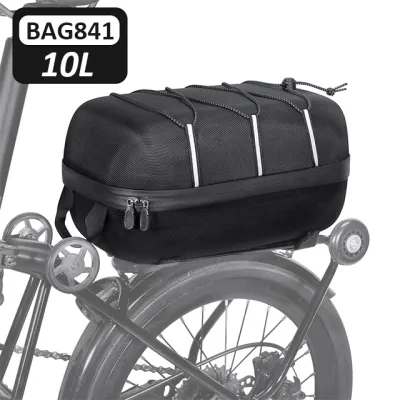
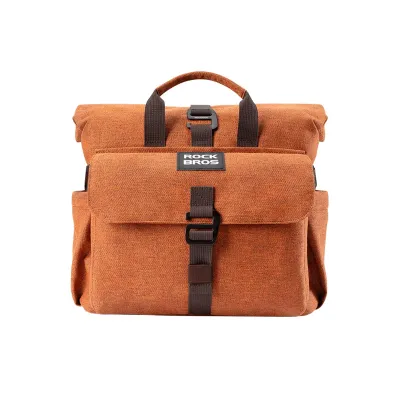
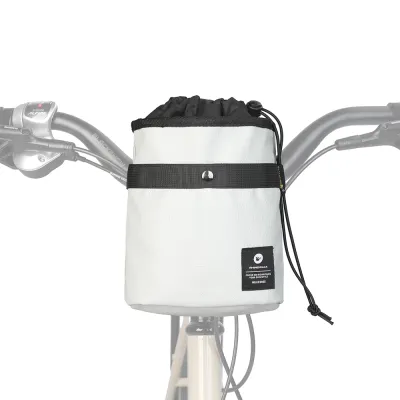
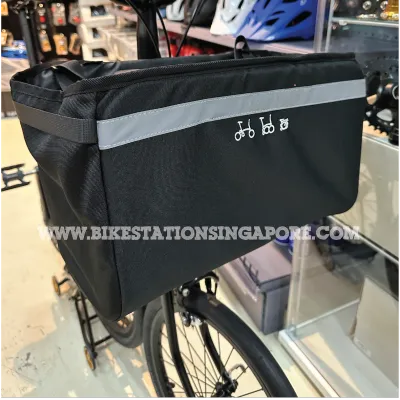
Prices are valid at publication and may change. Please refer to the product page for the latest price.
However, selecting a bag is not just about choosing a style; it requires checking compatibility with your specific Brompton handlebar type. Brompton bikes are historically configured with S (straight), M (classic), H (high), or P (multi-position) handlebars. Because the S-bar setup is lower and more forward-facing, larger or taller front bags can interfere with brake levers or block the rider’s hands. Conversely, H-bar and M-bar setups offer more vertical clearance but still require careful routing of the control cables to prevent rubbing or binding when turning.
Every front bag choice involves a practical trade-off between cargo capacity and off-bike portability. A massive touring bag is excellent for carrying groceries or travel gear, but its physical bulk can make carrying the folded bike on public transit like the MRT or bus highly cumbersome. Conversely, a tiny, streamlined pouch is effortless to carry into a cafe, but it will force you to leave larger essentials behind. Understanding this balance is the first step toward finding your ideal setup.
Best Brompton Front Bag Types for Different Riding Scenarios
To help you navigate the wide array of available options, it is useful to categorize Brompton front bags into three primary styles: standard city bags, compact bags, and high-capacity touring bags. Each category serves a distinct lifestyle and riding pattern.

Daily Commuting and City Errands (Standard/City Bags)
Standard city bags are designed for the modern professional or urban commuter who needs to transition seamlessly from a morning ride to an office environment. These bags typically offer a balanced volume of 12 to 20 liters, providing ample space for a productive day out.
- Ideal for: Daily commuters carrying a laptop, tablet, charger, change of clothes, notebook, and lunchbox.
- Key benefits: These bags feature structured internal frames that keep them upright when placed on the floor, dedicated padded laptop sleeves, and organized pockets for keys, pens, and phones. The aesthetic is often tailored and professional, resembling a classic messenger bag or briefcase that looks perfectly natural in a corporate meeting room.
- Limitations & Checks: If you only need to carry a wallet and keys, a standard city bag can feel unnecessarily bulky and heavy. Before purchasing, always verify the internal dimensions of the laptop compartment against your specific computer model, as padded sleeves can restrict the usable width.
Weekend PCN Rides and Light Travel (Compact Bags)
If your riding consists primarily of recreational weekend loops along Singapore’s scenic Park Connector Network (PCN), quick coffee stops, or running light errands, a compact bag is often the most practical choice. These bags generally range from 5 to 10 liters in capacity.
- Ideal for: Casual weekend riders, minimalists, and those who prioritize agility and a lightweight setup.
- Key benefits: Compact bags keep the bike's profile sleek and aerodynamic. They are incredibly easy to carry off the bike, usually featuring integrated shoulder straps or converting into a simple crossbody bag. They provide just enough space for essentials like a water bottle, sunscreen, a compact camera, a repair kit, and a light jacket.
- Limitations & Checks: These bags offer very limited storage space. They cannot accommodate large laptops, bulky grocery items, or heavy wet-weather gear. If you plan to make unexpected purchases during your ride, you may find yourself running out of space quickly, requiring you to carry an additional backpack or packable tote.
Long-Distance Touring and Heavy Cargo (Touring Bags)
For riders who push their folding bikes to the limit—whether through multi-day touring, heavy weekly grocery shopping, or commuting to the airport—a dedicated touring bag is indispensable. These heavy-duty haulers typically boast capacities ranging from 25 to over 30 liters.
- Ideal for: Long-distance touring, carrying camping gear, transporting bulky groceries, and long travel days.
- Key benefits: Touring bags maximize the carrying capacity of the front carrier system. They often feature roll-top closures that allow you to expand or compress the bag's volume depending on the load. Multiple external rear pockets face the rider, providing rapid access to water bottles, snacks, passports, or windbreakers without needing to open the main compartment.
- Limitations & Checks: The sheer physical size of a fully loaded touring bag adds noticeable weight to the front of the bike and increases aerodynamic drag. Additionally, a tall or wide bag can easily obscure your front-mounted safety light or reflectors. Before riding in low-light conditions, verify that your front light is positioned dynamically—such as on the front fork axle—so it remains visible past the bulk of the bag.
Key Features to Compare Before You Buy
When comparing specific models within these categories, keeping a few critical technical and practical parameters in mind will ensure you make a lasting investment.
Capacity and Organization Do not look only at the total liter volume; consider how that volume is distributed. An open-cavity roll-top bag is fantastic for stuffing large, irregular items like sleeping bags or grocery bags, but it can turn into a bottomless pit when you are searching for your keys. If you value organization, look for models with dedicated zippered dividers, external quick-access pockets, and internal sleeves that keep your electronics separate from your tools.
Weather Resistance Given the sudden, intense tropical downpours common in Singapore, weather protection is a non-negotiable feature for many riders. Standard water-resistant fabrics can handle light drizzle, but they will eventually saturate during a heavy storm, potentially risking damage to your laptop or papers. If you ride year-round, look for bags constructed from fully waterproof materials (such as Cordura or high-denier nylon with a polyurethane coating) featuring welded seams and roll-top closures. Alternatively, verify if the bag includes a high-visibility, elasticated rain cover that can be quickly deployed over the exterior.
Folding Clearance and Compatibility Before finalizing your choice, check the manufacturer’s compatibility notes regarding your handlebar type. This is especially critical if you ride an S-bar model, which has the lowest handlebar height, or if you have customized your cockpit with aftermarket components. Ensure that when the bag is mounted, there is no interference with your brake levers, gear shifters, or the routing of your control cables. A pinched cable can severely compromise your braking efficiency or gear shifting performance.
Off-Bike Portability Remember that a Brompton bag spends a significant portion of its life off the bike. Evaluate how comfortable the bag is to carry when you are walking through a shopping mall, boarding an MRT train, or sitting in a cafe. Look for wide, padded shoulder straps that can be quickly tucked away or detached so they do not dangle and get caught in your front wheel while riding. Some modern designs even offer backpack-style harness systems, which distribute weight evenly across both shoulders for longer walks.
Practical Tips for Loading and Maintaining Your Front Bag
To protect your investment and ensure a safe, stable ride, you must follow proper loading and maintenance protocols.
Loading Limits Always consult your bag manufacturer’s instructions and the Brompton user manual to verify the maximum weight limit for the front carrier block. While the frame bracket is incredibly strong, overloading the front bag can place excessive stress on the head tube fittings and alter the bike’s handling characteristics. As a general safety guideline, most official front carrier blocks are rated for a maximum load of 10 kilograms. Exceeding this limit can make steering feel sluggish and increase your stopping distance.
Securing the Bag Before setting off, always perform a quick physical check to ensure the bag is fully locked onto the carrier block. Slide the bag frame downward into the block until you hear a distinct, audible click. Give the bag a firm upward tug to verify that the spring-loaded safety latch is completely engaged. A partially secured bag can dislodge when riding over speed bumps, potholes, or rough PCN paths, creating an immediate safety hazard. If you feel the bag shifting or if the steering feels restricted while riding, stop immediately in a safe area and check the carrier block.
Routine Maintenance Keep the mounting interface clean and free of road grit, sand, and debris, which can cause wear on both the bag frame and the carrier block. Periodically inspect the mounting screws securing the carrier block to your bike’s frame to ensure they remain tight. Clean the bag’s zippers and buckles regularly using a damp cloth to prevent dirt buildup from causing them to jam. If your bag is exposed to heavy rain, allow it to dry completely in a well-ventilated indoor area before storing it to prevent mold and mildew.
Frequently Asked Questions (FAQ)
Can I use third-party front bags on a Brompton?
Yes, you can use third-party bags, provided they are compatible with the Brompton Front Carrier Block system. Many independent manufacturers produce bags equipped with compatible mounting frames, or sell aftermarket frames that allow you to convert standard backpacks and messenger bags for use on your Brompton. However, when using third-party options, you must carefully verify that the bag does not interfere with your steering, block your front wheel, rub against your frame, or disrupt the folding mechanism. Be aware that damage caused by unapproved third-party accessories may not be covered under your manufacturer’s warranty.
Will a front bag affect my Brompton's folded size?
A front bag must be completely removed from the carrier block before you can fold your Brompton. The bike cannot fold with the bag attached. Once removed, the bike folds down to its standard compact size. However, you should consider how you will manage both the folded bike and the bag simultaneously when navigating public transport or tight spaces. A very large or heavy bag can make carrying the folded bike in your other hand highly challenging, whereas a compact bag with a shoulder strap allows you to keep your hands relatively free.
How do I prevent the front bag from rubbing against the frame?
To prevent the bag or its frame from rubbing against your bike’s head tube or main frame, first verify that your Front Carrier Block is properly aligned and securely tightened according to the manufacturer’s torque specifications. If you notice minor contact during rough rides or when carrying heavy loads, you can apply a small piece of clear, protective polyurethane frame tape to the contact points on the head tube. This simple, reversible modification protects your bike’s paintwork from cosmetic scuffs and abrasions without affecting the functionality of the folding system.
Community discussion
Share your experience or ask a question. Comments are reviewed before publication.