
Choosing the right table tennis racket is one of the most critical decisions you will make as a player. Butterfly is a highly respected brand in the table tennis world, offering equipment that spans from basic recreational models to highly specialized custom setups used by world champions. To find the perfect match, you must evaluate your current physical skill level and your preferred tactical playing style. Selecting a paddle that is too advanced can hinder your development, while an underpowered racket can limit your competitive growth.
By aligning your personal playing characteristics with Butterfly’s specific product categories, blade compositions, and rubber types, you can ensure your equipment supports your technique rather than working against it. This guide will walk you through self-assessing your skills, identifying your strategic style, and understanding the key technical specifications to check before making your purchase.
Assess Your Current Table Tennis Skill Level
Before looking at specific equipment, you must objectively evaluate your current abilities. Playing with a racket designed for a different stage of development can stall your progress.
Products mentioned in this guide
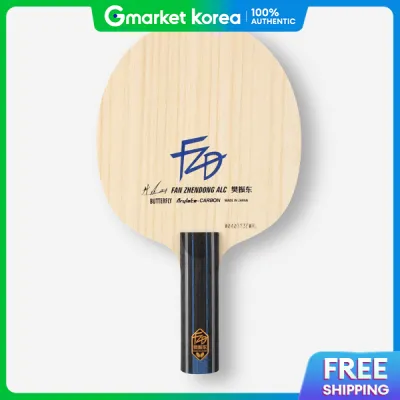
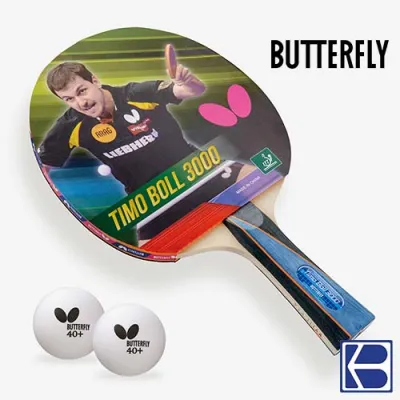
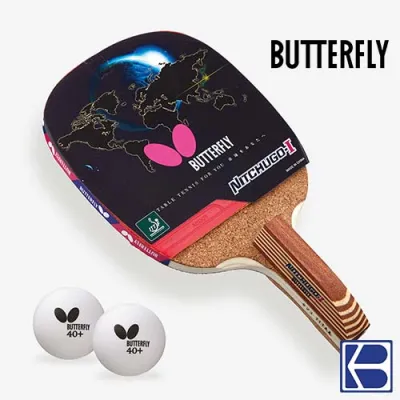
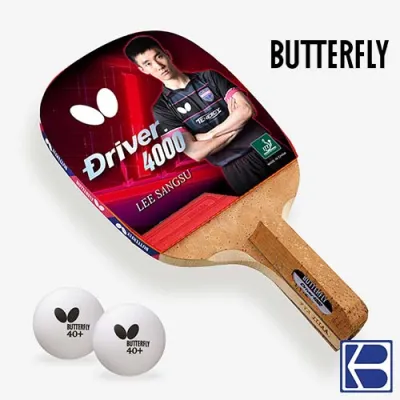
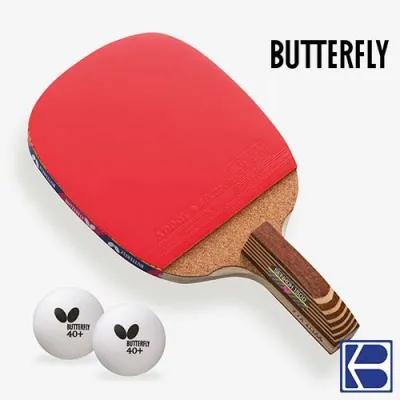
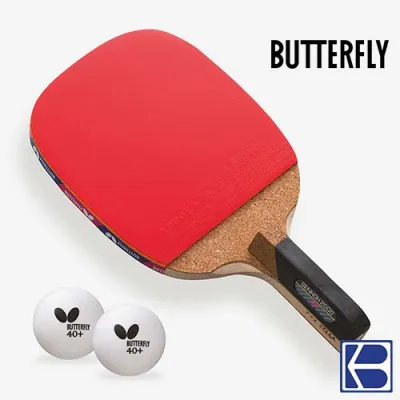
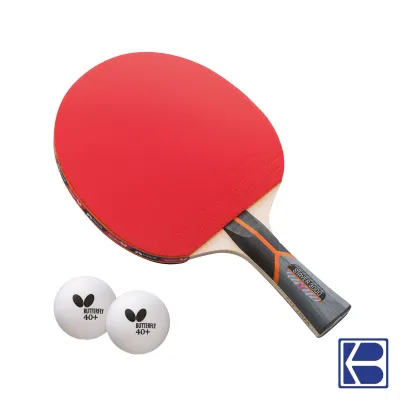
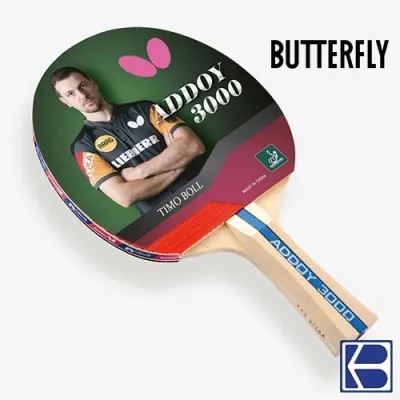
Prices are valid at publication and may change. Please refer to the product page for the latest price.
Beginners focus on developing consistent ball contact and mastering basic stroke mechanics. Your main goals are maintaining a consistent grip, keeping the ball on the table during simple rallies, and learning fundamental forehand and backhand drives. At this level, your equipment should offer maximum forgiveness and control, allowing you to focus entirely on physical form and hand-eye coordination.
Intermediate players have moved past basic mechanics and are beginning to integrate footwork into their play. At this stage, you can consistently generate your own spin and are starting to execute more advanced techniques, such as loop drives, blocks, and basic pushes. You are likely beginning to develop a preferred style of play and can sustain longer, more dynamic rallies. For intermediate players, the equipment needs to offer a balance of speed and control, providing enough feedback to help you refine your touch and start dictating the pace of the game.
Advanced players possess highly developed tactical awareness and competitive match experience. If you are an advanced player, you can maintain stroke stability and control under high-speed and high-spin conditions. You have a clear understanding of spin variations, can read your opponent’s serves effectively, and can execute precise ball placement. Advanced players require highly specialized equipment that can maximize their specific strengths, whether that means explosive speed for offensive loops or extreme control for defensive chopping.
Identify Your Preferred Playing Style
Your playing style dictates the physical characteristics you need from your racket, particularly regarding speed, spin, and control balance.

An offensive style prioritizes fast attacks, powerful loops, and active counter-attacks close to or mid-distance from the table. If you favor this style, you will want a racket that maximizes speed and spin generation. This allows you to produce deep, aggressive shots that force errors from your opponent, though it requires precise timing and physical control to keep the ball on the table.
A defensive style focuses on control, pace absorption, and capitalizing on opponent errors. Defensive players often play mid-distance to far from the table, utilizing techniques like chopping to return aggressive shots with heavy backspin. Alternatively, some defensive players operate close to the table, using blocking and precise placement to neutralize their opponent’s attacks. If you lean toward a defensive style, your equipment must prioritize maximum control and spin absorption, allowing you to cushion high-speed attacks and return them with high accuracy.
An all-round style represents a balanced approach that adapts to various match situations. All-round players do not rely solely on raw power or passive defense; instead, they transition smoothly between attacking and defending based on the flow of the rally. This style prioritizes a mix of control, placement, and moderate speed, allowing you to exploit weaknesses in your opponent’s game without taking excessive risks. An all-round player needs a versatile racket that offers a reliable blend of speed and control across all stroke types.
Match Your Profile to Butterfly Paddle Categories
Understanding Butterfly’s product classifications allows you to narrow down your choices based on your skill level and playing style.
For beginners and all-round recreational players, pre-assembled rackets are highly recommended. Butterfly offers several pre-assembled series designed specifically for entry-level play. These rackets feature rubbers and blades that are permanently bonded together, prioritizing high forgiveness and control over raw speed. They are designed to help you learn the game without the overwhelming complexity of choosing separate components. When selecting a pre-assembled model, look for official entry-level labeling that emphasizes control and ease of use.
As you transition into an intermediate player, you will need to understand how blade materials and rubber sponge thickness affect your play. Intermediate blades often introduce composite materials or specific wood plies to enhance the sweet spot. For example, pure wood blades generally offer excellent feedback and control, making them ideal for developing players who need to feel the ball impact. Some intermediate setups may incorporate soft carbon layers, which increase speed and sweet spot size while maintaining a manageable level of control. At this stage, choosing a medium sponge thickness (typically around 1.8mm to 2.1mm) provides a balanced trade-off between speed and control.
Advanced players almost exclusively use custom setups, selecting their blade and rubbers separately to match their precise playing style. Butterfly offers a wide range of high-performance blades featuring advanced carbon composites, such as Arylate-Carbon (ALC) or Super Arylate-Carbon, which provide exceptional speed and stability. Advanced rubbers, such as the Tenergy or Dignics series, offer specialized spin and speed characteristics. When building a custom racket, you must carefully read official specification charts, paying close attention to speed, spin, and hardness ratings to ensure the components complement your physical technique.
Key Specifications to Check Before Buying
Verify these physical specifications and official parameters to ensure the racket matches your physical needs and playing environment.
The blade structure is the foundation of your racket. You should check the ply count—typically 5-ply or 7-ply—and the material composition. Pure wood blades offer more vibration and feedback, which is highly beneficial for control-oriented players. Carbon-infused blades are stiffer and offer higher speed, but they reduce the contact feel. Additionally, consider the overall weight of the blade. A heavier blade can generate more power but may cause wrist strain during long sessions, whereas a lighter blade allows for faster swing speeds and easier maneuverability.
The rubber type is the primary interface between your racket and the ball, directly influencing spin and speed. Inverted rubbers, which have a smooth outer surface, are the most common and versatile, suitable for generating high levels of spin and speed. Short pips-out rubbers offer excellent control against incoming spin and are ideal for fast, flat hitting close to the table. Long pips-out and anti-spin rubbers are highly specialized defensive tools designed to reverse the opponent’s spin and disrupt the rhythm of the game. Verify that the rubber type aligns with your identified playing style before buying.
The handle shape is a critical factor for grip stability and wrist flexibility. Butterfly blades typically come in several handle configurations:
- Flared (FL): Wider at the base, preventing the racket from slipping out of your hand. This is the most popular shape and is excellent for players who maintain a consistent grip.
- Straight (ST): Uniform width from top to bottom, allowing you to easily adjust your grip angle during play. This is often preferred by defensive players who switch between forehand and backhand grips.
- Anatomic (AN): Features a wave-like shape that conforms to the natural contours of your palm, providing a very secure and stable grip.
- Penhold: Designed for the traditional penhold grip style, featuring a shorter handle.
Choose a handle shape that feels comfortable in your hand and supports your natural wrist mobility.
Frequently Asked Questions (FAQ)
Should beginners buy a custom Butterfly blade and rubber setup?
Beginners should generally avoid custom setups. Pre-assembled Butterfly rackets are specifically engineered to offer high control and forgiveness, which are essential for mastering basic stroke mechanics. A custom setup is often too fast and sensitive to spin, which can lead to poor habits and frustration. You should only consider upgrading to a custom setup once you have developed consistent stroke mechanics, can reliably control incoming spin, and have identified a clear playing style.
How do I know if a Butterfly paddle is too fast for my current level?
If your paddle is too fast, you will likely experience frequent unforced errors, such as hitting the ball off the end of the table or struggling to control simple blocks. Another key indicator is the inability to generate your own spin because the ball leaves the racket face too quickly, preventing proper dwell time. If you find yourself holding back on your swings or playing passively out of fear of missing the table, your equipment is likely too advanced for your current control capacity.
Does the handle shape affect my playing style?
Yes, the handle shape directly influences your grip stability and wrist flexibility. A flared handle provides a secure grip that is ideal for offensive players who execute powerful, sweeping strokes. A straight handle allows for quick micro-adjustments of the racket angle, making it highly suitable for defensive players or those who frequently transition between different grip styles during a rally. Testing different handle shapes can help you determine which configuration feels most natural for your hand size and stroke mechanics.
Community discussion
Share your experience or ask a question. Comments are reviewed before publication.