
Selecting the right table tennis racket is one of the most critical decisions a player can make to support their development, and Butterfly remains one of the most respected brands in the sport. Finding the ideal Butterfly series depends entirely on matching the equipment’s speed and feedback with your current technical proficiency and physical capability.
While elite players often gravitate toward high-speed carbon blades, using equipment that is too fast for your current skill level can severely hinder your development. This guide breaks down Butterfly’s most popular racket series by skill level, helping you make an informed decision that aligns with your playing style and progression goals.
Pre-Assembled Rackets vs. Custom Blades: Understanding the Basics
Before exploring specific series, it is essential to understand how Butterfly structures its product lineup. Beginners and casual players often start with pre-assembled rackets, which are factory-glued and sold as a single, ready-to-play unit. These rackets are highly convenient and cost-effective, making them excellent for recreational play in community centers or housing estate common areas across Singapore. However, because the rubbers are permanently bonded to the wood, they cannot be easily replaced once they wear out or when your skills outgrow them.
Products mentioned in this guide
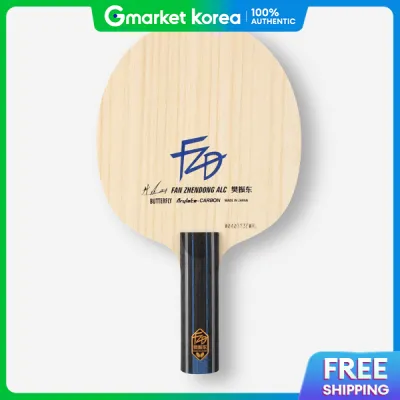
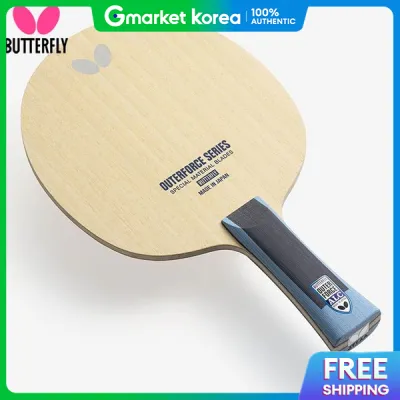
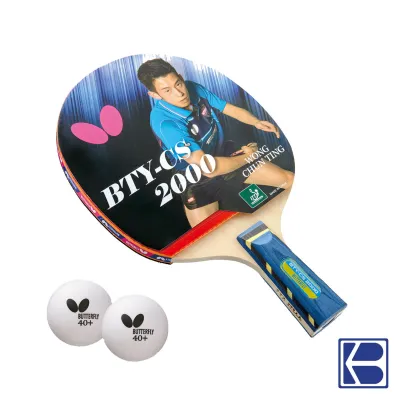
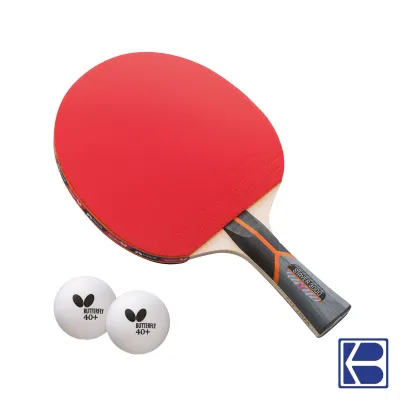
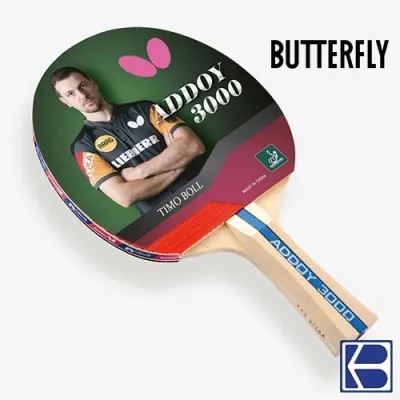
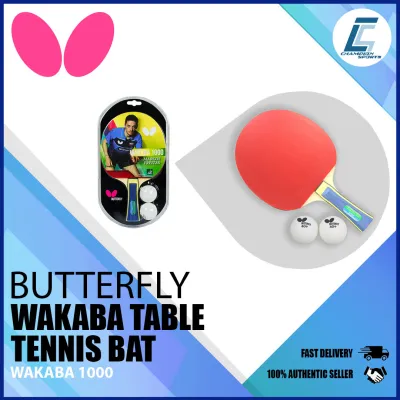
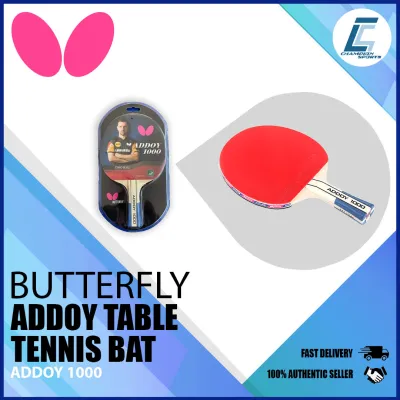
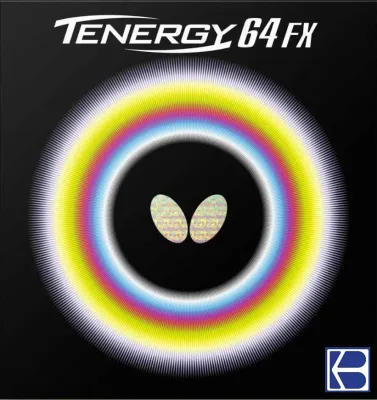
Prices are valid at publication and may change. Please refer to the product page for the latest price.
In contrast, custom blades represent the core of Butterfly’s competitive reputation. A custom setup separates the blade—the wooden or composite core—from the rubbers, which are purchased and glued on separately. This modular approach allows players to customize their racket’s weight, handle shape, and playing characteristics. As your skills advance, you can replace worn-out rubbers without needing to buy a new blade, or swap to different rubber styles as your tactical preferences evolve.
When browsing online marketplaces or specialty sports stores in Singapore, pay close attention to product naming conventions. Butterfly frequently uses the names of legendary players, such as Timo Boll or Zhang Jike, across both entry-level pre-assembled rackets and premium custom blades. A “Timo Boll” product could be a budget-friendly pre-assembled racket costing under S$40, or a professional-grade carbon blade retailing for over S$250. Always verify whether the item is listed as a complete racket or a standalone blade to ensure you are purchasing the correct equipment for your needs.
Best Butterfly Series for Beginners and Casual Players
For players who are just starting out or who play recreationally, the primary objective is to develop consistent stroke mechanics and ball control. High-speed rackets reduce the time the ball stays on the racket face, making it incredibly difficult to learn how to generate spin or direct the ball accurately. Beginners require forgiving equipment with a large sweet spot and a clear, natural vibration that helps them feel the ball impact.

At this stage, all-wood blades are highly recommended. Wood naturally absorbs energy better than composite carbon materials, providing a slower, more predictable bounce that allows you to focus on proper footwork, body positioning, and full stroke execution.
Primorac Series
The Butterfly Primorac is widely regarded as one of the finest entry-level custom blades ever produced. Constructed entirely from five plies of wood, this blade is designed specifically to maximize ball feel and control. It provides a medium-soft touch that gives players clear sensory feedback upon contact, which is essential for learning how to adjust the racket angle during active play.
The Primorac offers a superb balance of moderate speed and high control, making it highly forgiving on off-center hits. If your strokes are still slightly inconsistent, this blade helps keep the ball on the table rather than sailing long. It is also one of Butterfly’s most budget-friendly custom options, making it an excellent investment for players committed to transitioning from casual play to structured training.
Korbel Series
Named after the Czech legend Petr Korbel, the Korbel series is a classic 5-ply all-wood blade that serves as a natural stepping stone for developing attackers. It features a slightly harder outer wood ply (typically limba) compared to the Primorac, which provides a touch more speed and a crisper feel without sacrificing the natural feedback of an all-wood construction.
The standout characteristic of the Korbel is its exceptional dwell time. Dwell time refers to how long the ball remains in contact with the racket during a stroke; a longer dwell time allows players to grab the ball and generate heavy topspin. If you have mastered basic forehand and backhand drives and are ready to practice active topspin looping, the Korbel offers the perfect blend of control and offensive potential.
Entry-Level Pre-Assembled Rackets
If you prefer a hassle-free, ready-to-play option without the need to select and glue individual rubbers, Butterfly’s pre-assembled lines are highly practical. Models such as the Butterfly 401, 501, or the entry-level Timo Boll pre-assembled series are designed specifically for recreational use. These rackets typically come equipped with ITTF-approved rubbers like Yuki or Wakaba, which provide decent grip for learning basic spin.
However, it is important to maintain realistic expectations regarding their performance. Pre-assembled rackets use basic sponges and wood plies that limit the maximum spin and speed you can generate. Furthermore, because the rubbers are not designed to be peeled off, you cannot upgrade the setup later; once the rubber loses its grip, the entire racket must be replaced. They are ideal for casual family games but should be phased out once you begin playing competitive club matches.
Best Butterfly Series for Intermediate and Developing Players
Intermediate players have usually established consistent stroke mechanics and are beginning to develop a distinct playing style, such as close-to-table counter-driving or mid-distance looping. At this stage, players often find that all-wood blades require immense physical effort to generate winning speed. This is where composite blades, particularly those featuring Butterfly’s proprietary Arylate Carbon (ALC), become highly beneficial.
ALC technology weaves carbon fibers, which provide speed and a larger sweet spot, with Arylate fibers, which dampen harsh vibrations and soften the feel. This combination allows intermediate players to increase their offensive power while retaining enough control to handle short-game receives, passive blocks, and precise ball placement.
Timo Boll ALC
The Timo Boll ALC is a benchmark blade for modern offensive play. It features an outer ALC construction, meaning the carbon layers are positioned directly beneath the outer wood plies. This placement delivers a crisp, direct feel and high speed, making it incredibly effective for mid-distance looping and active counter-attacks.
Because of its balanced design, the Timo Boll ALC supports a highly versatile playing style. It provides enough speed to finish points easily while maintaining a reliable trajectory on topspin rallies. It is exceptionally popular among club-level players in Singapore who want a high-performance blade that can grow with them as they refine their competitive game.
Zhang Jike ALC
While the Zhang Jike ALC shares a similar material composition to the Timo Boll ALC, its structural design and weight distribution give it a slightly different playing character. The Zhang Jike ALC is designed to feel slightly stiffer and more solid, translating to faster rebound speeds and highly direct power transfer.
This blade is particularly well-suited for players who prefer to stay close to the table, utilizing quick blocks, aggressive counter-drives, and modern backhand flicks (often called the banana flick). Because of its stiffer nature, it requires a slightly higher level of technical precision to keep the ball on the table, as mistakes in racket angle will be amplified by the faster rebound.
Viscaria
The Viscaria is arguably the most famous blade in modern table tennis history, serving as the blueprint for almost all subsequent ALC designs. It offers a slightly softer, more forgiving feel compared to the Timo Boll ALC, which many players attribute to its specific wood ply thickness and handle ergonomics.
This subtle softness translates to incredible stability during passive play, such as blocking heavy topspin drives or executing precise short pushes. At the same time, it provides immense power when you step back and swing fully. For intermediate players who want a highly stable, professional-grade setup that excels at both backhand dominance and defensive control, the Viscaria remains the ultimate standard.
Best Butterfly Series for Advanced and Competitive Players
Advanced and competitive players possess highly refined techniques, fast footwork, and excellent physical conditioning. They require equipment that can maximize their physical output, offering extreme speed and massive spin potential. However, these advanced series come with a significant trade-off: they have very low forgiveness. If your timing is slightly off or your racket angle is incorrect, the ball will easily fly off the table.
To achieve elite performance, Butterfly utilizes advanced composite fibers like Zylon Carbon (ZLC) and Super ZLC, which offer higher elasticity, lighter weight, and an even larger sweet spot than standard carbon blades.
Timo Boll ZLC and Super ZLC
The Timo Boll ZLC and Super ZLC variants are engineered for maximum speed and dynamism. ZLC technology utilizes Zylon fiber, which is exceptionally strong and flexible, to produce a very high rebound. The Super ZLC variant weaves these fibers even more densely, creating a massive sweet spot where almost the entire blade face delivers uniform power.
These blades are designed for aggressive, high-speed loopers who frequently play from mid-to-far distance. The extreme speed allows you to hit powerful counter-loops even when forced away from the table. However, the dwell time is significantly shorter than that of ALC blades, meaning you must have highly precise wrist action and excellent timing to generate sufficient spin and control the ball’s trajectory.
Zhang Jike ZLC and Super ZLC
The Zhang Jike ZLC line is characterized by its stiff, direct feedback and explosive power. It is designed specifically for fast-attack specialists who aim to dominate rallies within the first three balls of a point. The high elasticity of the ZLC fibers creates a powerful “kicking” effect, allowing for devastating third-ball attacks and incredibly fast counter-loops.
This series is physically demanding. To control the high rebound of a Zhang Jike Super ZLC, you must have exceptional physical strength, quick recovery times, and highly developed stroke mechanics. It is not recommended for players who rely on passive blocking or slow, spin-heavy placement, as the blade’s inherent speed makes slow play highly difficult to control.
Dignics Series
While Butterfly is globally renowned for its blades, completing an advanced setup requires matching those blades with elite rubber technology. The Dignics series of rubbers (such as Dignics 05, Dignics 80, and Dignics 09C) represents the pinnacle of modern rubber engineering, designed specifically to optimize play with the modern plastic ball.
Featuring Butterfly’s Spring Sponge X technology, Dignics rubbers provide a highly elastic sponge that generates a deep, high-trajectory arc. This high arc gives advanced players a wider margin of safety over the net while maintaining extreme speed and heavy spin. Due to their premium price tier (often exceeding S$120 per sheet) and advanced performance characteristics, they are best suited for national-level competitors or highly dedicated club players who can fully exploit their high-tension potential.
Completing Your Setup: Pairing Blades with the Right Rubbers
Selecting the perfect blade is only half the equation; pairing it with the correct rubbers is crucial to unlocking its full potential. The general rule of thumb is to balance the stiffness of your blade with the hardness of your rubber sponge. Stiffer carbon blades often benefit from medium-to-soft rubbers to help retain control, while softer all-wood blades can be paired with harder rubbers to inject more offensive power.
- Beginner Pairings: If you are using an all-wood blade like the Primorac or Korbel, pair it with a highly forgiving rubber such as Butterfly Rozena. Rozena utilizes Spring Sponge technology but is engineered to compensate for minor stroke errors and incorrect racket angles, helping you build confidence as you learn to spin the ball.
- Intermediate Pairings: For ALC blades like the Timo Boll ALC or Viscaria, the Tenergy series is the gold standard. Tenergy 05 is highly recommended for players who focus on heavy topspin and close-to-table play, while Tenergy 64 offers a longer, flatter trajectory that suits mid-distance loopers.
- Advanced Pairings: Elite players using ZLC or Super ZLC blades should look toward the Dignics series. Dignics 05 provides maximum spin and a high arc for aggressive attackers, while Dignics 09C features a slightly sticky, tacky top sheet combined with a hard sponge, offering incredible precision for short pushes and explosive counter-looping.
Before finalizing your purchase, always check the specifications of your chosen rubbers. Pay close attention to rubber thickness; thinner sponges (such as 1.9mm) offer more control and reduce the overall weight of the racket, making them ideal for developing players. Thicker sponges (such as 2.1mm or “Max”) provide maximum speed and spin but require faster swing speeds to fully compress the sponge.
Additionally, consider the total weight of your completed setup. A blade paired with two heavy rubbers can easily exceed 190 grams, which may strain your wrist and slow down your swing speed if you are not accustomed to it. Finally, if you play in Singapore’s highly humid climate, moisture can easily condense on the rubber face during play, causing the ball to slip. Always store your racket in a protective case, clean the rubbers with a specialized sponge after play, and apply protective adhesive sheets to maintain their grip.
Quick Comparison of Popular Butterfly Blade Series
The table below summarizes the key attributes of the popular Butterfly blade series discussed in this guide to help you quickly identify the best fit for your current skill level.
| Series Name | Target Skill Level | Primary Material/Composition | Playstyle Focus | Relative Price Tier |
|---|---|---|---|---|
| Primorac | Beginner / Casual | 5-Ply All-Wood | Control & Fundamental Strokes | Budget (Under S$100) |
| Korbel | Developing Beginner | 5-Ply All-Wood | Controlled Topspin & Looping | Budget-Friendly (Under S$120) |
| Timo Boll ALC | Intermediate / Advanced | Arylate Carbon (Outer ALC) | Balanced, Mid-Distance Offense | Premium (S$200 – S$250) |
| Viscaria | Intermediate / Advanced | Arylate Carbon (Outer ALC) | Stable Blocking & Backhand Play | Premium (S$220 – S$270) |
| Timo Boll ZLC | Advanced / Competitive | Zylon Carbon (ZLC) | High-Speed, Dynamic Looping | Ultra-Premium (S$300 – S$350) |
| Zhang Jike Super ZLC | Elite / Competitive | Super Zylon Carbon (SZLC) | Explosive, Close-to-Table Attack | Ultra-Premium (Over S$450) |
Note: While technical specifications provide an excellent starting point, personal comfort, hand size, and physical strength should always play a role in your final decision. If possible, test different handle shapes (Flared vs. Straight) at a local club before purchasing.
Frequently Asked Questions (FAQ)
How often should I upgrade my Butterfly racket?
Upgrades should always be driven by technical milestones rather than arbitrary timelines. You should consider upgrading your blade when you find that your current setup is actively limiting your progression—for example, if you can consistently execute proper looping strokes but find that you must swing with extreme physical effort just to get the ball to the opponent’s side with decent speed. Conversely, rubbers wear out much faster than blades; if you play two to three times a week, you will likely need to replace your rubbers every four to six months as they lose their grip and elasticity, even if you keep the same blade.
Are Butterfly pre-assembled rackets good for official tournaments?
Yes, Butterfly pre-assembled rackets are legal for official tournament play, provided the rubbers carry the official ITTF (International Table Tennis Federation) logo. However, while they are technically legal, they are rarely competitive. The simplified wood and low-tension rubbers used in pre-assembled models cannot generate the heavy spin or high speeds required to compete effectively against players using custom setups. If you plan to enter sanctioned tournaments or join a competitive local league, transitioning to a basic custom setup is highly recommended.
What is the difference between ALC and ZLC carbon?
The primary difference lies in the balance between speed, stiffness, and vibration absorption. Arylate Carbon (ALC) incorporates Arylate fibers, which absorb vibrations and give the blade a slightly softer, more controlled feel, making it highly versatile and popular among intermediate to advanced players. Zylon Carbon (ZLC) uses Zylon fibers, which are stiffer and more elastic than Arylate. This results in a blade that is significantly faster with a larger sweet spot and a higher bounce, but it offers much less dwell time and vibration feedback, requiring elite-level technique to control.
Community discussion
Share your experience or ask a question. Comments are reviewed before publication.