
Selecting the right portable air pump requires a clear understanding of your inflation needs, whether you are a road cyclist tackling steep climbs, a driver keeping an emergency safety kit in your vehicle, or a homeowner managing sports equipment. CYCPLUS has established a diverse lineup of electric pumps designed to replace manual hand pumps and bulky garage compressors. Finding the ideal model involves balancing pressure capabilities, physical size, battery capacity, and thermal limits.
Because these compact devices use miniature electric motors and internal gear systems, their performance characteristics vary widely across different models. A pump optimized for high-pressure road bike tires operates differently from one designed to fill high-volume car tires. By evaluating your primary use cases against specific technical parameters, you can select a model that delivers reliable performance without unnecessary weight or expense.
How to Match CYCPLUS Pump Specs to Your Primary Use Case
When evaluating portable air pumps, the two most critical performance metrics are maximum pressure, measured in Pounds per Square Inch (PSI) or Bar, and airflow volume, measured in Litres per minute (L/min). High-pressure capability is essential for narrow tires, such as those found on road bicycles, which often require pressures exceeding 80 PSI. Conversely, high airflow volume is the key metric for larger inflatables, such as automotive tires or air mattresses, where the goal is to move a large quantity of air quickly at relatively low pressures.
Products mentioned in this guide
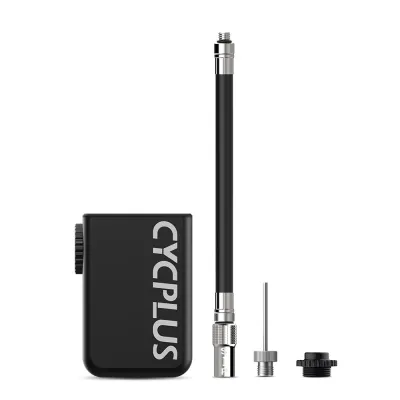
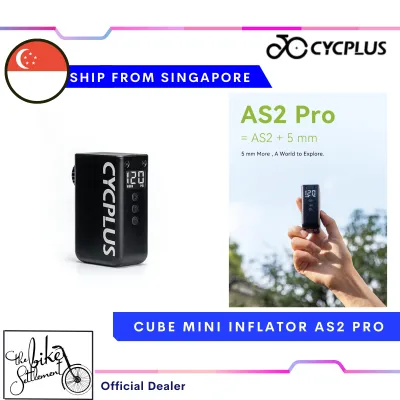
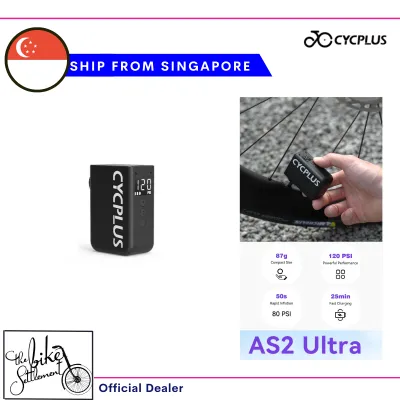
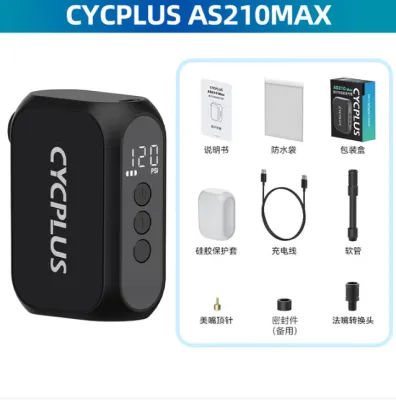
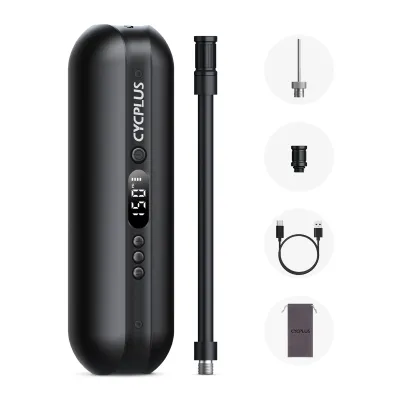
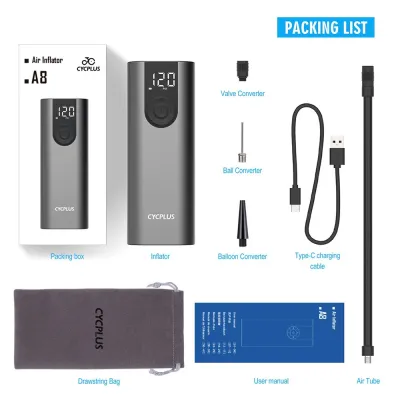
Prices are valid at publication and may change. Please refer to the product page for the latest price.
Power source configurations also dictate where and how you can use the pump. Models featuring built-in rechargeable lithium-ion batteries offer complete cordless convenience, making them excellent for roadside bicycle repairs or remote outdoor activities. However, these batteries have a finite runtime and require periodic recharging. On the other hand, models that connect directly to a 12V DC car adapter provide continuous power without the risk of battery depletion, though their usage is strictly limited by the reach of the power cable from the vehicle.
Every portable electric pump is subject to duty cycle limitations, which define how long the motor can run continuously before requiring a cooling period. The process of compressing air generates substantial heat, and small plastic or aluminum housings can warm up rapidly. High-quality models incorporate thermal management features, such as integrated cooling fans, heat-dissipating metal fins, or automatic thermal shutdown sensors. Before purchasing, verify the manufacturer’s recommended continuous run time to ensure the pump can complete your typical inflation tasks without overheating.
Choosing a Model for Cycling and E-Bikes
Cyclists must match their pump selection to the specific volume and pressure requirements of their tires. Road bike tires have a small air volume but demand high pressures, meaning you need a pump that can reliably push past 100 PSI without stalling. Mountain bike (MTB) and gravel tires operate at much lower pressures, typically between 20 and 40 PSI, but contain a much larger volume of air. For these high-volume tires, a pump with a higher L/min flow rate will save you significant time, whereas a slow, high-pressure road pump might take several minutes to inflate a single tire.

Valve compatibility is another crucial practical consideration. Bicycle inner tubes use three primary valve standards: Presta, Schrader, and Dunlop. Most portable electric pumps feature a native connection for one type—usually Schrader, which is identical to automotive valves—and rely on screw-on or press-on adapters for Presta and Dunlop valves. Check the manufacturer’s product description to confirm which adapters are included in the box and verify whether the connection mechanism secure enough to prevent air leakage at high pressures.
For active riders, portability is often the deciding factor. If you plan to carry the pump in a jersey pocket or a small saddle bag, look for ultra-compact models that minimize weight and physical footprint. Some specialized cycling pumps are small enough to be mounted directly alongside a bottle cage using dedicated brackets. Keep in mind that extreme miniaturization usually comes at the cost of battery capacity, so ensure the compact model you choose holds enough charge to handle at least two full tire inflations on a single charge.
Selecting a Pump for Automotive and Motorcycle Tires
Inflating automotive or motorcycle tires requires a pump with sufficient endurance and power to handle large air volumes. While a bicycle tire might only take a few seconds to top up, a standard car tire requires several minutes of continuous operation to increase pressure by even a few PSI. You must check the manufacturer’s stated duty cycle to ensure the pump can run for at least 10 to 15 minutes continuously. Using a pump with an inadequate duty cycle on a car tire can lead to premature motor failure or thermal shutdown mid-process.
Physical ergonomics play a major role when working around vehicles. Verify the length of both the air hose and the power cord if you are choosing a 12V DC model. The hose must be long enough to reach the tire valve stem comfortably when it is positioned at the top of the wheel rotation, preventing the pump from hanging in the air and straining the connector. For corded models, the 12V power cable must easily extend from the dashboard cigarette lighter socket to all four wheels, including the rear tires of longer vehicles like SUVs or station wagons.
Safety and precision are paramount when maintaining vehicle tires. Look for models equipped with clear digital pressure gauges and reliable auto-shutoff features. These systems allow you to pre-set your vehicle’s recommended cold tire pressure, automatically stopping the pump once the target is reached. This prevents dangerous over-inflation and allows you to step back from the vehicle while the pump operates, reducing your exposure to roadside traffic hazards.
Finding the Right Fit for Household and Sports Gear
If your primary goal is to inflate household items and sports equipment, versatility is key. Sports balls, such as basketballs, footballs, and volleyballs, require very low pressures—often between 4 and 12 PSI—but can be easily damaged or ruptured if over-inflated. Ensure the pump you select is compatible with specialized low-pressure needle adapters and features a sensitive digital gauge that can accurately measure and display low PSI levels to protect your gear.
Operational noise is an important factor if you plan to use the pump indoors, particularly in high-density residential settings like Singapore’s HDB flats. Small electric air compressors can produce a loud, high-pitched buzzing sound during operation. If you live in a shared space or frequently inflate gear late at night or early in the morning, check the manufacturer’s decibel (dB) ratings and look for models designed with noise-dampening casings or rubberized feet that minimize vibration transfer to the floor.
Battery capacity should be calculated based on the volume of items you expect to inflate during a single session. For example, inflating a large family pool float or multiple air mattresses for guests requires significantly more energy than topping up a few bicycle tires. Look for models with larger battery capacities, typically indicated by higher milliampere-hour (mAh) ratings, to ensure you do not run out of power before your recreational gear is fully prepared for use.
Essential Features to Verify Before Purchase
Before finalizing your purchase, it is essential to verify the safety and compliance certifications of the pump’s internal battery. High-quality lithium-ion cells should carry recognized international safety certifications to ensure they have been tested against short circuits, overcharging, and thermal instability. Always review the manufacturer’s guidelines regarding safe storage, especially concerning exposure to moisture and extreme temperatures.
Warranty terms and the availability of local after-sales support are critical considerations for electronic devices. Check whether the seller or manufacturer offers a local warranty in Singapore, which can simplify the process of obtaining a replacement or repair if a defect arises. Purchasing from authorized local distributors often provides greater peace of mind compared to buying from overseas sellers on online marketplaces, where resolving warranty claims can be complicated and costly.
Finally, compare the retail price in S$ against the completeness of the included accessory kit and the overall build quality. A slightly higher initial investment may be justified if the package includes high-quality brass adapters, a durable storage pouch, a flexible heat-resistant hose, and a robust aluminum alloy casing. Weigh these physical attributes against your budget to ensure you select a reliable tool that delivers long-term value for your specific inflation needs.
Frequently Asked Questions (FAQ)
Can I leave a rechargeable air pump in my car during hot weather? (FAQ)
No, you should avoid leaving a rechargeable air pump inside a parked car during hot weather. In tropical climates like Singapore’s, the interior temperature of a vehicle parked in direct sunlight can quickly rise to dangerous levels, often exceeding 60 degrees Celsius. Standard lithium-ion batteries can degrade rapidly, swell, or even experience thermal runaway when exposed to temperatures above their safe storage limits. Always consult your specific product manual for the manufacturer’s recommended storage temperature range, and store the device in a cool, shaded indoor environment when not in use.
How often should I charge the pump if I only use it occasionally? (FAQ)
If you only use your electric air pump occasionally, you should charge it at least once every three to six months to maintain battery health. Lithium-ion batteries naturally experience self-discharge over time, even when the device is turned off. If a battery is left completely discharged for an extended period, it can enter a state of deep discharge, which permanently reduces its overall capacity and may prevent it from holding a charge in the future. Refer to the manufacturer’s instructions for the recommended storage charge level, which is typically around 50% to 80% capacity.
Community discussion
Share your experience or ask a question. Comments are reviewed before publication.