
Bringing a DHS table tennis table into a Singapore home is an exciting step for any enthusiast, but the reality of urban living means space is often the ultimate deciding factor. Whether you are setting up in a cozy HDB flat, a modern condominium, or a spacious landed property, finding the right balance between a regulation-size table and your available floor area is crucial. To make a successful purchase, you must look beyond the static dimensions of the table itself and evaluate how much room you actually need to swing a racket, move laterally, and safely store the equipment when it is not in use.
Assessing Your Total Playing Footprint
To enjoy a proper game of table tennis, you must calculate the active playing footprint rather than just the physical boundaries of the table. A standard full-size table tennis table measures 2.74 meters (9 feet) in length and 1.525 meters (5 feet) in width. However, placing this table in a room that is exactly those dimensions would make play impossible. For comfortable recreational play, you need to add a minimum clearance of at least 1.5 to 2 meters behind each endline for backswings and footwork, along with at least 1 meter of clear space on each side. This brings the minimum recommended playing zone to approximately 5.8 meters in length and 3.5 meters in width.
Beyond the horizontal floor space, you must inspect the vertical and lateral environment of your intended room. In Singapore homes, common overhead obstacles include low-hanging ceiling fans, decorative pendant lights, and wall-mounted air-conditioning units. A high-speed smash or an aggressive lob can easily send a ball—or a raised racket—colliding with these fixtures. Ensure there is sufficient vertical clearance, and position the table away from the direct path of ceiling fan blades to prevent accidents and equipment damage.
Products mentioned in this guide
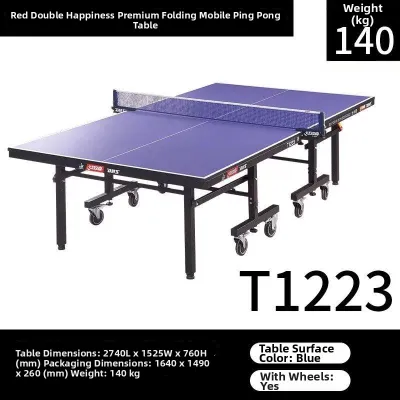

Prices are valid at publication and may change. Please refer to the product page for the latest price.
Before committing to a specific DHS model, it is highly recommended to create a physical or digital floor plan map of your room. Use masking tape on the floor to outline both the table’s physical footprint and the extended active play zone. This visual aid helps you see how the table interacts with static furniture like sofas, dining tables, and television consoles. If the tape overlaps with permanent fixtures, you will immediately know whether you need to rearrange the room or opt for a more compact table style.
Comparing DHS Table Structures for Space Constraints
DHS offers several structural designs tailored to different space and storage requirements, making it essential to understand how these mechanisms operate. Heavy-duty double-folding tables are designed with a robust, integrated undercarriage where both halves fold upward together. These models offer exceptional stability and are ideal if you have a dedicated games room or a large multi-purpose area where the table can remain set up for long periods. However, because they are heavier and have a wider storage profile, they require more effort and space to move and store.

For multi-purpose rooms where space is at a premium, single-fold or compact models are often more practical. Single-fold tables consist of two independent halves, each with its own set of folding legs and wheels. This design allows the halves to nest closely together when folded, significantly reducing the storage footprint. Additionally, many of these models feature an independent half-table playback mode. By folding only one half upward, you can practice solo against the upright surface, which is a highly valuable feature if you do not always have a playing partner.
When evaluating different structures, you must check the product labels and manufacturer specifications for folded dimensions and safety features. Look closely at the wheel locking systems; high-quality casters with secure locks are vital to prevent the table from shifting during intense rallies or rolling unexpectedly while in storage. Keep in mind the trade-off between frame stability and ease of daily relocation. Thicker steel frames and heavier undercarriages provide a more stable, professional playing experience but make the table significantly heavier to push across your living room floor.
Matching Table Configurations to Your Room Layout
Selecting the right DHS table configuration depends heavily on how you utilize your home’s layout. In multi-purpose living areas, such as a shared living and dining room, your priority should be quick fold-away capabilities and a slim vertical storage profile. You want a table that can be set up in minutes for a family session and then quickly rolled away into a corner, behind a wardrobe, or inside a utility closet. For these spaces, lightweight single-fold models or compact-sized tables are highly suitable as they minimize visual clutter when stored.
If you are fortunate enough to have a dedicated spare room or a study, you can balance structural rigidity with occasional folding needs. In these spaces, you might choose a sturdier DHS model with a thicker playing top to enjoy a more consistent, professional bounce. Since the table will remain set up most of the time, you only need to fold it occasionally—such as during deep cleaning, floor maintenance, or when hosting overnight guests. A double-folding table or a high-end single-fold model fits this scenario perfectly, offering a premium playing experience without permanently sacrificing the room’s versatility.
For those planning to play on covered patios, balconies, or within the shared void decks of landed properties, environmental factors must be carefully verified. Singapore’s tropical climate brings high humidity, heat, and occasional wind-driven rain. Standard indoor DHS tables are made of fiberboard, which can warp, bubble, or lose its bounce when exposed to moisture. Before placing any table in a semi-outdoor zone, verify the manufacturer’s specifications to ensure the model is explicitly rated for outdoor use, featuring weatherproof materials like melamine resin tops and rust-resistant undercarriages.
Verifying Delivery and Access Clearances
One of the most overlooked aspects of buying a table tennis table in Singapore is the delivery process. Before finalizing your purchase, you must measure the entire entry path from the delivery vehicle to the final room. Start by measuring the width and height of your main entrance door, internal doorways, and any tight hallway turning radiuses. Compare these measurements against the packaged dimensions of the table, which are often significantly larger than the folded table itself due to protective wooden crates or heavy cardboard boxing.
For high-rise apartment living, elevator access is a critical bottleneck. You must check the elevator cabin’s height, width, depth, and weight limits to ensure the packaged table halves can fit inside. If the package is too tall or wide to stand upright in the lift, delivery personnel may have to carry the heavy components up the stairwell, which often incurs additional manual handling fees or may even be physically impossible.
If your measurements reveal tight clearances or potential obstacles, stop and consult the retailer before scheduling delivery. Ask if the table can be delivered in a partially disassembled state or if they offer specialized routing services. Confirming these logistics beforehand prevents the frustration of a failed delivery, potential damage to your home’s walls, or unexpected return shipping costs.
Frequently Asked Questions (FAQ)
Can I store a folded DHS table flat against the wall?
Yes, but you must strictly follow the manufacturer’s guidelines to ensure safety. Folded table tennis tables are top-heavy and can pose a serious tipping hazard, especially in homes with children or pets. Always engage the built-in safety locking mechanisms on the undercarriage when the table is folded. If the model does not feature a self-supporting frame, secure it to the wall using heavy-duty safety straps or wall anchors to prevent accidental tip-overs.
Do compact DHS tables offer the same bounce as standard ones?
Compact or smaller-sized tables may not offer the exact same playing characteristics as a standard 18mm or 25mm professional top. To gauge the quality of the bounce, check the product specifications for the top’s thickness and material composition. While compact tables are excellent for casual recreation and tight spaces, serious players looking to train for tournaments should prioritize standard-thickness tops to ensure consistent ball rebound and spin response.
Community discussion
Share your experience or ask a question. Comments are reviewed before publication.