
Finding the space for a full set of dumbbells or a cable machine in a compact Singapore apartment can be a challenge. An elastic band offers a highly versatile, space-saving alternative that can replicate almost any gym exercise. However, choosing the wrong type of band can lead to inefficient workouts, awkward handling, or even sudden snaps during high-tension movements.
To select the right elastic band, you must match its design to your specific training objectives, fitness level, and the exercises you plan to perform. A band that works perfectly for glute activation will not provide the correct support for assisted pull-ups or upper-body presses. Understanding how different band styles function allows you to build an effective home gym setup that fits into a single drawer.
Identify Your Strength Training Goals and Current Level
Before browsing online marketplaces or local sporting goods stores, you need to diagnose your primary training objectives. Elastic bands serve vastly different purposes depending on their thickness, length, and elasticity. If your goal is physical rehabilitation or joint mobility, you will require a very light, highly controllable tension that allows for slow, precise movements. Conversely, if you are looking to build muscle (hypertrophy) or add heavy resistance to your squats and deadlifts, you will need thick, high-tension bands that can withstand significant force.
Products mentioned in this guide
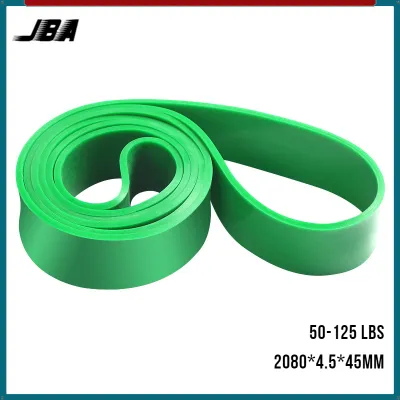
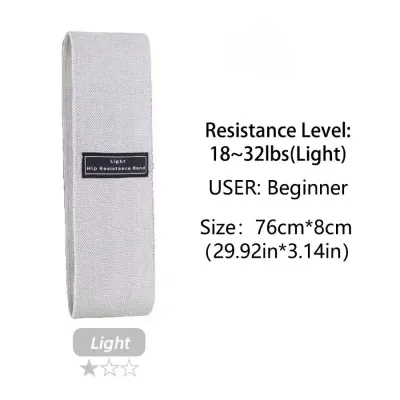
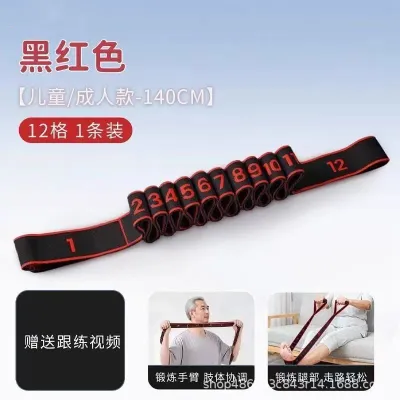
![[RECEIVE IN 3 DAYS] Looped Resistance Exercise Yoga Bands](https://img.lazcdn.com/g/p/478c71011ff76f1dc2636e7c42012a8d.jpg_400x400q80.jpg_.webp)
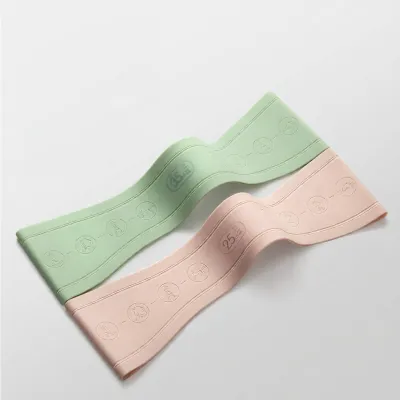
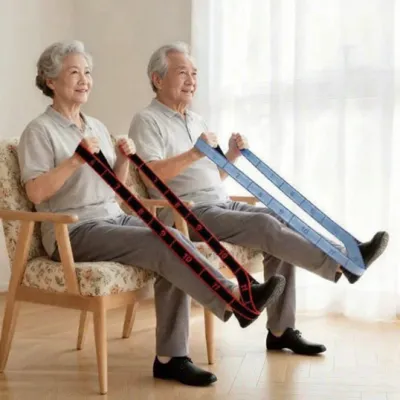
Prices are valid at publication and may change. Please refer to the product page for the latest price.
Your current fitness level and any existing joint limitations also play a critical role in your decision. Beginners should start with lower resistance levels to master their form, as the variable tension of an elastic band feels different from free weights. If you are recovering from an injury, check with a physical therapist before selecting a band, as certain designs can put unexpected stress on stabilizing muscles. Identifying exactly what you want to achieve ensures you do not end up with a band that is either too light to stimulate muscle growth or too stiff to use safely.
Understand the 4 Main Types of Elastic Bands
Loop Bands (Mini and Power Loops)
Loop bands are continuous, unbroken circles of material that come in two distinct sizes: mini loops and large power loops. Mini loops are typically 25 to 30 centimeters long and are made from either thin latex or thick, woven fabric. They are designed to be placed around your thighs, calves, or ankles to target the glutes, hips, and outer thighs during lower-body movements.

Large power loops, on the other hand, are much longer—usually around one meter—and are made of thick, heavy-duty latex. These bands are highly versatile, allowing you to anchor one end under your feet or to a sturdy post for full-body resistance. They are the standard choice for adding resistance to compound lifts like squats, assisting with bodyweight pull-ups, or performing deep, full-body mobility stretches.
Tube Bands with Handles
Tube bands are hollow, cylindrical pieces of latex equipped with carabiners at both ends, allowing you to clip on foam handles, ankle straps, or door anchors. This modular design closely mimics the functionality of a commercial gym’s cable machine. By swapping out tubes of different thicknesses, you can easily adjust the resistance level without changing your grip or setup.
These bands are ideal for upper-body pushing and pulling exercises, such as chest presses, bicep curls, shoulder presses, and seated rows. The rotating handles provide an ergonomic, comfortable grip that prevents the band from rubbing against your hands or wrists during repetitive movements. They are highly recommended if you want to perform traditional strength training patterns at home without heavy iron weights.
Flat Therapy Bands
Flat therapy bands are thin, wide, open-ended sheets of latex or synthetic rubber, typically measuring between one and two meters in length. Because they do not have loops or handles, you customize the resistance and grip width by wrapping the ends directly around your hands. This simple design provides exceptionally smooth, low-profile tension throughout the entire range of motion.
These bands are the standard tool for physical therapy, post-injury rehabilitation, Pilates, and gentle shoulder mobility routines. They are generally not suited for heavy strength training or muscle building, as they do not offer the high-tension levels required for progressive overload. Instead, they excel at isolating small stabilizing muscles, such as the rotator cuff, where control and precision are far more important than raw resistance.
Lifting Assistance and Figure-8 Bands
Figure-8 bands consist of a short elastic tube crossed in the middle to form two loops with handles at either end. This configuration limits the range of motion but provides high, immediate resistance, making them excellent for targeted upper-body isolation. You can use them for exercises like face pulls, chest flyes, and shoulder dislocates, where keeping your hands separated under constant tension is key.
Lifting assistance bands, such as elastic wrist straps or grip-assist loops, are specialized accessories designed to secure your grip during heavy pulling movements like deadlifts or heavy rows. It is important to note that these are training aids meant to prevent your grip from failing before your target muscles do; they do not replace proper lifting technique or hand strength. Always inspect the stitching and elastic integrity of lifting straps before lifting heavy loads to avoid sudden slippage.
Match the Band Type to Your Specific Exercises
To get the most out of your workouts, you must pair the correct band design with the specific movement patterns you plan to perform. Using the wrong band can make an exercise feel awkward, limit your range of motion, or cause the band to slip out of place mid-set.
For lower-body movements like squats, hip thrusts, and lateral walks, mini loop bands are the most effective choice. Placing a mini loop just above your knees forces your glutes to fire constantly to keep your knees from collapsing inward, protecting your joints while maximizing muscle activation. For upper-body push and pull exercises, such as chest presses or lat pulldowns, tube bands with handles are superior because they allow you to pull from a secure, anchored point while maintaining a natural wrist alignment.
If you are working on bodyweight progression, such as pull-ups or dips, large power loop bands are indispensable. By looping one end over a pull-up bar and placing your feet or knees in the other, the band provides mechanical assistance at the bottom of the movement where you are weakest, helping you build the strength needed for unassisted reps.
The table below outlines how to match common exercises to the appropriate elastic band type:
| Exercise | Recommended Band Type | Primary Reason for Match |
|---|---|---|
| Squats & Hip Thrusts | Mini Loop Band (Fabric or Latex) | Keeps constant lateral tension on the glutes and hips |
| Lateral Monster Walks | Mini Loop Band (Fabric) | Prevents slipping and rolling on the legs during movement |
| Chest Press & Rows | Tube Band with Handles & Door Anchor | Mimics cable machine mechanics with ergonomic grip |
| Bicep Curls & Tricep Extensions | Tube Band with Handles or Power Loop | Allows natural hand positioning and smooth tension |
| Assisted Pull-ups | Large Power Loop Band | Provides vertical lifting assistance at the bottom of the rep |
| Rotator Cuff Rotations | Flat Therapy Band | Offers light, highly controllable tension for joint stability |
| Face Pulls & Chest Flyes | Figure-8 Band or Tube Band | Keeps hands separated and provides high, short-range resistance |
Select the Right Resistance Level and Material
One of the most common mistakes when buying an elastic band is assuming that colors represent universal resistance levels. There is no industry-wide standard for band colors; a red band from one brand might offer light resistance, while a red band from another could be extra heavy. Always check the manufacturer’s product specifications for the estimated weight equivalent in kilograms or pounds to ensure you are selecting the correct tension.
Instead of buying a single band, it is highly recommended to invest in a progressive set containing light, medium, and heavy options. Different muscle groups require different levels of resistance; your legs can handle much heavier loads than your shoulders or arms. A set also allows you to implement progressive overload, gradually increasing the resistance as your strength improves over time.
You must also choose between latex and fabric materials, each of which has distinct trade-offs. Latex bands are highly elastic, stretch up to several times their original length, and provide a very smooth resistance curve, but they can roll up, pinch bare skin, and deteriorate quickly when exposed to sweat. Fabric or woven bands are wider, thicker, and lined with non-slip grips, making them incredibly comfortable for lower-body exercises. However, fabric bands have a limited stretch capacity and are generally only available in mini-loop designs, making them unsuitable for full-body or upper-body movements.
For residents in Singapore, the tropical, humid climate is a major factor to keep in mind. High humidity and sweat can cause latex bands to become sticky or degrade prematurely. If you choose latex, look for high-quality, multi-layered latex bands, and make sure to clean and dry them properly after every sweaty home workout.
Safety Checks and Maintenance for Elastic Bands
Because elastic bands store significant kinetic energy under tension, a sudden snap can cause serious injury to your face, eyes, or skin. Performing a quick, pre-workout inspection is the most critical safety step you can take. Visually inspect the entire length of the band for micro-tears, small punctures, discoloration, or white stress marks where the material has been overstretched. Run your fingers along the band to feel for any thinning spots or loss of elasticity; if you find any defects, do not use the band.
Safe anchoring is equally vital to prevent the band from slipping or snapping back toward you. Always use a dedicated door anchor when securing tube bands to a door frame, making sure to anchor on the side of the door that closes toward you so that your pulling force pulls the door shut rather than open. Never loop an elastic band around sharp edges, rough metal brackets, or abrasive concrete surfaces, as this will quickly cut the material. Avoid anchoring to lightweight or unstable furniture, such as chairs or light tables, which can easily tip over under tension.
To prolong the life of your bands, clean them regularly by wiping them down with a damp cloth and mild soap to remove sweat, body oils, and chalk. Avoid harsh chemical cleaners, and never dry them in direct sunlight or near heat sources, as UV rays and heat dry out the material and cause micro-cracking. For latex bands, applying a light dusting of unscented talcum powder or cornstarch after cleaning can prevent the material from sticking together during storage. Retire and replace any band immediately if it shows signs of permanent deformation, cracking, or stickiness.
Frequently Asked Questions (FAQ)
Can you build significant muscle mass using only elastic bands?
Yes, you can build muscle using elastic bands because muscle growth relies on mechanical tension and progressive overload, both of which bands can provide. However, bands have a variable tension curve, meaning the resistance is lightest at the start of the movement and heaviest at peak contraction. While they are highly effective for beginners, intermediates, and high-repetition endurance training, advanced lifters may eventually need to combine them with free weights to achieve the absolute loads required for maximal strength and lower-body hypertrophy.
How do I know when it is time to replace my elastic band?
You should replace your elastic band immediately if you observe visible cracks, deep scratches, thinning areas, or a chalky, sticky texture on the surface. Another clear indicator is a noticeable loss of snap-back speed, where the band feels sluggish or fails to return to its original length after being stretched. In Singapore’s hot and humid climate, sweat and moisture accelerate rubber degradation, so regular users should expect to replace latex bands every one to two years, depending on frequency of use and storage conditions.
Community discussion
Share your experience or ask a question. Comments are reviewed before publication.