
Selecting the right EVOC saddle bag depends on balancing your daily carrying requirements with your specific riding environment and bicycle setup. Whether you are navigating Singapore’s Park Connector Network (PCN) on a weekend cruise, commuting to work in unpredictable tropical weather, or embarking on long-distance road training, your choice should align with your gear volume and mounting compatibility. By matching the bag’s capacity and attachment mechanism to your bike’s physical dimensions, you ensure a secure fit that does not interfere with your pedaling rhythm or compromise your safety. A well-chosen saddle bag keeps your essential tools and personal items secure, dry, and easily accessible, allowing you to focus entirely on the road ahead.
Identify Your Core Cycling Needs and Gear Requirements
Before exploring specific bag designs, it is essential to evaluate what you actually need to carry on a typical ride. For short leisure rides along the PCN, your cargo list is likely minimal: a multi-tool, a spare inner tube, tire levers, and perhaps some emergency cash or a card. A compact, lightweight bag is ideal for these scenarios, as it tucks neatly under the saddle without adding unnecessary bulk or weight to your bicycle.
Conversely, longer road cycling trips or self-supported endurance rides demand a more comprehensive repair kit and additional personal supplies. You may need to pack multiple spare tubes, a CO2 inflator with cartridges, a patch kit, a chain breaker, and even a compact first-aid kit or a packable windbreaker. These larger loads require a saddle bag with expanded volume and internal organization compartments to prevent your tools from rattling against each other and causing damage.
Products mentioned in this guide
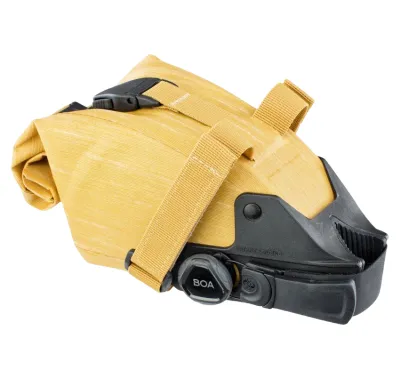
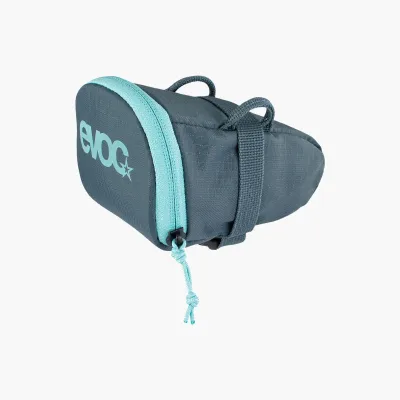
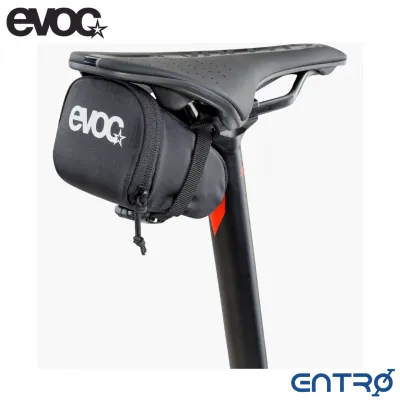
Prices are valid at publication and may change. Please refer to the product page for the latest price.
Singapore’s tropical climate introduces unique environmental challenges that must influence your gear protection choices. Sudden, heavy downpours can occur at any time of year, and high humidity levels can trap moisture inside non-breathable fabrics. If you plan to carry electronics, such as a smartphone or key fob, or items prone to rust like steel multi-tools, prioritizing reliable weatherproofing is non-negotiable. Choosing a bag with verified water resistance can save you from having to spend extra S$ on replacing rusted tools or water-damaged electronics.
Finally, you must assess the physical compatibility of your bicycle frame and components. Take note of your seat post exposure, the clearance between your saddle rails and the rear tire, and the design of your saddle rails. Small bicycle frames, bikes with dropped seatstays, or those with low saddle heights often have limited vertical clearance. If you install a bag that is too tall or droops excessively, it may rub against the rear tire when you ride over bumps, leading to rapid wear of the bag fabric and potential safety hazards.
Match EVOC Saddle Bag Features to Your Ride Type
Once you have defined your carrying needs, you can begin matching specific design features to your primary riding style. For daily commuting and casual PCN leisure rides, convenience and ease of use are paramount. A compact saddle bag with a simple, secure strap system is often the most practical choice. These bags are designed to hold just the essentials, keeping your bike’s profile clean and lightweight. Look for models that feature quick-access external pockets or wide-opening zippers, allowing you to retrieve your keys, transit card, or cash quickly during brief stops without having to unpack your entire repair kit.

For longer road cycling trips, aerodynamic efficiency and stability become much more critical. Road cyclists often ride at higher speeds and cover greater distances, meaning any extra wind resistance or side-to-side bag sway can waste valuable energy. A streamlined, narrow saddle bag that tucks tightly behind the seat post minimizes drag and prevents your thighs from rubbing against the bag while pedaling. For these demanding rides, prioritize models with roll-top closures or highly water-resistant zippers, which provide a reliable barrier against sustained road spray kicked up by your rear wheel over hours of riding.
If your cycling routine is diverse, switching frequently between urban commuting during the week and long-distance endurance rides on the weekend, cross-scenario compatibility is key. Instead of buying multiple bags, you can opt for a versatile mid-sized model that adapts to different loads. Look for bags equipped with compression straps or modular attachment options. These features allow you to compress the bag to a smaller profile when you are only carrying a spare tube and a multi-tool, or expand it to its full capacity when you need to pack extra layers and nutrition for a weekend century ride.
Key Specifications to Check Before You Buy
To ensure a successful purchase, you must carefully verify several key product specifications against your bicycle’s setup. The mounting system is one of the most critical factors to consider. EVOC saddle bags typically utilize either a strap-based system or a quick-release clip-on mechanism. Strap-based systems offer universal compatibility and are easy to swap between different bikes, but they require secure attachment points around the saddle rails and seat post. Quick-release clip systems offer the convenience of snapping the bag on and off in seconds, but you must verify that the mounting bracket is compatible with your specific saddle rail material and spacing. For instance, oversized carbon saddle rails (often 7x9mm) may not fit standard round-rail clips, requiring specialized adapters or a strap-based alternative to prevent damage to the delicate carbon structure.
Material quality and weather resistance should also be scrutinized rather than assuming all bags perform equally. Check the manufacturer’s product descriptions for specific technical details, such as welded seams, polyurethane (PU) coatings, and durable outer fabrics like high-density nylon or polyester. Welded seams are particularly effective at preventing water from seeping through stitch holes, making them superior for wet-weather riding. A durable outer fabric ensures the bag can withstand the constant abrasive action of road grit, mud, and water thrown up by the rear tire.
Visibility and safety features are essential additions, especially if you frequently ride during the early morning, late evening, or in low-visibility rainstorms. Look for saddle bags that incorporate highly reflective elements, such as reflective logos, piping, or side panels, which help make you more visible to motorists from various angles. Additionally, check for a dedicated light attachment loop on the rear of the bag. This loop allows you to securely clip on a rear safety light, ensuring your light remains positioned at an optimal height and angle, rather than being blocked by the bag itself. While reflective elements and safety lights significantly improve your visibility, they do not replace defensive riding habits and situational awareness, especially when navigating wet, slippery roads during a sudden downpour.
Installation, Adjustment, and Maintenance Tips
Proper installation is vital to protect your bicycle, extend the lifespan of your saddle bag, and ensure a quiet, distraction-free ride. When mounting the bag, thread the straps carefully through the saddle rails and around the seat post, pulling them snug to eliminate any play. A loose saddle bag will rattle and sway, which not only distracts you but can also cause abrasive wear on your bike’s paint or carbon finish. However, be cautious not to over-tighten the straps, particularly when mounting to lightweight carbon seat posts or carbon saddle rails. Excessive clamping force can crush or crack composite materials, leading to catastrophic component failure.
Regular maintenance is necessary to keep your saddle bag functioning reliably over time. After riding through heavy rain, muddy trails, or dusty roads, perform a quick inspection of the bag’s attachment points, zippers, and seams. Road grit can easily get trapped in zipper teeth, causing them to bind or wear out prematurely. Gently brush away any dried mud or debris, and check that the straps remain securely stitched to the bag body. If you notice any loose threads or minor tears, address them early to prevent the damage from spreading under the weight of your gear.
When it comes to cleaning, always follow the specific care instructions provided on the manufacturer’s label. Avoid throwing your saddle bag into a washing machine or using harsh chemical detergents, as these aggressive cleaning methods can strip away the water-repellent coatings and damage the internal structural liners. Instead, empty the bag completely and wipe both the interior and exterior with a soft cloth dipped in mild, soapy water. Once clean, open all compartments fully and allow the bag to air-dry in a shaded, well-ventilated area. Never expose the bag to direct high heat or tumble dryers, as extreme temperatures can warp plastic components and delaminate waterproof backings.
Frequently Asked Questions (FAQ)
Can I use an EVOC saddle bag on a carbon seat post?
Yes, you can safely use an EVOC saddle bag on a carbon seat post, but you must take extra precautions to prevent damage. Carbon fiber is highly sensitive to localized clamping pressure and friction. Before mounting the bag, clean both the seat post and the bag’s strap thoroughly to remove any abrasive grit. To protect the carbon finish from scuffs and wear caused by micro-movements during your ride, apply a small piece of clear, protective frame tape to the seat post where the strap wraps around it. Always follow the seat post manufacturer’s torque guidelines if the bag uses a rigid clamp, and avoid over-tightening hook-and-loop straps.
How do I clean my saddle bag after riding in heavy rain?
Cleaning your saddle bag after a wet ride is crucial for preserving its materials and preventing mold. Start by removing all contents, especially electronic items and tools that could rust if left in a damp environment. Wipe the exterior of the bag with a damp microfiber cloth to remove road grime, salt, and mud. If the bag is heavily soiled, hand-wash it gently using lukewarm water and a mild, pH-neutral soap. Do not submerge the bag unless specified by the manufacturer, and never use bleach or abrasive scrubbers. Open all zippers and compartments completely, then hang the bag to air-dry in a well-ventilated indoor space away from direct sunlight and heat sources.
Community discussion
Share your experience or ask a question. Comments are reviewed before publication.