
Selecting the right portable air pump requires a clear understanding of your specific inflation needs. If you are a cyclist navigating Singapore’s Park Connector Network (PCN), your requirements will differ from a driver looking for emergency roadside support on the PIE. While the Fanttik lineup offers a diverse range of portable electric inflators, choosing the correct model comes down to matching their technical capabilities—such as maximum pressure, airflow rate, and battery capacity—with your primary inflation tasks.
To make an informed decision, you must look past general marketing claims and focus on how a pump performs under real-world conditions. A common mistake is buying a heavy-duty, high-volume pump for simple road bike tyres, which adds unnecessary weight to your gear. Conversely, using a compact, pocket-sized pump to inflate a large, flat SUV tyre can strain the motor, overheat the battery, and leave you stranded. By evaluating your typical use cases, power access, and storage conditions, you can select a model that delivers reliable performance without unnecessary bulk.
Identify Your Primary Inflation Tasks Before Choosing a Fanttik Pump
Before browsing specific models, you must define the physical demands of the items you intend to inflate. Inflation tasks generally fall into two distinct categories: high-pressure, low-volume applications, and high-volume, medium-pressure applications. Understanding where your needs lie on this spectrum is the most critical step in narrowing down your choices.
Products mentioned in this guide
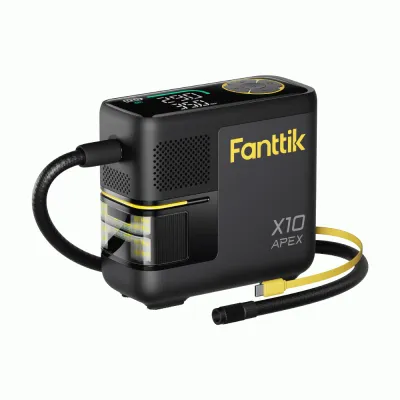
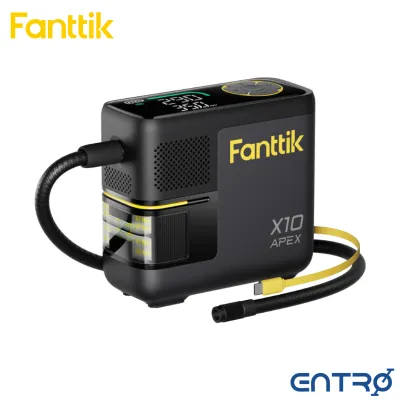
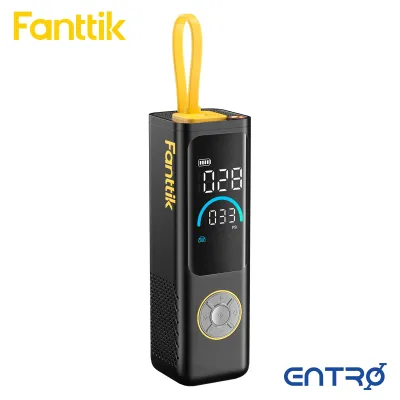
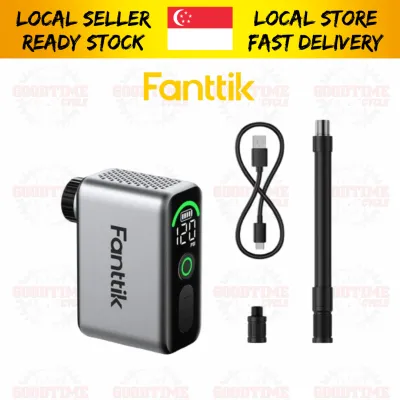
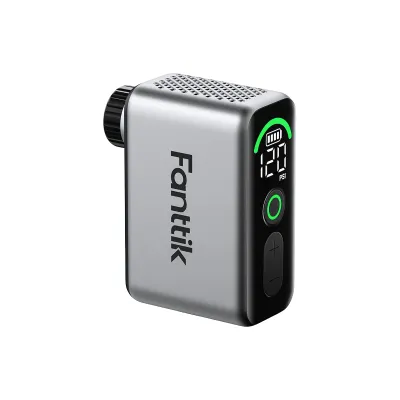
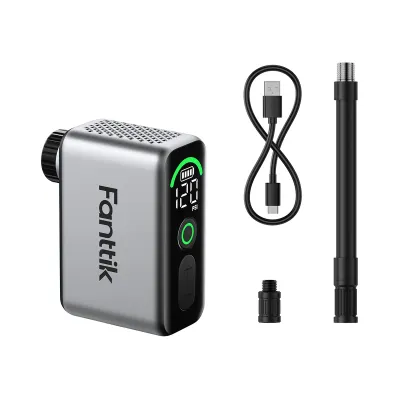
Prices are valid at publication and may change. Please refer to the product page for the latest price.
High-pressure, low-volume tasks include inflating road bicycle tyres, which often require pressures between 80 and 110 PSI, or sports balls like footballs and basketballs that require precise, lower pressures (typically 8 to 12 PSI). Because these items hold a relatively small amount of air, they do not require massive airflow. Instead, they require a pump with a highly accurate digital pressure sensor and a compact form factor that can be easily carried in a jersey pocket, a frame bag, or a sports backpack.
On the other hand, high-volume, medium-pressure tasks involve inflating car, motorcycle, or SUV tyres, as well as large recreational items like stand-up paddleboards (SUPs) and air mattresses. A typical passenger vehicle tyre only requires about 30 to 35 PSI, but the sheer volume of air needed to fill that tyre is immense. To inflate these items efficiently, a pump must deliver a high airflow rate, measured in Litres per Minute (L/min). Attempting to use a low-volume bicycle pump on a car tyre will result in extremely slow inflation times, often causing the pump to run continuously past its safe operating limits.
You should also consider where you will most frequently use the pump. If you primarily need a tool for routine tyre pressure maintenance in an HDB multi-storey carpark or your home garage, portability is less critical than power options. However, if you need an emergency backup for roadside punctures or long-distance cycling trips, weight, battery life, and ease of transport become your top priorities. Defining these parameters early prevents you from overbuying a heavy, expensive compressor or underbuying a weak unit that fails when you need it most.
Core Specifications to Compare Across the Fanttik Lineup
To evaluate different models effectively, you need to understand the key technical specifications listed on product labels. Manufacturers often highlight maximum pressure ratings, but other metrics like airflow, battery capacity, and duty cycle play a far more significant role in daily operation.

Maximum Pressure (PSI/Bar) The maximum pressure rating indicates the highest level of resistance the pump’s motor can overcome. While many portable pumps claim a maximum pressure of 150 PSI (10.3 Bar), this does not mean they are suited for continuous high-pressure work. Always verify your equipment’s recommended pressure on the tyre sidewall or manufacturer’s label. Ensure the pump you select has a maximum rating that comfortably exceeds your target pressure, providing a safe operating margin.
Airflow Rate (L/min) Airflow rate, typically measured in Litres per Minute (L/min), dictates how fast the pump can move air into an object. A higher L/min rating directly translates to faster inflation times. For example, a pump with an airflow of 15 L/min is perfectly adequate for bicycle tyres and sports balls but will take several minutes to top up a car tyre. For passenger vehicles, SUVs, or light trucks, look for a pump that delivers at least 25 to 32 L/min to ensure you are not standing by the roadside for an extended period.
Power Source and Battery Capacity Portable pumps generally fall into two power categories: cordless battery-powered models and corded 12V DC models. Cordless models rely on internal lithium-ion batteries, which are rated in milliampere-hours (mAh) or Watt-hours (Wh). While cordless models offer unmatched convenience and portability, their runtime is limited by battery life. Corded 12V DC models plug directly into your vehicle’s accessory socket (cigarette lighter), providing unlimited runtime but restricting your reach to the length of the power cable. Some advanced models offer dual-power functionality, allowing you to use battery power or plug into a 12V outlet.
Auto-Shutoff and Preset Modes A digital interface with preset modes simplifies operation by allowing you to select the target pressure before starting. Once the pump reaches this preset value, an automatic shutoff mechanism stops the motor. This feature is crucial for protecting your gear from over-inflation, which can permanently damage bicycle rims, rupture sports balls, or cause uneven tyre wear on vehicles. Always verify that the model you choose has a reliable digital sensor, and occasionally cross-check its readings with a dedicated manual pressure gauge.
Duty Cycle and Heat Dissipation All portable air compressors generate significant heat as they compress air. The duty cycle refers to the maximum amount of time a pump can run continuously before it must be turned off to cool down. A typical portable pump might have a duty cycle of 10 to 15 minutes, requiring an equal amount of rest time. Exceeding this limit can melt internal components, degrade seals, and shorten the motor’s lifespan. Look for models with built-in cooling fans, metal cylinder blocks, and clear heat dissipation vents.
Matching Fanttik Pump Categories to Your Specific Gear
The Fanttik product family is designed around distinct user profiles, ranging from ultra-compact handheld units to robust, high-output garage compressors. To find the right match, you should align your primary inflation tasks with one of these three main design categories.
Portable Handheld Pumps for Bicycles, E-Scooters, and Sports Balls
These compact, cylindrical pumps are engineered specifically for lightweight portability. They are the ideal choice for road cyclists, daily e-scooter commuters, and sports coaches who need a reliable inflation tool that does not weigh down their gear.
The primary advantage of these handheld models is their form factor. Weighing under 500 grams and measuring roughly the size of a water bottle, they easily fit into a jersey pocket, a frame-mounted bracket, or a small commuting backpack. Despite their small size, they can comfortably reach the high pressures required for road bike tyres (up to 120 PSI) and offer precise adjustments for sports equipment.
However, their compact design comes with clear limitations. Because they house smaller battery packs (typically between 2000 mAh and 2600 mAh) and smaller motors, their airflow rate is relatively low. While they can perform emergency top-ups on a car tyre in a pinch, they lack the battery capacity and heat dissipation required to inflate multiple large vehicle tyres from a completely flat state. Additionally, before purchasing, you must check the included accessories to ensure they contain the correct valve adapters—such as a Presta adapter for high-end bicycle tubes, a needle valve for sports balls, and a standard Schrader connector.
High-Volume Pumps for Car Tyres and Larger Vehicles
If your primary goal is maintaining tyre pressure on passenger cars, SUVs, motorcycles, or light trucks, you require a high-volume pump. These models are built with larger motors and more robust battery systems to handle the high-volume demands of automotive tyres.
The key advantage of high-volume pumps is their speed and stamina. With airflow rates often exceeding 30 L/min, they can top up a standard car tyre in under a minute and handle larger SUV tyres without overheating. They typically feature larger internal batteries (ranging from 5200 mAh to 7800 mAh) or direct 12V DC power cords, allowing them to run continuously for longer periods. This makes them indispensable for roadside emergencies on major expressways, where completing the inflation process quickly minimizes your exposure to traffic hazards.
The trade-off for this performance is size and weight. These pumps are significantly bulkier and heavier than handheld models, making them impractical to carry on a bicycle or during a run. They are designed to live in your vehicle’s glove compartment or boot. When selecting a high-volume model, always verify that the inflation hose is long enough to reach your tyre valves comfortably when they are positioned at the top of the wheel. If you opt for a corded 12V model, ensure your vehicle’s accessory port provides the necessary amperage to power the unit safely.
AC/DC or Multi-Function Pumps for Home and Garage Use
For households with multiple vehicles, bicycles, and recreational inflatables, a multi-function or stationary garage pump offers the highest level of versatility. These models are designed to serve as a centralized inflation station for the entire family.
The standout feature of these pumps is their dual-power capability. They can plug directly into a standard household AC wall outlet or run off a 12V DC car socket, providing unlimited runtime and eliminating worries about battery degradation. Many multi-function models also feature dual-hose designs: a high-pressure hose for tyres and sports equipment, and a separate, wide-diameter high-volume hose for rapidly inflating air beds, pool toys, and stand-up paddleboards.
The primary limitation of these units is their lack of portability. They are bulky, heavy, and generally do not feature internal batteries, meaning they must always be tethered to an external power source. For Singapore households, it is critical to perform a compatibility check before purchasing. Ensure that any AC power adapter supplied with the pump is rated for Singapore’s standard 230V/50Hz electrical grid and comes equipped with a safety-certified Type G three-pin plug. If the product only includes a foreign plug, you must use a high-quality, fused adapter capable of handling the compressor’s power draw.
Quick Comparison Framework for Fanttik Air Pumps
To help you choose the right model, use the structured comparison framework below. This table outlines the typical performance profiles of the main Fanttik pump categories, allowing you to cross-reference their capabilities with your specific inflation needs.
| Model Category / Archetype | Max Pressure (PSI) | Airflow Rate (L/min) | Power Source | Best Use Case | Key Limitation |
|---|---|---|---|---|---|
| Ultra-Compact Handheld | Up to 150 PSI | 15 – 20 L/min | Internal Battery (2000-2600 mAh) | Bicycles, e-scooters, sports balls, emergency bike top-ups | Low airflow; slow on car tyres; limited battery runtime |
| Mid-Range Portable | Up to 150 PSI | 20 – 28 L/min | Internal Battery (approx. 5200 mAh) | Daily passenger cars, motorcycles, occasional bicycle use | Moderate weight; can overheat if run continuously on large tyres |
| Heavy-Duty Cordless | Up to 150 PSI | 30 – 34 L/min | Internal Battery (approx. 7800 mAh) | SUVs, light trucks, rapid car tyre inflation, off-road use | Bulky and heavy; higher price bracket |
| Dual-Power AC/DC | Up to 150 PSI | 30+ L/min | 230V AC Wall Plug / 12V DC Car Socket | Home garages, high-frequency fleet maintenance, large inflatables | Not portable; requires external power source; no internal battery |
When using this framework to make your final decision, prioritize the specification that aligns with your primary constraint. If your main concern is safety during roadside emergencies, prioritize a model with a high airflow rate (L/min) and a reliable 12V DC backup cord to ensure fast inflation without battery anxiety. If you are a commuter who rides daily, prioritize a lightweight handheld model that fits easily into your existing carrying setup. Always cross-reference these general specifications with the exact technical details printed on the product packaging or listed on the manufacturer’s official website, as specifications can vary based on regional product batches.
Safe Operation, Heat Management, and Battery Care
Operating a portable air compressor safely requires strict adherence to operating limits and proper maintenance habits. Because these devices compress air at high speeds, they generate extreme heat and draw significant electrical current, making safety checks essential before every use.
Heat Management and Duty Cycles The process of compressing air naturally generates thermal energy, causing the pump’s cylinder block and inflation hose to become extremely hot during use. To prevent damage to the internal seals and motor, you must strictly follow the manufacturer’s stated duty cycle. If the manual recommends a 10-minute run time followed by a 10-minute cooling period, do not attempt to run the pump continuously to fill multiple tyres. Additionally, never touch the metal connector or the base of the inflation hose immediately after use, as these areas can cause contact burns. Always allow the unit to cool completely before packing it away.
Battery Safety in Tropical Climates Singapore’s tropical climate presents unique challenges for devices powered by lithium-ion batteries. The ambient temperature in Singapore is consistently high, and the interior of a car parked in direct sunlight can easily exceed 60°C. Storing a lithium-ion air pump in a hot car boot for extended periods accelerates battery degradation, reduces overall capacity, and in extreme cases, can trigger thermal runaway. To ensure safety, store battery-powered pumps in a cool, dry place inside your home when not in use. If you must keep an emergency pump in your vehicle’s boot permanently, consider choosing a corded 12V DC model that does not contain an internal lithium battery.
Roadside Safety and Connection Checks If you must inflate a tyre on a public road or expressway, your personal safety is the absolute priority. Equipment cannot replace situational awareness and proper safety protocols. Always pull over to a safe, flat area well away from active traffic lanes. Turn on your vehicle’s hazard lights, set the parking brake, and place a warning triangle behind your vehicle if available. Before turning on the pump, ensure the air chuck is securely locked onto the tyre valve. A loose connection can cause the hose to whip violently under pressure, potentially causing injury or damaging the valve stem.
When to Stop and Seek Help Always monitor the pump closely during operation. If the unit emits an unusual high-pitched squeal, excessive smoke, a burning smell, or fails to build pressure despite running, turn it off immediately. Disconnect the hose carefully, taking care to avoid hot metal components. Do not attempt to open the casing or perform DIY repairs on the battery pack or pressurized cylinder. If the pump exhibits these symptoms, or if your tyre has sustained structural damage such as a sidewall puncture, stop immediately and contact a professional towing or roadside assistance service.
Frequently Asked Questions (FAQ)
Can I use a Fanttik portable air pump to inflate a completely flat car tyre?
Yes, you can use a portable pump to inflate a completely flat car tyre, but the process requires caution. Because a completely flat tyre contains a large volume of empty space, a compact handheld pump will have to run continuously for a long period to seat the tyre bead and reach the recommended pressure. This extended run time will likely exceed the pump’s continuous duty cycle and drain a significant portion of its battery. For completely flat tyres, it is highly recommended to use a high-volume cordless model or a corded 12V DC model, and you must pause the inflation process every few minutes to let the pump cool down to prevent overheating.
Do Fanttik air pumps automatically stop when the target pressure is reached?
Most modern digital models in the lineup feature an automatic shutoff mechanism. This system allows you to pre-program your desired target pressure (in PSI or Bar) using the digital display. Once the internal sensor detects that the tyre has reached this preset level, the pump automatically cuts power to the motor. However, you should always verify this feature on the specific model’s specification sheet before purchasing. Additionally, it is highly recommended to monitor the pump closely during its first few uses to ensure the sensor is calibrated accurately and shuts off as intended.
How do I maintain the battery if I only use the pump occasionally?
To prolong the lifespan of a lithium-ion air pump, you must avoid storing the battery in a completely discharged or fully charged state for extended periods. For long-term storage, charge the battery to approximately 50% to 80% capacity and store the unit in a cool, dry, temperature-controlled environment inside your home. Avoid leaving the pump in humid areas or locations exposed to direct sunlight. To prevent the battery cells from dropping into a deep discharge state—which can permanently damage the battery’s ability to hold a charge—recharge the unit every 3 to 6 months even if you have not used it.
Community discussion
Share your experience or ask a question. Comments are reviewed before publication.