
Choosing the right fishing net depends on your fishing style, water environment, and target catch. While a landing net is standard for rod-and-reel anglers, active nets like cast and seine nets serve different purposes and come with distinct skill requirements and legal restrictions. This guide will help you match your needs to the correct net type before purchasing.
Identify Your Fishing Style and Target Catch
Before purchasing gear, clarify how you intend to fish. Anglers who enjoy waiting for a bite on a hook and line require a net that acts as a supportive tool rather than the primary catching mechanism. In contrast, those gathering live bait or targeting small schooling species need an active netting system.
Your physical fishing location also dictates your choice. Fishing from a high pier, rocky shoreline, or boat requires different reach and net configurations than wading through shallow coastal flats. A long-handled tool is necessary when you cannot easily reach the water, whereas wading allows for close-range netting.
Products mentioned in this guide
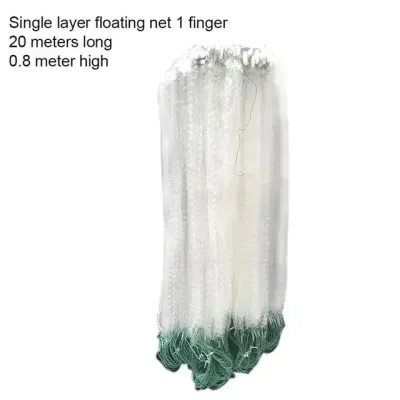
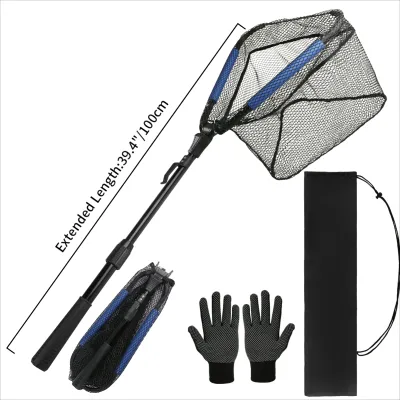
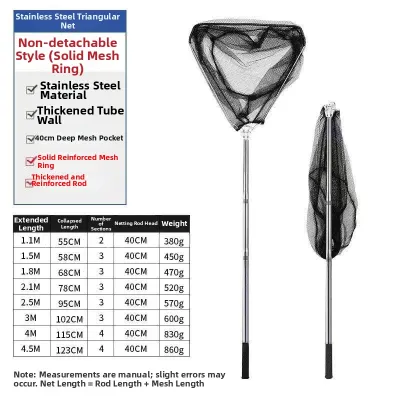
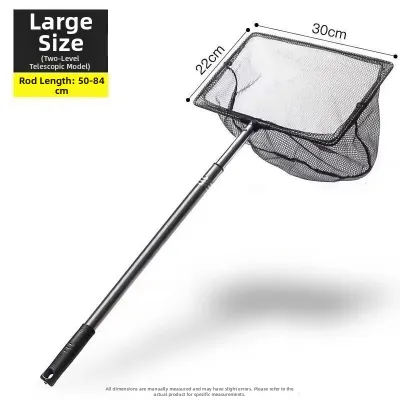
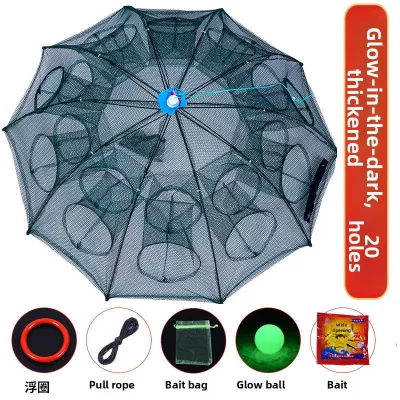
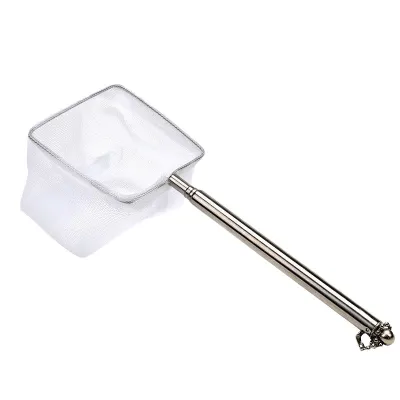
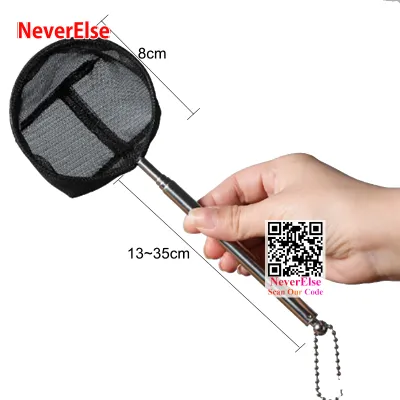
Prices are valid at publication and may change. Please refer to the product page for the latest price.
Finally, consider the physical characteristics of your target catch. Large sport fish require sturdy, spacious netting to prevent injury. Small, delicate baitfish or prawns require fine mesh to prevent them from slipping through or becoming entangled.
Landing Nets: The Essential Tool for Rod and Reel Anglers
A landing net is the most common netting equipment for rod-and-reel anglers. Its primary purpose is to secure a fish already hooked and reeled close to your position. Scooping the fish reduces line tension, minimizing the risk of line breakage or knot failure at the critical final moment of the catch.

It also supports responsible catch-and-release by distributing the fish’s body weight evenly, preventing jaw damage or internal injuries caused by lifting a heavy fish directly by the line.
When selecting a landing net, verify hoop size, handle length, and bag material. The hoop size must match your target species to prevent fish from spilling out. Choose handle length based on your fishing platform: fixed handles offer structural strength for boats, while telescopic handles provide the reach needed from high canal walls, piers, or steep shorelines.
Net bag material is equally critical. Rubber or rubber-coated mesh is highly recommended for beginners because it protects the fish’s slime coat and resists hook tangles. Knotted nylon is lighter and less expensive but can be abrasive and prone to snagging.
Keep in mind that landing nets are designed strictly for scooping up fish already controlled by a line. They are not effective for chasing free-swimming fish or gathering fast-moving bait in open water.
Cast Nets: The Active Choice for Bait and Shallow Water
If your goal is to gather live bait like small mullet or prawns, a cast net is the traditional tool. Unlike landing nets, cast nets are thrown by hand to open into a circle, sink rapidly, and trap schooling bait underneath.
These nets are highly effective in shallow environments like sandy flats, estuaries, and calm shorelines, allowing you to secure fresh bait quickly.
When choosing a cast net, consider the radius, mesh size, and weight. For beginners, a smaller radius of 3 to 4 feet is much easier to throw than larger nets. The mesh size must be small enough to retain bait without gilling them; 1/4 inch to 3/8 inch is standard for small baitfish and prawns.
The lead line weight determines sink speed. A heavier weight sinks quickly to prevent bait from escaping, but requires more physical effort to throw.
Prepare for a steep learning curve. Throwing a cast net successfully requires coordinated body mechanics and practice on dry land before your first trip. Additionally, the throwing line must be securely attached to your wrist, and you must watch for underwater snags, strong currents, and entanglement risks.
Seine Nets: The Collaborative Option for Enclosing Areas
A seine net is a collaborative tool designed to capture fish and crustaceans by enclosing an area of water. It consists of a long, flat panel of mesh with floats along the top edge and weights along the bottom to maintain contact with the seabed.
Operating a seine net is a multi-person task. Typically, two people hold poles at either end and wade through shallow water, dragging the net parallel to the shoreline before sweeping it back to the beach to trap the catch.
Check the length and depth specifications to ensure they comply with local regulations and match your physical wading limits. A net that is too deep will drag excessively, while a net that is too shallow allows fish to swim over the float line.
These practical limits make seine netting less suitable for solo beginners. The equipment is bulky, requires clear sandy or muddy bottoms free of rocks, and demands coordinated teamwork. If you plan to fish alone or near heavy underwater structure, a seine net is impractical.
Decision Matrix: Match Your Activity to the Right Net
Use this framework to match your planned activity, group size, and target catch to the correct net type.
| Fishing Activity | Recommended Net Type | Primary Operator | Target Catch | Key Decision Driver |
|---|---|---|---|---|
| Hook-and-line sport fishing | Landing Net | Solo | Single large fish | Safe fish handling and line protection |
| Gathering live bait in shallows | Cast Net | Solo | Schooling baitfish, prawns, mullet | Active bait collection, requires throwing skill |
| Shoreline harvesting | Seine Net | Group (2+ people) | Schooling fish, crabs, prawns | Collaborative sweeping of large shallow areas |
Stop and Reassess: Before purchasing a cast or seine net, verify if your intended fishing location permits active netting. Many recreational zones, marine parks, and public reservoirs strictly prohibit active nets to protect fish stocks. If you are unsure of local regulations or lack space to practice, stick to a landing net and purchase bait from a local shop.
Regulatory and Safety Checks Before Purchasing
Before purchasing or deploying any fishing net, conduct thorough regulatory and safety checks. Fishing regulations vary by region, and using the wrong net type can result in heavy fines or gear confiscation.
In Singapore, the use of cast and seine nets is subject to strict spatial restrictions. Recreational netting is generally prohibited in public reservoirs, nature reserves, and marine conservation zones. Verify current guidelines from local authorities, such as the National Parks Board (NParks), to identify permitted coastal netting zones.
Mesh size is another heavily regulated dimension. Many jurisdictions enforce minimum mesh sizes to ensure juvenile fish can escape, preserving local marine populations. Check local guidelines for the exact allowable mesh dimensions before buying a net online or at a tackle shop.
Safety is a primary consideration, particularly with weighted cast nets. Never throw a cast net near overhead power lines, as wet lines and metal weights conduct electricity. Avoid throwing nets from high bridges or in active boat traffic, where you risk being pulled in if the net snags. Always inspect your wading path for drop-offs, strong currents, and sharp debris before stepping into the water.
Frequently Asked Questions (FAQ)
Do I need a fishing license to use a cast net or seine net?
Licensing requirements depend on your location. Active nets like cast and seine nets are often classified differently than recreational rod-and-reel gear, requiring specific permits or licenses. In Singapore, while a recreational license is not required for coastal rod fishing, active netting is restricted to specific coastal zones and prohibited in reservoirs. Always check local regulations before using any active net.
What is the easiest fishing net for a complete beginner to use?
The landing net has the lowest barrier to entry for a beginner. It requires no complex throwing techniques or teamwork, functioning simply as a manual extension of your arm to scoop up a fish already brought to the surface with your rod and reel.
Can I use a landing net to catch baitfish instead of a cast net?
While you can occasionally scoop up slow-moving bait or prawns in tight, shallow rock pools with a landing net, it is highly inefficient for general bait gathering. Free-swimming baitfish easily detect and evade a landing net in open water. Attempting to chase them usually results in empty sweeps and can stress or damage the fish.
Community discussion
Share your experience or ask a question. Comments are reviewed before publication.