
When you step onto the putting green, marking your golf ball is one of the first rules of etiquette and play you will practice. A golf ball marker is a small, flat object used to mark the position of your ball before you lift it to clean it or clear the path for another player. While it seems like a simple accessory, choosing the right type can significantly impact your comfort, pace of play, and focus on the course.
There is no single best marker for every beginner; instead, the ideal choice depends on your personal habits and how you manage your gear. Clip-on hat clips are excellent for players who frequently misplace small items, as they stay mechanically secured to your cap. Magnetic markers are perfect for golfers who prefer a minimalist routine and want to grab or replace their marker with a quick, one-handed motion. Meanwhile, divot-tool markers are the best fit for those who want to carry fewer individual items and prefer a multi-functional tool that handles both ball marking and green repair.
Understanding the Main Types of Golf Ball Markers
To make an informed choice, it helps to understand how these accessories are designed and how they function during a round. While all markers serve the same basic purpose on the putting green, their physical designs differ in how they attach to your gear and how you deploy them.
Products mentioned in this guide

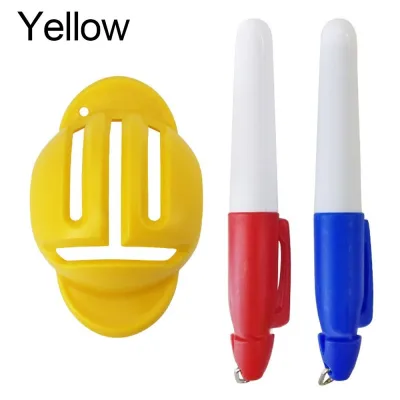
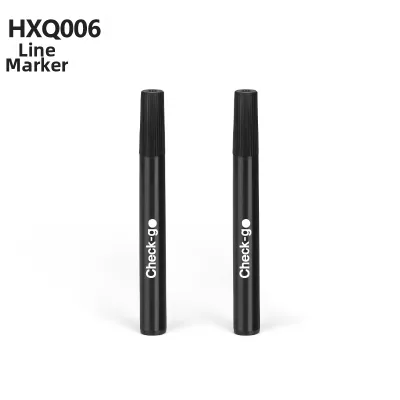
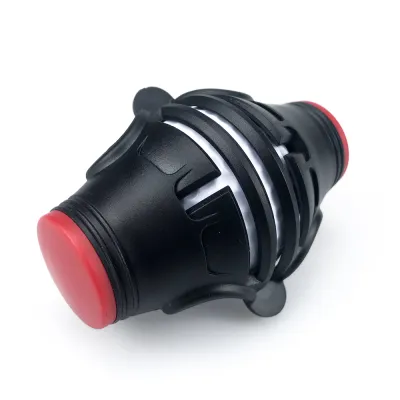
Prices are valid at publication and may change. Please refer to the product page for the latest price.
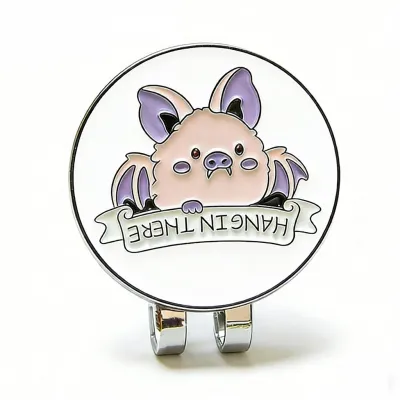
Magnetic markers are a highly popular option among golfers of all skill levels. This system consists of two distinct parts: a flat metal disc (the marker itself) and a separate base clip containing a small, powerful magnet. The base clip is designed to slide onto the brim of your golf cap, visor, or even the edge of your belt. The metal disc clings securely to the magnet when you are walking the fairways and can be easily slid off when you reach the green.
Clip-on markers utilize a mechanical attachment rather than relying solely on magnetic force. These markers feature a built-in spring-loaded clamp or a snap-clip mechanism integrated directly into the marker’s design. You clip the entire unit onto your hat brim or pocket edge. To mark your ball, you unclip the entire piece. Because they do not require a separate magnetic base, they offer a unified design that some players find more straightforward.
Divot-tool style markers combine two essential golf accessories into one pocket-friendly device. A divot tool, also known as a pitchfork, is used to repair the indentations your ball makes when it lands on the putting green. Many of these tools feature a recessed slot on the handle where a small, flat ball marker sits. The marker is typically held in place by a small magnet or a sliding track. When you reach the green, you can pull the tool from your pocket, slide the marker out to mark your ball, and use the fork to repair any turf damage.
While these markers are made from various materials—ranging from lightweight plastics and zinc alloys to premium brass and stainless steel—it is the attachment and deployment mechanism that truly defines your user experience. Choosing a style that aligns with how you move and organize your gear will keep your focus on your game rather than your accessories.
Comparing Magnetic, Clip-On, and Divot-Tool Markers
Evaluating these three styles side-by-side reveals distinct trade-offs in ease of use, security, and pocket comfort. As a beginner, understanding these practical differences will help you avoid common frustrations on the course.

Ease of use and speed of marking are areas where magnetic markers excel. When you walk onto the green, you can easily slide the metal disc off your hat clip with one hand, place it behind your ball, and lift the ball in one continuous motion. Clip-on markers with mechanical clasps can be slightly more cumbersome, sometimes requiring two hands to open the clip and detach it from a stiff hat brim. Divot-tool markers require you to reach into your pocket, retrieve the entire tool, slide the marker out, and then either place the tool back in your pocket or hold it while you mark your ball.
The risk of losing your marker is a major consideration for new golfers. Magnetic markers offer moderate security, but a strong gust of wind, brushing against a tree branch, or dropping your hat can knock the disc loose from its magnetic base. Clip-on markers with mechanical clamps offer the highest level of security, as the physical grip makes accidental detachment highly unlikely. Divot-tool markers are kept safely inside your pocket, making them very difficult to lose while walking, though the small detachable disc can occasionally slip out when you pull other items, like tees or ball markers, from your pocket.
Pocket bulk and weight can affect your comfort and your swing. In warm, humid climates like Singapore, where lightweight, breathable golf shorts are essential, keeping your pockets light is a priority. Magnetic and clip-on markers sit on your hat, keeping your pockets completely free of clutter. Divot-tool markers, being larger and heavier metal tools, can feel bulky and bounce around in your pocket as you walk or swing, which some beginners find distracting.
| Marker Type | Attachment Method | Loss Risk | Primary Observable Advantage |
|---|---|---|---|
| Magnetic Hat Clip | Magnetic attraction to a separate brim clip | Moderate (can be knocked loose) | Extremely fast, one-handed deployment |
| Clip-On Marker | Mechanical spring or snap-clip on brim | Low (secure mechanical grip) | Stays firmly attached during active movement |
| Divot-Tool Marker | Integrated into a pocket-sized repair tool | Low (stored safely in pocket) | Combines green repair and marking in one tool |
How to Choose the Right Ball Marker for Your Beginner Needs
Selecting the right marker comes down to analyzing your personal habits, your gear preferences, and how you prefer to organize your pockets during a round.
If you frequently find yourself misplacing small items or tend to be a bit disorganized on the course, a clip-on marker is your best option. The secure mechanical grip ensures that once you attach it to your cap or visor, it will stay there until you intentionally remove it. This is also an excellent choice if you frequently take your hat off to wipe away sweat during warm rounds, as the marker will not fly off when the hat is moved quickly.
If you prefer a low-profile look and want the fastest, most seamless routine on the green, choose a magnetic marker. The ability to slide the disc off and on with a simple thumb motion allows you to focus entirely on reading your putt. It keeps your pockets completely empty, which is ideal if you dislike the feeling of loose items shifting in your shorts during your golf swing.
If you want to carry fewer individual accessories and want to build good course care habits from day one, choose a divot-tool marker. Every golfer has a responsibility to repair their pitch marks on the green. By carrying a divot tool with an integrated marker, you ensure you always have both essential tools on hand without cluttering your golf bag with separate items.
Before making your final choice, verify the design of your favorite golf hats or visors. Some structured caps have exceptionally thick or highly curved brims that can prevent standard metal clips from sliding on easily. Conversely, lightweight visors with thin fabric brims may sag under the weight of a heavy magnetic clip. Checking these physical dimensions beforehand ensures your chosen marker fits your gear perfectly.
Essential Ball Marker Etiquette and Rules for Beginners
Understanding how to use your ball marker correctly is just as important as choosing the right style. Following proper etiquette and official rules ensures a smooth round and prevents unnecessary penalties.
Under the official Rules of Golf, when you are on the putting green and need to lift your ball, you must place a ball marker directly behind the ball. “Behind” means on the side opposite the target or hole. Once the marker is placed, you can lift and clean your ball. When it is your turn to play, you must place the ball back in its exact original spot directly in front of the marker before lifting the marker. Failing to mark the ball properly before lifting it, or moving the ball before replacing the marker, can result in a penalty stroke.
Green etiquette also requires you to be mindful of other players’ putting lines. A putting line is the path between a player’s ball and the hole. Never step on another player’s line, as your footprints can compress the grass and alter the roll of their putt. When walking to mark your ball, take a wide path around other players’ lines.
If your ball marker lies directly in another player’s putting line, they may politely ask you to move it. To do this, find a fixed object in the distance (such as a tree, a bunker edge, or a stake) to use as a reference point. Align your putter head with that object, place the heel of the putter next to your marker, and move the marker to the toe of the putter. This moves the marker exactly one putter-head length away from their line. Once they have completed their putt, remember to measure back in the opposite direction to replace your ball in its original spot before taking your stroke.
Finally, always aim to use flat, non-distracting markers. While large, colorful, or novelty markers can be fun, they can distract other players who are trying to line up their putts. If your marker is thick or highly reflective, consider carrying a flat, simple disc or a small coin for situations where your ball is close to another player’s line of sight.
Frequently Asked Questions (FAQ)
Can I use a coin instead of a dedicated golf ball marker?
Yes, under the Rules of Golf, using a small coin or a similar small object is completely legal and acceptable. Many golfers enjoy using local coins, such as a Singapore five-cent or ten-cent coin, because they are flat, inexpensive, and easy to find in a pocket. However, coins can have a few practical drawbacks. They can add clutter to your pocket, can be difficult to pick up from wet grass, and are often less visible from a distance compared to purpose-built markers with high-contrast designs.
What happens if my ball marker gets moved accidentally?
If your ball marker is accidentally moved by you, another player, or an outside influence (such as a gust of wind or a stray ball) while you are in the process of marking or replacing your ball, there is no penalty under the Rules of Golf. You must simply replace the marker or the ball as close as possible to its original position. To avoid any confusion or disputes during a round, it is always best to communicate clearly with your playing partners and consult the latest official rulebook for specific scenarios.
Community discussion
Share your experience or ask a question. Comments are reviewed before publication.