
Fitting a consistent cardio routine into a busy Singaporean schedule often leads to a common dilemma: how to enjoy the convenience of home workouts without turning your apartment into a crowded gym. If you live in a Housing & Development Board (HDB) flat, spatial efficiency is just as important as motor horsepower. Choosing a compact jomo treadmill can resolve this tension, offering a dedicated running or walking surface that respects the boundaries of your living area.
To find the right balance, you must look beyond the basic dimensions of the machine. Integrating fitness equipment into a high-density home requires a clear understanding of layout planning, safety clearance, mechanical storage options, and neighborly etiquette. By evaluating how different treadmill designs interact with your specific flat layout, you can maintain an active lifestyle without sacrificing the comfort and flow of your home.
Assessing Your HDB Space for a Treadmill
Modern HDB flats, particularly newer Build-To-Order (BTO) units, are designed with highly optimized layouts where every square meter counts. When planning for a jomo treadmill, you must first distinguish between the physical footprint of the machine and its visual bulk. A treadmill might occupy a modest floor area of 1.2 meters by 0.6 meters, but its upright console, handrails, and overall height can dominate a room visually, making a compact space feel instantly claustrophobic.
Products mentioned in this guide
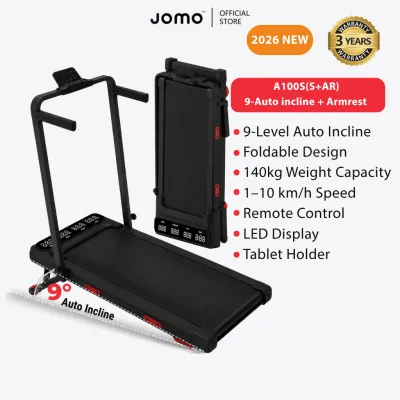
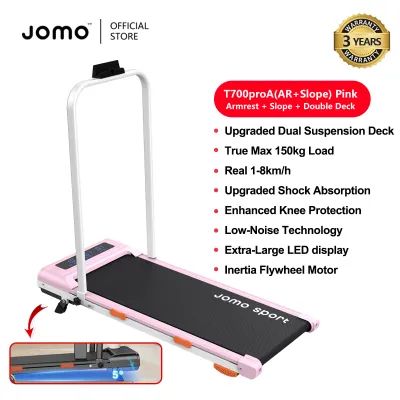
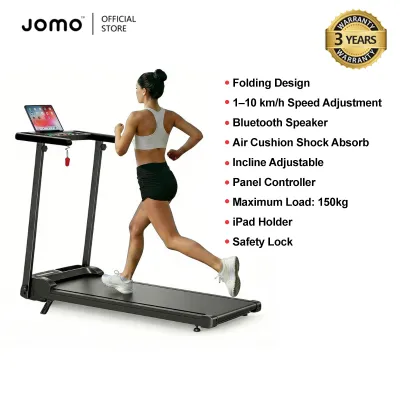
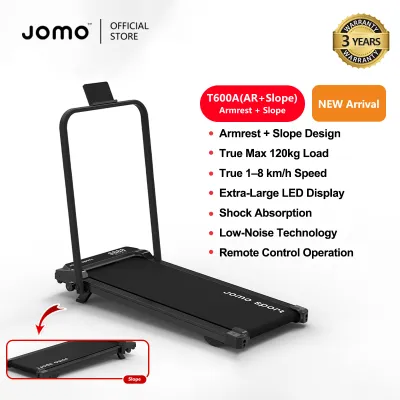
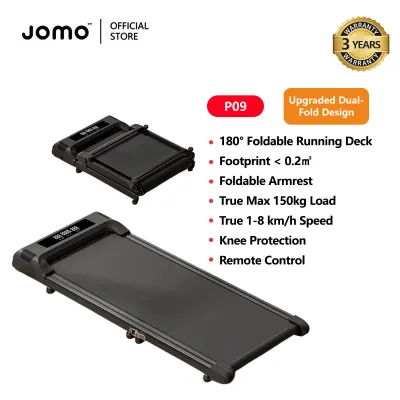
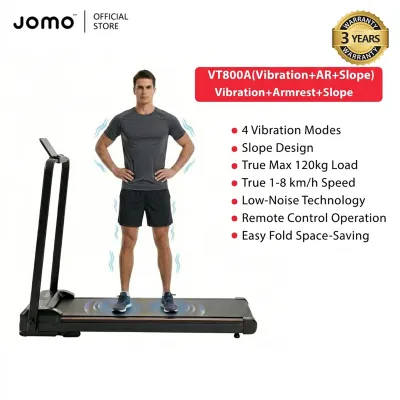
Prices are valid at publication and may change. Please refer to the product page for the latest price.
To prevent your home from feeling cluttered, map out your apartment’s zones carefully. The living room is a popular choice due to its access to entertainment and ventilation, but placing a treadmill directly in the center can disrupt the natural flow of traffic. Instead, look for underutilized corners, such as the space adjacent to a balcony door or a dedicated corner in a study room or spare bedroom.
Designating a permanent or semi-permanent zone for your workouts is crucial for safety and daily convenience. Avoid placing the machine in high-traffic walkways or directly in front of emergency exits, household shelters, or narrow corridors. If you have to move furniture every time you want to run, the friction of setting up the machine will eventually discourage you from working out altogether.
Space-Saving Features to Look for in JOMO Treadmills
When exploring the jomo treadmill lineup, understanding the mechanical differences between models will help you choose one that matches your daily routine. Traditional folding treadmills typically feature a hydraulic or manual drop-down deck. These machines fold the running deck upward toward the console, reducing the horizontal floor space they occupy when not in use, though they still retain a significant vertical presence.

For ultra-compact spaces, flat-folding walking pads offer an alternative design. These minimalist machines often feature foldable handrails or completely console-free designs, allowing them to lay entirely flat. This low profile makes them ideal for sliding under a sofa or a raised bed frame, keeping your fitness equipment completely out of sight when your workout is finished.
Beyond the folding mechanism, pay close attention to the mobility and safety features built into the frame. High-quality transport wheels are essential for moving the machine between its storage spot and your active workout zone without straining your back. Additionally, look for soft-drop hydraulic systems that slowly lower the running deck to the floor, preventing accidental damage to your vinyl, laminate, or tiled HDB flooring.
Before making a final decision, verify the specific storage orientation your chosen model supports. Some compact treadmills are engineered exclusively for horizontal storage, meaning they must lie flat on the floor. Others are structurally reinforced to support safe vertical storage, allowing you to stand the machine upright against a wall to reclaim valuable floor space. Never attempt to store a treadmill vertically unless the manufacturer explicitly states it is safe to do so.
How to Measure Your Treadmill Footprint and Clearance
Accurate spatial measurement is the most critical step before purchasing any fitness equipment. When reviewing product specifications, always differentiate between the “stored dimensions” and the “in-use dimensions.” The stored dimensions tell you if the machine will fit under your bed or inside a closet, while the in-use dimensions dictate the actual floor space required when the treadmill is fully unfolded and operational.
Operating a treadmill safely requires a mandatory clearance zone around the machine, which is often larger than the equipment itself. You must maintain a clear, unobstructed zone of at least 1 to 1.5 meters directly behind the running belt. This safety buffer is critical; if you trip or lose your balance at high speeds, the moving belt will propel you backward, and a lack of clearance can result in severe friction burns or impact injuries against a nearby wall or furniture.
Additionally, allow for at least 0.5 meters of clearance on both sides of the treadmill to facilitate safe mounting and dismounting. If your chosen model features an incline function, you must also calculate your ceiling clearance. Standard HDB ceiling heights are typically around 2.6 meters. To ensure you do not bump your head, calculate your maximum height during a workout: add your own height to the deck’s step-up height, plus the maximum vertical rise of the incline feature, leaving a comfortable safety buffer of at least 20 to 30 centimeters.
How to Verify JOMO Specifications for Small Spaces
To ensure a seamless fit, you must read the official specification sheets with a critical eye. Do not rely solely on marketing terms like “ultra-slim” or “space-saving.” Check the exact folded dimensions, paying close attention to the widest points of the base, the height of the motor housing, and any protruding handles or adjustment knobs that might prevent the machine from sitting flush against a wall or sliding under your furniture.
There is a direct trade-off between a compact frame and the usability of the running surface. A narrower and shorter belt saves floor space, but it also restricts your movement. For walking and light jogging, a belt width of 40 centimeters and a length of 120 centimeters are generally sufficient. However, if you are taller or plan on running at faster speeds, you will need a wider belt (at least 45 to 50 centimeters) to accommodate your natural stride safely without stepping off the sides.
Finally, verify the net weight of the machine alongside its user weight capacity. While lightweight models (under 30 kilograms) are incredibly easy to move and store, they may lack the structural stability required for high-intensity running. If you plan to run at speeds exceeding 10 kilometers per hour, a slightly heavier machine with a sturdier frame will provide a safer, more stable platform that does not wobble or slide across the room during your sprint sessions.
Common Space and Delivery Mistakes to Avoid
One of the most common logistical oversights occurs long before the treadmill is set up in your room. Buyers often forget to measure the delivery pathway. Before placing your order, measure the internal dimensions of your HDB passenger lift, the width of your common corridors (especially if you live in a corner unit with tight turns), and the clear opening of your main apartment door frame to ensure the delivery team can safely transport the boxed machine into your home.
Power management is another area where spatial planning often falls short. Treadmills draw a significant amount of power and should be plugged directly into a grounded wall outlet rather than a flimsy extension cord or multi-way adapter. Plan your treadmill’s placement close to an existing outlet to avoid running thick cables across your floor, which creates an immediate tripping hazard and can lead to cord damage over time.
Lastly, do not underestimate the visual impact of the machine on your home’s aesthetic. A bulky, dark industrial treadmill can make a small, light-filled room feel heavy and cluttered. Choosing a model with a streamlined profile, hidden cabling, and a neutral color palette allows the equipment to blend harmoniously with your interior decor, keeping your living space feeling open, bright, and inviting.
Frequently Asked Questions (FAQ)
Can I use a treadmill in an HDB flat without disturbing downstairs neighbors?
Yes, you can minimize noise transfer with the right setup and maintenance. While standard concrete HDB floor slabs are structurally robust enough to handle the weight of a treadmill, the impact of your feet running on the deck creates structural vibrations that travel easily through the floor to the unit below. To mitigate this, always place a high-density, shock-absorbing rubber treadmill mat under the machine to cushion the impact and dampen the sound.
Additionally, mechanical noise can be kept to a minimum through regular maintenance. Keep the running belt properly aligned and lubricated according to the manufacturer’s instructions to reduce motor strain and friction noise. Scheduling your high-intensity runs during reasonable daylight hours also ensures you remain respectful of your neighbors’ quiet hours.
Will a folding JOMO treadmill stay upright safely when stored vertically?
Vertical storage safety depends entirely on the design of your specific model. You must consult your user manual to verify if your model is engineered for upright storage and if it includes a dedicated safety locking pin, latch, or hydraulic lock to secure the deck in place.
Never lean an unsecured folding treadmill against a wall or rely solely on balance to keep it upright. Without a locked safety mechanism, a heavy running deck can easily be knocked over by pets, children, or accidental bumps, posing a serious risk of injury or property damage. If your model does not support vertical locking, always store it flat on the floor.
Community discussion
Share your experience or ask a question. Comments are reviewed before publication.