
Selecting your very first fishing reel can feel overwhelming given the sheer number of technical specifications, gear ratios, and braking systems on the market. For beginners seeking a balance between affordability and performance, Kastking has emerged as a highly popular brand that offers modern features without the premium price tag of legacy angling manufacturers. If you are starting your angling journey in Singapore, the most practical choice is to begin with a versatile spinning reel like the Kastking Centron or Sharky III, which handles both freshwater reservoirs and light coastal bait fishing with ease. However, if you are specifically focused on learning the art of active lure casting, an entry-level baitcasting reel equipped with an adjustable magnetic braking system, such as the Kastking Royale Legend or Crixus, will provide a more forgiving learning curve.
To make an informed purchase, you must match the reel’s design to your intended fishing environment, target species, and personal patience for learning casting mechanics. Singapore offers a unique mix of urban freshwater reservoirs, saltwater payponds, and coastal jetties, each requiring slightly different gear configurations. By understanding how these reels operate and how to evaluate their key specifications, you can avoid common beginner pitfalls and select a tool that will reliably perform on the water.
Quick Answer: Spinning vs. Baitcasting for Your First Reel
Before diving into specific models, you must decide between the two primary categories of fishing reels: spinning and baitcasting. Spinning reels are universally recognized as the most beginner-friendly option because the spool remains stationary during the cast. The fishing line uncoils freely from the open spool, which virtually eliminates the risk of “backlash”—the tangled mess of line that occurs when a spool spins faster than the lure can pull the line. Spinning reels are highly versatile, allowing you to cast lightweight lures or live bait with minimal effort, making them the ideal starting point for absolute beginners.
Products mentioned in this guide
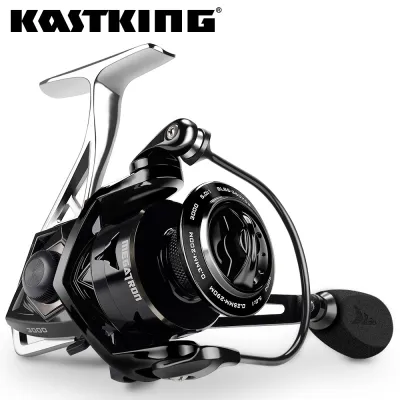
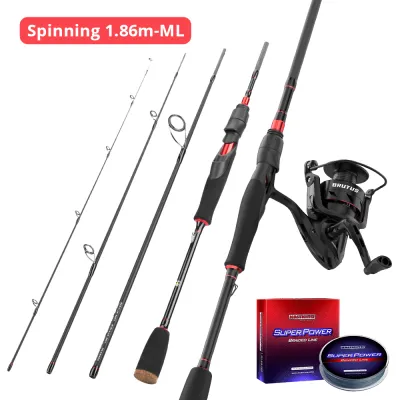
Prices are valid at publication and may change. Please refer to the product page for the latest price.
Baitcasting reels, by contrast, feature a rotating spool that sits on top of the rod. While they offer superior casting accuracy, greater structural power, and direct control over your lure’s presentation, they require a much higher level of physical coordination. Your thumb must act as a manual brake on the spinning spool to prevent severe tangles as the lure hits the water. Consequently, learning to use a baitcaster involves a steep learning curve that can be frustrating for those who simply want to catch fish on their first few outings.
Kastking positions itself as a highly accessible brand by offering value-driven entry points across both categories. Their reels incorporate advanced materials, such as carbon fiber drag washers and shielded ball bearings, at prices that are highly competitive for the local Singapore market. Whether you choose the simplicity of a spinning reel or the precision of a baitcaster, the brand provides a cost-effective pathway to develop your angling skills.
Kastking Spinning Reels: Matching the Model to Your Fishing Scenario
Spinning reels are the workhorses of the angling world, and Kastking offers several distinct series tailored to different environments. To choose the right model, you must consider where you plan to fish most frequently and the types of fish you expect to encounter.

Budget-Friendly Freshwater Basics (e.g., Centron Series)
For beginners who plan to fish primarily in freshwater reservoirs, public ponds, or managed recreational fishing spots, the Kastking Centron (or Centron Lite) series represents one of the most cost-effective entry points available. These reels are constructed with a lightweight graphite frame that reduces hand fatigue during long casting sessions. Despite the low price point, they feature a smooth multi-disc drag system that provides sufficient stopping power for common local freshwater species such as peacock bass, tilapia, and small snakeheads.
When using a budget-oriented reel like the Centron, it is important to remember that the lightweight components are optimized for light to medium freshwater applications. They are not designed to withstand the corrosive nature of saltwater or the extreme runs of large marine predators. To ensure you are buying the correct version for your needs, always verify the current model generations, exact gear ratios, and real-time availability on official brand stores or authorized online retailers, as product lineups and specifications are updated frequently by the manufacturer.
Versatile All-Rounders for Coastal and Inshore Fishing (e.g., Sharky III Series)
If your fishing plans include targeting coastal jetties like Bedok Jetty, exploring local estuaries, or visiting saltwater payponds for barramundi (Kula) and snapper, you require a reel built to survive harsher conditions. The Kastking Sharky III series is specifically engineered as a highly versatile, heavy-duty spinning reel capable of handling both fresh and saltwater environments. It features a robust fiber-reinforced nylon body, a stainless steel main shaft, and a highly powerful triple-disc carbon fiber drag system that can deliver up to 15kg of stopping power in larger sizes.
Because saltwater is highly destructive to internal metal gears, the Sharky III incorporates specialized protective elements, such as the Kastking Intrusion Shield System (K.I.S.S.), which utilizes rubber seals to help block water and dirt from entering the spool and rotor assembly. When purchasing, you should carefully check the manufacturer’s official saltwater resistance ratings and water intrusion protection features to ensure the model matches your intended environment.
Regardless of any marketed water resistance or protective seals, saltwater will eventually find a way past barriers if left untreated. You must perform a thorough post-trip freshwater rinse after every single saltwater outing to prevent salt crystallization, preserve internal components, and maintain your warranty. Equipment ratings are a secondary line of defense; diligent maintenance remains the primary factor in your reel’s longevity.
Kastking Baitcasting Reels: Forgiving Options for New Anglers
For beginners who are determined to master the technique of baitcasting, selecting a reel with a highly adjustable and forgiving braking system is critical to minimizing cast-induced tangles. Kastking designs several low-profile baitcasters specifically aimed at easing this transition for new anglers.
Adjustable Magnetic Braking for Tangle-Free Learning (e.g., Crixus or Royale Legend Series)
The primary challenge of baitcasting is controlling the speed of the spool during a cast. The Kastking Royale Legend and Crixus series address this by incorporating easily adjustable magnetic braking systems. These systems use a series of small magnets located inside the side plate to apply a consistent magnetic drag to the aluminum spool, slowing it down as the cast progresses and preventing the spool from overrunning.
To build your casting confidence and avoid the dreaded “bird’s nest” tangle, you should adopt a systematic approach when starting out:
- Start with heavier lures: Begin with lures weighing between 10g and 15g, as heavier weights pull the line more consistently and are easier for the braking system to regulate.
- Set brakes to maximum: Adjust the external magnetic brake dial to its maximum setting (usually 9 or 10) before your first cast.
- Practice short casts: Make short, smooth casting motions rather than trying to achieve extreme distance.
- Dial back gradually: As your muscle memory develops and your thumb learns to lightly feather the spool as the lure hits the water, gradually reduce the braking force to increase your casting distance.
When selecting a baitcasting reel, you must also pay close attention to the gear ratio. Lower gear ratios (such as 5.4:1 or 6.3:1) provide more cranking power, making them ideal for high-resistance lures like deep-diving crankbaits. Higher gear ratios (such as 7.2:1 or 8.1:1) retrieve line much faster, which is highly beneficial when working topwater lures, jigs, or soft plastics where you need to quickly pick up slack line.
Finally, because baitcasting reels cannot have their handles swapped from one side to the other like spinning reels, you must confirm the exact handle orientation (left-handed or right-handed retrieval) and the specific braking system type on the product listing before finalizing your purchase.
Essential Specs to Check Before You Checkout
To ensure the Kastking reel you select fits your target rod and fishing style, you should systematically evaluate the following four key specifications on any product listing:
- Gear Ratio: This represents the number of times the spool rotates for every single turn of the handle. A ratio of 5.2:1 is considered a moderate, powerful speed suitable for general bait fishing and slow lure retrieves. A ratio of 7.2:1 or higher is a high-speed retrieve designed for rapid lure presentation. For general beginner use, a moderate ratio between 5.2:1 and 6.2:1 on a spinning reel offers the best balance of power and speed.
- Max Drag Power: Drag is the friction mechanism that allows a fish to pull line off the reel under tension, preventing your line from snapping. You should check the max drag rating (typically listed in kilograms or pounds) and ensure it aligns with your target species. For local reservoir fishing, a max drag of 4kg to 6kg is more than sufficient, whereas saltwater payponds or coastal jetties may require 8kg to 12kg of drag to stop powerful fish from wrapping your line around structure.
- Ball Bearings: While manufacturers often use high ball bearing counts as a marketing tool, the quality and placement of the bearings are far more important than the sheer quantity. Look for shielded or double-shielded stainless steel ball bearings, which resist corrosion and keep dirt out of the moving parts. A standard baseline of 4+1 or 5+1 high-quality bearings is perfectly adequate for smooth, reliable operation in entry-level reels.
- Line Capacity and Reel Sizing: Spinning reels are categorized by numerical sizes (e.g., 1000, 2000, 3000, 4000). You must match the reel size to the diameter and breaking strain of the line you intend to use. For example, a 2000-size reel is ideal for light monofilament or thin braided lines used in freshwater reservoirs, while a 3000 or 4000-size reel provides the deeper spool capacity needed for thicker lines used in saltwater environments. Avoid overfilling the spool past the recommended bevel edge, as this causes line to slip off in clumps, and avoid underfilling, which severely limits your casting range.
Basic Maintenance to Protect Your First Investment
Taking proper care of your fishing reel is the most effective way to protect your investment and ensure it remains smooth and reliable for years to come. Simple, routine maintenance should be performed after every outing, especially if you have been fishing in or near saltwater.
After a day on the water, gently rinse your reel with a light mist of clean, lukewarm fresh water while keeping the drag tightened to prevent water from entering the drag washers. Never use a high-pressure hose nozzle or pressure washer, as the intense force will drive salt, sand, and moisture past the protective rubber seals directly into the internal gear box, causing rapid corrosion. Once rinsed, wipe down the exterior with a clean, dry microfiber cloth.
Store your reel in a cool, dry indoor environment away from direct sunlight, as prolonged UV exposure can degrade plastic housings, rubber handles, and monofilament fishing lines.
Always consult your specific Kastking product manual for recommended lubrication schedules and oiling points. If you begin to notice internal grinding, clicking, or slipping during retrieval, stop using the reel immediately. Rather than attempting an unguided disassembly of the complex internal gear train, seek assistance from a professional reel servicing shop or contact the manufacturer’s customer service department to prevent permanent damage.
Frequently Asked Questions (FAQ)
Do I need a left-handed or right-handed Kastking baitcaster?
Unlike spinning reels, which allow you to easily swap the handle from left to right, baitcasting reels must be purchased with a permanent left- or right-handed configuration. The standard convention is to choose based on which hand you prefer to use for holding the rod and which hand you prefer to use for winding the handle. Many right-handed anglers prefer to cast with their dominant right hand and retrieve with their left hand (requiring a left-handed reel) so they do not have to switch the rod to their left hand after casting. It is highly recommended to visit a local tackle shop to hold both configurations and determine which setup feels most natural to you before buying.
What size Kastking spinning reel is best for general use in Singapore?
For general, multi-purpose angling in Singapore, a 2500 or 3000-size spinning reel is widely considered the most versatile starting point. This size range is light enough to cast comfortably for hours in freshwater reservoirs like Bedok or Pandan, yet it possesses sufficient line capacity and drag strength to handle light coastal jetty fishing or saltwater payponds. To ensure a balanced and safe setup, always cross-reference your chosen reel size with your fishing rod’s recommended line weight and lure weight ratings, as an unbalanced setup can lead to poor casting performance or rod breakage.
Does a higher ball bearing count always mean a smoother reel?
No, a higher ball bearing count does not automatically guarantee a smoother or more durable reel. The precision alignment of the internal gears, the structural rigidity of the reel frame, and the quality of the bearings themselves are far more critical than the total number of bearings. A reel with five high-quality, double-shielded stainless steel bearings will consistently outperform and outlast a cheap reel advertised with ten low-grade, unshielded bearings that quickly rust or deform under load. When evaluating a reel, focus on reputable user feedback regarding long-term smoothness and the materials used in the gear construction rather than choosing based solely on bearing numbers.
Community discussion
Share your experience or ask a question. Comments are reviewed before publication.