
Selecting the right badminton bag is a practical decision that directly affects the lifespan of your rackets and the convenience of your commute to the court. To choose the ideal Kawasaki badminton bag, you must match your weekly playing routine, the number of rackets you carry, and your accessory load to the bag’s structural capacity. Selecting a bag that is too small forces you to cram expensive graphite frames against shoes and water bottles, risking structural damage. Conversely, an oversized bag can be cumbersome to transport on public transport or during daily commutes.
In the sport of badminton, “capacity” ratings can be misleading for beginners. When a manufacturer labels a bag as a “3-racket” or “6-racket” model, this number refers to the maximum number of bare rackets the compartments can hold if packed tightly together without any other gear. Once you add court shoes, shuttlecock tubes, spare clothes, and water bottles, the actual number of rackets you can safely carry drops significantly. Understanding how these capacity tiers translate to real-world storage is the first step toward protecting your investment.
Quick Guide: Matching Bag Capacity to Your Court Routine
To simplify your selection process, it helps to view bag capacity through the lens of your playing habits and the gear you actually bring to the court. Badminton bags generally fall into three distinct size categories, each designed for specific user needs and storage requirements.
Products mentioned in this guide
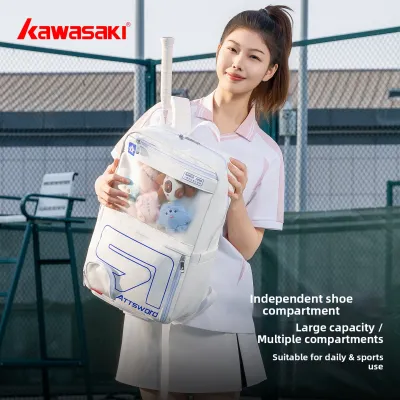
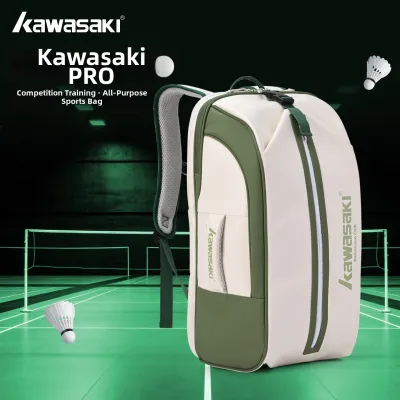
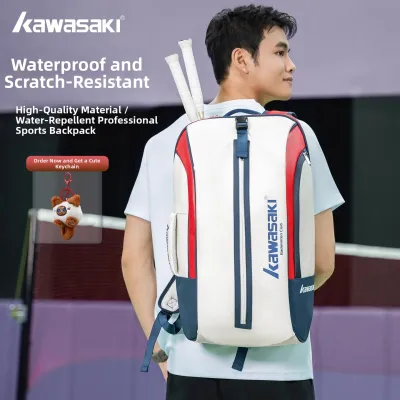
Prices are valid at publication and may change. Please refer to the product page for the latest price.
- Small Capacity (1-3 Rackets): Best suited for casual players, beginners, or minimalist commuters. This tier is designed to hold 1 to 2 rackets, a spare grip, a small water bottle, and personal essentials like a phone and keys. It is highly portable but lacks specialized storage compartments.
- Medium Capacity (4-6 Rackets): The industry standard for regular club players who play multiple times a week. This tier comfortably accommodates 3 to 4 rackets alongside a dedicated shoe bag, a tube of shuttlecocks, a towel, and a change of clothes. It balance storage capacity with ease of transport.
- Large Capacity (7+ Rackets): Designed for competitive tournament players, coaches, or gear enthusiasts who carry heavy loadouts. This tier easily holds 6 or more rackets, multiple pairs of shoes, several shuttlecock boxes, and post-match recovery gear. It features complex compartmentalization but is physically bulky.
When evaluating a Kawasaki bag, remember that choosing the correct size is not just about convenience; it is a matter of equipment preservation. Rackets are constructed from high-modulus carbon graphite, which is highly sensitive to lateral pressure and impact. Squeezing multiple rackets into an undersized compartment forces the frames to press against each other, which can lead to micro-fractures in the graphite or warped frames during transit. Ensuring your bag has dedicated, uncrowded space for your rackets preserves their structural integrity and keeps your strings performing consistently.
Small Capacity (1-3 Rackets): For Casual Play and Minimal Gear
Small-capacity Kawasaki bags are designed for players who prioritize speed, mobility, and simplicity. If you only play occasionally, participate in casual weekend sessions, or are just starting your badminton journey, you likely do not need to carry a vast array of technical gear. For these scenarios, a compact bag provides a lightweight footprint that is easy to carry on a bicycle, motorcycle, or public transit system.

These bags typically come in two distinct form factors: the classic single-shoulder sling bag and the compact badminton backpack. Sling bags are flat, rectangular carriers that mirror the shape of a badminton racket, keeping the profile as slim as possible. Compact backpacks, on the other hand, are designed to hold rackets vertically. In these backpacks, the racket handles usually extend out of a dedicated zippered slot at the top, which is a highly efficient design for urban commuting but leaves the handles exposed to the elements.
In terms of storage, a small-capacity bag is strictly minimalist. It realistically accommodates one primary racket, one backup racket, a replacement grip, a small water bottle, and a dedicated zippered pocket for your wallet, keys, and phone. Because space is highly optimized, there is virtually no room for bulky items. If you attempt to pack a standard pair of court shoes into the main compartment of a small bag, you will immediately crowd out your rackets and strain the zippers.
Furthermore, small-capacity bags generally omit premium technical features. You will rarely find dedicated thermal linings to protect your strings from temperature fluctuations, nor will you find isolated, ventilated shoe compartments. If you plan to carry items like a large, thick cooling towel or a full change of heavy cotton clothing, you must check the exact external dimensions on the product label before purchasing, as these bulky items can quickly exhaust the main compartment’s volume.
Medium Capacity (4-6 Rackets): The Standard for Regular Sessions
For intermediate players, regular club members, and those who step onto the court several times a week, a medium-capacity Kawasaki bag is the most practical choice. This size category represents the sweet spot of the badminton world, offering a generous amount of storage space without becoming overly heavy or difficult to carry during a daily commute.
Typically designed as rectangular “tour” bags, these models feature two main large compartments. The physical layout is engineered to separate your rackets from the rest of your gear. In a standard setup, you can dedicate one side compartment entirely to 3 or 4 rackets, keeping them flat and protected. This leaves the second large compartment completely free to house a shoe bag, a tube of shuttlecocks, a fresh change of clothes, and your personal washing kit.
Transportation options are highly versatile in this size range. Most medium Kawasaki bags are equipped with dual carrying systems: a set of short hand straps for quick lifting and a pair of adjustable, padded backpack straps. The backpack straps allow you to carry the bag vertically on your back, distributing the weight evenly across both shoulders. This is particularly beneficial if you have to walk long distances from the car park or train station to the sports hall.
One of the most critical reasons to step up to a medium-capacity bag is the inclusion of protective technologies. In tropical climates characterized by high heat and humidity, such as Singapore, racket strings can lose tension rapidly if exposed to temperature spikes. Many mid-sized Kawasaki bags feature an insulated or thermal pocket lined with heat-reflective material. Storing your rackets in this compartment shields the high-tension strings from external heat, preserving your preferred string playability and preventing premature breakage.
While these bags are officially marketed as “6-racket” models, you must organize your gear carefully if you intend to pack them to their limit. If you actually place six rackets inside the bag, the remaining space for shoes and shuttlecocks will be severely restricted. For daily use, it is best to treat these as highly spacious 3-to-4-racket bags that leave plenty of breathing room for your essential court accessories.
Large Capacity (7+ Rackets): For Tournaments, Coaches, and Heavy Loadouts
Large-capacity Kawasaki bags are engineered for competitive tournament players, coaches, and those who refuse to leave any gear behind. When you are playing in weekend-long tournaments or running coaching clinics, your gear requirements multiply. You need multiple pre-strung rackets at specific tensions, spare clothing for multiple matches, and professional training aids.
These bags are characterized by their three-compartment design, which offers maximum organizational efficiency. With three distinct full-length sections, you can organize your gear systematically. For example, you can dedicate one compartment entirely to storing up to six rackets, use the middle compartment for multiple tubes of shuttlecocks and coaching clipboards, and use the third compartment to isolate clean apparel from damp, post-match gear. This level of compartmentalization prevents clean items from absorbing moisture and odors from used equipment.
Carrying a fully loaded large bag presents physical challenges. When packed with six or more rackets, two pairs of shoes, water bottles, and accessories, a large bag can easily weigh several kilograms. To mitigate physical strain, it is vital to check for ergonomic features. Look for heavily padded, contoured shoulder straps that distribute weight away from your neck. High-quality large bags often include adjustable chest or waist buckles to stabilize the load and prevent the bag from shifting uncomfortably as you walk.
Because of the sheer volume of gear, you must avoid the temptation to overpack beyond the bag’s structural limits. Forcing extra gear into an already full bag puts immense pressure on the zippers, seams, and protective padding. Over time, this strain can cause the zipper teeth to separate or compromise the foam cushioning that shields your rackets from external impacts. Always pack mindfully, ensuring that compartments close smoothly without requiring excessive force.
Finally, verify the bag’s base structure before making a purchase. A high-quality large tournament bag should feature a reinforced, molded base or non-slip rubber feet. This structural reinforcement ensures that the bag can stand upright or lay flat on a court bench without collapsing or sliding onto a dusty floor, keeping your gear clean, dry, and easily accessible during intense match play.
Essential Features to Verify Beyond Racket Count
While selecting the correct capacity tier is an excellent starting point, the real-world usability and longevity of your Kawasaki badminton bag depend on several technical features. Before finalizing your decision, evaluate these secondary specifications to ensure the bag meets your environmental and physical demands.
Thermal/Insulated Compartments
As badminton strings are subjected to high tension, the physical properties of the nylon or polyester core are highly sensitive to thermal fluctuations. In warm, humid environments, heat causes the string material to relax, resulting in a noticeable drop in tension and a loss of control on court. A thermal-lined compartment utilizes a reflective foil layer to maintain a stable internal temperature. When browsing Kawasaki models, verify the presence and exact location of this thermal lining on the product tag or official specification sheet, as this feature is typically reserved for mid-to-high-tier models.
Shoe Compartments
Keeping your court shoes separate from your rackets and apparel is essential for both hygiene and equipment care. Court shoes collect dust, sweat, and moisture during a match. A dedicated shoe compartment physically isolates your shoes from the rest of the bag’s interior. When evaluating this feature, look for models that offer vented compartments equipped with mesh panels or metal grommets. These vents allow air to circulate, helping your shoes dry out and preventing moisture and odors from transferring to your clean clothes or racket grips.
Material and Water Resistance
Your badminton bag must protect your gear from external moisture, whether from a sudden tropical downpour during your commute or accidental spills on the court bench. Check the manufacturer’s label for materials like high-density polyester (such as 600D or 900D) or bags featuring a thermoplastic polyurethane (TPU) coating. These materials offer excellent water resistance, allowing water to bead off the surface. However, keep in mind that “water-resistant” does not mean “fully waterproof.” While the fabric will protect your gear during a quick dash through the rain, water can still penetrate through the seams and zipper tracks during prolonged exposure.
Strap Ergonomics and Hardware
The durability of a badminton bag is often determined by its smallest components. Heavy loads put continuous stress on zippers, carrying handles, and strap buckles. Look for robust, thick-gauge zippers that glide smoothly without catching on the fabric lining. For medium and large bags, ensure that the shoulder straps are attached with reinforced stitching or heavy-duty plastic buckles. The padding on the straps should be thick and breathable, utilizing open-cell foam or mesh to prevent heat buildup on your shoulders during warm commutes.
Ultimately, remember that brand reputation or material names alone do not guarantee specific performance levels. You must rely on the manufacturer’s officially stated specifications, material listings, and care instructions to verify the exact durability, weather resistance, and protective features of your chosen model.
Frequently Asked Questions (FAQ)
Can I fit a pair of badminton shoes in a 3-racket Kawasaki bag?
While you can physically squeeze a pair of court shoes into the main compartment of a 3-racket bag, doing so is not recommended. Small-capacity bags generally lack dedicated shoe compartments. Placing shoes directly alongside your rackets crowds the space, forcing the shoe soles against the racket frames and strings. This can warp your racket frames, damage the delicate string beds, and transfer dirt, sweat, and odor to your racket grips.
Do all Kawasaki badminton bags have thermal compartments?
No, thermal insulation is not a standard feature across all Kawasaki models. Thermal lining is a premium feature typically reserved for medium and large-capacity bags designed for competitive or frequent players. Entry-level, small-capacity bags and basic backpacks rarely include this feature. If protecting your racket strings from heat and humidity is a priority, always verify the product specifications or check the physical product tags before purchasing.
How should I clean and maintain my badminton bag to extend its lifespan?
To maintain your bag, empty all compartments after every session, shake out any loose debris, and wipe down both the interior and exterior surfaces with a soft, damp cloth. Always air-dry your bag completely in a shaded, well-ventilated indoor area before storing it; never leave a damp bag zipped shut, as this encourages mold and mildew growth. Before using any cleaning agents, check the manufacturer’s care label. Avoid harsh detergents, bleach, or machine washing, as intense agitation and chemicals can strip away water-resistant coatings and damage internal thermal linings.
Community discussion
Share your experience or ask a question. Comments are reviewed before publication.