
Selecting the right Li-Ning badminton racket depends on aligning the brand’s distinct series philosophies with your individual playing style, physical strength, and skill level. Li-Ning categorizes its rackets into primary lines—such as Axforce for power, Halbertec for control, and Blade for speed—each engineered with specific frame geometries, weight distributions, and shaft flexibilities. Navigating these options requires understanding how these technical designs translate to your performance on the court, ensuring you choose a tool that enhances your natural strengths rather than working against your physical limits. This guide will help you analyze these series and identify the exact specifications that match your tactical approach.
Understanding Li-Ning's Core Racket Series
The Axforce series is engineered specifically for players who prioritize attacking power and heavy smashes. These rackets typically feature a head-heavy balance, which utilizes centrifugal force during a swing to transfer maximum kinetic energy to the shuttlecock. Additionally, Axforce frames are constructed to withstand high string tension, allowing advanced players to string their rackets at higher levels for crisper shots and faster shuttle repulsion. The frame geometry often incorporates boxier, reinforced structures that minimize twisting under the high stress of aggressive overhead strokes.
For players who value precision, tactical rally construction, and defensive stability, the Halbertec series offers a balanced alternative. Designed with a focus on control, these rackets aim to provide a solid, dampened holding feel upon impact, allowing you to direct the shuttlecock with high accuracy. The frame design emphasizes torsional stability, ensuring that off-center hits do not result in wild deflections. This makes the Halbertec line highly suitable for players who rely on tight net play, deceptive drops, and precise defensive blocks to wear down their opponents.
Products mentioned in this guide
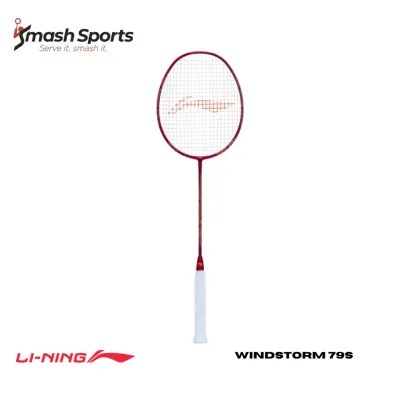
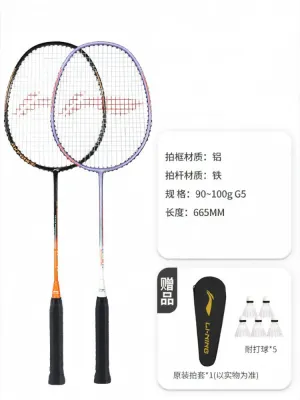
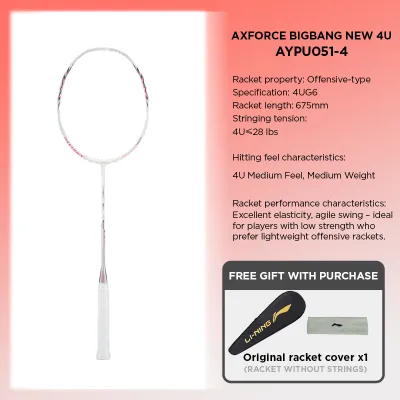
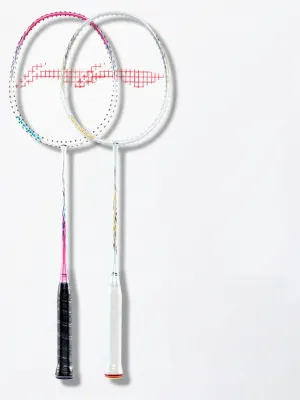
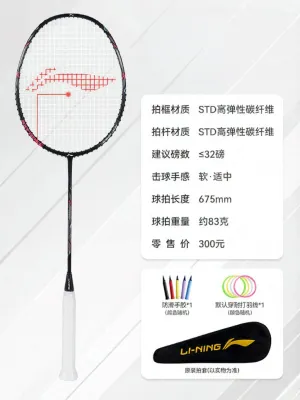
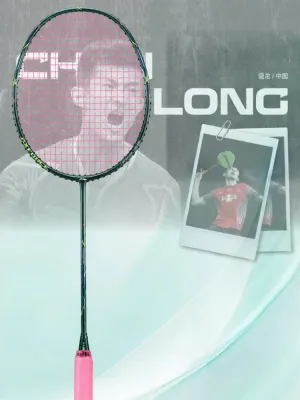
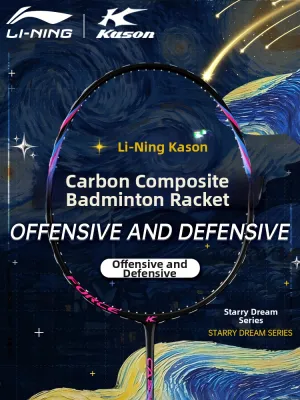
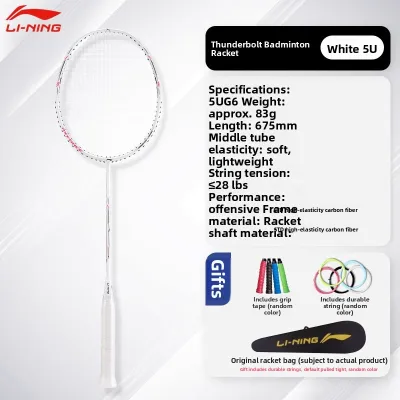
Prices are valid at publication and may change. Please refer to the product page for the latest price.
The Blade series (along with other speed-oriented lines like the Bladex) is engineered for rapid swing speeds, agility, and fast-paced flat exchanges. These rackets feature highly aerodynamic frame profiles that cut through the air with minimal resistance, allowing for quicker recovery times between consecutive shots. The weight distribution is typically head-light or even-balanced, which reduces the physical effort required to maneuver the racket in fast defensive situations or quick front-court interceptions. This design philosophy is highly beneficial for doubles players who engage in rapid drive battles and net-kill opportunities.
While these series define the general characteristics of the rackets, you must verify the official specifications of individual models within each line. Weight, balance point, and shaft stiffness can vary significantly even within the same series, meaning a specific Axforce model might be more head-heavy or stiffer than another. Always consult the manufacturer’s official specification sheets to confirm these details before making a decision.
Matching Racket Series to Your Playing Style and Skill Level
If your tactical approach revolves around dominant rear-court play, steep smashes, and forcing weak returns from your opponents, the Axforce series is the logical starting point. However, choosing a power-oriented racket requires an honest self-assessment of your wrist strength, shoulder conditioning, and power generation technique. Head-heavy rackets require clean, coordinated kinetic chain movement—from your legs and torso through to your forearm and wrist—to swing effectively. Without proper technique, relying solely on a heavy racket head to generate power can lead to early fatigue and increased physical strain.

If you prefer to control the tempo of the game, construct rallies patiently, and exploit gaps in your opponent’s court coverage, the Halbertec series is highly appropriate. This line supports players who rely on precise placement, soft net touches, and quick counter-attacks. Because these rackets offer a more neutral balance, they allow you to transition smoothly from a defensive stance to an offensive push, making them highly versatile for both singles and doubles players who play a tactical, all-round game.
For players who thrive in the fast-paced environment of doubles, particularly in the front-court or mid-court areas, the Blade series is designed to match your quick reflexes. The aerodynamic frames and lower swing weight allow you to react instantly to fast drives, execute quick flick serves, and intercept loose returns at the net. This series is ideal for players who rely on hand speed and rapid racket recovery rather than raw, heavy power from the back of the court.
Skill level matching is critical when selecting any racket. Beginners and intermediate players should generally avoid overly demanding specifications, such as extra-stiff shafts or extreme head-heavy balances, even if they prefer an attacking style. These advanced configurations require precise timing and high swing speeds to flex the shaft and generate power. Forcing yourself to use a racket that is too demanding can hinder your technique development and increase the risk of common injuries like tennis elbow. Starting with more forgiving, medium-flex, and even-balanced models allows you to build proper form before transitioning to specialized equipment.
Key Specifications to Check Before Buying
The weight of a badminton racket is categorized using the ‘U’ classification system, where a higher number denotes a lighter racket. For example, 3U rackets (typically weighing 85 to 89 grams) offer more mass, which can translate to heavier smashes but requires greater arm strength and endurance. 4U rackets (typically 80 to 84 grams) represent the standard, balanced choice for most intermediate players, offering a good compromise between power and maneuverability. 5U rackets (typically 75 to 79 grams) and lighter are highly maneuverable and easy on the wrist, making them popular for defensive play and front-court doubles, though they offer less natural momentum for heavy clears and smashes.
The balance point, measured in millimeters from the handle butt, determines how the racket feels during a swing. A balance point over 300mm indicates a head-heavy design, which assists in generating downward force for smashes but increases the perceived swing weight, making quick defensive reactions more tiring. A balance point below 290mm indicates a head-light design, which maximizes maneuverability and speed at the expense of raw power. Even-balance rackets (around 290mm to 300mm) offer a versatile middle ground, suitable for players who need to switch quickly between offense and defense.
Shaft stiffness affects how energy is transferred from your swing to the shuttlecock. Stiff shafts do not bend easily, meaning they require a very fast swing speed and precise timing to snap back and transfer power efficiently. If your swing is too slow, a stiff shaft will feel like a board, resulting in weak shots and vibrations traveling up your arm. Flexible shafts bend more easily during the swing, providing a ‘whip’ effect that helps players with slower swing speeds generate depth on their clears with less physical effort.
Before purchasing, always review the manufacturer’s official specification sheet for the exact model you are considering. If possible, visit an authorized physical sports retailer to hold the racket, feel its weight distribution, and perform a few dry swings. Test-playing a demo racket, if available, is the most reliable way to ensure the physical parameters align with your comfort and playing style.
Where to Buy and How to Verify Authenticity
To protect your investment, always purchase your racket through legitimate, authorized channels. These include the brand’s official websites, authorized physical sports retailers, and official flagship stores on major online marketplaces. Buying from established sources ensures that you receive a genuine product backed by the manufacturer’s warranty, which is particularly important given the high-tension forces badminton rackets must withstand.
Counterfeit rackets are common in the market, but you can protect yourself by performing several physical checks. Genuine Li-Ning rackets feature specific anti-counterfeit measures, including holographic security stickers with scratch-off codes that can be verified on the official website. Additionally, inspect the overall build quality: genuine rackets exhibit flawless paint finishes, perfectly aligned grommets, and clean, crisp logos on the butt cap. Any smudging, rough edges, or misaligned decals are strong indicators of a counterfeit product.
Be highly cautious of unauthorized third-party sellers on online platforms offering premium rackets at unusually low prices, such as discounts that seem too good to be true. These sellers often lack proper return policies and customer support, leaving you with no recourse if the racket suffers from structural defects or breaks under normal stringing tensions. Investing in a genuine racket from an authorized dealer ensures safety, durability, and optimal performance on the court.
Frequently Asked Questions (FAQ)
How often should I restring my Li-Ning badminton racket?
The frequency of restringing depends on your playing frequency, style, and how sensitive you are to performance changes. As a general guideline, if you play twice a week, you may want to restring your racket at least two to three times a year. Over time, strings naturally lose their tension (tension creep), even when the racket is not in use, which can lead to a loss of control and power. You should also inspect your strings regularly for visible wear, fraying, or shifting; if the strings look thin or damaged, it is best to restring them before they snap during a match. Consulting a professional stringer at your local club or sports shop can help you determine the right tension and string type for your current skill level.
Does a higher price always mean a better racket for beginners?
No, a higher price tag does not guarantee a better experience for a beginner, and in many cases, it can actually hinder your progress. Premium, high-end rackets are often designed for professional players and feature very stiff shafts and extreme balance points that require advanced technique, rapid swing speeds, and excellent physical conditioning to utilize effectively. For a beginner, these rackets can feel unforgiving, leading to short clears, poor control, and potential wrist or shoulder strain. Beginners should prioritize rackets with high fault tolerance, moderate shaft flexibility, and an even balance, which are often found in intermediate or entry-level price ranges (typically around S$80 to S$150). These models are designed to assist with power generation and offer a larger sweet spot, helping you develop proper technique safely.
Community discussion
Share your experience or ask a question. Comments are reviewed before publication.