
Selecting the right badminton shuttlecock is a critical decision that directly impacts your playing experience, skill development, and budget. While professional players require the absolute precision of premium goose feathers, recreational players and club enthusiasts often find better value in durable duck feathers or synthetic nylon alternatives. Li-Ning offers a comprehensive range of shuttlecocks tailored to these distinct needs. By matching your selection to your specific skill level, playing environment, and budget, you can optimize both your performance on the court and the lifespan of your equipment.
Understanding Li-Ning Shuttlecock Materials and Grading
To make an informed purchase, you must first understand the structural anatomy of a shuttlecock. The choice of materials dictates how the shuttlecock behaves in the air, how long it survives high-velocity impacts, and how much it will cost you over time. Li-Ning categorizes its lineup based on these material differences, offering options ranging from synthetic nylon to premium natural goose feathers.
Natural feather shuttlecocks are the traditional standard for badminton. They are constructed using 16 individual feathers inserted into a cork base, bound together with thread and adhesive. Within this category, there is a major distinction between goose and duck feathers. Goose feathers are highly regarded for their thick, sturdy shafts and wide, uniform vanes. This structural integrity translates to a highly consistent flight trajectory, predictable rotational spin, and excellent durability under intense play. Duck feathers, on the other hand, are slightly thinner and more brittle. While they still offer the natural flight path that players prefer over synthetic options, they tend to wear out faster, making them a more economical choice for training rather than high-stakes matches.
Products mentioned in this guide
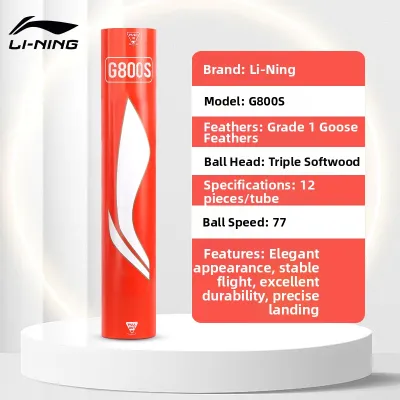
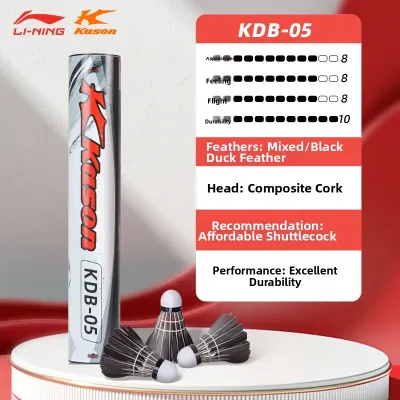
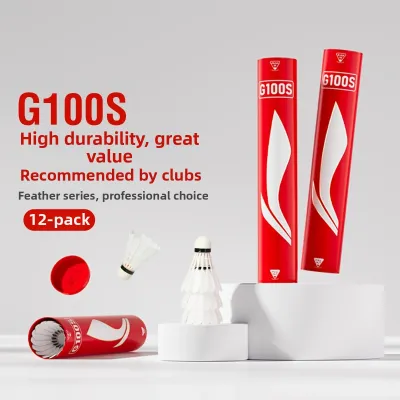
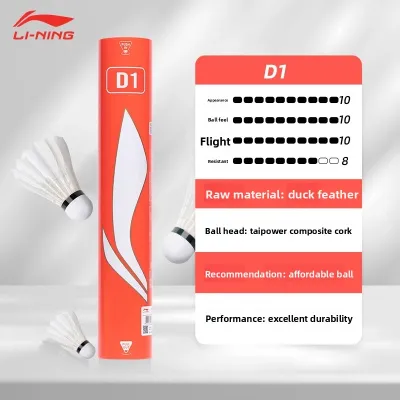
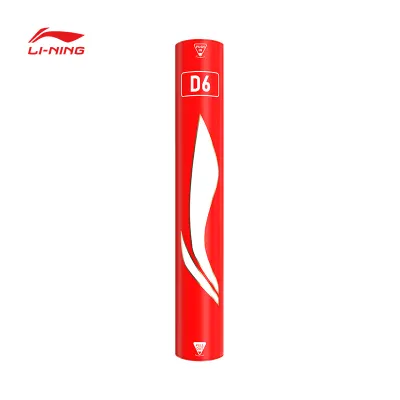
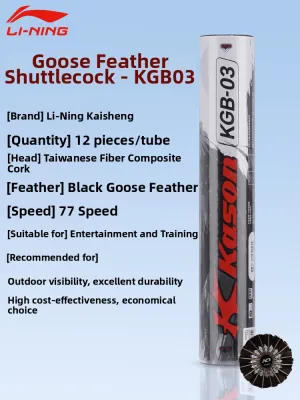
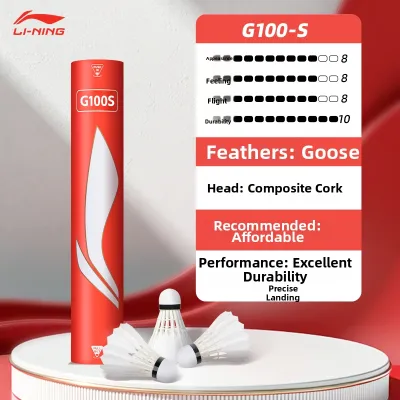
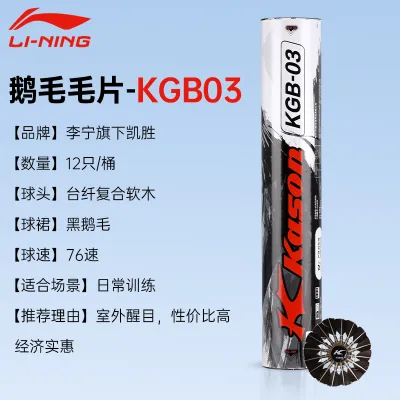
Prices are valid at publication and may change. Please refer to the product page for the latest price.
Synthetic shuttlecocks, typically made with a nylon skirt molded onto a synthetic or natural cork base, offer a completely different set of performance characteristics. Nylon is incredibly resilient; it can withstand hundreds of off-center hits without breaking or losing its shape. However, synthetic shuttlecocks exhibit a different flight trajectory than natural feathers. A feather shuttlecock decelerates rapidly after reaching its peak height due to the natural drag of the overlapping feathers opening up. A nylon shuttlecock tends to follow a more parabolic flight path, maintaining its speed longer and dropping less sharply. This makes nylon less suitable for practicing advanced net play or precise baseline drops, but highly practical for casual recreation.
Li-Ning utilizes a clear grading framework to help players navigate these material differences. Their product tiers are generally divided into tournament/competition grade, club/training grade, and beginner/recreational grade. When browsing the shelves of authorized sports retailers, you should carefully read the labels on the shuttlecock tube. Look for the specific feather type (goose vs. duck), the cork composition (natural, composite, or synthetic), and the speed rating. Because specific model names and SKUs are updated frequently by the manufacturer to reflect new production batches or design tweaks, understanding these core grading criteria is far more valuable than memorizing static model numbers. Always evaluate the current lineup based on these structural specifications.
Best Li-Ning Shuttlecock Types for Beginners and Casual Play
For those who are new to badminton, students in school programs, or casual players who enjoy weekend games in community spaces, the primary goals are durability, ease of play, and cost-efficiency. At this stage of skill development, players are still refining their hand-eye coordination and racket timing. This inevitably leads to frequent mishits, where the racket frame or strings strike the delicate feather skirt of the shuttlecock rather than the solid cork base.

For this reason, synthetic nylon shuttlecocks or entry-level duck feather models are the most practical choices. If you choose a premium natural feather shuttlecock as a beginner, a single poorly timed smash that catches the feathers can instantly bend or snap a shaft. Once a single feather is damaged, the shuttlecock loses its rotational balance, causing it to wobble, veer off course, and become unusable. Nylon shuttlecocks completely bypass this issue. The flexible nylon skirt can deform during a mishit and immediately snap back into its original shape, allowing a single shuttlecock to last for multiple sessions.
If you prefer the feel of natural feathers even as a beginner, entry-level duck feather models offer a reasonable compromise. These models are priced significantly lower than goose feather alternatives, meaning the financial impact of destroying a shuttlecock during practice is minimal. They allow beginners to adapt to the natural flight and deceleration of feather play without the high cost of premium equipment.
These entry-level options are also highly suited for non-standard playing environments. In Singapore, casual badminton is often played in multi-purpose community halls, outdoor parks, or void decks. These spaces rarely have the strict environmental controls found in dedicated sports complexes. Drafts, wind, and varying temperatures can easily disrupt the delicate flight of a high-end feather shuttlecock. Nylon shuttlecocks, being slightly heavier and more aerodynamically forgiving, are much better suited to handle these unpredictable outdoor conditions.
When purchasing entry-level Li-Ning options, verify the specifications on the packaging. Look for labels indicating a nylon skirt or entry-grade duck feathers. Check the speed rating—typically speed 77 or 78 is ideal for general recreational play in Singapore’s climate. Ensure the base is listed as synthetic cork or high-density foam, which provides a solid hitting surface that can withstand repetitive, forceful impacts without crumbling.
Ideal Li-Ning Shuttlecock Choices for Intermediate Club Players
Intermediate club players and regular enthusiasts require a higher level of performance. At this stage, players have developed consistent striking techniques, meaning they rarely hit the feather skirt directly. Rallies are longer, smashes are faster, and net play requires a level of precision that synthetic nylon shuttlecocks simply cannot provide. For these players, the focus shifts to mid-tier goose feather or high-quality, reinforced duck feather models designed for regular indoor club play.
One of the most critical factors for intermediate players to understand is the shuttlecock speed rating, which is typically marked on the tube as 76, 77, or 78. This rating corresponds to the weight and aerodynamic performance of the shuttlecock under specific environmental conditions. Air density, which is heavily influenced by temperature and humidity, directly affects how much drag a shuttlecock experiences. In Singapore’s naturally hot and humid climate, the air is less dense, which theoretically allows shuttlecocks to fly faster and further. However, most intermediate club sessions take place in indoor sports halls.
If you are playing in a non-air-conditioned community club hall where the air remains warm and humid, you should opt for a slower speed rating, such as speed 76. The lighter weight of a speed 76 shuttlecock compensates for the low air density, ensuring it does not sail past the baseline on standard clears. Conversely, if your club rents courts in a modern, heavily air-conditioned sports complex, the cold air becomes much denser. In these chilled environments, a speed 76 shuttlecock will feel heavy and sluggish, falling short of its target. For air-conditioned halls, speed 77 or even speed 78 is the correct choice, as the slightly heavier weight helps the shuttlecock cut through the dense, cold air to maintain a natural depth.
Intermediate play involves a constant trade-off between the cost per tube and the expected lifespan of the shuttlecocks. During intense drilling sessions or competitive club matches, shuttlecocks are subjected to high-velocity impacts. To maximize your budget, look for Li-Ning models that feature composite corks and reinforced feather shafts. A composite cork utilizes a natural cork base at the hitting face for a clean, crisp feel off the racket, bonded to a synthetic upper section that resists cracking. Reinforced feather shafts are treated with specialized lacquers or structural adhesives to prevent them from splitting during hard smashes. These features ensure the shuttlecock maintains its flight stability for multiple games, reducing the frequency of replacements during a session.
Top-Tier Li-Ning Shuttlecocks for Advanced and Competitive Matches
Advanced players, tournament competitors, and elite club athletes demand absolute precision from their equipment. At this level, even a minor deviation in flight path, weight distribution, or rotational speed can mean the difference between a winning shot and an unforced error. To meet these rigorous standards, advanced players must look to Li-Ning’s top-tier, full-round goose feather shuttlecocks.
These premium models are constructed using only the finest selection of goose feathers, harvested from specific regions of the wing to ensure perfect symmetry. The feathers are carefully sorted to match in weight, thickness, and curvature. This meticulous manufacturing process results in exceptional aerodynamics. When struck, a top-tier goose shuttlecock exhibits a rapid spin rate that stabilizes its flight almost instantly. As it reaches the apex of its trajectory, the feathers create a highly predictable drag coefficient, leading to a sharp, clean deceleration. This allows players to execute tight net drops, precise lifts, and powerful smashes with complete confidence in where the shuttlecock will land.
When selecting tournament-grade shuttlecocks, advanced players should look for specific quality indicators on the packaging. The most important is the Badminton World Federation (BWF) approval logo, which certifies that the model has passed strict testing for weight, flight consistency, and structural dimensions, making it eligible for official international tournaments. Additionally, verify that the tube specifies a premium, solid natural cork base. Unlike composite or synthetic corks, solid natural cork provides the ultimate tactile feedback, allowing players to feel the exact point of contact on the racket face for maximum control over delicate spin shots.
It is important to note that these high-end shuttlecocks are highly sensitive to technique. Because they are designed for optimal flight rather than brute durability, they require clean, precise striking. A player with advanced technique will consistently hit the sweet spot of the cork, preserving the feathers and allowing a single premium shuttlecock to last through several intense games. However, if an inexperienced player attempts to use these models, their frequent mishits will quickly destroy the expensive goose feathers, making them highly cost-ineffective for casual play. For competitive matches where performance is the sole priority, the premium price point of these top-tier models is fully justified by the unmatched consistency they deliver during aggressive smashes and intricate net play.
How to Verify Authenticity and Extend Shuttlecock Lifespan
Because Li-Ning is a highly respected global badminton brand, counterfeit products are a common issue in the market. Purchasing fake shuttlecocks not only wastes your money but also results in terrible flight performance and rapid structural failure. To protect yourself, always verify the authenticity of your purchase.
Li-Ning equips its shuttlecock tubes with official anti-counterfeit holographic stickers. These stickers feature a scratch-off panel that reveals a unique security code. You can scan the accompanying QR code or visit Li-Ning’s official brand website to enter this code and verify if the product is genuine. To minimize the risk of buying counterfeits, avoid purchasing from unverified third-party sellers on online marketplaces. Instead, buy your equipment exclusively from authorized sports retailers, official brand stores, or reputable local pro shops in Singapore.
Once you have verified and purchased genuine natural feather shuttlecocks, you can significantly extend their lifespan through proper maintenance. Natural feathers contain moisture and natural oils that keep them flexible. In Singapore’s air-conditioned environments or during dry spells, these feathers can dry out and become highly brittle, causing them to snap easily upon impact. Humidifying your shuttlecocks before use is a highly effective, low-risk method to restore their elasticity.
To humidify your shuttlecocks, you can use a dedicated electronic shuttlecock steamer, which gently injects warm moisture into the tube. Alternatively, you can use the traditional steam-from-a-kettle method. Carefully hold the open end of the shuttlecock tube over the steam rising from a boiling kettle for approximately 5 to 10 seconds, allowing the steam to pass through the feathers. Immediately seal both ends of the tube with the plastic caps to trap the moisture inside. For the best results, perform this humidification process 24 to 48 hours before your scheduled playing session, giving the feathers ample time to absorb the moisture.
However, you must observe strict safety and preservation boundaries. Never over-humidify the shuttlecocks, as excess moisture will make the feathers heavy and soggy, completely ruining their flight trajectory and speed. Avoid exposing the shuttlecocks to direct heat sources, such as hair dryers or open flames, which will dry out the adhesive and melt the structural glue. Additionally, never store your shuttlecock tubes in extremely hot or dry environments, such as a car boot parked under the direct Singapore sun. The intense heat inside a vehicle will bake the natural oils out of the feathers and degrade the cork, rendering them brittle and useless. Always read and follow the manufacturer’s specific care and storage instructions printed on the tube before applying any maintenance techniques.
Frequently Asked Questions (FAQ)
How do I choose the right shuttlecock speed for Singapore's climate?
Choosing the correct shuttlecock speed in Singapore depends entirely on the temperature and airflow of your playing venue. Air density is the key physical factor: hot, humid air is less dense, while cold, dry air is denser. If you are playing in a non-air-conditioned school hall or community center where the indoor temperature is warm, the thin air offers less resistance. In these conditions, you should use a slower speed rating, such as speed 76, to prevent the shuttlecock from flying out of bounds. If you are playing in a modern, heavily air-conditioned sports hall where the temperature is kept low, the dense air will slow the shuttlecock down. For these air-conditioned courts, you should select a faster speed rating, such as speed 77 or 78, to ensure the shuttlecock travels the correct distance with normal hitting force.
Can I use nylon shuttlecocks for competitive badminton matches?
Nylon shuttlecocks are not permitted in official competitive badminton matches, which strictly require natural feather shuttlecocks. The primary reason is the fundamental difference in flight dynamics. Natural feather shuttlecocks spin rapidly and experience high drag, causing them to decelerate sharply at the end of their flight path. This unique deceleration profile is essential for executing advanced tactical shots, such as tight net drops, deceptive slices, and deep defensive clears. Nylon shuttlecocks follow a more parabolic, wind-resistant flight path and do not slow down as quickly, which alters the timing and strategy of high-level play. While nylon shuttlecocks are excellent for school physical education classes, beginner training, and casual outdoor recreation due to their extreme durability, competitive tournaments and advanced club leagues always mandate the use of natural feather models.
How long should a feather shuttlecock last during a typical game?
The lifespan of a natural feather shuttlecock varies significantly based on the players’ skill level, physical power, and striking technique. In an advanced or professional match, players strike the shuttlecock with immense force and execute highly aggressive smashes. Even a minor bend in a single feather can alter the flight path, leading players to change the shuttlecock every few games, or sometimes multiple times within a single game, to maintain absolute precision. For intermediate club players who have good technique but play at a slightly lower intensity, a single high-quality goose or reinforced duck feather shuttlecock can typically last for one to two full games of doubles play before the flight stability begins to degrade noticeably. If the shuttlecock remains structurally intact without any broken feathers, intermediate players can often continue using it for casual rallies or drilling sessions.
Community discussion
Share your experience or ask a question. Comments are reviewed before publication.