
Choosing the right Molten basketball depends entirely on where you play most often, your sensitivity to grip, and how much wear you expect the ball to endure. While premium models offer excellent tactile feedback for indoor wooden courts, they will quickly degrade on rough outdoor surfaces. In Singapore, where high humidity can make ball handling challenging and outdoor courts are often exposed to sudden tropical downpours, selecting the correct cover material is essential for both performance and longevity. This guide breaks down the Molten BG series by material and intended use, helping you match the correct model tier to your specific playing environment and physical preferences without overpaying for features you cannot fully utilize.
Rather than simply purchasing the most expensive model available, players must evaluate how different cover materials interact with local court surfaces. An indoor sports hall floor requires a completely different set of physical characteristics from a neighborhood concrete court. By understanding the trade-offs between grip, moisture absorption, and abrasion resistance, you can select a basketball that enhances your play style and lasts for seasons to come.
Understanding Molten's Model Hierarchy and Materials
To make an informed decision, it is helpful to understand how Molten structures its basketball lineup. The brand’s BG series uses a clear numerical hierarchy where higher numbers generally indicate premium materials, more advanced carcass construction, and specialized indoor designs. Conversely, lower numbers represent more durable, cost-effective materials engineered to withstand the harsh conditions of outdoor play.
Products mentioned in this guide
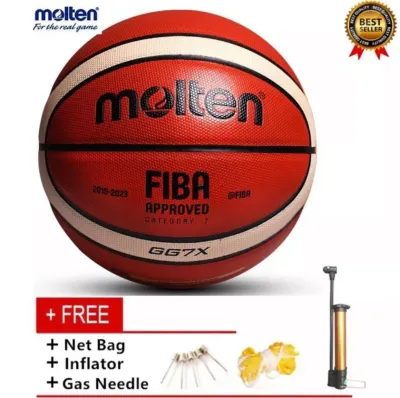
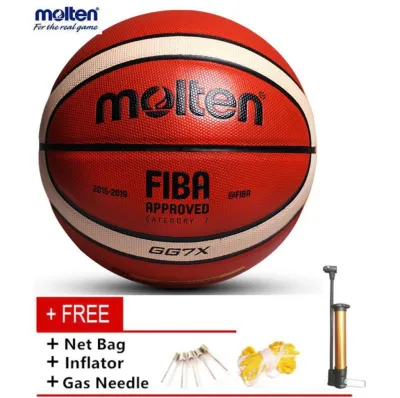
![[IN SG STOCK]Molten GG7X Basketball Official Size 7](https://img.lazcdn.com/g/p/b2017c68f59707ef38cd93ad6a6442e8.jpg_400x400q80.jpg_.webp)
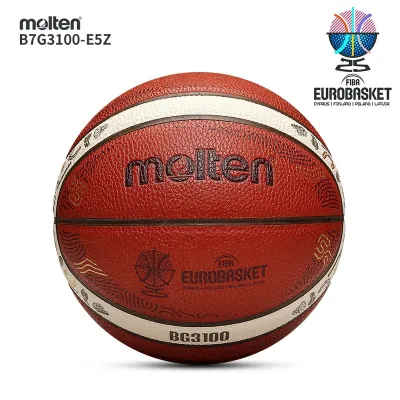
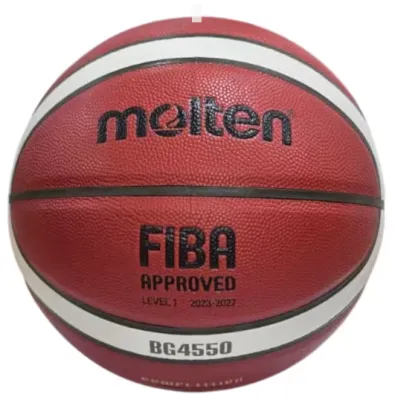
![[Local Seller] Molten number7 indoor outdoor games kid free gift professional FIBA basketball 7号魔腾篮球](https://img.lazcdn.com/g/p/124ed82375567fd1a04666114f86b70e.jpg_400x400q80.jpg_.webp)
Prices are valid at publication and may change. Please refer to the product page for the latest price.
At the top of the hierarchy are genuine leather models, such as the BG5000, which serve as the official game balls for international competitions. Genuine leather offers unmatched feel and durability but requires a dedicated break-in period and must be used exclusively on pristine indoor wooden courts. Below this tier lies premium composite leather, found in models like the BG4500. This synthetic material is engineered to mimic the soft feel and moisture-wicking properties of natural leather without requiring an extensive break-in phase, making it highly popular for competitive indoor leagues.
Moving down the hierarchy, standard polyurethane (PU) covers, such as those on the BG3800, offer a balance of soft touch and enhanced wear resistance. These models are designed for versatile use across different court types. At the entry-level and outdoor-focused tiers, such as the BG3100 and BG2000, you will find rugged PU or vulcanized rubber covers. These materials do not absorb moisture or dirt, allowing them to maintain structural integrity and grip on highly abrasive surfaces like concrete and asphalt.
In Singapore’s humid climate, the choice of material directly impacts how the ball behaves during intense play. High humidity and sweat can quickly turn a dusty basketball into a slippery hazard. Premium composite covers absorb moisture to maintain a reliable grip, but if they are exposed to outdoor dirt, that moisture absorption will trap dust and ruin the cover. Rubber and rugged PU covers do not absorb moisture, relying instead on deep mechanical pebbling to provide traction even when the court is dusty or damp.
Comparing Popular Molten Models by Court and Use Case
Matching your basketball’s cover material to the abrasiveness of your primary playing surface is the single most important factor in ensuring longevity. Using a premium indoor ball on an outdoor court will destroy its soft outer layer within a few sessions, while using a stiff outdoor ball indoors can limit your control and tactile feedback.

Every model tier involves a direct trade-off between premium feel and long-term durability. To help you narrow down your choices, we have categorized the most popular Molten models into three distinct playing environments: dedicated indoor play, versatile indoor-outdoor play, and rugged outdoor recreation.
Indoor and Competitive Play (e.g., BG4500 and Above)
For players who spend their time in dedicated indoor sports halls, school gymnasiums, or private wooden courts, premium models like the BG4500 are the standard choice. These balls feature a high-grade composite leather cover wrapped around a dual-cushion carcass, which provides a soft, consistent bounce and excellent tactile feedback.
The primary advantage of these top-tier models is their superior moisture-wicking capability. During intense indoor games, sweat from players’ hands is absorbed by the composite cover, preventing the ball from becoming slick. This ensures that you maintain complete control during fast dribbles, precise passes, and high-spin shots.
However, this premium performance comes with a strict indoor-only limitation. The soft composite leather is highly susceptible to abrasion. If used on concrete or asphalt, the fine pebbles on the surface will quickly wear flat, and the seams may begin to peel. Additionally, while these balls are highly playable out of the box, they still benefit from a brief initial break-in period to wear off the factory protective coating and achieve their optimal grip level.
Indoor-Outdoor and Versatile Use (e.g., BG3800)
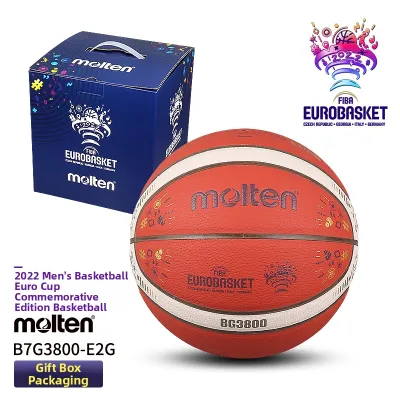
If your weekly routine involves transitioning between indoor sports halls and smooth outdoor surfaces, a mid-tier model like the BG3800 offers a practical compromise. These balls utilize a standard PU cover that is specifically formulated to offer a blend of soft touch and enhanced abrasion resistance.
The BG3800 is highly suitable for painted concrete courts, synthetic outdoor surfaces, and well-maintained community club courts. It provides a similar aesthetic and panel design to the premium indoor models but uses a tougher synthetic compound that can withstand the friction of outdoor play without wearing down immediately.
The trade-off for this versatility is a slight reduction in premium grip and moisture absorption. Because the PU cover is denser and less porous than premium composite leather, it does not wick away sweat as effectively. In highly humid conditions, the ball may feel slightly slicker than a BG4500, requiring players to wipe it down more frequently during play. It is also important to note that while the BG3800 is more durable than indoor-only models, it should still be kept away from highly abrasive, unpainted asphalt to maximize its lifespan.
Outdoor and Recreational Play (e.g., BG3100 and Below)
For players who primarily frequent rough neighborhood concrete courts, street courts, or uncovered school yards, durability is the absolute priority. In these high-wear environments, entry-level models like the BG3100 (which uses a rugged PU cover) or the BG2000 (which features a vulcanized rubber cover) are the most sensible choices.
These models are engineered specifically to resist the abrasive effects of concrete, asphalt, dust, and dirt. The covers are highly durable and do not absorb water, meaning they will not become waterlogged if you play on a damp court or if the ball rolls into a puddle after a sudden tropical shower. They are also incredibly easy to clean; a quick wipe with a damp cloth is usually all that is needed to remove outdoor grime.
The compromise for this extreme durability is a much firmer feel and reduced moisture absorption. These balls lack the cushioned carcass of premium indoor models, resulting in a stiffer impact on your hands and a slightly louder, more metallic bounce. The grip relies entirely on deep, pronounced mechanical pebbling rather than the natural tackiness of the material. However, for casual recreational play, street games, or training in high-wear environments, these models offer excellent longevity and value.
Key Decision Factors: Grip, Bounce, and Feel
When selecting or verifying a Molten basketball, there are several physical inspection criteria you can use to ensure the ball matches your personal preferences and playing style. First, examine the pebble depth and channel width. Molten’s signature 12-panel design features more seams than traditional 8-panel balls, which provides additional alignment points for your fingers. If you prefer a highly tactile grip for shooting, look for models with deeper channels and more pronounced pebbling. If you prefer a smooth, quick release off your fingertips, a model with flatter pebbling may feel more comfortable.
Second, perform a basic bounce test to verify the consistency of the internal bladder and air retention. Inflate the ball to the manufacturer’s recommended pressure, which is typically printed near the inflation valve. Hold the ball at eye level (approximately 1.8 meters) and drop it onto a flat, solid surface. A properly inflated, high-quality ball should rebound consistently to about waist height (approximately 1.2 to 1.4 meters) without drifting to the side. An erratic bounce or rapid air loss indicates a faulty bladder or poor nylon winding.
Finally, manage your expectations regarding the initial feel of a new ball. Many players are surprised to find that a brand-new PU or composite leather basketball feels somewhat slick or slippery straight out of the packaging. This is completely normal and is caused by a thin protective coating applied during manufacturing. This slickness will gradually disappear as you play, allowing the natural grip and tackiness of the synthetic leather to emerge over time.
How to Verify Authenticity and Specifications
Due to the high popularity of Molten basketballs in competitive leagues, counterfeit products are common on online marketplaces and unauthorized retail channels. Purchasing a counterfeit ball not only results in poor performance and rapid air loss but also deprives you of any warranty support.
To verify the authenticity of a Molten basketball, start by inspecting the printed specifications and logos on the cover. Genuine Molten balls feature crisp, perfectly aligned printing. Look for official certification marks, such as the “FIBA Approved” logo, which should be printed clearly with precise fonts and spacing. The model number (such as BG4500 or BG3800) must match the physical material of the ball; for example, a genuine BG4500 will always have a premium composite leather texture, never a cheap rubber feel.
Next, examine the physical construction of the ball. Genuine models feature perfectly flush air valves, consistent seam gluing, and uniform panel alignment. Many official distributors include holographic security stickers, unique serial numbers, or barcode verification systems on the packaging.
To guarantee authenticity, always purchase your basketball from authorized sporting goods retailers, reputable local department stores, or the official brand stores on major ecommerce platforms. Avoid purchasing from unknown third-party sellers offering prices that are significantly lower than the standard retail rate, as these are highly likely to be counterfeit.
Final Selection Framework: Which Model Should You Buy?
To finalize your decision, use the following conditional framework to map your playing environment and preferences to the correct Molten model tier:
Choose the BG4500 or above if you play exclusively on indoor wooden or high-grade synthetic courts, participate in organized leagues, and prioritize maximum grip, moisture absorption, and a soft, professional feel. This is an investment in performance that must be protected by keeping the ball strictly indoors.
Choose the BG3800 if you split your time between indoor sports halls and smooth, painted outdoor community courts, and you need a single, versatile ball that balances tactile feedback with moderate abrasion resistance. This model offers the best middle ground for the multi-court player.
Choose the BG3100 or BG2000 if you play primarily on rough, unpainted concrete or asphalt outdoor courts, need a highly durable ball that resists dust and moisture, or want a low-maintenance option for casual recreational play.
Verify first if you have specific grip preferences or smaller hands. The 12-panel design of Molten balls offers more seam contact points, which many players find helpful for finger placement, but it is always highly recommended to handle the ball in-store to verify the feel and size before making your final purchase.
Ultimately, matching the ball to your primary court surface is the most critical decision. A premium indoor ball will fail quickly outdoors, while an outdoor rubber ball will lack the refined feel required for competitive indoor play. By selecting the model that aligns with your actual playing conditions, you ensure a better playing experience and get the maximum value out of your basketball.
Frequently Asked Questions (FAQ)
How long does it take to break in a new Molten basketball?
The break-in period for a new Molten basketball depends on the cover material and how frequently you play. For premium composite leather models like the BG4500, it typically takes about two to four weeks of regular use (playing two to three times a week) for the factory protective coating to wear off completely. During this time, the natural oils from your hands and the friction from clean court surfaces will gradually soften the synthetic leather and enhance its natural tackiness. To accelerate this process safely, simply wipe the ball down with a slightly damp microfiber cloth after each session to remove dust and sweat, and avoid using any harsh chemical cleaners or leather conditioners, which can permanently damage the synthetic cover.
Can I use an indoor Molten basketball on outdoor concrete courts?
While you can physically bounce an indoor Molten basketball on an outdoor concrete court, doing so is highly discouraged and will rapidly ruin the ball. Outdoor surfaces like concrete and asphalt act like sandpaper on the soft, porous composite leather covers of indoor models like the BG4500. Within just a few outdoor sessions, the fine pebble texture will be ground flat, the seams will begin to fray and peel, and the ball’s ability to absorb moisture will be compromised by outdoor dirt and dust. To protect your investment, reserve premium composite leather models strictly for indoor wooden or synthetic courts, and use a dedicated outdoor PU or rubber model for concrete surfaces.
Community discussion
Share your experience or ask a question. Comments are reviewed before publication.