
Selecting a football requires balancing performance, durability, and cost. Molten, a brand highly regarded for its precision engineering and official tournament partnerships, offers a diverse lineup of footballs designed for different skill levels, playing frequencies, and pitch surfaces. Choosing the incorrect model can lead to rapid wear on abrasive courts or a frustrating lack of control during competitive matches.
To find the ideal ball, you must evaluate where you play, how often you train, and your current skill level. In tropical climates like Singapore, where sudden heavy downpours and high humidity are common, construction details such as water resistance and bladder air retention become critical factors. This diagnostic guide breaks down Molten’s product tiers to help you make an informed purchase.
Quick Diagnostic: Match Your Skill Level to the Right Ball Type
Identifying your primary playing environment and frequency is the fastest way to narrow down your options. Molten categorizes its footballs into distinct tiers, each optimized for specific performance standards and price brackets.
Products mentioned in this guide
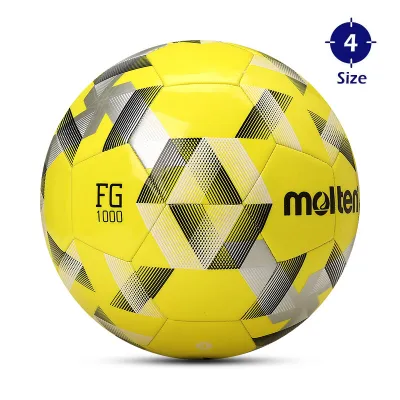
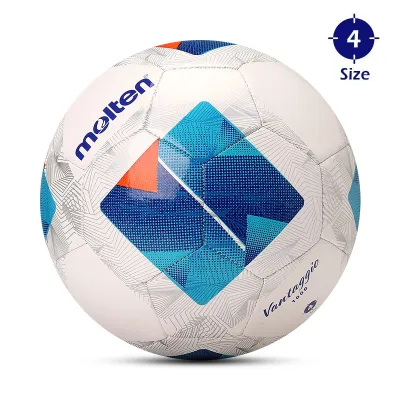
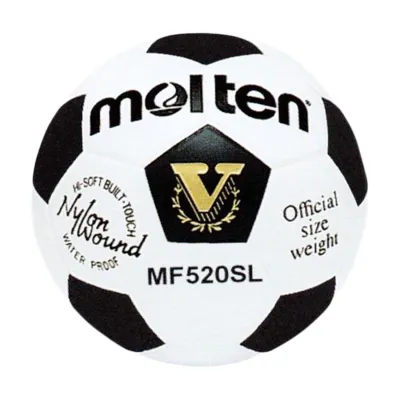
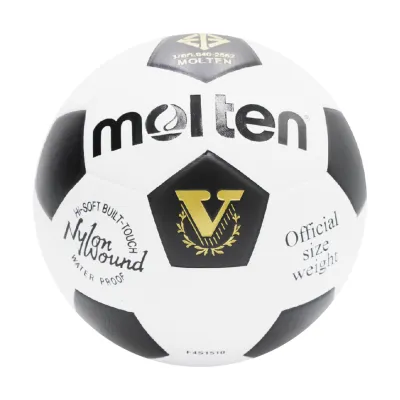
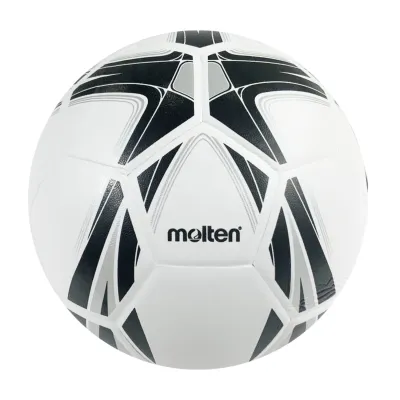
Prices are valid at publication and may change. Please refer to the product page for the latest price.
Below is a quick reference table to match your playing profile with the appropriate Molten football category:
| Player Profile | Primary Pitch Surface | Key Requirements | Recommended Molten Tier | Price Band (SGD) |
|---|---|---|---|---|
| Competitive / Advanced | Natural Grass, High-Quality Turf | Premium touch, aerodynamic stability, FIFA certifications | Match Series | S$100 – S$200+ |
| Intermediate / Regular Trainer | Artificial Turf, Hybrid Pitches | High durability, consistent bounce, shape retention | Training Series | S$30 – S$80 |
| Beginner / Casual / Street | Concrete, Hard Courts, Futsal | Abrasion resistance, low bounce (futsal), affordability | Recreational & Specialty | Under S$30 |
If you play multiple times a week in structured leagues, investing in a high-tier ball is essential for skill consistency. Conversely, casual weekend kickabouts or street games on hard surfaces require a construction focused on external durability rather than delicate touch.
Assess Your Playing Style, Frequency, and Pitch Conditions
Before purchasing a Molten football, conduct a quick self-diagnosis of your playing habits. The surface you play on is the single most influential factor in determining how long your football will last. Natural grass pitches offer a forgiving, low-friction surface that preserves the outer cover of premium balls. However, many public and school pitches utilize artificial turf or concrete hard courts, which act like sandpaper on high-end polyurethane covers.

Ask yourself the following questions to clarify your needs:
- How many times a week do you play? Daily or high-frequency training demands a reinforced hybrid or hand-stitched construction.
- What is the typical surface? If you play on concrete void decks or public hard courts, a premium match ball will scuff and peel within a few sessions.
- What are the physical demands of your sessions? High-impact shooting drills require robust bladder reinforcement, whereas tactical passing drills benefit from a softer, more responsive outer cover.
Over-buying is a common purchasing mistake. Many players buy a top-of-the-line match ball assuming it is the best option, only to ruin its delicate outer skin on an abrasive artificial turf pitch. Matching the ball’s construction to your actual playing conditions ensures both optimal performance and value for your money.
Breakdown of Molten Football Categories by Player Profile
Molten designs its footballs with specific engineering methods tailored to different user expectations. Understanding the structural differences between these categories helps you choose a ball that aligns with your developmental goals and budget.
Match Balls: For Competitive Play and Advanced Skills
Molten’s premium match balls are engineered for advanced players, official league matches, and serious amateurs who demand elite performance. These balls typically feature Molten’s proprietary ACENTEC (Accuracy Enhancing Technology) structure. This cross-linking lamination process creates a seamless surface with virtually zero water absorption, ensuring the ball maintains its weight and flight trajectory even during heavy tropical rain.
The outer cover of a match ball is made of premium, high-density polyurethane (PU), which provides an exceptionally soft touch and responsive feel off the boot. This material allows players to execute precise spins, controlled passes, and high-velocity shots with predictable accuracy. When shopping, look for the official FIFA Quality Pro or FIFA Quality certification marks stamped on the ball, which verify that the model has passed rigorous testing for weight, circumference, sphericity, and water absorption.
However, these high-performance characteristics come with specific limitations. The soft PU cover is highly susceptible to scuffing and tearing on abrasive surfaces. For this reason, premium match balls should be reserved for natural grass pitches or high-quality, non-abrasive artificial turf, and are best kept for match days rather than daily, high-impact training drills.
Training Balls: For Regular Drills and Durability
For players, school teams, and local clubs who train multiple times a week, Molten’s training series offers the ideal balance of performance and longevity. These balls are constructed to withstand the repetitive impact of daily drills, shooting practice, and defensive clearances without losing their structural integrity.
Molten training balls often utilize a hybrid construction method that combines machine stitching with heat-activated adhesive bonding. This hybrid technique reinforces the seams against tearing while minimizing water intake on wet pitches. The outer cover is typically made of a slightly thicker, more durable PU or thermoplastic polyurethane (TPU). This material provides a highly consistent bounce and a reliable touch, making it excellent for developing fundamental ball-control skills.
Because they are engineered for durability, training balls are highly cost-effective. They perform reliably across various surfaces, including mixed artificial turf and grass pitches. If you need a dependable workhorse ball that can survive rigorous weekly training sessions throughout the season, this category is your most practical choice.
Recreational and Specialty Balls: For Casual Play and Hard Courts
Recreational and specialty balls are designed for beginners, casual weekend players, and specific non-grass environments. This category includes Molten’s entry-level models as well as specialized variants like futsal balls. For casual kickabouts on concrete courts or void decks, standard PU balls will wear out rapidly. Instead, recreational models often feature reinforced polyvinyl chloride (PVC) or rubberized covers designed specifically to resist high-friction abrasion.
Futsal models represent a highly popular specialty category. Because futsal is played on hard indoor wooden floors or outdoor acrylic courts, these balls are smaller (typically Size 4) and feature a specialized low-bounce butyl bladder filled with synthetic fibers. This dampens the rebound, keeping the ball low to the ground to facilitate the rapid, short-passing style characteristic of futsal.
While these balls are highly durable and budget-friendly, they do not offer the soft touch or aerodynamic precision of match-grade balls. They are, however, the absolute best option for unstructured play, street soccer, and court-based games where surface abrasion is the primary threat to equipment life.
Essential Specifications to Verify Before Purchasing
To ensure you buy the correct model, always verify the technical specifications on the product label, packaging, or online listing. Pay close attention to the following three dimensions before finalizing your purchase:
Size Mapping
- Size 3: Designed for young children (under 8 years old). It is lightweight and helps beginners develop basic motor skills without straining their joints.
- Size 4: Standard for youth players (ages 8 to 12) and the official size for adult futsal.
- Size 5: The standard size for players aged 12 and older, used in all official 11-a-side matches. Always verify league rules, as some youth development leagues have specific size transitions.
Cover Material
- Polyurethane (PU): Offers the best elasticity, soft touch, and aerodynamic performance. Found on match and high-end training balls.
- Thermoplastic Polyurethane (TPU): A mid-range material offering excellent abrasion resistance and moderate softness, ideal for training balls.
- Polyvinyl Chloride (PVC): Highly durable, hard-wearing, and water-resistant. It is budget-friendly but has a stiffer feel, making it suitable mainly for recreational or hard-court use.
Bladder Type
- Butyl Bladders: Known for exceptional air retention. A butyl bladder can hold air for weeks, minimizing the need for constant pumping. It is slightly heavier and stiffer, which is common in training and recreational balls.
- Latex Bladders: Preferred for high-end match balls because of their superior responsiveness, elasticity, and soft feel. However, latex is naturally micro-porous and slowly leaks air, requiring you to inflate the ball before every session.
Low-Risk Maintenance to Protect Your Investment
Proper maintenance extends the lifespan of your Molten football, preserving its aerodynamic shape and surface grip. Implementing a simple post-game routine ensures your ball remains in peak playing condition for multiple seasons.
First, always clean the ball after play. Use a soft, damp cloth to wipe away dirt, mud, and abrasive artificial turf rubber crumbs. Avoid using harsh chemical detergents, solvents, or stiff wire brushes, as these can strip the protective outer coating and damage the seam adhesives.
Second, store the ball correctly. Keep it in a cool, dry indoor environment away from direct sunlight. In hot, humid climates, leaving a football in a car trunk or on an outdoor balcony can cause the air inside the bladder to expand, warping the ball’s shape or weakening the outer panels.
Third, practice proper inflation techniques. Always use a reliable pressure gauge to inflate the ball to the manufacturer’s recommended PSI, which is typically printed directly around the valve. Before inserting the inflation needle, moisten it with a drop of glycerin or soapy water. This lubricates the valve and prevents the needle from tearing the internal rubber seal, which is a common cause of slow air leaks. Finally, never sit or stand on the football, as this uneven pressure permanently deforms the internal carcass winding.
Frequently Asked Questions (FAQ)
What size Molten football should I buy for my child?
For children under 8 years old, select a Size 3 ball. For youth players aged 8 to 12, a Size 4 ball is the standard. Players aged 12 and older should use a standard Size 5 ball. We highly recommend double-checking these requirements with your child’s local youth league or school coach, as specific development programs may adjust these age brackets.
Can I use a premium Molten match ball on artificial turf?
While you can physically use a premium match ball on artificial turf, the abrasive nature of synthetic grass and the friction from rubber crumb infill will rapidly scuff and degrade the soft PU cover. To protect your investment, we recommend reserving premium match balls for natural grass pitches or official games, and using a durable Molten training ball for regular practice on artificial turf.
How do I know if my Molten football needs replacing?
Your football needs replacing if it exhibits clear physical signs of structural failure. Check for an inability to hold air despite a properly lubricated and seated valve (indicating a ruptured internal bladder). You should also replace the ball if you observe visible panel separation, peeling outer skin, deep surface cracks, or if the ball loses its spherical shape and develops a noticeable wobble when rolled or kicked.
Community discussion
Share your experience or ask a question. Comments are reviewed before publication.