
Quick Answer: How to Match Your Molten Ball to the Court
Selecting the right Molten basketball size 5 depends entirely on where you plan to play. The court surface dictates the material properties required to maintain grip, structural integrity, and consistent bounce over time. Choosing a model designed specifically for your primary playing environment ensures safety, optimal performance, and longevity.
Choose a composite or synthetic leather Molten model if you primarily play on indoor wooden courts. These models prioritize high friction, exceptional moisture absorption, and a premium tactile feel. They perform exceptionally well on clean, polished indoor surfaces where sweat and dust can otherwise cause slippage.
Choose a rubber Molten model if your games take place on outdoor concrete or asphalt courts. These balls are engineered for high abrasion resistance, weather tolerance, and cost-effectiveness. They feature deep, dust-displacing channels that help maintain grip even on dusty outdoor surfaces.
Products mentioned in this guide
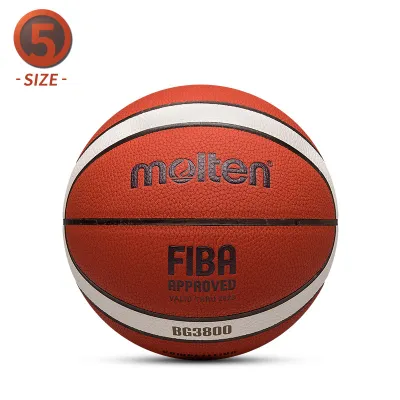
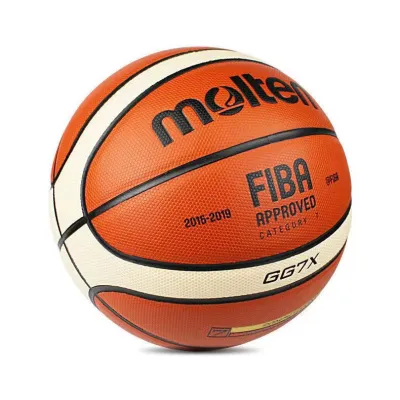
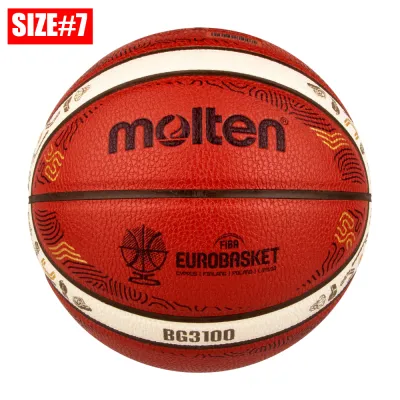
Prices are valid at publication and may change. Please refer to the product page for the latest price.
Using an indoor composite ball on outdoor asphalt will rapidly destroy its soft pebbled surface, peeling the panels and ruining the grip within a few sessions. Conversely, using an outdoor rubber ball indoors often results in a slippery, low-traction experience on polished wood, as rubber cannot absorb the fine dust and moisture present on indoor courts.
Why Court Surface Dictates Your Basketball Material Choice
The physical interaction between a basketball’s outer cover and the court surface determines how the ball handles, bounces, and wears. Indoor and outdoor courts present completely different mechanical challenges. Understanding these differences helps prevent premature gear failure and ensures a safer playing experience.

Indoor wooden courts are highly polished and finished with protective coatings. While these surfaces offer excellent shock absorption for players, they require a ball with a high coefficient of friction. As players sweat, moisture transfers to the ball. Indoor composite leather covers feature microscopic pores that actively absorb moisture, keeping the surface tacky and preventing turnovers caused by a slippery ball. However, if this soft, porous material is subjected to rough concrete, the abrasive surface acts like sandpaper, grinding down the delicate pebbles and exposing the underlying carcass.
Outdoor courts, typically constructed from concrete or asphalt, present a highly abrasive environment. These surfaces are exposed to weathering, grit, dust, and temperature fluctuations. Outdoor balls require a non-porous, highly resilient cover material like vulcanized rubber. Rubber does not absorb water or dirt; instead, it resists punctures and scrapes. To combat the dust that naturally settles on outdoor courts, outdoor basketballs feature wider and deeper channels. These channels channel dust and fine debris away from the contact points, allowing the player’s fingers to find traction directly on the rubber pebbles.
Many manufacturers market certain models as “Indoor/Outdoor” hybrid balls. While these hybrid options offer a compromise, they come with inherent trade-offs. Hybrid balls are typically made from a tougher, utility-grade synthetic leather designed to resist abrasion better than premium indoor composite, while offering a softer feel than pure rubber. However, they will still wear out significantly faster outdoors than a dedicated rubber ball, and they lack the ultra-soft, high-grip feel of a dedicated indoor composite ball. When evaluating a hybrid ball, always check the manufacturer’s specific surface recommendations rather than relying solely on promotional labels.
In tropical environments like Singapore, high humidity and frequent rainfall add another layer of complexity. High humidity levels mean indoor courts can quickly become slick from airborne moisture and sweat. Outdoors, sudden downpours leave courts damp long after the rain stops. A non-porous rubber ball is highly practical for outdoor play in these conditions because it can be easily wiped dry, whereas a composite ball exposed to excessive moisture can waterlog, causing the adhesive layers to fail and the ball to lose its shape.
Composite vs Rubber: Comparing Molten Size 5 Material Categories
Molten offers its size 5 basketballs in two primary material categories: composite leather and rubber. While specific model numbers and series names may update over time, the underlying material properties remain the most reliable metric for making a purchasing decision. Understanding these categories helps you align your choice with your playing frequency, budget, and court type.
Composite Leather and Synthetic Models
Molten’s composite leather series, often identified by a “BG” prefix in their modern lineup, are designed primarily for indoor use. These balls utilize a synthetic polyurethane (PU) or high-grade synthetic cover layered over a cushioned foam backing. This multi-layered construction gives the ball a soft, responsive feel upon catching, passing, and shooting, which is highly beneficial for youth players developing their hand strength and shooting mechanics.
- Moisture Management: The synthetic leather cover is engineered to mimic the porous nature of genuine leather. It absorbs perspiration from the player's hands during intense play, maintaining a consistent grip throughout the game.
- Consistent Bounce: When paired with a clean indoor wooden floor, composite models deliver a highly predictable, uniform bounce. The soft cover absorbs minor surface imperfections, ensuring that dribbling remains precise.
- Limitations: These models are highly vulnerable to outdoor abrasion. A single session on rough concrete can scuff the cover, permanently damaging the pebble pattern. They are also sensitive to extreme heat, which can dry out the synthetic materials and cause the panels to peel away from the inner bladder. Additionally, composite models sit at a higher price point, typically ranging from S$50 to over S$120 in the local market.
Decision Rule: Select a composite leather Molten model if your training and games are strictly confined to indoor sports halls, and you prioritize maximum grip, soft tactile feedback, and professional-grade performance.
Rubber Models
Molten’s rubber basketball models, often designated with “GR” or “BGR” prefixes, are built to withstand the harshest outdoor environments. Constructed from a durable, vulcanized rubber compound, these balls are molded as a single continuous outer shell, making them incredibly tough and resistant to structural damage.
- Extreme Durability: The heavy-duty rubber cover resists cuts, scrapes, and punctures from rough concrete, asphalt, and outdoor metal chain nets. It maintains its shape and pebble texture even after months of daily outdoor use.
- Dust and Dirt Displacement: Rubber models feature deep, pronounced channels. On dusty outdoor community courts, these channels allow dirt to settle away from the raised pebbles, ensuring that your fingers still make clean contact with the ball's surface.
- Affordability: Rubber balls are highly cost-effective, typically priced under S$30. This makes them an excellent option for high-frequency outdoor practice, schools, and recreational play where gear is subjected to heavy wear and tear.
- Limitations: The vulcanized rubber cover feels significantly harder than composite leather, which can cause hand fatigue during long training sessions. It provides less tactile feedback during shooting, and the surface can become highly slippery when wet or when used on polished indoor courts, as the non-porous rubber cannot absorb sweat.
Decision Rule: Choose a rubber Molten model if you primarily play on concrete or asphalt courts, require a highly durable ball for outdoor practice, or are purchasing gear on a limited budget.
Essential Specifications and Labels to Verify Before Buying
Before finalizing your purchase, it is crucial to verify the technical specifications of the basketball to ensure it matches your intended use, age group requirements, and quality expectations. Relying on visual appearance alone can lead to purchasing an incompatible model.
First, check the explicit surface recommendation labels. Manufacturers print these specifications on the retail packaging, on the product tag, or directly on the ball near the inflation valve. Look for clear designations such as “Indoor Use Only,” “Outdoor,” or “Indoor/Outdoor.” If a listing or package does not explicitly state the recommended surface, examine the material composition: polyurethane (PU) indicates an indoor-focused composite, while vulcanized rubber indicates an outdoor-ready model.
Second, verify the size and weight specifications. A size 5 basketball is the standard size designated for youth players, typically boys and girls aged 9 to 11 years old. To ensure the ball complies with youth league standards, verify the following physical dimensions on the manufacturer’s specification tag:
- Circumference: The ball must measure between 69 and 71 centimeters (approximately 27.1 to 27.9 inches).
- Weight: The official weight range for a size 5 basketball is 470 to 500 grams.
Third, look for official certification marks. High-quality Molten models often feature a “FIBA Approved” or “FIBA Official” stamp. This certification indicates that the model has undergone rigorous laboratory testing to meet international standards for sphericity, bounce consistency, weight tolerances, and pressure retention. While a FIBA certification guarantees excellent performance, remember that it does not alter the physical limits of the material; a FIBA-approved indoor composite ball will still degrade rapidly if used outdoors.
Finally, inspect the valve and bladder specifications. Look for models featuring a butyl bladder rather than a latex bladder. Butyl bladders offer superior air retention because the material is less porous, meaning you will not have to inflate the ball as frequently. This is particularly important for outdoor balls, which are subjected to constant temperature changes that accelerate air loss. Additionally, high-quality models feature nylon or polyester windings wrapped around the bladder, which helps the ball retain its perfect spherical shape under high-impact play.
Maintenance Rules to Extend Your Basketball's Lifespan
Proper maintenance directly impacts how long your basketball retains its grip, shape, and bounce consistency. Regardless of whether you choose a premium composite model or a durable rubber model, following a disciplined care routine will protect your investment.
Cleaning Protocols
Keeping the cover clean prevents dirt and oils from degrading the material properties over time. The cleaning method must match the material to avoid damage:
- Composite Leather: After every indoor session, wipe the ball down with a clean, microfiber cloth slightly dampened with lukewarm water. This removes sweat, skin oils, and fine court dust. Never submerge a composite ball in water, and do not use dish soap, alcohol, or harsh chemical detergents, as these substances strip the synthetic leather of its natural tackiness and degrade the polyurethane layer.
- Rubber Balls: Outdoor rubber balls accumulate heavy concrete dust and grime. Wash the ball using mild soap, lukewarm water, and a soft-bristled brush to gently scrub the dirt out of the deep channels. Rinse the ball thoroughly with clean water, and wipe it down with a dry towel. Allow it to air dry completely in a shaded, well-ventilated indoor space.
Storage Requirements
Environmental factors can severely damage a basketball’s internal and external structure. Always store your basketball indoors in a climate-controlled room. Avoid exposing the ball to direct sunlight, extreme heat, or high humidity when not in use.
Never leave your basketball inside a car trunk or on an outdoor balcony. In hot climates, temperatures inside a parked car can easily exceed 50 degrees Celsius. This extreme heat causes the air inside the bladder to expand rapidly, stretching the nylon windings and permanently warping the ball’s shape. It also dries out the adhesives holding the composite panels together, leading to peeling and bubbling.
Inflation and Pressure Management
Maintaining the correct inflation pressure is vital for consistent bounce and to prevent structural damage. Always use a dedicated hand pump and a reliable pressure gauge to check the inflation level before play:
- Check the Valve: Look at the inflation valve on the ball; the manufacturer's recommended inflation pressure (typically measured in psi or bar) is printed directly around the valve opening.
- Lubricate the Needle: Always moisten the inflation needle with a drop of glycerin or soapy water before inserting it into the valve. Inserting a dry needle can damage or displace the rubber valve core, leading to slow, permanent air leaks.
- Manage Temperature Shifts: Air pressure is highly sensitive to temperature. Moving a ball from a cool, air-conditioned indoor environment to a hot outdoor court causes the air inside to expand. Conversely, moving it back into a cold room will cause the pressure to drop. Check the pressure regularly to ensure the ball is neither under-inflated (which deadens the bounce) nor over-inflated (which stretches the bladder and alters the ball's shape).
Frequently Asked Questions (FAQ)
Can I use a Molten indoor basketball on an outdoor court occasionally?
It is highly discouraged to use a dedicated Molten indoor composite basketball on an outdoor court, even for a single casual session. The highly abrasive nature of concrete and asphalt will immediately begin to wear down the soft outer pebbles, permanently reducing the ball’s indoor grip. Additionally, outdoor dirt and sand will clog the microscopic pores of the composite leather, rendering the surface slick and slippery.
The only exception is if the outdoor court features a specialized, smooth synthetic modular tile surface or a highly polished, painted acrylic sports coating. However, even on these surfaces, the presence of outdoor dust and grit will accelerate the wear of the composite cover compared to clean indoor wooden floors. To protect your investment, keep your indoor composite ball strictly indoors and use a dedicated rubber ball for outdoor play.
What age group is a Size 5 Molten basketball designed for?
A size 5 basketball is the standard size designed for youth players, typically boys and girls between the ages of 9 and 11 years old. This size is widely used in primary school sports programs, youth development leagues, and community training clinics.
Using the correct ball size is critical for physical development and skill acquisition. A ball that is too large or heavy forces young players to alter their shooting mechanics, often leading to poor habits such as pushing the ball from the chest rather than releasing it over the head. To confirm if a size 5 ball is appropriate for a specific player, have them hold the ball with both hands; they should be able to comfortably control, pass, and shoot the ball without their hands straining to span the surface.
How do I know if my Molten basketball is authentic?
Due to the popularity of Molten basketballs in both competitive and recreational leagues, counterfeit balls are common in online marketplaces. To ensure you are purchasing an authentic product, buy exclusively from official brand stores, authorized sports retailers, or reputable online sports platforms.
When inspecting the ball, look for key physical markers of authenticity. Genuine Molten basketballs feature perfectly aligned, crisp, and clean printed graphics with no bleeding or smudging. The inflation valve should be perfectly centered and flush with the ball’s surface, and the pebble pattern should be uniform across all panels without any flat spots or overlapping seams. Additionally, authentic Molten balls are shipped with official retail packaging, tags, and, depending on the region, holographic security stickers or registered serial numbers that can be verified through the manufacturer’s official channels.
Community discussion
Share your experience or ask a question. Comments are reviewed before publication.