
Selecting the right knee support depends entirely on matching the brace’s structural design to the physical demands of your movement. The neenca knee brace lineup offers various configurations—ranging from highly flexible knit sleeves with gel inserts to rigid, double-hinged stabilizers. To choose the correct model, you must evaluate whether your primary activity involves the repetitive, high-frequency impact of running, the intense axial loading of weightlifting, or the low-intensity, prolonged wear of daily tasks.
How Different Activities Stress Your Knees
Every step you take, squat you perform, or hour you spend standing exerts a distinct mechanical force on your knee joint. Understanding these forces is essential before selecting a support level, as a brace must match the specific mechanical demands of your primary activity to be both effective and comfortable.
Running subjects the knee to repetitive, low-to-moderate impact forces. With each stride, the joint undergoes rapid flexion and extension while absorbing forces that can equal several times your body weight. This constant cycle primarily stresses the patellofemoral joint and the surrounding tendons, requiring stabilization rather than rigid immobilization.
Products mentioned in this guide
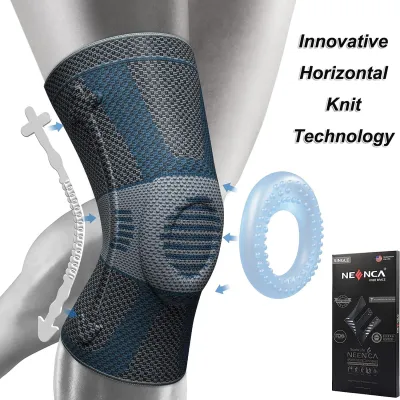
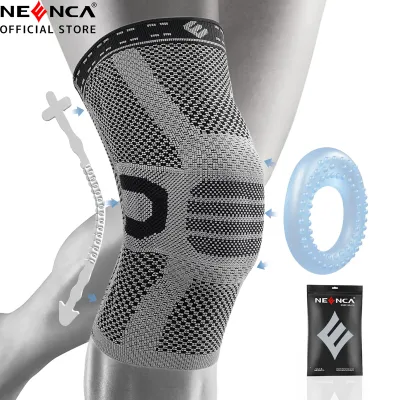
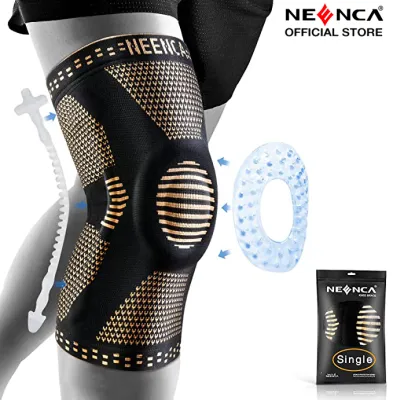
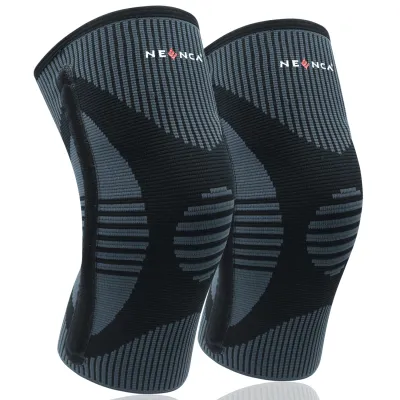
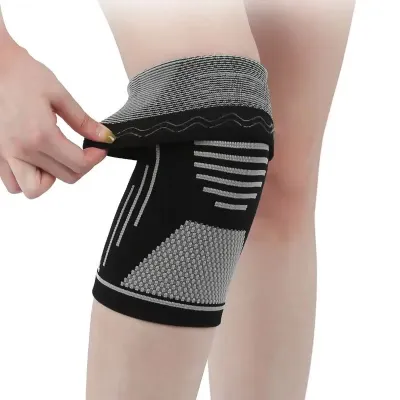
![NEENCA [2 Pack] Knee Brace Knee Compression Sleeve Support with Patella Gel Pad & Side Spring Stabilizers Top Grade Knee Protector for Running Meniscus Tear Arthritis Joint Pain Relief Sport](https://img.lazcdn.com/g/p/35990d04ad7d0b506e3b40e00e2edb4b.jpg_400x400q80.jpg_.webp)
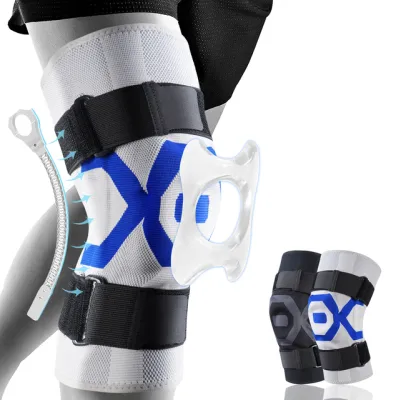
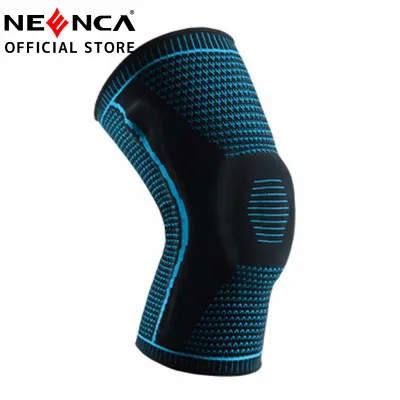
Prices are valid at publication and may change. Please refer to the product page for the latest price.
Weightlifting, by contrast, introduces massive axial loads down through the spine, hips, and knees. Exercises like squats, clean-and-jerks, and leg presses compress the joint space, demanding maximum lateral stability and joint warmth to maintain proper alignment under pressure.
Daily support involves low-level, prolonged strain. Sitting for long hours, walking short distances, or climbing stairs requires mild compression to promote circulation and prevent stiffness, without restricting movement or causing skin irritation over hours of continuous wear.
To address these varied demands, knee braces utilize three primary design variables:
- Compression Level: Mild compression supports blood flow and joint awareness, while high compression provides structural reinforcement.
- Stabilizer Types: These range from flexible side spring stabilizers that guide natural motion to rigid mechanical hinges that prevent lateral twisting.
- Material and Breathability: Lightweight, moisture-wicking knit fabrics suit hot climates and high-cardio activities, whereas thicker neoprene retains therapeutic heat for heavy lifts.
Neenca Knee Braces for Running: Prioritizing Flexibility and Shock Absorption
Runners require a knee support that moves dynamically with their natural gait while mitigating the repetitive shock of hard surfaces. A restrictive brace can alter your running mechanics, potentially causing secondary discomfort in your hips or ankles.

When evaluating a neenca knee brace for running, prioritize models that stabilize the patella (kneecap) without locking the joint. Look for the following design features on the product specifications:
- Anatomically Shaped Patella Gel Pads: A circular silicone or gel cushion surrounding the kneecap helps distribute impact forces and keeps the patella tracking correctly within its natural groove during rapid flexion.
- Flexible Side Spring Stabilizers: Dual metal spring stabilizers positioned on both sides of the knee offer lateral support. These springs bend easily as your knee flexes, preserving your natural stride while resisting side-to-side wobble.
- Breathable High-Elastic Knit Fabric: High-performance knit fabrics provide uniform compression and allow heat to escape, which is crucial for maintaining comfort during long runs.
Before purchasing, verify the manufacturer’s product specifications for weight and flexibility. The brace should feel light on the leg and should not slip down as you sweat. Many runners benefit from models featuring double-sided non-slip silicone strips along the upper cuff to prevent sliding during repetitive motion.
Safety Boundary for Runners: While a knee sleeve can assist with minor soreness or mild instability, it is not a cure for structural injuries. If you experience sharp, localized pain, swelling, or a feeling of the joint giving way while running, stop the activity immediately. Consult a healthcare professional or sports physiotherapist for a comprehensive evaluation.
Neenca Knee Braces for Weightlifting: Maximizing Compression and Joint Alignment
Lifting heavy weights demands a highly structured support system. Under heavy axial loads, the knee joint requires external reinforcement to prevent lateral deviation and to assist the muscles in maintaining optimal alignment.
For weightlifting, powerlifting, or high-intensity functional fitness, look for neenca knee models engineered for maximum joint compression and structural rigidity. Key features to identify include:
- Thicker Neoprene or High-Density Compression Knit: Heavy-duty fabrics provide intense, uniform pressure. This compression increases joint warmth, which helps keep the synovial fluid within the joint warm and viscous, improving overall joint lubrication.
- Robust Side Stabilizers or Hinged Inserts: For heavy squats and Olympic lifts, dual spring stabilizers or removable plastic/metal hinges offer crucial lateral resistance, preventing the knees from caving inward under load.
- Adjustable Strap Systems: Braces equipped with crisscross or hook-and-loop tension straps allow you to customize the compression level before a heavy set and loosen it afterward to restore full circulation.
Always verify the brace’s intended load capacity and structural limits on the product packaging or manufacturer’s official specifications. A standard running sleeve will not provide sufficient lateral resistance for near-maximal lifts.
Lifting Mechanics and Safety Limits: A knee brace is designed to support a healthy joint under load; it cannot compensate for poor lifting form, inadequate core bracing, or lack of mobility. Do not use a brace to force your way through pain. Additionally, pay close attention to physical feedback: if you experience numbness, tingling, or coldness in your calves or feet during your workout, the brace is too tight and must be loosened immediately to prevent nerve compression or restricted blood flow.
Neenca Knee Braces for Daily Use: Balancing Comfort and Mild Compression
Daily wear requires a completely different design philosophy than athletic training. If you need support for office work, light walking, or mild recovery at home, comfort and skin health are your primary concerns.
A daily-use brace must fit comfortably under clothing and remain unnoticeable throughout the day. Look for these specific design elements in an everyday lineup:
- Seamless or Flat-Seam Knitting: Traditional seams can rub against the skin, leading to chafing or blisters over hours of wear. Seamless construction minimizes friction points.
- Soft, Skin-Friendly Inner Linings: The interior fabric should feel soft against the skin, reducing the risk of contact dermatitis or irritation.
- Ultra-Thin, Low-Profile Profiles: A slim profile ensures the brace fits discreetly under trousers or skirts without bunching behind the knee when sitting.
- Lightweight, Flexible Stays: Instead of heavy metal springs, daily braces often use light, flexible plastic stays or rely solely on elastic compression to allow easy sitting, standing, and stair climbing.
In Singapore’s hot and humid climate, breathability is paramount for daily wear. Trapped sweat can quickly lead to skin irritation, fungal infections, or unpleasant odors. Prioritize open-knit fabrics or models with moisture-wicking properties.
To maintain the elasticity and hygiene of your daily brace, check the care label for specific washing instructions. Accumulations of sweat, body oils, and dead skin cells can degrade elastic fibers over time.
Daily Wear Safety Check: Unless explicitly directed by a qualified medical professional, do not wear a compression knee brace while sleeping. During sleep, your circulation naturally slows down, and a tight brace can restrict blood flow or compress nerves without your realization.
Cross-Activity Compatibility: Can One Neenca Brace Do It All?
Choosing between a specialized brace and a versatile, multi-purpose model depends on your activity level and training intensity. While a hybrid brace can bridge the gap for casual fitness enthusiasts, it involves distinct structural trade-offs.
A typical hybrid brace—such as a moderately compressed knit sleeve featuring flexible, non-removable side springs and a gel patella pad—offers a balanced middle ground. It provides more support than a basic daily sleeve but retains more flexibility than a heavy lifting brace.
Crossover use works exceptionally well in the following scenarios:
- Casual Gym Workouts and Daily Walking: If your gym routine consists of light cardio, bodyweight exercises, and moderate resistance machines, a hybrid knit sleeve is highly effective for both your workout and your daily errands.
- Light Jogging and Active Recovery: A flexible, spring-stabilized brace can transition smoothly from a short recovery run to a day of active walking.
However, crossover attempts fail—and can introduce physical risks—when activities demand extreme, opposing structural properties:
- Using a Thin Daily Sleeve for Heavy Squats: A lightweight, seamless sleeve lacks the structural rigidity and lateral support needed to protect the joint under heavy axial loads, offering false security.
- Using a Heavy Hinge Brace for Long-Distance Running: A rigid, heavily strapped lifting brace will restrict your natural gait cycle, cause severe friction and chafing, and place unnecessary strain on your hips as your body attempts to compensate for the locked knee joint.
To decide whether to invest in one versatile model or two specialized braces, evaluate your training intensity. If you run more than 15 kilometers a week or lift weights close to your body weight, your joints will benefit significantly from two separate, specialized braces designed for those exact mechanical demands. For light, recreational activities, a single high-quality hybrid sleeve is usually sufficient.
How to Verify Fit, Care, and Safety Limits
No matter how advanced a knee brace’s design is, it will not function correctly if it does not fit your body properly. An ill-fitting brace can slip down, restrict circulation, or fail to provide the intended support.
To find your correct size, use a flexible tape measure and follow these standard steps:
- Stand up straight with your leg slightly bent (approximately 30 degrees).
- Measure the circumference of your knee directly over the center of the patella (kneecap).
- Measure the circumference of your thigh (typically 10 to 15 centimeters above the center of the kneecap, depending on the specific manufacturer's sizing chart).
- Measure the circumference of your calf (typically 10 to 15 centimeters below the center of the kneecap).
Compare these measurements directly to the manufacturer’s sizing chart on the product packaging. If your measurements fall between two sizes, it is generally recommended to size up for comfort or size down for tighter, athletic compression.
Monitor your body closely for signs of an improper fit. If you experience numbness, tingling, a cold sensation in your lower leg, or if the brace leaves deep, painful indentations on your skin, the brace is too tight. Conversely, if the brace slips down during movement or bunches behind the knee, it is too loose and will not provide adequate stabilization.
Always remember that a knee brace is a supportive aid, not a medical cure. If you are managing chronic joint pain, recovering from a ligament tear, or experiencing worsening swelling and instability, stop using the brace and seek a professional medical evaluation from an orthopedic specialist or physiotherapist.
Frequently Asked Questions (FAQ)
How tight should my Neenca knee brace feel during exercise?
Your Neenca knee brace should feel snug, firm, and supportive, providing clear joint awareness without causing discomfort. It should never cause pain, numbness, tingling, or a cold sensation in your lower leg or foot. If you experience any of these symptoms, or if the brace leaves deep, painful indentations on your skin, loosen the adjustable straps immediately or switch to a larger size to ensure healthy blood circulation.
Can I wash my knee brace in a washing machine?
Always check the specific care label on your Neenca product before cleaning. To preserve the elasticity of the knit fabric, the integrity of the gel pads, and the shape of the metal side stabilizers, hand washing is highly recommended. Wash the brace in cold water using a mild detergent, rinse thoroughly, and allow it to air dry completely in a shaded area. Avoid machine washing, tumble drying, or exposing the brace to direct high heat, as this can warp the stabilizers and degrade the elastic fibers.
Community discussion
Share your experience or ask a question. Comments are reviewed before publication.