
Selecting the right outdoor basketball hoop in Singapore requires balancing your playing goals with the physical realities of your home. Unlike suburban environments with sprawling yards, Singapore’s unique housing landscape—comprising high-rise HDB flats, condominiums, and landed properties—demands careful consideration of space constraints, ground surfaces, and strict community regulations. Choosing the wrong hoop type can lead to safety hazards, property damage, or costly disputes with estate management.
By matching your available area, budget, and local housing rules to the correct equipment, you can establish a safe, durable, and highly functional playing space. Whether you need a temporary setup that can be tucked away or a permanent court, understanding the distinct advantages and limitations of portable, wall-mounted, and in-ground systems is the first step toward making a successful investment.
Assess Your Space, Surface, and Housing Rules
Before browsing online catalogs or visiting a sporting goods store, you must critically evaluate the physical space where you plan to install your outdoor basketball hoop. A standard half-court setup is ideal, but most residential properties in Singapore require creative space management. Start by measuring the exact dimensions of your available playing area. You need a flat, level surface that provides enough room for a player to shoot comfortably without stepping into drains or neighboring properties.
Products mentioned in this guide
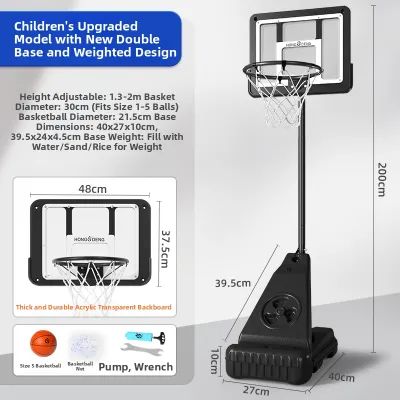
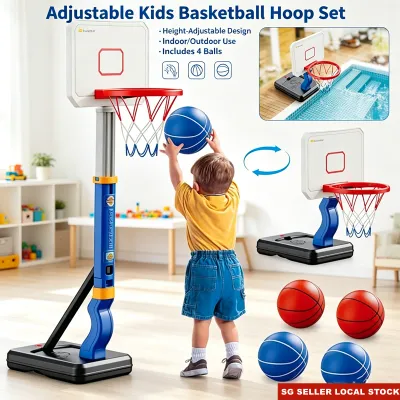
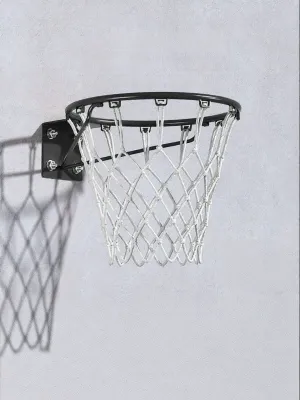
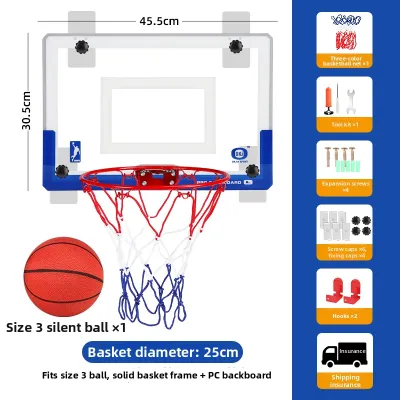
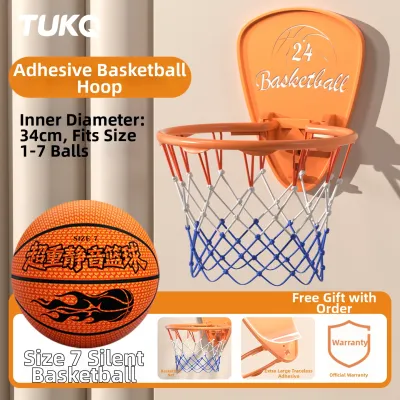
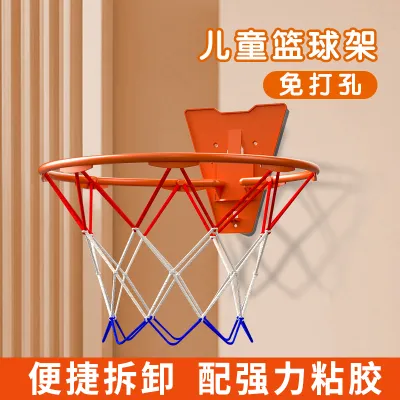
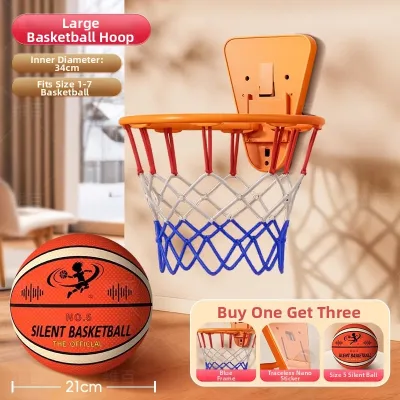
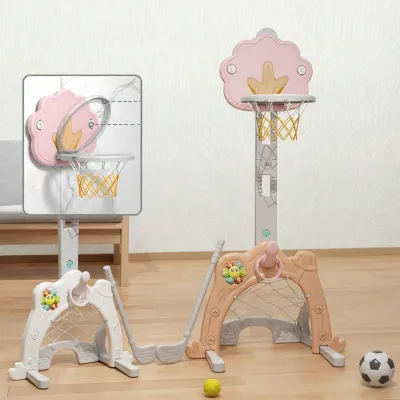
Prices are valid at publication and may change. Please refer to the product page for the latest price.
Equally important is vertical clearance. Basketball shots require a high, arched trajectory, meaning you must look upward for potential obstructions. Check for low-hanging tree branches, overhead utility lines, roof eaves, balconies, and outdoor lighting fixtures. A standard regulation rim stands at 3.05 meters (10 feet), but the top of the backboard can extend up to 3.9 meters (13 feet). To play safely and avoid damaging your property, ensure you have at least 4.5 to 5 meters of clear vertical space above the entire playing zone.
The ground surface itself plays a critical role in both safety and performance. Concrete and asphalt are the preferred choices because they offer a perfectly level, hard surface that ensures a true ball bounce and excellent foot traction. If your driveway is tiled with stone or interlocking pavers, be aware that the high impact of basketball play and the heavy weight of a portable hoop’s base can crack or displace the tiles over time. Playing on grass or soil is not recommended; not only does the soft ground deaden the ball’s bounce, but wet soil can also cause portable bases to sink unevenly, creating a severe tipping hazard.
In Singapore, housing types dictate what you can and cannot install due to strict community guidelines. If you live in an HDB flat, the void decks, linkways, and common corridors are public property managed by the local Town Council. Permanent installations are completely prohibited. Even setting up a temporary portable hoop in these shared spaces is highly restricted, as they can block emergency evacuation routes, create safety hazards for elderly residents, and generate excessive noise that disturbs neighbors.
For condominium residents, the rules are governed by the MCST bylaws. Most condominiums prohibit residents from drilling into exterior walls or placing large, unsightly items on balconies or private enclosed spaces (PES). Placing a portable hoop in shared driveways or common car parks is almost always forbidden due to liability and obstruction concerns. Always write to your condo’s managing agent to seek formal approval before purchasing any equipment.
Landed property owners enjoy the greatest freedom, but must still navigate local boundary laws. When installing a hoop in your front driveway or garden, ensure no part of the structure—including the backboard overhang—encroaches onto public pathways, drainage reserves, or your neighbor’s airspace. You must also consider the trajectory of missed shots; installing containment netting can prevent the ball from bouncing into the public road or damaging neighboring properties.
Match the Hoop Type to Your Environment
Once you understand your spatial limits and housing rules, you can choose between the three primary outdoor basketball hoop configurations: portable, wall-mounted, or in-ground. Each type offers distinct trade-offs in terms of stability, space consumption, and installation complexity.

Portable Hoops: Best for Flexibility and Paved Spaces
Portable hoops are freestanding units supported by a large plastic base filled with water or sand for stability. Their greatest advantage is flexibility. Because they require no permanent drilling or excavation, they are often the only viable option for renters or homeowners who want the option to move the hoop to different parts of the property. Many models feature built-in wheels, allowing you to roll the structure into a garage or covered patio when not in use or during extreme weather.
The primary trade-off of a portable system is its physical footprint. The plastic base is bulky, taking up to 1.5 square meters of valuable ground space directly beneath and behind the backboard. This base protrusion limits under-the-basket play and can be a tripping hazard. Furthermore, portable hoops are inherently less stable than permanent options. They are prone to shaking and vibrating when the ball hits the backboard, which can disrupt the rhythm of play and produce a less realistic rebound.
To ensure safety, proper ballast management is critical. While filling the base with water is convenient, filling it with dry play sand is highly recommended for Singapore’s climate. Sand is significantly denser than water, providing a heavier and more stable foundation that prevents the hoop from tipping over during sudden wind gusts or heavy tropical downpours. If you must use water, add a specialized base gel or a mild algaecide to prevent internal algae growth, which can degrade the plastic base over time and cause slow, undetected leaks.
Wall-Mounted Hoops: Best for Saving Ground Space
Wall-mounted hoops are bolted directly to an existing vertical structure, such as a brick wall, concrete pillar, or garage header. By eliminating the ground-level base entirely, this setup maximizes your usable playing area, making it the perfect solution for narrow driveways, compact backyards, or tight car porches. Wall-mounted systems offer excellent stability, comparable to indoor gym setups, resulting in minimal vibration and highly predictable rebounds.
However, wall mounting is a permanent modification that requires a highly durable structural surface. You cannot mount a basketball hoop to hollow brick, wood siding, or decorative cladding, as these materials will quickly crack under the dynamic forces generated by a basketball hitting the backboard. The installation process is also demanding, requiring precise leveling, heavy-duty masonry anchors, and specialized tools.
Before proceeding with a wall installation, verify the composition of your target wall. In Singapore, most landed home exterior walls are constructed from reinforced concrete, which provides an exceptionally secure anchor point. Use heavy-duty sleeve anchors or wedge bolts designed for concrete, and ensure you drill to the exact depth recommended by the manufacturer. It is also vital to check architectural drawings or use a high-quality wall scanner to ensure you do not drill into hidden electrical conduits, water pipes, or structural reinforcement bars.
In-Ground Hoops: Best for Permanent, Dedicated Courts
In-ground hoops are the ultimate choice for serious players, featuring a heavy-duty steel pole anchored directly into a deep concrete foundation. This setup offers the highest level of stability, structural integrity, and performance. Because the support pole is exceptionally rigid, in-ground hoops experience virtually no shaking or swaying, providing a professional-grade playing experience. They also have the smallest ground footprint of all three types, leaving the area under the rim completely clear for safe, aggressive play.
The main drawback of an in-ground system is the intense, irreversible installation process. It requires excavating a hole roughly 1 to 1.2 meters deep, pouring multiple bags of concrete, and allowing the foundation to cure completely before mounting the pole. This makes the hoop nearly impossible to relocate if you move houses or decide to redesign your garden. It is also the most expensive option due to the labor and materials required for the foundation.
When planning an in-ground installation, you must account for Singapore’s high water table and frequent heavy rains. Poorly drained soil can soften around the concrete base, leading to structural shifting or tilting over time. Ensure the concrete is mixed and poured correctly, and allow at least 72 hours of dry curing time before assembling the heavy backboard and rim. If your property has clay-heavy soil, you may need a wider or deeper concrete footing to guarantee long-term stability.
Budget Tiers and Installation Logistics
Understanding the financial commitment and labor required for each hoop type helps prevent unexpected expenses during your purchase. Outdoor basketball hoops are available across three main budget tiers in Singapore, each offering different material standards and durability levels.
Entry-level hoops, typically priced between S$200 and S$500, are almost exclusively portable systems with thin plastic or acrylic backboards and lightweight steel poles. These are excellent for young children and casual shooting but will wobble significantly and degrade faster under constant sun exposure. Mid-range hoops, ranging from S$500 to S$1,500, feature thicker acrylic or polycarbonate backboards, heavier steel poles, and basic breakaway rims that absorb impact. These offer a great balance of durability and performance for active families.
Premium hoops, costing from S$1,500 to over S$4,000, include high-end wall-mounted and in-ground systems. These feature thick tempered glass backboards—the same material used in professional arenas—heavy-duty steel support frames, and advanced breakaway rims designed to handle aggressive play. Tempered glass provides the truest rebound performance and does not scratch, cloud, or yellow over time.
Installation logistics vary widely. Portable hoops can generally be assembled as a DIY project over a weekend, though you will need at least two people to safely lift and secure the backboard to the pole. Wall-mounted and in-ground systems, however, usually require professional installation. Hiring a contractor in Singapore for core drilling into reinforced concrete or excavating a deep foundation can add S$300 to S$800 to your total project cost.
Do not forget to budget for hidden costs. You will need to purchase several bags of heavy play sand to fill a portable base, which can add S$50 to S$100. Additionally, high-quality pole padding, rust-prevention sprays, and replacement nets should be factored into your long-term ownership costs.
Weatherproofing and Maintenance for Singapore's Climate
Singapore’s tropical climate—characterized by high humidity, intense UV radiation, and heavy rainfall—is exceptionally harsh on outdoor sports equipment. Without regular maintenance, metal parts will rust, plastic bases will crack, and nets will rot.
Rust prevention is your top priority. Ensure you purchase a hoop with a powder-coated steel pole and weather-resistant hardware. Periodically inspect all joints, welded seams, and bolts for any signs of paint chipping or orange rust. If you detect any corrosion, immediately sand the area down to bare metal, wipe it clean, and apply a high-quality rust-inhibiting outdoor primer followed by a matching touch-up paint.
Your backboard material also dictates its cleaning requirements. Polycarbonate and acrylic backboards can easily scratch and develop a cloudy appearance due to UV exposure and mineral deposits from rainwater. Clean the backboard every few months using a soft microfiber cloth, mild dish soap, and warm water. Never use harsh chemical cleaners, ammonia-based window sprays, or abrasive scrubbing pads, as these will permanently scratch the surface and accelerate UV degradation.
For portable systems, inspect the plastic base regularly for hairline cracks or leaks. Ensure the ballast remains at the correct level, and top it up if you notice any shifting. The intense tropical sun will also degrade standard nylon nets over time, causing them to become brittle and tear. Plan to replace the net every one to two years with a heavy-duty, UV-resistant nylon or chain-link net. Finally, check the rim’s breakaway springs and lubricating joints annually to ensure they flex smoothly and do not seize up from moisture exposure.
Frequently Asked Questions (FAQ)
Can I install a basketball hoop in an HDB void deck or common area?
No, you cannot install a basketball hoop in any HDB void deck, common corridor, or shared estate area. These spaces are strictly managed by local Town Councils to maintain clear fire escape routes, ensure resident safety, and control noise levels. Setting up a portable hoop in these areas can lead to immediate removal or confiscation by estate officers, along with potential fines for obstruction. Residents wishing to play basketball should utilize the free public courts provided in almost every HDB neighborhood.
What size backboard is best for a small driveway?
For limited spaces like a narrow single-car driveway or a small patio, a backboard size of 44 to 48 inches is ideal. This size provides a compact footprint that fits neatly into tight spaces without overwhelming the area visually or physically. If you have a larger two-car driveway or a dedicated half-court space, upgrading to a 54-inch or 60-inch backboard is recommended, as it allows for realistic bank shots and wider shooting angles from the sides of the court.
Community discussion
Share your experience or ask a question. Comments are reviewed before publication.