
Selecting the right tennis ball is one of the most straightforward ways to improve your consistency, protect your joints, and get the most value out of your gear. For players looking at Prince tennis balls, the decision comes down to matching the ball’s core construction with your skill level, and pairing the outer felt with the court surface you play on most frequently.
In Singapore’s hot and highly humid climate, these choices become even more critical. High humidity rapidly alters the playability of pressurized balls, while the abrasive hard courts found in most public sports complexes and condominiums can quickly shred the wrong type of felt. By understanding how different Prince models are engineered, you can select a ball that performs predictably and lasts longer on the court.
Quick Diagnostic: Matching Tennis Balls to Your Game
To help you make an immediate decision at the pro shop or when browsing an online marketplace, use this quick diagnostic framework to identify the correct category of Prince tennis balls for your setup.
Products mentioned in this guide
![Prince NX Tour Pro Tennis Balls [ SG Local Seller ]](https://img.lazcdn.com/g/p/802bb1804c36195ab9e0de6555a2c772.png_400x400q80.png_.webp)
Prices are valid at publication and may change. Please refer to the product page for the latest price.
- For Beginners and High-Volume Practice: Choose pressureless tennis balls. These balls rely on a thick, elastic rubber core rather than compressed air, offering an exceptionally long lifespan and a highly consistent bounce that does not fade over time. They are ideal for ball machines, coaching drills, and players still developing their stroke mechanics.
- For Intermediate, Advanced, and Match Play: Choose pressurized tennis balls. These are filled with compressed gas to deliver a lively, responsive bounce, excellent speed, and superior spin control. They are the standard for competitive matches where feel and playability are the top priorities.
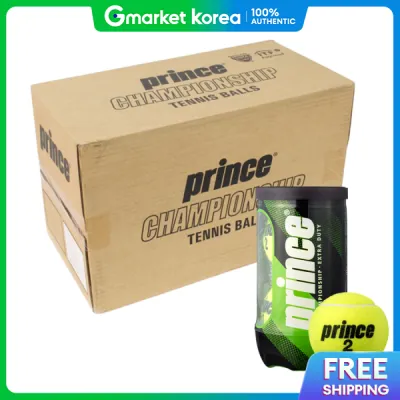
- For Hard Courts and Concrete Surfaces: Select Extra Duty felt. This variation features a thicker, more durable weave designed to withstand the high friction and abrasion of hard outdoor courts without wearing down prematurely.
- For Clay, Grass, and Indoor Courts: Select Regular Duty felt. This option utilizes a tighter, thinner weave that resists fluffing and prevents the ball from absorbing excess moisture or loose surface debris.
When examining Prince packaging, look closely at the label specifications. Pressurized options are typically sold in sealed metal or plastic cans to preserve their internal pressure, while pressureless models are often sold in loose mesh bags or cardboard boxes. The label will also explicitly state whether the balls feature “Extra Duty” or “Regular Duty” felt.
Step 1: Identify Your Skill Level and Ball Core Type
Your current playing level and training style should dictate whether you play with pressurized or pressureless tennis balls. Each core construction behaves differently on impact, affecting how much control you have over your shots and how quickly your arm tires during a long session.

Pressurized tennis balls are the industry standard for competitive play. Inside the ball, a pocket of compressed air or nitrogen pushes outward against the rubber shell, creating a highly responsive and lively bounce. When the ball contacts your racket strings, it compresses slightly and then springs back rapidly, transferring energy efficiently and allowing intermediate and advanced players to generate heavy topspin and pace. The trade-off is that pressurized balls begin losing their internal gas the moment the can is unsealed, gradually becoming “dead” or flat within a few weeks, even if they are not used.
Pressureless tennis balls, on the other hand, derive their bounce entirely from the structural elasticity of their heavy rubber core. Because they do not rely on internal gas pressure, they never go flat. In fact, as the outer felt wears down over time, pressureless balls actually become slightly lighter and can bounce marginally higher. For beginners, this consistency is incredibly valuable, as it ensures the ball behaves the same way during every practice session. They are also the practical choice for ball machines, where balls must endure hundreds of impacts without losing their bounce.
However, the heavier, stiffer feel of pressureless balls is an important consideration. Because the rubber shell is thicker, hitting a pressureless ball requires more physical effort and transmits more vibration up the racket frame. Players prone to tennis elbow or shoulder strain should monitor how their joints feel when using these balls. If you are a beginner focusing on short, controlled rallies, the durability of a pressureless ball is highly advantageous, but players engaging in fast-paced, full-swing rallies generally prefer the softer feel of pressurized options.
Singapore’s tropical climate adds another layer to this decision. High ambient temperatures and humidity accelerate the rate at which gas molecules permeate through the rubber membrane of pressurized balls. An opened can of pressurized balls that might last three to four weeks in a cooler, drier climate may lose its optimal bounce in half that time locally. If you only play occasionally, investing in pressureless balls can save you from constantly opening fresh cans of flat pressurized balls.
Step 2: Check Your Court Surface for the Right Felt
Once you have selected the appropriate core type, you must match the outer felt to the court surface. The felt cover is not just for visibility; it regulates the ball’s speed through the air and dictates how it grips both the court surface and your racket strings.
Extra Duty felt is engineered specifically for hard courts, which are the most common court type in Singapore’s public parks, schools, and residential estates. These acrylic-coated concrete or asphalt surfaces act like sandpaper on a tennis ball. Extra Duty felt is woven with a higher percentage of synthetic fibers mixed with wool, creating a thicker, looser nap. As the ball rubs against the rough court, these fibers absorb the friction, preventing the rubber core from being exposed. Using Extra Duty balls on hard courts ensures the felt wears down gradually and evenly.
Regular Duty felt is designed for softer, less abrasive surfaces such as clay, grass, or indoor carpet courts. This felt has a tighter, thinner weave with a higher wool content. Because these surfaces do not subject the ball to extreme friction, the felt does not need to be highly reinforced. If you were to use an Extra Duty ball on a clay court, the thick felt would quickly fluff up, trapping clay dust and moisture, which makes the ball heavy, slow, and difficult to hit over the net.
Using the incorrect felt type on a hard court leads to rapid degradation. If you play with Regular Duty balls on a hard court, the thin felt will wear away within a single match, leaving bald patches on the rubber. A bald tennis ball loses its aerodynamic drag, causing it to fly unpredictably through the air and slide off the court surface rather than bouncing cleanly. This makes it incredibly difficult to time your shots and can lead to erratic play.
Furthermore, the state of the felt directly impacts your racket’s grip on the ball. Fresh, intact felt allows the strings to grab the ball during impact, enabling you to generate spin. When the felt is worn flat or heavily fluffed, this grip is compromised, reducing your control over the ball’s trajectory. Matching the felt to your court surface is therefore essential for maintaining consistent playing conditions.
Step 3: Know When to Retire and Replace Your Balls
Playing with worn-out or dead tennis balls can hinder your skill development and increase the risk of injury. Recognizing the physical and visual signs of a degraded ball will help you maintain a high standard of play and protect your body.
Start with a visual inspection of the felt. A healthy tennis ball should have a uniform, slightly fuzzy cover. If you notice bald spots where the black rubber core is visible, or if the felt has become excessively frayed and loose, the ball’s aerodynamics are compromised. These balls will fly faster and lower than normal, disrupting your rhythm. Additionally, if the felt has absorbed significant moisture and dirt, it will become heavy and waterlogged, which can strain your wrist and elbow upon impact.
Next, perform a physical check to evaluate the ball’s structural integrity. For pressurized balls, the squeeze test is a quick way to gauge pressure loss. Hold the ball in one hand and compress it with your thumb. A fresh pressurized ball should feel firm and offer significant resistance. If you can easily squeeze the sides inward, the internal gas has escaped, and the ball is dead. You can also perform a bounce test by dropping the ball from shoulder height onto a hard floor; it should rebound to approximately chest height. If it bounces below your waist, it needs to be replaced.
For pressureless balls, the squeeze test is less effective because the thick rubber shell will always feel firm. Instead, rely on the bounce test and sound. As pressureless balls age, the rubber core can harden and lose its elasticity, resulting in a dull, metallic “clinking” sound upon impact rather than a clean pop. If the ball feels unusually hard on your racket or fails to reach a consistent height during a drop test, the core has fatigued, and the ball should be retired.
To manage your gear efficiently, establish a clear rotation system. Keep a dedicated set of fresh pressurized balls for competitive matches, and rotate older, slightly worn balls into your practice hopper for serving drills or casual hitting. Once balls are completely dead or bald, repurpose them. They can be used for low-intensity warm-ups, physical therapy exercises, or donated to local schools and pet owners, keeping them out of landfills while maximizing their utility.
Frequently Asked Questions (FAQ)
Can I use extra duty balls on clay or indoor courts?
While you can physically play with Extra Duty balls on clay or indoor courts, it is not recommended for optimal play. The thicker, looser weave of Extra Duty felt is designed to withstand abrasion, but on clay, it quickly absorbs moisture and picks up loose clay particles. This extra weight makes the ball heavy and sluggish, reducing bounce height and increasing the physical strain on your arm. On indoor carpet or hardwood courts, the excess fluffing can slow the game down significantly and leave behind fiber debris.
Do pressureless balls ever go flat?
Pressureless balls do not go flat in the traditional sense because they do not rely on compressed air for their bounce. However, they do not last forever. Over extended periods of play, the rubber core experiences material fatigue from repeated impacts, gradually losing its natural elasticity. When this happens, the ball will feel increasingly stiff, heavy, and dead on your racket, even if the outer felt still looks perfectly intact. Once you notice a drop in bounce height or a harsh feel on impact, the ball has reached the end of its useful life.
How should I store my tennis balls to maximize their lifespan?
To maximize the lifespan of your tennis balls, store them in a cool, dry place away from direct sunlight, moisture, and extreme heat. In tropical environments, leaving tennis balls in a hot car trunk or balcony can rapidly degrade the rubber core and weaken the adhesives holding the felt together. For pressurized balls, keep the cans sealed until the day you plan to play. Once opened, you can use a specialized pressure-saver storage tube, which seals the balls under pressure to help slow down the rate of gas leakage between your weekly sessions.
Community discussion
Share your experience or ask a question. Comments are reviewed before publication.