
To choose the right Puma soccer ball, you must match the ball’s construction—specifically its casing material, seam type, and bladder style—to your primary playing surface. Natural grass demands aerodynamic stability and water resistance, artificial turf requires high abrasion resistance, and indoor futsal courts require a specialized low-bounce, smaller ball. Selecting the wrong type can ruin a premium ball in a single session or compromise player safety.
How Playing Surfaces Dictate Soccer Ball Construction
Every time a soccer ball contacts the ground, its physical properties are tested by three primary environmental factors: friction, impact force, and moisture. Natural grass pitches offer natural cushioning but can introduce moisture that threatens to waterlog a ball. Conversely, artificial turf generates high friction and heat, which rapidly wears down external panels. Hard indoor courts provide zero shock absorption, transferring all impact force directly back into the ball and the player’s foot.
To navigate these environments, you must understand the key construction terms printed on Puma product labels:
Products mentioned in this guide
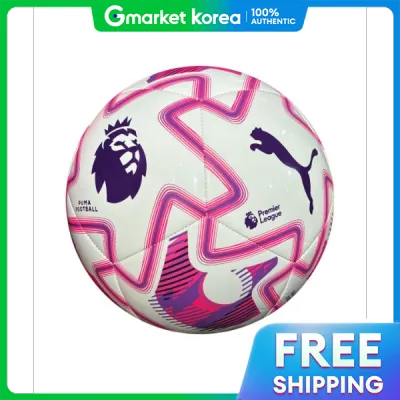
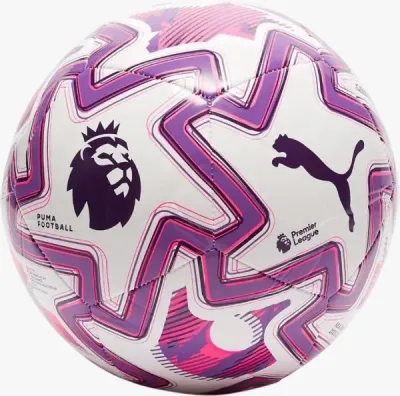
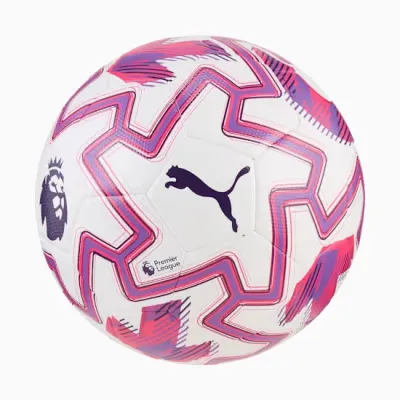
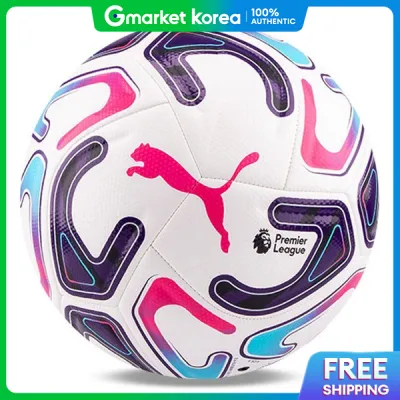
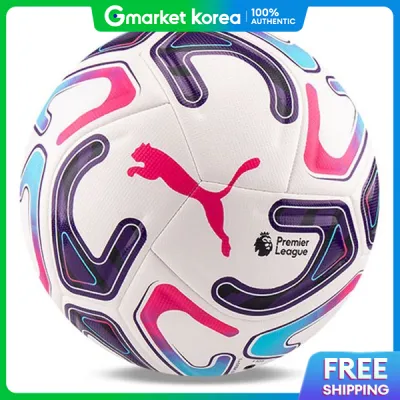
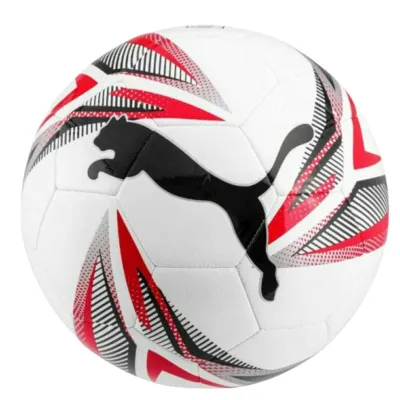
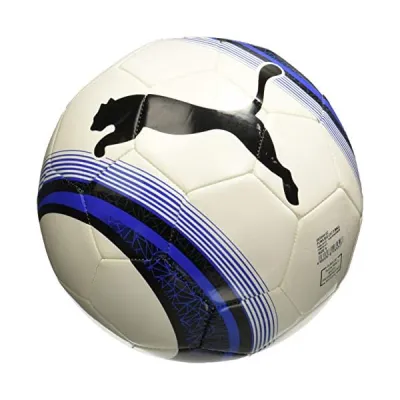
Prices are valid at publication and may change. Please refer to the product page for the latest price.
- Seam Construction: Puma balls generally feature three types of seams. Thermal bonding uses heat to fuse panels together, creating a seamless, perfectly spherical ball that blocks water absorption entirely. Hand-stitching offers deep, durable seams and a traditional feel but can absorb water if the casing is damaged. Machine-stitching is common in budget training balls, offering decent durability for casual play but shallower seams that are more prone to wear on abrasive surfaces.
- Casing Materials: The outer cover is usually made of Polyurethane (PU) or Polyvinyl Chloride (PVC). PU is soft, flexible, and responsive, offering a premium touch preferred for matches. PVC is harder, highly scratch-resistant, and incredibly durable, making it excellent for rugged training sessions, though it lacks a soft touch. Many modern Puma training balls use a hybrid Thermoplastic Polyurethane (TPU) casing to balance durability and feel.
- Bladder Types: The bladder holds the air inside the ball. Butyl bladders retain air exceptionally well, requiring minimal maintenance, which makes them ideal for daily training. Latex bladders are softer and offer superior bounce and flight characteristics, but they lose air slowly over time, requiring inflation before every match.
What to Look for in a Puma Ball for Natural Grass
Natural grass pitches are highly dynamic environments. Depending on the weather, a grass field can transition from hard and dry to soft, muddy, and waterlogged. To perform consistently on grass, a soccer ball must maintain a predictable flight path, deliver a true bounce, and possess excellent water repellency.

When browsing Puma’s lineup for natural grass, prioritize match-grade or premium training balls, such as those in the Puma Orbita series. Look for balls featuring thermal-bonded seams. Because there are no needle holes in a thermally bonded casing, water cannot penetrate the inner layers. This prevents the ball from absorbing water, which would otherwise make it heavy, sluggish, and potentially dangerous to head during a match.
Aerodynamic stability is another critical factor on open grass fields. Premium Puma balls designed for grass often feature textured outer casings. These micro-textured or dimpled PU surfaces disrupt the boundary layer of air around the ball as it flies, reducing drag and preventing unpredictable knuckling or drifting in the wind.
To guarantee that your ball meets the rigorous standards required for grass play, look for official certification marks on the casing. Marks like FIFA Quality or FIFA Quality Pro indicate that the ball has passed independent laboratory tests for weight, sphericity, water absorption, loss of pressure, and bounce consistency.
Selecting a Durable Puma Ball for Artificial Turf
Artificial turf—commonly referred to as 3G, 4G, or AstroTurf—presents a highly abrasive environment. The synthetic grass blades, combined with the black rubber infill granules used to cushion the pitch, act like sandpaper on a soccer ball’s outer casing. Additionally, because turf is laid over a compacted stone or concrete base, the surface is much harder than natural soil, causing standard balls to bounce faster and feel stiffer on impact.
For artificial turf, durability must be your primary selection criterion. You should look for Puma training or club-level balls engineered specifically to withstand high-friction environments. These balls typically feature robust, thick PU or TPU casings that resist scuffing and tearing when dragged across synthetic fibers.
Stitching style is also vital on turf. While thermal-bonded match balls can be used, the constant friction from rubber infill can wear down the bonded seams prematurely. Puma’s hybrid-constructed balls, which combine deep stitching with protective bonding, are highly recommended for turf. They protect the seams from direct contact with abrasive surfaces, ensuring the ball maintains its structural integrity over months of play.
Avoid using premium, soft-touch match balls on rough artificial turf. The delicate, textured outer layers of high-end match balls will quickly scuff and peel, ruining the aerodynamics you paid a premium for. Always check the manufacturer’s recommended surface guidelines on the product packaging to ensure the ball is rated for synthetic turf play.
Finding the Right Puma Futsal Ball for Indoor Courts
Indoor sports halls and dedicated futsal courts, whether made of polished wood, synthetic vinyl, or smooth concrete, require a completely different category of soccer ball. Attempting to play with a standard outdoor soccer ball on a hard indoor court is highly impractical and unsafe. The high bounce of an outdoor ball makes fast, floor-based passing nearly impossible and increases the risk of the ball ricocheting off hard surfaces and striking players at close range.
To play safely and effectively indoors, you must select a specialized Puma futsal ball. Futsal balls are engineered with a low-bounce bladder. Puma achieves this by filling the internal bladder with specialized foam or heavy synthetic fibers. This dampens the rebound, keeping the ball low to the ground and allowing for the rapid, intricate footwork that defines futsal.
Sizing is another non-negotiable difference. Official adult futsal is played with a Size 4 ball, whereas outdoor soccer uses a Size 5 ball. Despite being smaller, a futsal ball is designed to be relatively heavy, matching the weight feel of an outdoor ball to ensure stability on slick indoor floors.
The outer casing of a Puma futsal ball is also optimized for hard surfaces. Look for models featuring highly abrasion-resistant PU or synthetic leather covers. These materials are designed to withstand constant impact against hard floors, walls, and metal goals without scuffing or losing their shape.
Cross-Surface Compatibility: Can One Puma Ball Do It All?
If you regularly transition between different playing environments, you might wonder if a single Puma soccer ball can handle every surface. The practicality of a single-ball setup depends entirely on which surfaces you are combining.
If your play is strictly outdoors, transitioning between natural grass and artificial turf, a versatile mid-tier Puma training ball is a highly practical solution. A durable, hybrid-constructed training ball can withstand the abrasive nature of turf while still offering a respectable touch and reliable flight on natural grass. However, you must accept certain trade-offs: this versatile ball will not deliver the elite, water-resistant performance of a match ball on wet grass, nor will it last as long as a dedicated turf ball on synthetic pitches.
However, the boundary between outdoor soccer and indoor futsal is absolute. You cannot use an outdoor ball for futsal, as the excessive bounce and larger size violate the rules of the game and create safety hazards on hard courts. Conversely, a low-bounce futsal ball is entirely unsuitable for outdoor fields; its dampening bladder means it will feel heavy and lifeless on grass, making long passes and high crosses impossible.
For casual players who occasionally play on different outdoor pitches, a single durable Puma hybrid training ball offers excellent value. However, if you play competitively or participate in both outdoor leagues and indoor futsal, you should invest in separate, specialized balls. This approach ensures optimal performance, protects your safety, and extends the lifespan of both products.
Surface-Specific Care to Extend Your Ball's Lifespan
Proper maintenance is essential to preserve the structural integrity and playability of your Puma soccer ball. Because different surfaces expose the ball to different elements, your cleaning and storage routine should adapt accordingly.
After playing on natural grass, always wipe the ball down with a damp cloth to remove mud, grass stains, and moisture. Avoid using harsh chemical detergents, which can strip the protective coatings on the PU casing. Allow the ball to dry naturally in a cool, well-ventilated indoor space; never use artificial heat sources like hair dryers, which can warp the panels.
For artificial turf play, the main enemy is synthetic rubber infill. These small black pellets can wedge themselves into the seams of your ball. After every session, thoroughly brush off any rubber dust or pellets. The oils and chemicals present in synthetic turf infill can degrade the adhesives used in thermally bonded or hybrid seams if left in contact for extended periods.
Singapore’s tropical climate presents a significant environmental hazard: extreme heat. Never leave your Puma soccer ball inside a parked car or exposed to direct sunlight on a balcony. Temperatures inside a sealed vehicle under the tropical sun can quickly exceed 50°C. This intense heat causes the air inside the bladder to expand rapidly, stretching the casing, weakening the seam adhesives, and permanently warping the ball’s shape.
Finally, always practice safe inflation. Use a reliable pressure gauge and a clean, lubricated pump needle. Applying a drop of glycerin or valve oil to the needle before inserting it protects the rubber valve from tearing, which is the leading cause of slow air leaks. Always inflate the ball strictly within the PSI range printed around the valve area (typically 8 to 12 PSI for outdoor balls). Over-inflation stretches the outer casing and stresses the seams, while under-inflation ruins the ball’s flight dynamics and responsiveness.
Frequently Asked Questions (FAQ)
What size Puma soccer ball is standard for adult matches?
For standard adult matches played on natural grass or artificial turf, Size 5 is the official and universal standard, designed for players aged 12 and older. For adult futsal and indoor court games, Size 4 is the official standard. Futsal balls are specifically engineered to be smaller and heavier to facilitate close control on hard, fast surfaces.
How can I tell if my Puma ball is losing its shape or pressure?
To check for shape distortion, roll the ball slowly across a flat, smooth floor; if it wobbles, hops, or veers off course consistently, the internal bladder or panels have likely warped. To test for pressure retention, inflate the ball to its recommended PSI using a pressure gauge, then measure the pressure again after 24 to 48 hours. A minor drop is normal for latex bladders, but a significant loss of pressure indicates a slow puncture or a faulty valve, meaning the ball should be replaced.
Community discussion
Share your experience or ask a question. Comments are reviewed before publication.