
Selecting the ideal RCL shuttlecock requires matching the construction material, speed rating, and durability of the shuttle to your technical skill level and how often you step onto the court. Because specific model names and retail availability can shift across seasons, the most reliable selection method is to evaluate the technical specifications printed on the packaging tube. By understanding how these specifications translate to flight physics, durability, and cost-per-session, you can make an informed decision that enhances your badminton experience without overspending.
For casual players and beginners, prioritizing durability and cost-efficiency usually leads to nylon or entry-level duck feather options. Intermediate and advanced players, who require precise flight trajectories, crisp tactile feedback, and predictable deceleration, will find that mid-tier duck feather or premium goose feather models better support their technical development. Balancing these performance needs against Singapore’s warm, humid climate ensures that your chosen shuttlecock performs consistently from the first rally to the last.
Understanding RCL Shuttlecock Specifications and Labels
To select the right shuttlecock, you must first decode the information printed on the packaging tube. RCL categorizes its shuttlecocks primarily by raw material, speed rating, and quality grade. Understanding these three pillars allows you to filter out unsuitable options immediately before evaluating individual models.
Products mentioned in this guide
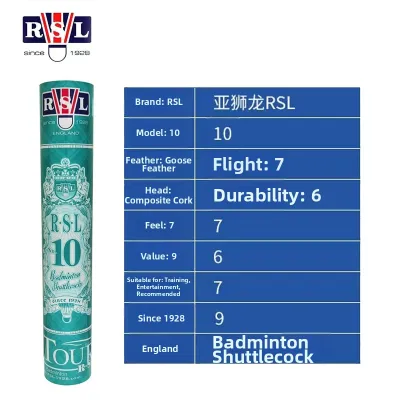
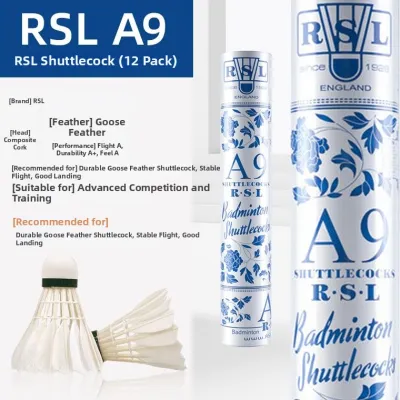
![[SG SELLER] EVAGOLD BADMINTON FEATHER SHUTTLECOCKS SHUTTLECOCK FOR BEGINNER](https://img.lazcdn.com/g/p/96915ea93a82ac9b9e06426cb14b0fc8.jpg_400x400q80.jpg_.webp)
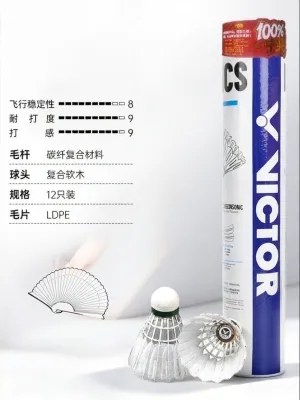
Prices are valid at publication and may change. Please refer to the product page for the latest price.
The raw material of the skirt determines both the flight profile and the lifespan of the shuttlecock. Nylon (synthetic) shuttlecocks offer exceptional durability, resisting feather breakage even during off-center hits, making them highly economical for recreational play. Duck feather shuttlecocks represent the intermediate tier, offering a natural flight path and crisp sound at a moderate price point, though they are more prone to wear than synthetic options. Goose feather shuttlecocks sit at the top tier, featuring thick, uniform feathers that provide the most stable flight, precise control, and predictable deceleration, though they carry a higher price tag and require clean, consistent striking to prevent premature damage.
Speed ratings are another critical specification indicated on the tube, typically represented by numbers ranging from 75 to 79, or sometimes categorized simply as slow, medium, or fast. These numbers correspond to the weight and aerodynamic drag of the shuttlecock, which dictate how far and fast it travels under specific temperature and altitude conditions. In warmer climates, air density is lower, meaning shuttlecocks fly faster and farther; conversely, cooler air increases resistance, slowing the shuttle down. Reading these manufacturer indicators carefully ensures you do not purchase a shuttlecock that flies consistently out of bounds or falls short of the baseline during standard clears.
Finally, RCL uses specific grade or series naming conventions to denote target audiences and performance tiers. Premium series are designed for tournament play and undergo rigorous testing for weight consistency and rotational balance. Club or training series focus on balancing durability with acceptable flight paths, making them suitable for regular practice sessions. Entry-level or recreational series prioritize structural resilience and affordability, ensuring that players who are still mastering their striking technique do not exhaust their budget on rapidly degrading feathers.
Matching Shuttlecock Models to Your Skill Level
Your technical proficiency on the court directly influences how a shuttlecock behaves and how long it lasts. Matching the shuttlecock’s design to your current skill level prevents frustration, saves money, and supports proper skill acquisition.

Beginners should prioritize high durability and consistent, forgiving flight paths. When learning basic strokes like clears, drops, and serves, off-center hits on the racket frame or mishits near the shuttlecock’s nose are common. These mishits can instantly snap natural feathers, rendering a premium feather shuttlecock unusable within minutes. Nylon models or entry-level duck feather ranges are highly recommended for this stage, as their robust construction tolerates mechanical stress while providing a predictable enough trajectory for players to develop their hand-eye coordination and basic footwork.
Intermediate players, who have mastered basic striking consistency and are beginning to practice tactical rallies, require a balance of cost and realistic flight dynamics. At this stage, the exaggerated flight path of nylon shuttles can hinder the development of delicate net play and precise drop shots. Transitioning to mid-range duck feather shuttlecocks allows intermediate players to experience authentic deceleration and spin. These models offer the necessary aerodynamic feedback for practicing slices and deceptive shots, while remaining affordable enough to accommodate the occasional broken feather during intense training sessions.
Advanced and competitive players demand precise drop shots, immediate smash feedback, and strict quality control, which only premium goose feather models can deliver. At high levels of play, even a minor variance in feather weight or alignment can alter the shuttlecock’s trajectory, affecting tight net exchanges and deep baseline clears. Premium goose feather shuttlecocks undergo strict manufacturing checks to ensure uniform rotation and flight stability. The crisp, solid feedback upon impact allows advanced players to gauge the power and angle of their shots accurately, facilitating high-speed, competitive rallies where split-second precision is paramount.
Adjusting for Playing Frequency and Local Conditions
Beyond skill level, your weekly playing frequency and the local environmental conditions play a significant role in determining the overall value and performance of your shuttlecocks. Managing these factors helps optimize your sports budget while maintaining a high standard of play.
Evaluating the cost-per-session is essential for high-frequency players. If you play multiple times a week, using premium goose feather shuttlecocks for casual games can quickly become financially unsustainable, especially during high-intensity sessions where several shuttles are consumed per hour. For frequent casual play, alternating between durable duck feather models for practice and reserving premium models for formal matches is a practical strategy, helping you balance a budget of S$20 to S$45 per tube. Conversely, low-frequency players who meet only occasionally for competitive club matches may prefer to invest in premium tubes to ensure the highest quality of play during their limited court time.
The local climate in Singapore, characterized by high humidity and consistently warm temperatures, directly affects feather behavior and shuttle speed. High humidity adds moisture to the feathers, slightly increasing their weight and making them less brittle, which can actually improve durability compared to dry, cold climates. However, the warm air reduces air density, causing shuttlecocks to fly faster. To compensate for this environmental factor, players in Singapore typically require a slower speed rating, such as speed 76 or 77, to prevent the shuttlecock from constantly sailing past the back boundary line.
Always check the manufacturer recommendations on the label for climate-specific speed adjustments and storage advice. Storing your shuttlecocks in a cool, dry place away from direct sunlight prevents the natural oils in the feathers from drying out, preserving their elasticity and structural integrity. Some players utilize specialized humidifying tubes or storage techniques to maintain optimal moisture levels, ensuring that the feathers remain flexible and resistant to fracturing during high-velocity impacts.
Verifying Authenticity and Pre-Purchase Condition Checks
To ensure you receive the performance and durability you pay for, it is crucial to verify the authenticity of your RCL shuttlecocks and inspect their physical condition before purchasing. Counterfeit or poorly stored products can degrade rapidly, leading to inconsistent flight and wasted expenditure.
Always purchase your shuttlecocks from authorized sports retailers or official brand storefronts on reputable online marketplaces. Avoid buying from unverified third-party sellers offering prices that seem unusually low, as these are often sources of counterfeit goods or expired, brittle stock. Authorized dealers maintain direct supply chains, ensuring that the products have been transported and stored under appropriate conditions to preserve feather quality.
When purchasing, inspect the packaging tube carefully for official security features. Look for intact tube seals, holographic stickers, or anti-counterfeit labels that feature unique scratch-off verification codes. Genuine RCL packaging will have clear, high-quality printing with precise alignment of logos, speed ratings, and batch numbers. Any signs of peeling labels, blurry text, or broken seals should be treated as red flags.
If you are purchasing physical stock in-store, take the opportunity to inspect the shuttlecocks directly if the retailer permits. Check the feathers for natural moisture and flexibility; dry, brittle feathers will feel stiff and are prone to snapping on the first hit. Ensure that the feathers are perfectly aligned, with no gaps, overlapping errors, or bent shafts. The cork base should be firmly attached to the feather skirt, and the adhesive binding the feathers together should be clean, uniform, and free of excess residue, indicating high manufacturing standards.
Frequently Asked Questions (FAQ)
How do I choose the correct shuttlecock speed for indoor courts in Singapore?
For indoor courts in Singapore, where the climate is warm and humid, you should generally select a slower speed rating, typically speed 76 or 77. The warm air reduces air resistance, causing the shuttlecock to fly faster than it would in a colder environment. Choosing a lower speed rating ensures that the shuttlecock maintains a natural flight trajectory and stops within the court boundaries during standard clears, matching the local atmospheric conditions perfectly.
Are nylon RCL shuttlecocks acceptable for competitive club play?
Nylon shuttlecocks are generally not accepted in formal competitive club play, as they do not mimic the precise flight deceleration and spin characteristics of natural feather shuttlecocks. While nylon models are highly valued for recreational play and beginner training due to their extreme durability, competitive clubs rely on feather shuttlecocks to ensure authentic tactical play, especially during delicate net exchanges and fast-paced smashes. Players preparing for competitive environments should transition to feather models to adapt to correct flight timings.
Community discussion
Share your experience or ask a question. Comments are reviewed before publication.