
Quick Guide: Matching Your Swimming Board to Your Training Goals
Selecting the right swimming board depends entirely on your current technique goals and which part of your stroke requires isolation. Swimmers use these tools not as flotation devices, but as targeted training aids to improve body position, build strength, and refine specific movements in the water.
To identify the best tool for your next session, consider these three primary categories:
- Kickboards: Designed for lower body isolation, these boards allow you to focus entirely on leg strength, ankle flexibility, and kick mechanics while keeping your upper body supported.
- Pull Buoys: Engineered for upper body isolation, these foam devices are placed between your thighs to keep your hips high, allowing you to focus on your arm pull, catch mechanics, and core stability without kicking.
- Combination Boards: Also known as pull-kicks, these hybrid tools feature a modified shape that functions as a compact kickboard when held in front, and as a pull buoy when placed between your legs.
To determine your immediate training priority, ask yourself a few diagnostic questions. Are your legs sinking during your swim, or does your lower back arch when you try to stay flat? Do you find yourself fatiguing quickly due to an inefficient arm stroke? If your primary goal is to build leg endurance or fix a weak flutter kick, a kickboard is your starting point. If you need to isolate your catch and pull phases to build shoulder strength, a pull buoy is the correct choice. For swimmers who perform mixed-drill sets and want to carry less gear to the pool, a combination board offers a space-saving compromise.
Products mentioned in this guide
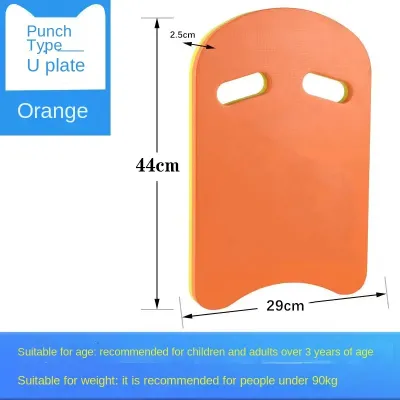
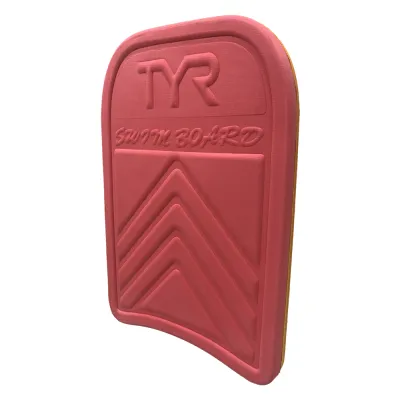
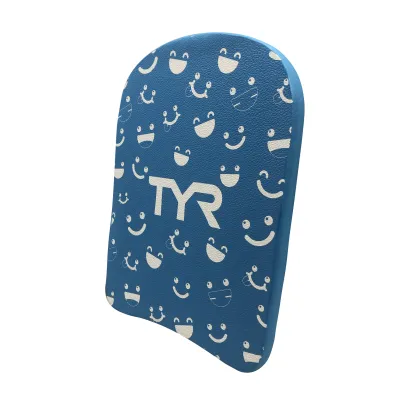
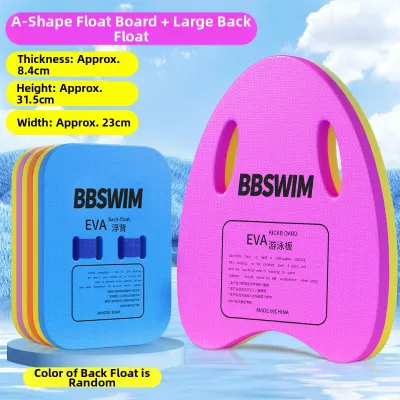
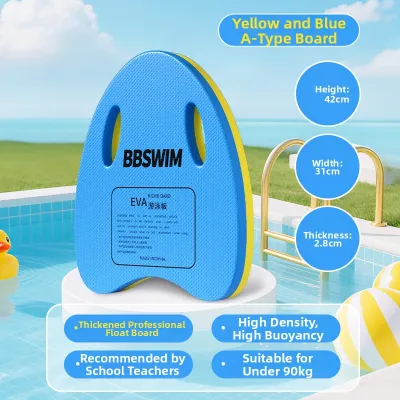
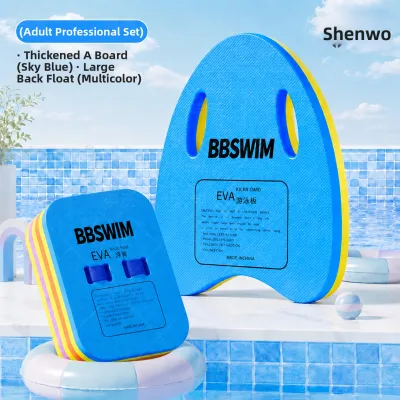
Prices are valid at publication and may change. Please refer to the product page for the latest price.
Kickboards: When to Use Them for Lower Body and Technique Training
A standard kickboard is highly effective when you need to address specific weaknesses in your lower body mechanics. One of the most common observable signs that you need isolated leg training is “sinking hips.” When your kick lacks power or consistency, your lower half drags through the water, creating massive resistance. A kickboard allows you to isolate the legs to build the muscular endurance needed to maintain a horizontal body position.

Standard kickboard training involves specific drills designed to challenge your lower body. During vertical kicking drills in deep water, holding a kickboard against your chest forces you to rely entirely on a rapid, compact kick from the hips to stay afloat. For sprint sets, holding the board at the bottom edge in a streamlined position helps build explosive power. These drills are excellent for developing a strong flutter, breaststroke, or dolphin kick.
However, improper kickboard use can lead to poor posture and physical strain. A common mistake is resting your entire chest on the board or gripping the top edge, which forces your head up and arches your lower back. This unnatural alignment can cause neck and lumbar strain. To prevent this, hold the board at the bottom corners with your arms extended, and keep your face in the water, lifting your head only to breathe, or use a snorkel to maintain a neutral spine.
Pull Buoys: Isolating Upper Body Strength and Body Position
If you find your legs dragging behind you or struggle to maintain a high body position without constantly kicking, a pull buoy is an invaluable tool. By neutralizing your legs, the pull buoy forces your hips to the surface. This elevation allows you to experience how a flat, hydrodynamic body position should feel, making it easier to replicate during full-stroke swimming.
With your lower body supported, you can dedicate your full attention to the catch, pull, and recovery phases of your arm stroke. This isolation is particularly useful for swimmers working on high-elbow catches or refining their hand entry angles. Because you cannot kick, your core muscles must engage to prevent your hips from swaying side to side, making the pull buoy an excellent tool for building functional core stability.
To use a pull buoy correctly, place it high up between your thighs, just below your groin. Squeeze your thighs gently to hold the buoy securely in place, keeping your legs relaxed and extended straight behind you. Avoid placing the buoy down near your knees, as this can cause your lower back to arch and put unnecessary pressure on your joints. If you experience shoulder discomfort, reduce your pull buoy sets; without the propulsion of a kick, your shoulders bear the entire workload, which can lead to overuse strain if introduced too quickly.
Combination Boards: Versatility for Multi-Drill Sessions
Combination boards, or pull-kicks, are designed for swimmers who value efficiency and versatility. If your training routines involve rapid transitions between kicking and pulling intervals, switching between separate boards can disrupt your rhythm. A combination board allows you to transition seamlessly from a kicking drill to a pulling set without stopping to swap equipment at the pool wall.
When evaluating a combination board, look for specific structural features on the product label. High-quality models typically feature dual-density EVA foam, which provides a balance of softness and structural rigidity. Look for contoured hand grips along the sides for secure handling during kick sets, and a recessed, hourglass middle section that fits comfortably between your thighs during pull sets.
While highly convenient, combination boards do involve ergonomic trade-offs. Because they must function as both tools, they are generally smaller than a standard kickboard and less bulky than a traditional pull buoy. This smaller surface area means they offer less overall buoyancy. For beginners who require maximum support to stay afloat, a dedicated, single-purpose board is often more effective than a hybrid model.
How to Choose the Right Board for Your Current Skill Level
Your swimming experience and technical development needs should guide your final equipment choice. Matching the board’s characteristics to your skill level ensures you build proper habits rather than relying on the equipment as a crutch.
For beginners, the primary focus is building water confidence, establishing a consistent kick, and mastering breathing patterns. A standard, highly buoyant kickboard is ideal here because it provides maximum stability and keeps the upper body securely supported. This support allows beginners to focus entirely on generating kick power from the hips rather than the knees, without the fear of sinking.
Intermediate swimmers should focus on stroke efficiency, body rotation, and targeted muscle endurance. At this stage, a pull buoy is highly beneficial for isolating the arm stroke and learning to keep the core engaged during body rotation. Intermediate swimmers can also benefit from a combination board, which challenges their stability due to its lower buoyancy while offering the flexibility needed for varied training sets.
Advanced swimmers utilize training aids for high-intensity interval training, race-pace simulation, and extreme drill isolation. Advanced athletes often prefer smaller, streamlined kickboards or low-buoyancy combination boards. These smaller tools provide just enough support to execute the drill while forcing the swimmer to rely on their own core strength and body alignment to stay high in the water.
Before purchasing, verify the product specifications on the label against your physical needs:
- Buoyancy Rating: Ensure the board's volume matches your body weight; heavier swimmers require more buoyant foam to maintain proper alignment.
- Dimensions: Choose a size that matches your shoulder width for kickboards, or a width that fits comfortably between your thighs for pull buoys.
- Material Quality: Look for closed-cell EVA foam, which resists water absorption and remains hygienic over long-term use in chlorinated water.
Frequently Asked Questions (FAQ)
Can I use a standard kickboard as a pull buoy?
Using a standard kickboard as a pull buoy is not recommended due to significant differences in shape and ergonomics. Kickboards are wide, flat, and highly buoyant, making them difficult to grip securely between your thighs. Attempting to squeeze a wide board forces your hips into an unnaturally wide stance, which can strain your hip joints and lower back. Additionally, the flat profile of a kickboard creates high water resistance when held between the legs, disrupting your body alignment and causing the board to slip out easily during flip turns or hard push-offs.
How do I know if my swimming board has too much or too little buoyancy?
You can determine if your board has incorrect buoyancy by observing your body position in the water. If a kickboard or pull buoy has too much buoyancy, it will force your upper body or hips too high, causing your lower back to arch excessively and leading to lower back or shoulder strain. If the board has too little buoyancy, you will feel your hips and legs sinking despite using the tool, preventing you from isolating your target muscle groups. If you experience these issues, check the manufacturer’s sizing guidelines to find a board with a volume and buoyancy rating suited to your body weight.
Community discussion
Share your experience or ask a question. Comments are reviewed before publication.