
For a beginner stepping onto the tennis court, selecting the right Teloon tennis racket comes down to finding a frame that maximizes forgiveness, ease of swing, and comfort. The ideal starting point is a Teloon racket featuring a mid-plus to oversized head (typically between 100 and 110 square inches) paired with a lightweight frame weighing between 260 and 285 grams unstrung. This combination provides a generous sweet spot to handle off-center hits while preventing early arm fatigue during long practice sessions. Because product lineups and model names evolve, beginners should focus on verifying these core physical specifications in current official Teloon catalogs rather than searching for specific, potentially discontinued model names.
Choosing a racket that does not match your current physical ability can lead to rapid fatigue, frustration, and even minor injuries like tennis elbow. By focusing on how a racket’s physical dimensions interact with your swing, you can confidently select a Teloon model that supports your learning curve and makes your early hours on the court highly enjoyable.
Key Racket Specifications Every Beginner Must Check
Understanding the technical specifications of a tennis racket allows you to look past marketing jargon and evaluate how a frame will actually perform in your hands. For novices, four primary specifications dictate the racket’s playability: head size, unstrung weight, grip size, and string tension.
Products mentioned in this guide
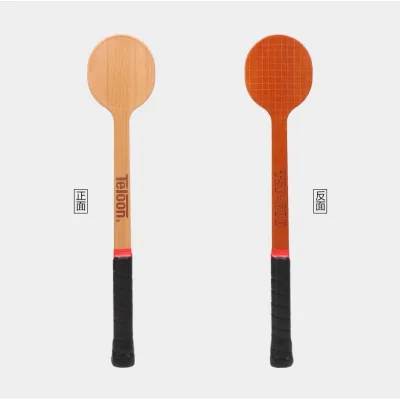
Prices are valid at publication and may change. Please refer to the product page for the latest price.
Head Size and the Sweet Spot
The head size of a racket directly determines the size of the sweet spot, which is the optimal area of the string bed for striking the ball. For beginners, a larger head size is highly forgiving. If you misjudge the bounce and strike the ball closer to the frame, an oversized head (105 to 115 square inches) or a mid-plus head (100 to 105 square inches) will still return the ball over the net with reasonable depth. Smaller head sizes (under 98 square inches) offer excellent control for advanced players but require highly precise contact, which can frustrate a novice still learning to read ball trajectories.
Racket Weight and Swing Dynamics
Racket weight is typically measured in grams and refers to the frame without strings (unstrung weight). Beginners should target a weight range of 260 to 285 grams. A lighter frame is easier to maneuver, allowing you to react quickly to fast balls and complete a full, high-to-low swing path without straining your wrist or shoulder. As you play longer sessions, a heavy racket (over 300 grams) will quickly tire your forearm muscles, leading to late contact and poor form. Conversely, avoid ultra-light rackets (under 250 grams) unless they are specifically designed for juniors, as they may lack the stability needed to plow through heavier incoming balls.
Grip Size and Hand Comfort
Selecting the correct grip size is essential for maintaining control of the racket and preventing hand strain. In Singapore’s hot and humid climate, a grip that is too small or too large will cause your hand to slip, forcing you to squeeze the handle excessively. To find your size, measure the distance from the middle crease of your palm to the tip of your ring finger. This measurement corresponds to standard grip sizes:
- Grip 1 (4 1/8 inches): Ideal for juniors transitioning to adult frames or players with smaller hands.
- Grip 2 (4 1/4 inches): The most common size for average-sized adult hands.
- Grip 3 (4 3/8 inches): Suitable for players with larger hands.
If you are between sizes, choose the smaller size; you can easily increase the grip thickness by wrapping an inexpensive overgrip around the handle.
String Tension and Power Generation
String tension is measured in pounds or kilograms and determines how much the string bed deflects upon impact. Lower string tensions (48 to 53 pounds) create a trampoline effect, returning more energy to the ball and helping beginners generate effortless depth. Higher tensions (above 55 pounds) offer more control but require a fast, technically sound swing to push the ball deep into the opponent’s court. When starting out, opting for a lower tension range reduces the physical effort required to clear the net, allowing you to focus entirely on your footwork and swing path.
How to Identify Suitable Teloon Models for Novices
Navigating a manufacturer’s product lineup can be daunting without a clear framework. Teloon offers a wide range of rackets, from casual recreational frames to high-performance models. To identify the right option, you must learn to read their product categories and verify the physical specifications printed on the frame.

Deciphering Product Series and Tiers
Teloon typically organizes its rackets into distinct series based on target player levels. Recreational and game-improvement series are engineered specifically for beginners and intermediate players. These frames often feature wider beams, which provide inherent stiffness and power, and are constructed with materials that prioritize shock absorption. Performance or tour series, on the other hand, are designed for competitive players who demand maximum control and have the physical strength to generate their own power. When browsing, look for descriptors such as “recreational,” “comfort,” or “game-improvement” in the product documentation.
Verifying Specifications on the Frame
Never rely solely on online retail titles, which can sometimes be generic or misleading. Instead, look at the physical racket throat or the detailed specification table on the manufacturer’s official listing. Reliable manufacturers print the exact weight, balance point, head size, and recommended string tension directly on the inside of the racket shaft. Before making a purchase, verify that these printed numbers align with the beginner-friendly ranges discussed above.
Material Trade-offs: Aluminum vs. Graphite
One of the most important decisions you will make is choosing the frame material, which heavily influences both the price and performance of the racket:
- Aluminum and Alloy Composites: These rackets are highly budget-friendly, making them an attractive option if you are testing the waters and unsure of your long-term commitment. However, aluminum frames are highly flexible, transmit more vibration to your arm, and can warp permanently if dropped or struck against the court surface.
- Carbon Fiber and Graphite: Full graphite frames represent a slightly higher initial investment but offer superior structural integrity, excellent vibration dampening, and a much longer lifespan. Graphite allows for a stiffer frame design that generates easy power while protecting your joints from harsh vibrations. If you plan to play regularly, a graphite frame is highly recommended.
Matching Racket Features to Your Build and Playing Goals
Every beginner has a unique physical build, fitness level, and set of goals. Personalizing your racket choice ensures that your equipment works with your body rather than against it.
Adjusting for Physical Build and Age
Your physical strength and stature should guide your weight selection within the beginner range. Petite players, seniors, or older juniors transitioning to adult frames will benefit most from rackets on the lighter end of the spectrum (260 to 270 grams) to maintain fast swing speeds. Physically strong or athletic beginners can comfortably handle frames weighing 275 to 285 grams, which offer slightly more stability when blocking fast shots at the net.
Frame Stiffness and Joint Protection
Frame stiffness is rated on a scale (often referred to as the RA rating). Stiffer frames (above 65 RA) bend very little during impact, ensuring that maximum energy is transferred back into the ball. This is highly beneficial for players who want effortless power. However, if you have a history of wrist, elbow, or shoulder discomfort, you should look for a more flexible frame (below 62 RA) or pair a stiffer frame with soft, shock-absorbing strings to protect your joints from impact shock.
Aligning with Your Long-Term Playing Goals
Consider how you plan to engage with the sport over the next twelve to eighteen months:
- Casual Weekend Play: If your goal is to hit occasionally with family or friends on a condominium court, a budget-friendly composite Teloon racket is highly practical and cost-effective.
- Structured Coaching and Progression: If you are enrolling in structured lessons with a coach and intend to play multiple times a week, investing in a full-graphite Teloon racket is a smarter choice. A high-quality graphite frame can grow with you, accommodating higher string tensions and different string types as your technique improves.
Where to Buy Authentic Teloon Rackets in Singapore
To ensure you receive a genuine product with reliable build quality, it is important to purchase your Teloon racket through reputable channels and understand your options regarding stringing.
Finding Authorized Retailers and Online Storefronts
When shopping in Singapore, look for authorized sports distributors, physical pro shops located near public tennis centers, or official brand storefronts on major e-commerce platforms. Purchasing from established local sellers ensures you are not buying counterfeit goods or old, degraded stock that has been stored in poor conditions. Physical stores also offer the invaluable advantage of letting you hold the racket to verify the grip size and overall feel before committing to a purchase.
Verifying Warranty and After-Sales Support
Before finalizing your purchase, check the seller’s return policy and warranty coverage. Genuine graphite rackets should come with a manufacturer’s warranty against structural defects, such as hairline cracks in the frame that occur during normal play. Knowing you have local after-sales support provides peace of mind, especially when you are first learning to handle and care for your equipment.
Pre-Strung vs. Unstrung Rackets
Most beginner-focused Teloon rackets are sold pre-strung from the factory. This is incredibly convenient and cost-effective, allowing you to head straight to the court. Factory strings are typically synthetic gut or nylon, strung at a moderate, middle-of-the-road tension suitable for general play.
However, if you purchase an unstrung frame, you will need to take it to a local pro shop to be strung. While this adds an extra step and cost, it allows you to customize the string type and tension to your exact preferences. For beginners opting for custom stringing, a soft multifilament string at 50 pounds is an excellent starting point for maximum comfort and power.
Frequently Asked Questions (FAQ)
Is Teloon a good brand for beginner tennis players?
Yes, Teloon is highly regarded for offering excellent value in the entry-level and recreational segments. The brand produces structurally sound, well-balanced frames that incorporate modern design principles—such as expanded sweet spots and lightweight materials—at a highly accessible price point. This makes it an ideal choice for novices who want reliable, durable gear without making a massive initial financial investment.
Should I buy a pre-strung Teloon racket or string it myself?
For absolute beginners, a pre-strung Teloon racket is highly recommended. It eliminates the immediate need to understand complex string materials and tension dynamics, allowing you to start playing immediately at a lower total cost. As your skills develop and you begin to feel the difference in how the ball leaves the string bed, you can transition to custom stringing to fine-tune your performance.
How often should a beginner restring their Teloon racket?
As a general rule of thumb, you should restring your racket as many times a year as you play per week. If you play once a week, restringing once a year is usually sufficient. However, because Singapore’s high humidity and heat can accelerate the loss of string tension and degrade synthetic fibers, you should also inspect your strings regularly. If they feel excessively loose, slide out of place constantly, or show visible fraying, it is time to take the racket to a local pro shop for a fresh set of strings.
Community discussion
Share your experience or ask a question. Comments are reviewed before publication.