
Quick Answer: Do You Need a Tennis Trainer Right Now?
A tennis trainer is a valuable supplement to your practice, but it cannot replace the foundational feedback of a professional coach. If you cannot consistently make clean contact with a stationary ball or struggle with basic grip mechanics, investing in solo equipment may reinforce poor habits.
You are ready for a tennis trainer if you have completed a few introductory lessons, understand the basic swing path, and want to build muscle memory through repetition. At this stage, solo practice helps lock in your form and improves your hand-eye coordination.
Conversely, if you are entirely new to the sport and have never held a racket, prioritizing group clinics or professional coaching is the most efficient path. A trainer is designed to refine existing movements, not to diagnose structural flaws in your swing. Equipment should always supplement, rather than replace, structured instruction.
Products mentioned in this guide
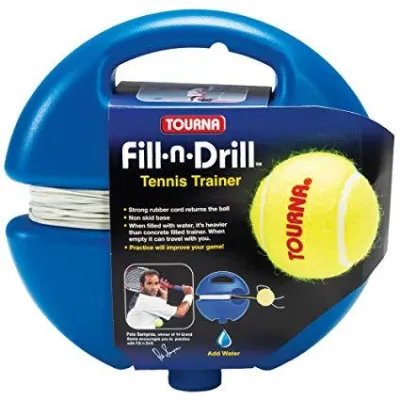
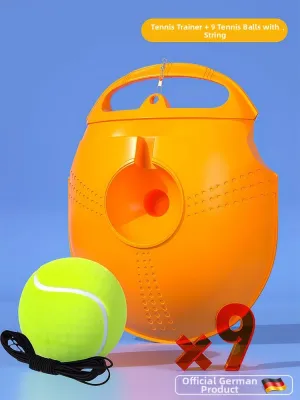
![[SG]The advanced version of PP Smart Pro tennis ball server is launched a new upgraded automatic trainer Recommended gifts](https://img.lazcdn.com/g/p/13bfab11ec3c989a40c7bf841e2bccae.jpg_400x400q80.jpg_.webp)
![[SG 🚚] Tennis Trainer Primary Exercise Ball Practice Tool](https://img.lazcdn.com/g/p/ceaa33d2281626fe3e0268da696d111f.jpg_400x400q80.jpg_.webp)

Prices are valid at publication and may change. Please refer to the product page for the latest price.
Step 1: Assess Your Current Skill Level and Practice Goals
To choose the right equipment, you must first evaluate your current consistency level. If you struggle to keep a slow rally going with a partner, your immediate need is high-repetition, low-velocity contact. If you can sustain a short rally but lose form under physical fatigue, your goal shifts toward footwork and endurance.

Defining specific practice goals is equally critical. If you want to isolate your wrist movement during a forehand, you need a tool that keeps the ball in a predictable zone. If you want to practice split-steps and lateral movement, you require a system that forces you to move dynamically across the court.
Finally, evaluate your available time and commitment for solo practice. Setting up heavy equipment for a quick fifteen-minute session often leads to the gear gathering dust. Match the equipment’s setup complexity to your actual weekly availability and carrying capacity.
Step 2: Understand the Main Types of Tennis Trainers
Ball Machines These devices feed balls at adjustable intervals, speeds, and angles. They are excellent for simulating realistic ball trajectories and building cardiovascular endurance. However, they require a significant amount of space, a consistent power source or battery charge, and a large collection of tennis balls.
Return Nets and Rebounders These vertical or angled nets bounce the ball back using the energy of your own shot. They require you to generate your own pace and spin. A rebounder is highly effective for practicing rhythm, timing, and volley reactions, as the ball returns faster the harder you hit it.
Training Aids and Base-Tethered Balls These simple systems consist of a weighted base anchored to the ground, connected to a tennis ball via an elastic cord. When you strike the ball, the cord stretches and pulls the ball back to you. They are highly portable and excellent for absolute beginners focusing on basic swing paths, though the return trajectory does not perfectly mimic a real tennis shot.
Step 3: Match Your Diagnosis to the Right Equipment
For Stroke Mechanics and Initial Contact If your primary goal is to master the basic swing path and find the sweet spot consistently, a base-tethered ball or a static swing guide is the most practical starting point. These tools allow you to focus entirely on your body alignment and racket face angle without worrying about court movement.
For Footwork, Rally Consistency, and Endurance If you can already hit a clean stroke and want to work on your physical conditioning and court positioning, a rebound net or an entry-level ball machine is more appropriate. These setups force you to recover your position after every shot, simulating the physical demands of an actual match.
Transitioning as Skills Progress As your timing improves, you will naturally outgrow simple tethered systems. Transitioning to a rebound net allows you to practice varying your spin and pace, while moving to a ball machine helps you practice hitting on the run and handling different ball depths.
Step 4: Evaluate Space, Storage, and Setup Constraints
Before purchasing, measure your available practice area. A base-tethered trainer requires a clear radius of at least five to six meters to avoid hitting walls or bystanders. Rebound nets and ball machines require even more depth, making them better suited for private driveways, quiet public parks, or booked tennis courts rather than small residential balconies or indoor living rooms common in high-density urban areas like Singapore.
Consider how you will transport the equipment. A heavy ball machine might require a car trunk and a lift-accessible storage space, whereas a tethered ball can easily fit into a standard sports backpack. If you must travel to a public court via public transport, lightweight and collapsible designs are essential.
Align your purchase with realistic budget tiers. Entry-level tethered systems are highly affordable but have wear-prone elastic cords. Mid-tier rebound nets offer great structural durability but require a larger upfront investment. Ensure you check the frame material, weather resistance, and replacement part availability before committing to a purchase.
Frequently Asked Questions (FAQ)
Can I use a tennis trainer on any court surface?
Surface compatibility depends heavily on the specific trainer design. Weighted base-tethered trainers and rebound nets can generally be used on hard courts, concrete, or even flat grass, provided the base is sufficiently heavy or anchored. However, you must check the manufacturer’s guidelines before placing heavy wheeled ball machines on delicate clay or synthetic turf surfaces to prevent leaving deep ruts or damaging the court material.
Additionally, different surfaces alter the ball’s bounce and the stability of the equipment. Hard concrete surfaces provide a predictable bounce but accelerate ball wear, while grass dampens the rebound significantly. After practicing on dusty, sandy, or clay courts, always wipe down the frame, wheels, and tension straps to prevent abrasive particles from degrading the moving parts or adjustment mechanisms.
Are tennis trainers safe to use without a partner present?
Solo practice requires heightened environmental awareness to prevent accidents. Before you begin hitting, ensure there is a clear safety zone of several meters around your entire swing path and the equipment’s operational area. Stray balls can easily become tripping hazards, so keep your practice zone clear of loose equipment, water bottles, and extra balls.
Physical fatigue is another critical safety factor during unmonitored solo drills. Without the natural breaks of a partnered game, players often hit continuously, which can lead to repetitive strain injuries in the wrist, elbow, or shoulder. Set a timer to take regular breaks, monitor your physical limits, and stop immediately if you experience sharp joint pain. Always ensure the trainer’s base is properly weighted with water or sand to prevent the unit from tipping over during high-velocity impacts.
How do I maintain my tennis trainer to ensure it lasts?
Regular maintenance is key to extending the lifespan of your training gear. Perform a quick visual inspection before every session, checking for frayed elastic cords, loose frame joints, or worn wheels. If you notice any structural cracking or severe wear on tension bands, replace those components before using the equipment again.
Proper storage is vital, especially in humid or high-temperature climates. Avoid leaving nets, elastic cords, or electronic ball machines exposed to direct sunlight and rain for extended periods, as UV rays and moisture rapidly degrade nylon, rubber, and electrical circuits. Store your gear in a cool, dry indoor space. If a machine or structural frame begins to malfunction or shows signs of electrical failure, stop using it immediately and consult the manufacturer’s manual or a qualified technician for repairs.
Community discussion
Share your experience or ask a question. Comments are reviewed before publication.