
Selecting the right training cones for football drills depends on matching the physical profile of the cone to the specific movement, speed, and spatial requirements of your training session. While low disc cones are the standard choice for rapid footwork and agility drills due to their low profile, taller cones are essential for simulating defenders, marking shooting zones, or establishing clear visual targets from a distance. Flexible markers and flat discs work best for defining tactical boundaries and grid zones where players frequently step across lines. By diagnosing your primary training objectives, player age groups, and typical playing surfaces, you can build a versatile cone setup that enhances drill efficiency and player safety.
Identify Your Primary Training Objectives
Before purchasing training gear, evaluate the primary focus of your football sessions. Technical skill development, physical conditioning, and tactical positioning each demand different spatial setups and visual cues. For example, high-speed agility drills require low-profile markers that players can step over safely, whereas tactical positioning drills require highly visible boundaries that players can spot from across the pitch.
The playing surface also dictates the physical characteristics of the cones you need. Natural grass pitches allow for lightweight cones, but artificial turf and hard indoor courts require cones with stable, non-slip bases to prevent them from sliding or tipping during fast-paced movements. If you train on windy outdoor pitches, heavier bases or wind-resistant designs are crucial to keep your setup intact.
Products mentioned in this guide
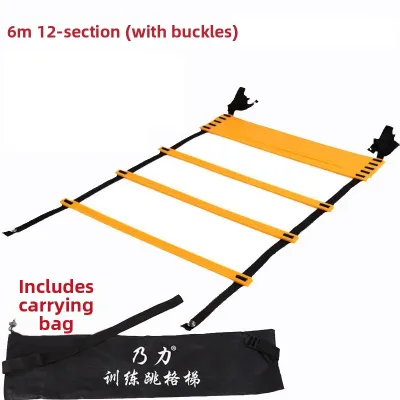
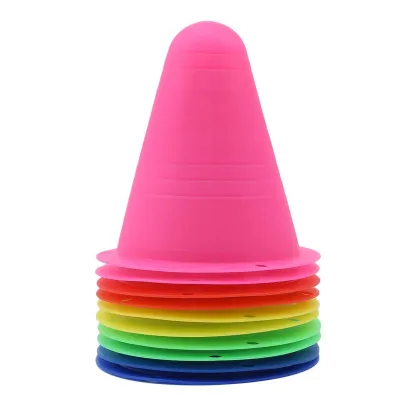
Prices are valid at publication and may change. Please refer to the product page for the latest price.
Finally, consider the age and skill level of your players. Younger players benefit from highly visible, brightly colored cones that clearly define boundaries, helping them maintain spatial awareness. Safety is also paramount for youth training; choosing flexible, crush-proof materials reduces the risk of tripping or injury when players inevitably step on or fall over the markers.
Match Cone Types to Specific Football Drills
To optimize your training sessions, you must align the height, footprint, and stability of your cones with the speed and spatial demands of each drill. Different shapes serve distinct physical and tactical purposes on the pitch.

Tall Cones for Dribbling and Shooting
Tall cones, typically standing between 9 to 12 inches or higher, serve as effective physical obstacles that simulate opposing players. When setting up dribbling lanes or shooting drills, these cones force players to lift their heads and navigate around a realistic physical presence, encouraging better spatial awareness and ball control.
Because of their height, tall cones are more susceptible to wind and physical contact. When selecting tall cones, check the base weight and stability features to ensure they remain upright on your training surface. Look for models with wide bases or those designed to allow wind to pass through, which prevents them from tipping over during outdoor sessions.
Safety is a critical factor when using taller markers. Verify that the material is sufficiently flexible to bend or collapse under pressure. If a player accidentally collides with or steps on a rigid tall cone, it can cause ankle rolls or falls, so choosing impact-resistant, pliable plastics is essential for maintaining a safe training environment.
Low Disc Cones for Agility and Footwork
Low disc cones are the workhorses of football training, specifically designed for high-speed agility, coordination, and rapid directional changes. Their low-profile design allows players to perform quick footwork, lateral shuffles, and pivoting movements directly over or around the cones without the risk of catching a boot and tripping.
Visibility is key when setting up complex, multi-line agility courses. Look for low disc cones in high-contrast, fluorescent colors like orange, yellow, and white, which stand out clearly against green grass or artificial turf. Using multiple colors allows you to color-code different pathways or instructions within a single drill, enhancing cognitive training.
Because agility drills often require dozens of markers, transportability and storage are major considerations. Check for compatibility with stacking pegs or carrying straps. A good carrying system allows you to collect, stack, and transport fifty or more disc cones efficiently, saving valuable setup and pack-up time during busy training sessions.
Flexible Markers for Tactical Boundaries
Tactical training, positional play, and small-sided games require clear, unambiguous boundaries to define grid areas and restricted zones. Flat, flexible rubber markers or dome cones are well-suited for this purpose because they lay flat on the ground, allowing the ball to roll over them smoothly without altering its trajectory.
These flat markers provide excellent visual clarity for tactical shape and spacing drills without creating physical obstructions on the pitch. Players can run across these lines naturally, making them perfect for defining offside lines, neutral zones, or target areas during possession games.
When evaluating flexible markers, check the durability and recovery capability of the material. High-quality thermoplastic rubber or soft elastomer compounds should quickly return to their original shape after being stepped on, kicked, or compressed by players. Combining these flat markers with tall cones at the corners of your grids creates a highly structured, multi-dimensional training environment.
Evaluate Cone Durability and Visibility Features
To ensure your training cones withstand the rigors of regular outdoor use, inspect the product specifications and material labels carefully. Prolonged exposure to sunlight can degrade cheap plastics, causing them to become brittle and fade. Look for cones with UV-resistant properties and anti-fading stabilizers to maintain their bright colors and structural integrity over multiple seasons.
Base design is another critical factor, especially if you frequently transition between different training surfaces. For smooth indoor courts or synthetic turf, verify if the cones feature anti-slip rings, textured bottoms, or weighted bases. These features prevent the cones from sliding out of position when brushed by a ball or stepped on by a player.
For early morning, late afternoon, or evening training sessions under floodlights, visibility becomes a safety and performance issue. Check for fluorescent colors or reflective strips that catch the light effectively. Highly visible markers ensure that players can react quickly to the boundaries and obstacles, maintaining the high intensity required for effective football training.
Build Your Training Cone Setup
Building an effective training kit requires calculating the right quantity and mix of cones based on your typical squad size and drill complexity. For a standard squad, a foundational mix of fifty to eighty low disc cones in at least two contrasting colors is highly recommended, as this covers most agility, dribbling, and small-sided game setups.
To complement your low discs, allocate a smaller portion of your budget to tall cones and flat markers. A set of ten to twelve tall cones is usually sufficient for simulating defensive lines or marking goal targets, while twenty flat rubber markers can handle tactical grid setups. This balanced ratio ensures you have the right tool for every training scenario.
Finally, evaluate the practical utility of any included accessories. Carrying bags, mesh storage sacks, and plastic cone ladders are not just convenient; they protect your gear from damage during transport and keep your storage space organized. Investing in a complete set with a durable carrier saves time and ensures you never leave essential markers behind.
Frequently Asked Questions (FAQ)
Can I use just one type of cone for all football drills?
While you can run basic sessions using only low disc cones, relying on a single type limits your training options. Low discs cannot simulate the physical height of a defender for shooting drills, while using only tall cones for agility work increases the risk of tripping and slows down footwork. A mixed setup provides a practical balance of safety and versatility.
How many training cones do I need for a full team session?
For a standard squad of fifteen to twenty players, a minimum of fifty low disc cones and ten tall cones is recommended. This quantity allows you to set up multiple simultaneous stations, such as an agility circuit, a dribbling lane, and a small-sided game boundary, keeping all players active and minimizing standing time.
Are soft cones safer for young players?
Yes, soft, flexible cones made from pliable plastics or rubber are significantly safer for youth training. Young players are more prone to falling and stepping on markers; rigid plastic cones can crack, creating sharp edges, or cause ankle injuries. Soft cones collapse flat under weight and pop back into shape, preventing injuries.
Community discussion
Share your experience or ask a question. Comments are reviewed before publication.